Source Raw Carbon Fiber Pickleball Paddle for training, games, and youth sports
Compare 30 listings for Raw Carbon Fiber Pickleball Paddle options including carbon fiber and PP materials. Buyers can evaluate model numbers, weights, and customization features for professional players and youth training needs.
Key considerations
Products List


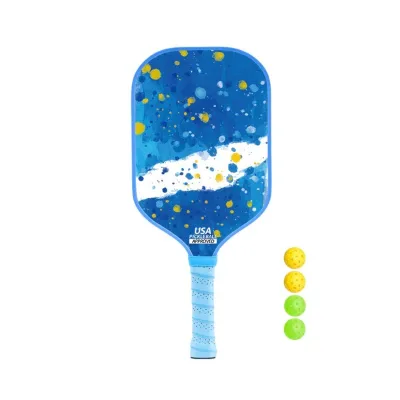
Premium Carbon Fiber Honeycomb Core Pickleball Paddle for Ultimate Performance
$6.00 - $6.20
MOQ: 50 Pieces




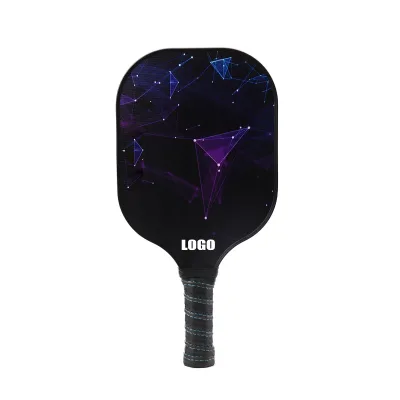
High-Performance Carbon Fiber Pickleball Paddle with Durable Aramid Core
$10.00 - $13.00
MOQ: 100 Pieces




Comprehensive Sourcing Guide
Strategic Sourcing Guide for Raw Carbon Fiber Pickleball Paddles
Understanding Material Composition and Technical Specifications
When sourcing raw carbon fiber pickleball paddles, the primary distinction lies in the material composition and the manufacturing process that binds these materials into a functional sports implement. The core keyword "raw carbon fiber" implies a focus on the structural integrity and surface properties derived from carbon fiber materials rather than composite blends or polymer-only constructions. Based on available product data, the material specification for high-performance paddles is explicitly listed as "Carbon Fibre" or "Carbon," distinguishing these items from those made with standard plastic types like PP (Polypropylene). The presence of "Carbon Fiber" as a standard in the product attributes indicates a specific manufacturing tier where the paddle face or core utilizes carbon fiber layers to enhance stiffness, power transfer, and durability.
The technical specifications for these paddles vary significantly across different model numbers, which buyers must evaluate against their specific performance requirements. Observed model identifiers include JP-25-11, JP-25-18, YD-79-7, YD-85-4, TL5007, and WR-series codes such as WR-0301-08 and WR-250402-1. These alphanumeric codes serve as critical identifiers for supply chain tracking and quality consistency. The physical dimensions are not uniform; specifications list sizes such as "Custom Size" or specific measurements like 41219616mm and 402016cm. This variability suggests that suppliers offer modular sizing options, which is a crucial consideration for buyers targeting specific player demographics or custom branding needs.
Weight is another pivotal technical attribute. The observed weight range for these carbon fiber paddles is approximately 220 grams or 7.3 to 8.4 ounces. This range places the product in a mid-to-lightweight category, suitable for players seeking maneuverability without sacrificing the structural benefits of carbon fiber. The manufacturing process often cited in the product data is "Cold Press Cutting" or simply "Cold Press." This process is essential for maintaining the integrity of the carbon fiber layers without the thermal degradation that might occur with high-heat lamination methods. Buyers should verify that the supplier utilizes cold press technology to ensure the carbon fiber remains in its optimal state, providing the necessary rigidity and surface texture required for competitive play.
Compliance, Certification, and Regulatory Standards
In the B2B procurement of sports equipment, particularly items designed for competitive play, compliance and certification are non-negotiable. The supply chain data indicates that specific products carry the "Usapa" certification. USAPA (USA Pickleball Association) certification is a significant marker for paddles intended for official tournament play. This certification ensures that the paddle meets the strict dimensional, weight, and surface roughness standards required by the governing body. When sourcing raw carbon fiber paddles, buyers must explicitly request proof of USAPA certification for any models intended for the competitive market. Without this verification, the paddles may be restricted to recreational use only, limiting their marketability to serious players and tournament organizers.
Beyond USAPA, the broader context of international trade requires attention to other potential standards. While specific data points mention "CE" and "ISO 9001" as background or low-confidence attributes, these should not be assumed as guaranteed facts for every unit. Instead, buyers must treat these as verification targets. The origin of the products is consistently listed as China, with specific mentions of Anhui as a production hub. This geographic concentration implies a mature supply chain, but it also necessitates rigorous due diligence regarding export compliance and labor standards. Buyers should verify that the supplier holds valid ISO 9001 certification for their manufacturing facilities, as this indicates a commitment to consistent quality management systems, even if the specific product data does not explicitly list it for every model.
The "Raw" aspect of the keyword also touches on material safety and environmental compliance. Carbon fiber production involves specific chemical processes, and the final product must be free from hazardous substances that could violate import regulations in North America or Europe. Buyers should ensure that the supplier provides Material Safety Data Sheets (MSDS) and confirms that the carbon fiber and resin components comply with relevant REACH or RoHS directives, depending on the destination market. The absence of explicit certification data for these specific environmental standards in the provided text means that the buyer must proactively request this documentation rather than assuming compliance based on the product's category.
Cost Drivers and Pricing Dynamics
The pricing structure for carbon fiber pickleball paddles is influenced by several distinct factors, primarily the material cost of the carbon fiber itself and the complexity of the manufacturing process. The observed price range in the market data spans from 0.1 to 99 USD. This wide disparity reflects the difference between basic recreational models and high-end, tournament-grade paddles featuring premium carbon fiber weaves and advanced cold press engineering. The lower end of the spectrum likely corresponds to paddles with minimal carbon fiber content or those intended for bulk promotional use, while the higher end represents fully carbon-fiber-faced units with custom branding and USAPA certification.
Material costs are a primary driver. The distinction between "PP" (Polypropylene) plastic and "Carbon" or "Carbon Fibre" materials creates a significant cost differential. Carbon fiber is inherently more expensive due to the raw material costs and the specialized labor required to lay up and press the fibers. The "Cold Press Cutting" process mentioned in the specifications adds value by ensuring precision and structural integrity, which justifies a higher price point compared to injection-molded alternatives. Additionally, the "Custom Size" and "Customized Logo Available" attributes indicate that customization is a major cost variable. Buyers ordering paddles with specific dimensions, custom logos, or unique packaging (such as "Bubble Bag + Carton" or "Each Paddle Pack in Bubble Bag") will incur higher unit costs compared to standard, off-the-shelf inventory.
The Minimum Order Quantity (MOQ) also plays a critical role in the total cost of ownership. The observed MOQ range is 1 to 500 units. This flexibility allows buyers to test the market with small orders, such as the "Small Orders: Accepted" attribute suggests, but it also means that unit prices will be higher for smaller quantities. To achieve the most competitive pricing, buyers should aim for the upper end of the MOQ spectrum, leveraging the economies of scale inherent in the "50 PCS/CTN" packing standard. The packing method itself, whether it is a simple bubble bag or a more robust carton with specific dimensions, impacts shipping costs and overall logistics expenses, which must be factored into the total landed cost calculation.
Typical Applications and Target Audience Segmentation
The versatility of raw carbon fiber pickleball paddles allows them to serve a diverse range of applications, from professional competition to youth training. The product attributes explicitly identify the target audience as "Youth, Professional Players, Children, Adult." This broad segmentation requires buyers to tailor their procurement strategy to specific market needs. For professional players, the focus must be on paddles with USAPA certification, precise weight distributions (7.3-8.4 ounces), and high-stiffness carbon fiber faces that offer maximum power and control. These paddles are typically marketed under names like "Carbon Fiber Pickleball Paddle" or "Carbon Pickleball Paddle" and are designed for high-intensity gameplay.
In contrast, the "Sports Game.Sports Training" and "Pickleball Training" functions indicate a significant market for training aids and recreational paddles. These applications may prioritize durability and cost-effectiveness over peak performance. The "Polymer Pickleball Paddle Bundle" suggests that some suppliers offer bundled solutions for training camps or club programs, where multiple paddles are packaged together for efficiency. The "Double" player attribute in the specifications points to the paddle's suitability for doubles play, which is the most common format in pickleball. This makes the product highly relevant for club owners, tournament directors, and community centers looking to equip teams with consistent, high-quality gear.
The "Customization" and "Customer Logo" attributes further expand the application scope to include corporate gifting, team uniforms, and promotional merchandise. Organizations seeking to brand their own line of paddles can leverage the "Custom Size" and "Customized Logo Available" options to create unique products that align with their brand identity. The "Target Audience" of children and youth also opens opportunities for schools and youth leagues to procure paddles that are lightweight and easy to handle, ensuring that the carbon fiber technology is accessible to the next generation of players.
Supplier Evaluation and Quality Control Protocols
Evaluating suppliers for raw carbon fiber pickleball paddles requires a multi-faceted approach that goes beyond simple price comparisons. The first step is verifying the supplier's origin and production capabilities. The data consistently points to "China" as the origin, with "Anhui, China" specifically noted for certain models. This geographic concentration suggests a specialized manufacturing hub, but buyers must still verify the specific factory's capacity to handle the "Cold Press" process and maintain the quality of carbon fiber materials. The presence of multiple model numbers (e.g., JP, YD, TL, WR series) indicates that suppliers may have diverse production lines; buyers should ensure the specific model they are sourcing is produced in a facility dedicated to high-quality carbon fiber manufacturing rather than a general plastics line.
Quality control protocols are essential to ensure that the "Carbon Fibre" material performs as expected. Buyers should request samples to verify the weight, balance, and surface texture of the paddles. The "Weight (G): About 220g" specification should be treated as a target, and buyers must verify that the actual units fall within an acceptable tolerance range. Additionally, the "Standard" attribute of "Carbon Fiber" must be physically confirmed in the sample to ensure that the paddle is not merely labeled as carbon fiber but actually contains the requisite material layers. The "Certificate: Usapa" is a critical quality marker; buyers should request a copy of the certification for the specific model number to ensure it is valid and not expired.
The packaging standards, such as "Each Paddle Pack in Bubble Bag" or "OPP Bag + Carton," also serve as indicators of the supplier's attention to detail. Proper packaging is crucial for preventing damage during transit, especially for carbon fiber paddles which can be susceptible to impact damage. Buyers should evaluate the supplier's ability to provide robust packaging that meets the "Carton" or "Bubble Bag" requirements while maintaining the structural integrity of the product. The "Small Orders: Accepted" attribute suggests that the supplier is flexible, but buyers should also assess their responsiveness and ability to handle quality disputes if they arise.
Long-Term Procurement and Supply Chain Considerations
Sourcing raw carbon fiber pickleball paddles is not just a one-time transaction but a long-term partnership that requires careful supply chain management. The "Customization" and "Customized Logo Available" features imply a need for ongoing communication between the buyer and the supplier to maintain brand consistency over time. As the market evolves, buyers may need to adjust their specifications, such as changing the "Custom Size" or updating the "Logo" design. A reliable supplier should be capable of adapting to these changes without compromising the quality of the carbon fiber material or the "Cold Press" manufacturing process.
The "Lead time" and "MOQ" dynamics are critical for inventory planning. With an MOQ range of 1 to 500, buyers must balance the need for inventory flexibility with the cost benefits of larger orders. For businesses with stable demand, committing to higher MOQs can reduce unit costs and secure priority production slots. However, for new entrants or those testing new markets, the ability to place small orders is a significant advantage. Buyers should also consider the "Origin" and potential geopolitical risks associated with sourcing from China. Diversifying suppliers or maintaining a buffer stock can mitigate risks related to supply chain disruptions.
Finally, the long-term viability of the product depends on the supplier's ability to innovate and maintain quality. The "Carbon Fiber" material is a premium component, and suppliers who invest in research and development to improve the "Cold Press" process or enhance the "Weight" distribution will offer a competitive advantage. Buyers should look for suppliers who demonstrate a commitment to continuous improvement and who are willing to collaborate on product development. By focusing on these long-term considerations, buyers can build a resilient supply chain that supports their growth in the competitive pickleball market.
FAQs
What certifications do raw carbon fiber pickleball paddles have?
Some models carry Usapa certification for official tournament play. Buyers must verify this specific certification for competitive use, as not all listed products explicitly display it.
Which materials are used for these paddles?
The primary material is Carbon Fibre or Carbon, distinct from standard PP plastic types. This composition ensures structural integrity and stiffness required for performance play.
Can I order small quantities of these paddles?
Yes, small orders are accepted with an MOQ range starting from 1 unit. Buyers can test the market with minimal commitment before scaling up to larger volumes.
What is the typical weight of these paddles?
The weight ranges from 7.3 to 8.4 ounces, approximately 220 grams. This mid-to-lightweight category suits players seeking maneuverability without sacrificing carbon fiber benefits.
How are these paddles packaged for shipping?
Packaging options include bubble bags, OPP bags, or cartons depending on the order size. Some listings specify 50 pieces per carton for efficient bulk logistics.
Where are these paddles manufactured?
The products originate from China, with specific production hubs noted in Anhui. This geographic concentration indicates a mature supply chain for carbon fiber sports equipment.