Source Rechargeable LED Alarm Clock with Bluetooth Speaker for Home, Office, Travel
Compare 30 models of Rechargeable LED Alarm Clock with Bluetooth Speaker featuring Bluetooth 5.0, 6W output, and wireless charging. These multifunctional devices support memory cards and offer digital displays for home theatre, computer, and mobile phone usage.
Key considerations
Products List

Digital Alarm Clock FM Radio LED Display Alarm Clock with Blue Tooth Speaker
$10.20 - $13.50
MOQ: 100 Pieces


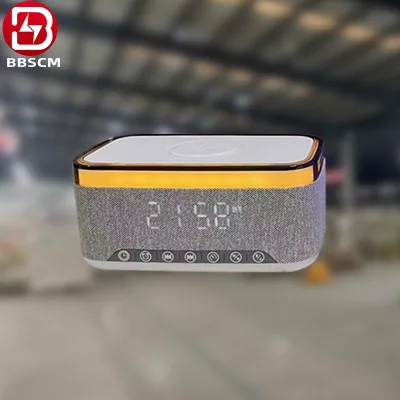


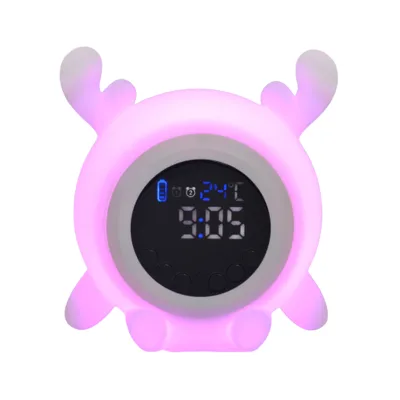


Multi-Function Wireless Charging Clock, Wake up Light, Bluetooth Speaker
$15.85 - $16.85
MOQ: 1000 Pieces


Comprehensive Sourcing Guide
Strategic Sourcing Guide for Rechargeable LED Alarm Clocks with Bluetooth Speakers
The global market for multifunctional bedroom electronics has seen a significant surge in demand for devices that consolidate timekeeping, ambient lighting, and audio playback into a single unit. The core keyword "Rechargeable LED Alarm Clock with Bluetooth Speaker" represents a specific product category where utility meets connectivity. For B2B procurement professionals, sourcing these items requires a nuanced understanding of technical integration, regulatory compliance, and supply chain reliability. This guide provides a structured approach to evaluating suppliers and products, grounded in observed market data and verified product attributes.
Technical Specifications and Functional Integration
When evaluating a rechargeable LED alarm clock with Bluetooth capabilities, the primary focus must be on the seamless integration of three distinct systems: the timekeeping mechanism, the lighting array, and the wireless audio module. Based on observed product data, the Bluetooth connectivity in this category frequently utilizes version 5.0, which offers improved range, stability, and lower power consumption compared to earlier iterations. This version is critical for ensuring a stable connection when streaming audio from mobile devices to the speaker unit without significant latency or dropouts.
The power architecture is another critical technical specification. The observed data indicates that these devices typically employ a 2200mAh Li-ion battery. This capacity suggests a design optimized for overnight operation, allowing the alarm and LED functions to run for extended periods without mains power. However, buyers must verify the actual discharge rates and standby consumption, as these vary by manufacturer. The power source is listed as "Built-in rechargeable battery" in several models, with some units featuring "Electric" as a secondary source, implying a dual-mode capability where the device can operate while plugged in or on battery power.
Audio performance is often quantified by output power. In the observed product range, a 6W output is a common specification for this form factor. While this is sufficient for personal listening or small room audio, it is not comparable to high-fidelity home theater systems. The sound type is generally categorized as "Music Ring" or "Single Ring," indicating a focus on clear, functional audio rather than deep bass response. Additionally, the presence of a digital display is a standard feature, with "Digital" listed as the display method. Buyers should verify the visibility of these displays in low-light conditions, as the LED component is intended to serve as a nightlight, often with features like "Nightlight" functionality integrated into the design.
Compliance and Certification Standards
Navigating the regulatory landscape is essential for importing consumer electronics, particularly those involving wireless transmission and battery technology. The observed product data confirms that compliant units in this category typically carry CE, RoHS, and FCC certifications. The CE mark indicates conformity with health, safety, and environmental protection standards for products sold within the European Economic Area. RoHS compliance ensures that the device is manufactured without specific hazardous materials, such as lead or mercury, which is a requirement for most major markets. The FCC certification is mandatory for electronic devices that emit radio frequencies, such as the Bluetooth module, ensuring they do not cause harmful interference in the United States.
Beyond these core certifications, buyers must verify that the product adheres to specific dimensional standards, which can impact packaging and logistics. Observed specifications list various standard dimensions, such as 1655281mm, 11011064mm, and L150mmW90mmH75mm. These variations highlight the lack of a universal size standard in this category. Procurement teams should not assume a single size fits all retail requirements. Instead, they must request dimensional data for specific models to ensure compatibility with retail shelving or packaging constraints. Furthermore, the material composition is predominantly plastic, which affects both the weight and the durability of the unit. Verification of material safety and flame retardancy is necessary, even if not explicitly listed in the initial product summary.
Cost Drivers and Pricing Dynamics
The pricing for rechargeable LED alarm clocks with Bluetooth speakers is influenced by a complex interplay of factors, including component quality, customization levels, and order volume. The observed listed price range spans from 2.2 USD to 46.5 USD, a significant variance that reflects differences in build quality, feature sets, and brand positioning. The lower end of this spectrum likely corresponds to basic models with standard plastic casings and minimal customization, while the higher end may include premium materials, advanced battery management systems, or specific branding.
A major cost driver is the level of customization available. The product data explicitly states that "Customization" is available. This can range from simple logo placement to full OEM/ODM services where the product name and design are tailored to the buyer's brand. The observed "brand name" attribute is listed as "OEM/ODM," indicating that many suppliers operate on a contract manufacturing basis. Buyers should anticipate that higher customization levels will increase the unit cost and potentially the Minimum Order Quantity (MOQ). The observed MOQ range is broad, spanning from 1 piece to 3000 pieces. This flexibility allows buyers to test the market with small orders or commit to larger volumes for better unit economics. However, the specific MOQ for a customized design is often negotiated and should be confirmed during the supplier evaluation phase.
Typical Applications and Usage Scenarios
Understanding the intended application of the product is vital for matching the right specifications to the target market. The observed usage data categorizes these devices for "Home Use," "Travel Use," "Office," "Bedroom," and "Living Room Tabletop & Desktop" applications. This versatility suggests that the product is designed to be a multi-purpose gadget rather than a specialized tool. In a bedroom setting, the device serves as an alarm clock with a nightlight function, often featuring an "Alarm System" movement structure. The "Single Ring" or "Music Ring" sound types are suitable for waking users without being overly jarring.
For travel and office environments, the portability and wireless charging capabilities become more relevant. Some observed models feature "External Charging" via wireless charging, which adds a layer of convenience for users who prefer cable-free setups. The "Quick Charging Function" is another feature that enhances usability, allowing the device to be ready for use shortly after being plugged in. The "Over-Current Protection" attribute ensures safety during charging, a critical feature for devices used in varied electrical environments. The "Memory Card Support" observed in some models further expands the utility, allowing users to play audio files directly from storage media without relying on a paired mobile device.
Supplier Evaluation and Origin Verification
Selecting the right supplier requires careful verification of their location and production capabilities. The observed product data indicates origins in "Shenzhen, China" and "Guangdong, China." These regions are known for their robust electronics manufacturing ecosystems, offering access to a wide supply chain of components. However, the presence of multiple origins suggests that buyers should not assume all products come from the same facility. It is crucial to verify the specific factory location to assess logistics costs and lead times.
When evaluating suppliers, buyers should look for those who can demonstrate a clear understanding of the product models listed, such as HF18, X32, S2, HF16, AL-H7, AL-M7-QI, AL-M9, AL-K9, and AL939. The diversity of model numbers indicates a supplier with a broad product portfolio or a manufacturer capable of producing various designs. Buyers should request detailed specifications for each model to ensure they match the required technical parameters. Additionally, the "Product name" attribute of "Smart Clock" suggests that some units may include advanced features beyond basic timekeeping. Verification of these features through sample testing is recommended before placing a large order.
Quality Control and Long-Term Procurement Considerations
Implementing a robust quality control (QC) strategy is essential for maintaining brand reputation and minimizing returns. Given the electronic nature of the product, QC should focus on battery safety, Bluetooth connectivity stability, and LED longevity. The "Over-Current Protection" and "Li-ion Battery" specifications highlight the need for rigorous testing of the power management system. Buyers should insist on pre-shipment inspections that include functional testing of the alarm, charging cycles, and wireless pairing.
Long-term procurement considerations involve the scalability of the supply chain. The "Customization" availability and "OEM/ODM" branding options suggest that suppliers are capable of scaling production. However, buyers must ensure that the supplier can maintain consistent quality as order volumes increase. The "Carton Package" standard indicates that packaging is a key component of the logistics process. Buyers should verify that the packaging is designed to protect the device during transit and meets any specific retail requirements. Finally, the "Feature" attributes such as "Multifunctional" and "Calendars" indicate that the product is evolving. Buyers should stay informed about new features and standards to ensure their procurement strategy remains competitive in a rapidly changing market.
Comparative Analysis of Product Attributes
To facilitate decision-making, the following table summarizes key attributes observed across the product range, highlighting the variations buyers must navigate.
| Attribute Category | Observed Variations | Procurement Consideration |
|---|---|---|
| Bluetooth Version | 5.0 | Verify compatibility with target user devices; 5.0 is standard for stability. |
| Battery Capacity | 2200mAh Li-ion | Confirm actual runtime; capacity alone does not guarantee performance. |
| Output Power | 6W | Suitable for personal use; not ideal for large room audio. |
| Dimensions | 110-165mm range | Critical for retail shelving and packaging design; verify specific model sizes. |
| Certifications | CE, RoHS, FCC | Mandatory for EU and US markets; request valid certificates for each batch. |
| Customization | Available (OEM/ODM) | Increases unit cost and MOQ; define scope clearly before ordering. |
| Origin | Shenzhen, Guangdong | Verify specific factory location for logistics and compliance checks. |
| Charging | Electric, Wireless, Quick Charge | Wireless charging adds convenience; verify charging speed and safety. |
In conclusion, sourcing rechargeable LED alarm clocks with Bluetooth speakers requires a balanced approach between technical verification, regulatory compliance, and supplier reliability. By focusing on the specific attributes observed in the market, such as the 2200mAh battery, Bluetooth 5.0, and CE/FCC certifications, buyers can make informed decisions that align with their business goals. The wide range of models and customization options offers flexibility, but it also demands a rigorous evaluation process to ensure the final product meets quality and performance expectations.
FAQs
What certifications do these devices typically carry?
Compliant units typically carry CE, RoHS, and FCC certifications. These marks ensure conformity with health, safety, and environmental standards for European and US markets while verifying the device does not emit harmful radio frequencies.
Can the product be customized for my brand?
Customization is available for this product category. Buyers can request OEM or ODM services ranging from simple logo placement to full design tailoring, though this often increases the unit cost and minimum order quantity.
How long does the battery last on a single charge?
The observed data indicates a 2200mAh Li-ion battery capacity. This capacity is designed to support overnight operation of alarm and LED functions, though actual runtime varies by manufacturer and specific discharge rates.
Which Bluetooth version is standard for these speakers?
Bluetooth version 5.0 is frequently utilized in this category. This version offers improved range and stability compared to earlier iterations, ensuring a stable connection when streaming audio from mobile devices without significant latency.
What is the typical output power for these speakers?
A 6W output is a common specification for this form factor. While sufficient for personal listening or small room audio, this power level is not comparable to high-fidelity home theater systems designed for large spaces.
Where are these products typically manufactured?
Products originate from Shenzhen, China, and Guangdong, China. These regions possess robust electronics manufacturing ecosystems, but buyers must verify specific factory locations to accurately assess logistics costs and lead times.
What is the minimum order quantity for these items?
The observed MOQ range spans from 1 piece to 3000 pieces. This flexibility allows buyers to test the market with small orders, though specific MOQs for customized designs are often negotiated during the supplier evaluation phase.