Source sew-on crystal pearl claw chain for Bags Garment Shoes
Compare 30 listings for sew-on crystal pearl claw chain from verified suppliers. Buyers can review specifications like material, size, and MOQ to find options for bags, garments, and shoes.
Key considerations
Products List
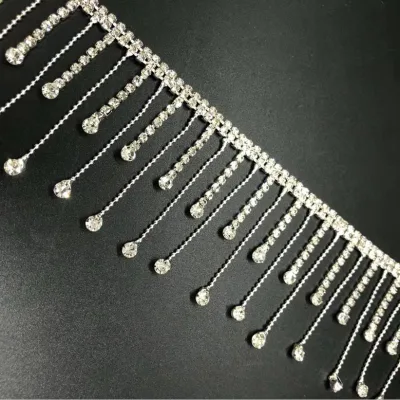
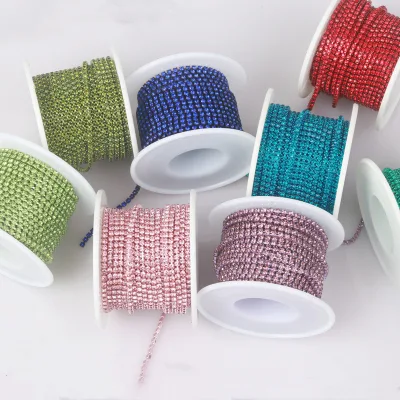
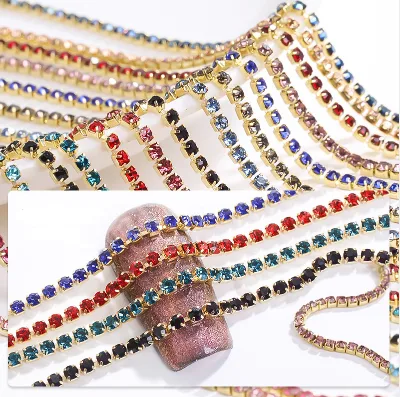


Halloween Crystal Tassel Drop Pearl Multilayer Clavicle Chain for Necklace Accessories
$1.75 - $1.98
MOQ: 100 Pieces


Crystal Rhinestone Banding Claw Ribbon Cup Chain for Clothing Accessories
$0.39 - $0.72
MOQ: 100 Pieces
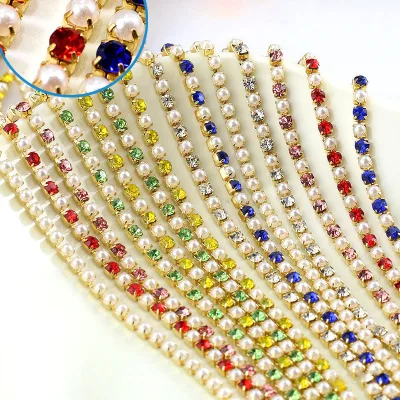
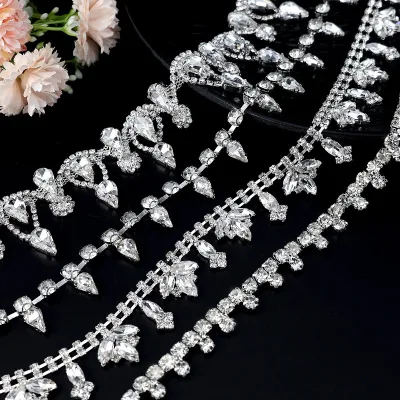


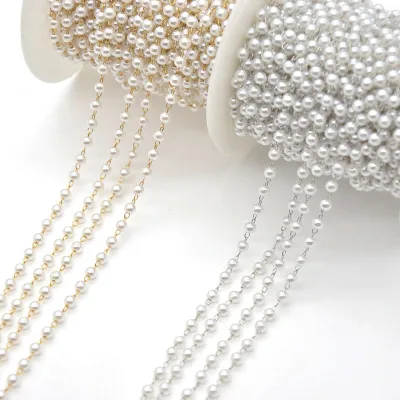
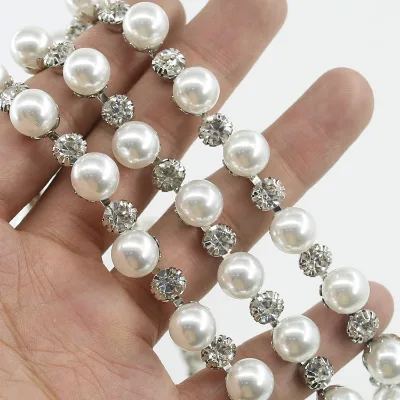
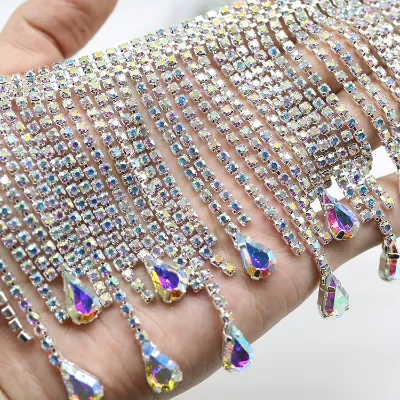


Comprehensive Sourcing Guide
Strategic Sourcing Guide for Sew-On Crystal Pearl Claw Chains
Understanding Product Variants and Technical Specifications
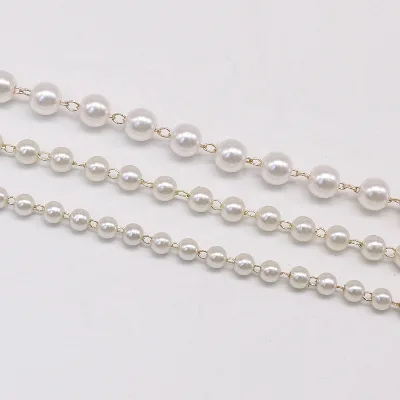
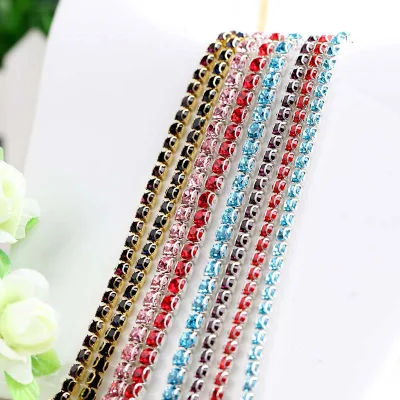
When sourcing sew-on crystal pearl claw chains, buyers must first distinguish between the specific configurations available in the market, as the term "claw chain" often refers to distinct structural designs. The supplied product data reveals a significant divergence in material composition and construction methods. One primary variant is constructed from crystal rhinestones set into a copper chain, specifically described as a "cup chain rhinestone." This type typically features a round shape with 12 facets, designed to maximize light reflection. The dimensions for these loose rhinestones vary, with common sizes including SS6 (2mm), SS8 (2.5mm), and SS12 (3mm). The color palette for these copper-based chains is extensive, ranging from specific numeric codes like 02 through 19, indicating a wide array of available hues.
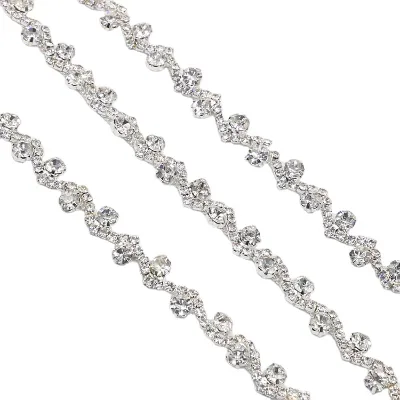
In contrast, another distinct category identified in the market data consists of "rhinestone chains" made from crystal material with a flatback style. These are explicitly noted as non-hot fix, meaning they are designed for sewing rather than heat application. The model numbers for these items, such as 351865 and YWJCCHM-120, suggest specialized manufacturing lines. A critical technical observation is the variation in packaging and batch specifications. Some batches are packaged in compact 5x5x5 cm units with a gross weight of 0.100 kg, while others utilize larger 10x5x8 cm packaging weighing up to 0.600 kg. The "crystal pearl claw chain" keyword often implies a hybrid or specific aesthetic, but the available data confirms that the market offers both copper claw chains and glass or crystal flatback chains. Buyers must verify whether the specific "pearl" aspect refers to the stone type or a specific finish, as the provided facts list "Crystal" and "Glass" as primary materials, with colors ranging from "copper claw" and "Iron Claw" to various colored options.
Material Composition and Structural Integrity
The structural integrity of sew-on chains is heavily dependent on the material composition of both the stones and the connecting chain. The data indicates two primary material profiles: "crystal rhinestone+copper chain" and "Glass." The copper chain variant is often associated with a "copper claw" or "Iron Claw" finish, which suggests a metallic setting that holds the stones in place. This construction is typical for "cup chain" styles where the stones are set into a metal framework. The "Glass" material variant, often linked to model numbers like THR3616, offers a different aesthetic and durability profile. Glass rhinestones are generally more affordable but may have different refractive properties compared to crystal.
Buyers must pay close attention to the "Technics" attribute, which is listed as "Sew-On" for the flatback variants. This confirms that the product is intended for needle-and-thread application rather than adhesive bonding. The "Hot Fix" attribute is explicitly marked as "non hot fix" for certain models, reinforcing the necessity of sewing. The "Shape" is predominantly "Round" with 12 facets, a standard configuration for maximizing sparkle. However, some listings describe the shape as "Other," which may indicate irregular cuts or specialized designs not captured by standard facet counts. The "Type" is further categorized as "handmade Jewelry" or "DIY Jewelry," suggesting that these chains are often used in custom fabrication rather than mass-produced, pre-assembled garments. Understanding these material distinctions is vital for ensuring the final product meets the desired aesthetic and durability requirements.
Compliance, Certification, and Quality Verification
In the realm of B2B procurement for decorative chains, compliance and certification are critical, yet the provided data presents a nuanced picture. The only standard explicitly mentioned in the context is "ISO 27001:2022," which is a data security standard rather than a product quality or material safety standard. This suggests that while a supplier may have robust data protection protocols, this specific certification does not verify the physical safety or material composition of the rhinestone chains. Buyers should not assume that the presence of this standard implies compliance with textile safety regulations, lead content limits, or heavy metal restrictions.
Instead, buyers must verify specific material safety certifications independently. For products containing "Crystal" or "Glass" and "Copper," it is essential to confirm that the materials comply with international standards such as REACH (Registration, Evaluation, Authorization and Restriction of Chemicals) in Europe or CPSIA (Consumer Product Safety Improvement Act) in the United States, particularly regarding lead and cadmium content. The "Feature" attribute lists "Eco-Friendly," which is a marketing claim that requires substantiation. Buyers should request third-party test reports to validate claims regarding the absence of hazardous substances. Additionally, the "Place of Origin" is listed as "Zhejiang, China," a major manufacturing hub. While this region has a mature supply chain, buyers must ensure that the specific factory adheres to local and international environmental and labor standards. The "Customized design" and "Customization: Available" attributes indicate that the supplier can modify products, but any customizations must also undergo the same rigorous quality and compliance checks as standard items.
Cost Drivers and Pricing Dynamics
The pricing of sew-on crystal pearl claw chains is influenced by several distinct factors, including material costs, order volume, and customization requirements. The observed price range in the market spans from $0.02 to $18.92 USD, a wide variance that reflects differences in material quality, stone size, and order quantity. The "Selling Units" are typically sold in multiples of 10 or 36, which directly impacts the unit cost. For instance, purchasing in multiples of 10 items or 10 yards often yields a lower per-unit price compared to smaller quantities.
The "MOQ" (Minimum Order Quantity) is a significant cost driver, with observed ranges from 1 to 3000 units. Specific listings show MOQs of 10 yards, 100 yards, and 72 meters. Higher MOQs generally correlate with lower unit prices, but they also increase the upfront capital requirement and inventory risk for the buyer. The "Gross weight per batch" varies from 0.100 kg to 0.600 kg, affecting shipping costs. Heavier batches, such as those weighing 0.600 kg, may incur higher freight charges, which should be factored into the total landed cost. Furthermore, the "Delivery time" of 2-15 days and the "7 days sample order lead time" support indicate that while production can be relatively quick, rush orders or custom designs may extend these timelines. The "Packing" attribute, which can be "as your request" or fixed at "10 yards/roll," also influences costs, as custom packaging solutions often carry additional fees.
Typical Applications and Usage Scenarios
The versatility of sew-on crystal pearl claw chains makes them suitable for a broad spectrum of applications. The "Usage" attribute explicitly lists "Bags, Garment, Shoes," highlighting their primary role in fashion accessories and apparel. These chains are particularly effective for embellishing handbags, where the "cup chain" or "claw" design can add a luxurious, dangling effect. In the garment sector, they are used for decorative trim on dresses, jackets, and evening wear, often sewn in patterns or along hems to create a shimmering border. The "Shoes" application suggests their use on heels, sandals, or boots, where the lightweight nature of the "crystal" or "glass" material ensures comfort without adding excessive weight.
Beyond standard apparel, the "Type" classification as "handmade Jewelry" and "DIY Jewelry" indicates a strong presence in the craft and custom jewelry market. Designers utilize these chains to create necklaces, bracelets, and earrings, leveraging the "Round" shape and "12 facets" to create intricate designs. The "Customized design: Yes" attribute supports the use of these chains in bespoke projects where unique patterns or specific color combinations are required. The "Color" options, ranging from "copper claw" to various numeric codes, allow for precise color matching with existing collections. The "Eco-Friendly" feature may also appeal to brands targeting sustainability-conscious consumers, provided the claim is verified. The ability to sew these chains directly onto fabric makes them ideal for high-end customization where adhesive methods might fail or look unsightly.
Supplier Evaluation and Procurement Strategy
Evaluating suppliers for sew-on crystal pearl claw chains requires a multi-faceted approach that goes beyond price comparison. The "Place of Origin" being "Zhejiang, China" is a common starting point, but buyers must verify the specific capabilities of the factory. The presence of "Customized design" and "Customization: Available" suggests that the supplier has in-house design capabilities, which is a positive indicator for flexibility. However, buyers should request samples to verify the "Technics" of the "Sew-On" application. The "non hot fix" attribute confirms the sewing requirement, but the quality of the stitching holes or the strength of the chain links must be tested to ensure they do not tear the fabric during application.
The "Model Number" variations, such as 351865, 811081829693, and YWJCCHM-120, indicate a diverse product line. Buyers should ensure that the specific model they select matches their technical requirements, particularly regarding size and material. The "Brand Name" "JC crystal" is listed, but buyers should not rely solely on brand reputation without verifying the supplier's track record. The "Lead time" of 2-15 days and the support for "7 days sample order lead time" are positive indicators of responsiveness, but buyers must confirm these timelines for custom orders, which may take longer. The "Packing" details, such as "10 yards/roll" or "3.6 meters per branch," should be confirmed to ensure compatibility with the buyer's logistics and storage systems. Finally, the "Selling Units" being multiples of 10 or 36 must be factored into the procurement plan to avoid overstocking or under-ordering.
Long-Term Procurement and Quality Assurance
For long-term procurement, establishing a robust quality assurance protocol is essential. The "Gross weight per batch" and "Package size per batch" variations highlight the need for consistent packaging standards. Buyers should request a standardized packing protocol to ensure that the "10 yards/roll" or "3.6 meters per branch" specifications are met consistently across all shipments. The "Feature: Eco-Friendly" claim requires ongoing verification, as material sourcing can change over time. Buyers should include clauses in their contracts that mandate periodic third-party testing for material safety and environmental compliance.
The "Customized design" capability offers a strategic advantage for long-term partnerships, allowing for product differentiation. However, this also introduces complexity in quality control. Buyers must ensure that the "Sew-On" technique remains consistent across custom batches, as variations in the sewing hole placement or chain strength can affect the final product's durability. The "Delivery time" of 2-15 days is relatively short, but buyers should build buffer time into their supply chain planning to account for potential delays, especially during peak seasons. The "MOQ" flexibility, ranging from 1 to 3000 units, allows for scalable ordering, but buyers should negotiate volume discounts as their order quantities increase. Ultimately, successful long-term procurement relies on a partnership with a supplier who can maintain consistent quality, adhere to compliance standards, and adapt to the evolving needs of the buyer's product line.
FAQs
What material is used for sew-on crystal pearl claw chains?
The chains are made from crystal rhinestones combined with a copper chain or glass material. Some variants use crystal for the stones while others specify glass as the primary component for the decorative elements.
How are these chains attached to garments or accessories?
These chains are designed for a sew-on application and are explicitly non-hot fix. Buyers must use needle and thread to attach them to bags, garments, or shoes rather than using heat or adhesive methods.
Which sizes are available for the loose rhinestones in the chains?
Common sizes include SS6 measuring 2mm, SS8 measuring 2.5mm, and SS12 measuring 3mm. Specific models may also list a standard size of 1 yard or SS6 2mm depending on the manufacturer configuration.
Can I request a customized design for these rhinestone chains?
Yes, customized designs are available for these products. Suppliers indicate that they can accommodate specific requests, allowing buyers to tailor the chains for unique jewelry or fashion applications.
What is the minimum order quantity for purchasing these chains?
The minimum order quantity varies by listing, with observed values of 10 yards, 100 yards, or 72 meters. Some suppliers may accept orders starting from 1 unit, but multiples of 10 or 36 are common selling units.
How long does it take to receive a sample order?
A sample order lead time of 7 days is supported by the supplier. The general delivery time for orders ranges from 2 to 15 days depending on the specific production schedule and customization requirements.