Source Silk Screen Printing Drumsticks for bands, studios, and schools
Find 30 listings for Silk Screen Printing Drumsticks from suppliers in China. Buyers can compare model numbers, materials, colors, and MOQs to select the right percussion accessories for their needs.
Key considerations
Products List




Comprehensive Sourcing Guide
Strategic Sourcing Guide for Silk Screen Printing Drumsticks
The global market for percussion accessories has seen a steady evolution, with drumsticks transitioning from purely functional tools to customizable branding assets. For procurement professionals seeking Silk Screen Printing Drumsticks, the sourcing landscape requires a nuanced understanding of material compatibility, printing limitations, and supply chain logistics. This guide synthesizes observed market data and technical realities to provide a disciplined framework for evaluating suppliers and products. The focus remains on evidence-based attributes, ensuring that procurement decisions are grounded in verifiable product characteristics rather than speculative marketing claims.
Material Composition and Printing Feasibility
The foundation of any successful drumstick procurement lies in the selection of the correct raw material. The observed market data indicates a distinct divergence in material choices, ranging from wood to plastics and generic other materials. For buyers specifically targeting silk screen printing, the material choice is the primary determinant of print quality and durability.
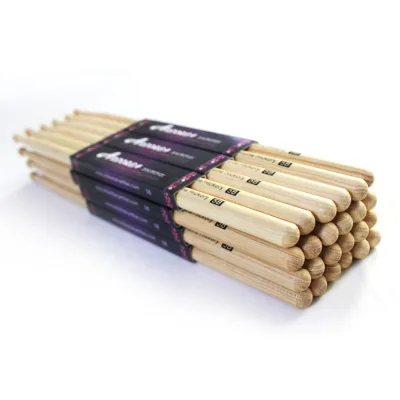
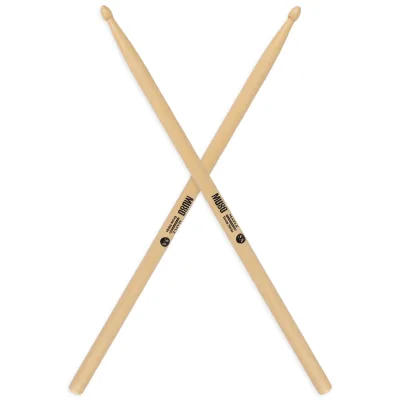
Wooden drumsticks, often sourced from regions like Hebei, China, present a traditional canvas for branding. The natural grain and porous surface of wood can accept ink well, provided the surface is properly prepared. However, the "Natural Wood Color" observed in several listings suggests that the ink must be opaque enough to cover the grain or applied in a way that complements it. Conversely, listings indicating Plastics as the material, often originating from Zhejiang, China, offer a smoother, non-porous surface. Printing on plastic requires specific ink formulations to ensure adhesion, as standard wood inks may peel or chip under the friction of drumming.
The "other" material category, seen in products from Shanxi, China, introduces ambiguity. Procurement teams must verify the exact composition of these items before committing to a silk screen process. If the material is a composite or a synthetic blend, the thermal expansion and surface tension may differ significantly from standard wood or plastic, potentially leading to cracking or ink failure during the printing process. The Model Number 1008 and 0925 listings highlight these material variations, necessitating a pre-production sample test to confirm that the specific batch of material can withstand the heat and pressure of the silk screen curing process.
Technical Specifications and Dimensional Standards
Precision in dimensions is critical for drumsticks, as even minor deviations can affect the player's feel and the instrument's performance. The data reveals a variety of standard sizes, including 5A, 5B, and 7A, which are industry-standard classifications for stick thickness and length. The Model Number MA-9 and MA-9C-7A listings provide specific dimensional data, such as 39*1.3cm and package sizes of 41X2X1 cm or 42X1.5X2 cm.
When sourcing for silk screen printing, the surface area available for the graphic design is a key constraint. The Single package size variations indicate that the physical dimensions of the stick itself may vary slightly between manufacturers. A buyer must ensure that the Model Number selected offers sufficient cylindrical surface area for the intended logo or graphic. For instance, a 5A stick typically has a different diameter than a 7A, directly impacting the curvature of the print.
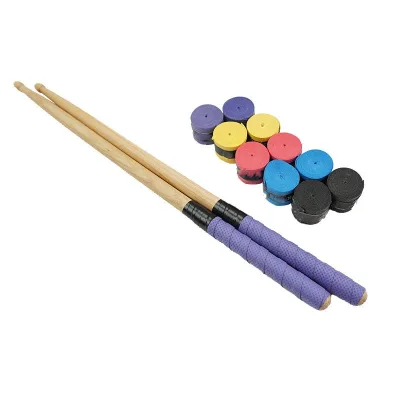
Furthermore, the Weight specifications, ranging from 0.1kg to 92g, must be consistent with the desired playing feel. The Single gross weight of 0.110 kg for certain models suggests that packaging and the stick itself contribute to the total mass. In a bulk order, weight consistency is vital for quality control. If the silk screen printing process adds significant ink layers, it could theoretically alter the weight balance, although this is usually negligible. However, the Feature: Anti-slip attribute observed in some listings suggests that surface treatments are applied, which might interfere with ink adhesion if not properly sequenced in the manufacturing process.
Cost Drivers and Minimum Order Quantities
Understanding the economic structure of drumstick procurement is essential for budgeting and inventory planning. The observed MOQ (Minimum Order Quantity) ranges widely, from as low as 5pcs to as high as 5000. This disparity reflects the difference between small-batch customization and large-scale industrial production.
For silk screen printing, the cost driver is primarily the setup cost of the screens. Each color in a design requires a separate screen and setup time. Therefore, the MOQ is often dictated by the need to amortize these setup costs over a larger volume. Listings showing an MOQ of 5pcs likely represent a high-cost-per-unit scenario, suitable for prototypes or very small promotional runs. In contrast, the MOQ of 20pairs or higher suggests a more efficient production run where the per-unit cost drops significantly.
The Selling Units being listed as "Single item" in some contexts can be misleading for bulk buyers. It is crucial to clarify whether the price per unit includes the cost of the printing setup or if the setup is a separate line item. The Observed listed price range of 0.4-22398 USD indicates a massive variance, likely correlating with the Model Number, material quality, and order volume. A price at the lower end of this spectrum may reflect a basic wooden stick with minimal branding, while the higher end could include premium materials, complex multi-color printing, or specialized packaging. Buyers must verify if the quoted price includes the Logo/graphic design: Silk Screen Printing service or if it is an add-on cost.
Supplier Evaluation and Geographic Origins
The geographic origin of the product is a significant factor in logistics, lead times, and regulatory compliance. The data points to three primary manufacturing hubs: Shanxi, China, Hebei, China, Zhejiang, China, and Guangdong, China. Each region may have different specializations and supply chain efficiencies.
Hebei and Shanxi are noted for wooden products, suggesting a strong tradition in wood processing. Zhejiang and Guangdong appear to be hubs for plastic and mixed-material products, potentially offering more modern manufacturing capabilities for synthetic drumsticks. When evaluating suppliers, buyers should verify the Place of Origin against the claimed material. For example, a supplier claiming to produce wooden drumsticks with silk screen printing should ideally be located in a region with a strong woodworking infrastructure.
The Brand Name is another evaluation criterion. Listings show brands such as yindu and DIDA. While brand reputation is not a guarantee of quality, established brands often have more rigorous internal quality control processes. However, the presence of generic brand names or "other" categories suggests a market filled with OEM (Original Equipment Manufacturer) opportunities. Buyers seeking custom branding should look for suppliers who explicitly list Logo/graphic design: Silk Screen Printing as a core capability, rather than those who only offer pre-printed stock.
Quality Control and Compliance Verification
Quality control for printed drumsticks involves verifying both the structural integrity of the stick and the durability of the print. The Feature: Not easy broken attribute highlights the importance of material strength. A drumstick that breaks easily renders the branding useless. Buyers must request test results or certifications regarding the Material strength, particularly for Plastics which may be prone to cracking under high-impact stress.
Regarding the silk screen printing, the primary quality concern is ink adhesion and resistance to wear. Drumsticks are subjected to constant friction against drumheads and cymbals. The ink must be cured properly to prevent flaking. Buyers should verify that the supplier uses inks compatible with the specific Material (wood or plastic). For wooden sticks, the ink should penetrate the grain; for plastic, it should form a strong bond with the surface.
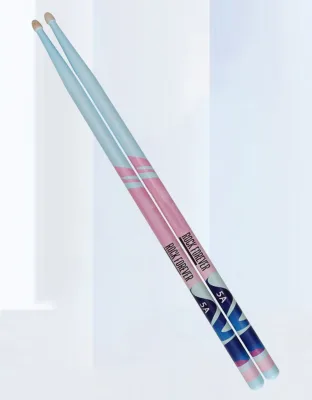
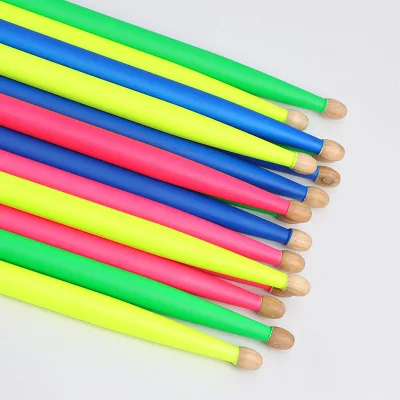
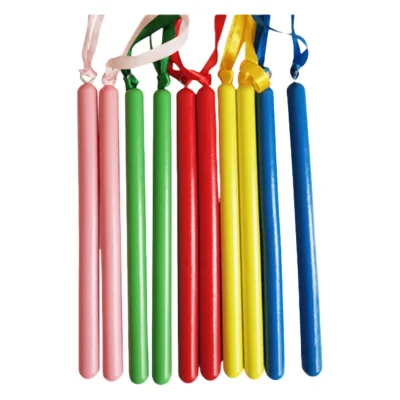
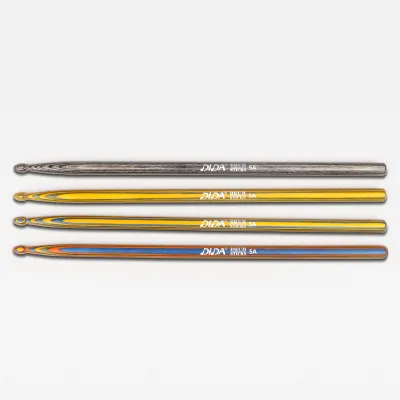
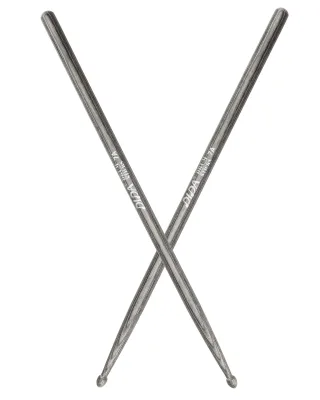
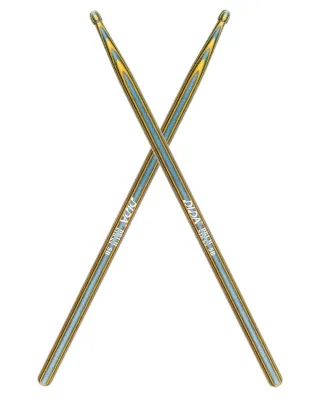
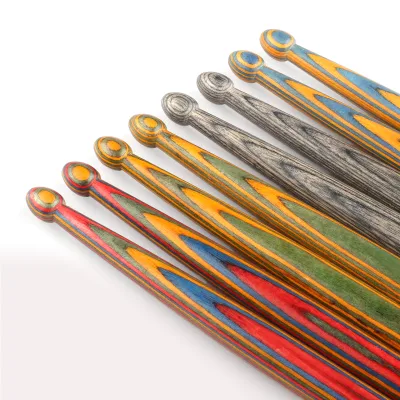
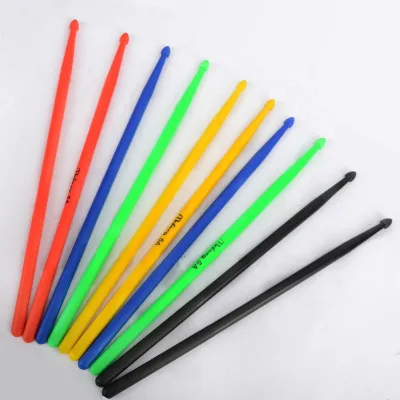
Compliance checks are also necessary. While specific certification standards are not listed in the provided data, buyers should inquire about compliance with international safety standards for musical instruments. This includes checking for non-toxic inks, especially if the drumsticks are intended for use by children or in educational settings. The Color options listed, such as Sky Blue, Yellow, Red, Black, Green, Brown, Pink, Deep Blue, suggest a wide range of aesthetic choices, but the safety of the pigments used in these colors must be verified.
Typical Applications and Market Positioning
The Use for: Drum Percussion Instrument Accessories Parts designation confirms the primary application of these products. However, the Type: Anti-slip Drumstick strap and Type: Drums attributes indicate a broader ecosystem of related products. Drumsticks with silk screen printing are frequently used for promotional purposes, band merchandise, or educational kits.
The Color variety allows for customization to match band logos, school colors, or corporate branding. For instance, a band might order Red/green/blue/black sticks to match their album art, while a school band might choose Sky Blue or Green to align with their uniform. The Model Number variations (e.g., 0910, 0925, 0926) suggest that different models may be tailored for different market segments, from professional touring musicians to beginner students.
The Package types, ranging from Bag to Box packing/OPP bag packing, also influence the application. Box packing is typically reserved for premium or gift sets, while OPP bag packing is standard for bulk retail or wholesale distribution. Buyers should align the packaging choice with the intended market; a high-end promotional event might require Box packing to enhance the perceived value, whereas a bulk order for a music store might prioritize cost-effective OPP bag packing.
Long-Term Procurement Considerations
Sourcing drumsticks with silk screen printing is not a one-time transaction but a relationship that requires long-term planning. The MOQ flexibility is a key consideration for scaling operations. A supplier that can accommodate an initial order of 5pcs for a prototype and then scale to 5000 units for a large campaign offers significant strategic value.
Consistency in Model Number and Size (e.g., 5A, 5B, 7A) is crucial for maintaining brand identity. If a buyer switches suppliers, they must ensure that the new supplier can replicate the exact dimensions and weight specifications. The Single gross weight and Single package size data provided in the listings serve as benchmarks for this consistency.
Finally, the Lead Time and Production Capacity should be discussed explicitly with suppliers. While specific lead times are not provided in the data, the Place of Origin and MOQ can offer clues. Suppliers in Guangdong or Zhejiang may have faster turnaround times due to their proximity to ports and established logistics networks. Buyers should establish clear communication channels to ensure that the silk screen printing process does not become a bottleneck in the supply chain, especially for time-sensitive promotional campaigns.
In conclusion, sourcing Silk Screen Printing Drumsticks requires a careful balance of material science, design constraints, and supply chain management. By focusing on the verified attributes of wood and plastic materials, understanding the implications of MOQ and price ranges, and rigorously evaluating quality control processes, buyers can secure high-quality products that meet their specific branding and performance needs. The diversity of Model Numbers and Color options available in the market provides ample opportunity for customization, provided that the technical and logistical details are managed with precision.
FAQs
What materials are used for Silk Screen Printing Drumsticks?
Drumsticks are typically made from wood, plastics, or other materials. Wood offers a traditional surface for ink adhesion, while plastics require specific inks to prevent peeling under friction. Buyers must verify the exact composition before committing to a silk screen process.
Which drumstick sizes are available for custom printing?
Standard sizes include 5A, 5B, and 7A, with specific dimensions like 39*1.3cm available for certain models. The surface area varies by diameter, directly impacting the curvature and space available for logo application during the printing process.
Can I order Silk Screen Printing Drumsticks with low minimums?
Yes, minimum order quantities range from 5 pieces to 5000 units depending on the supplier. Lower MOQs like 5 pieces are suitable for prototypes but carry higher per-unit costs, while larger orders amortize the screen setup fees more efficiently.
How does the printing process affect drumstick weight?
The ink layer from silk screen printing is usually negligible and does not significantly alter the stick's weight. However, total weight varies by model, with some listing a single gross weight of 0.110 kg, including packaging and the stick itself.
What packaging options exist for printed drumsticks?
Packaging ranges from simple OPP bags to box packing depending on the intended market. Box packing is often used for premium sets, while OPP bags are standard for bulk retail or wholesale distribution to keep costs down.
Which colors are available for custom drumstick branding?
Available colors include Sky Blue, Yellow, Red, Black, Green, Brown, Pink, and Deep Blue. Buyers should verify that the pigments used are non-toxic, especially for educational settings, to ensure compliance with safety standards.
Where are Silk Screen Printing Drumsticks manufactured?
Manufacturing hubs include Shanxi, Hebei, Zhejiang, and Guangdong in China. Hebei and Shanxi often specialize in wood, while Zhejiang and Guangdong are hubs for plastic and mixed-material products, affecting logistics and supply chain efficiency.