Source Water Drop Padel Paddle for Training Competition Fitness
Compare 30 verified listings for Water Drop Padel Paddle equipment designed for training, competition, and fitness applications. Buyers can review specifications like LED lighting, tempered glass protection, and customizable sizes from manufacturers in Hebei, China.
Key considerations
Products List


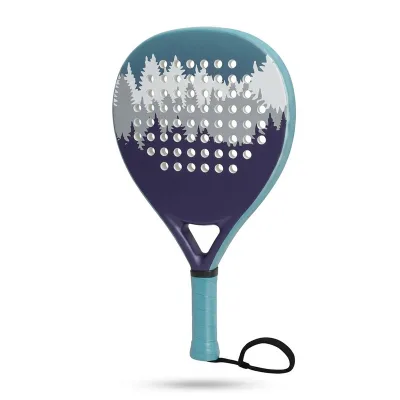


Customized Sweat and Dry Absorption Paddle Overgrip in Bulk Overgrip Padel
$0.22 - $0.25
MOQ: 500 pieces


Comprehensive Sourcing Guide
Strategic Sourcing Guide for Water Drop Padel Paddle Equipment
The global market for padel tennis equipment has expanded significantly, driven by the sport's rapid adoption in Europe, Latin America, and increasingly in Asia. When sourcing "Water Drop Padel Paddle" equipment, buyers must navigate a complex landscape of technical specifications, material compositions, and manufacturing capabilities. This guide provides a disciplined approach to procurement, focusing on evidence-based evaluation of products that align with professional training and competition standards. The core of this sourcing strategy involves understanding the intersection of paddle design, court infrastructure, and the specific manufacturing attributes observed in the current supply chain.
Technical Specifications and Material Composition
When evaluating paddle tennis equipment, the technical specifications are the primary determinant of performance and durability. The supply chain data indicates a diverse range of product models, such as the Aohe 06 and various LDK series identifiers, which suggest that manufacturers offer distinct configurations for different market segments. A critical observation in the current market is the variation in material composition. While some products utilize Galvanized Pipe for structural components, others specify PP (Polypropylene) for specific functional parts. Buyers must verify the material grade for the paddle face and core, as these directly influence the "water drop" aerodynamic profile and the overall weight distribution.
The structural integrity of the equipment is often linked to the thickness of the materials used. Observed specifications include a 12mm thickness for tempered glass components and a 1001003mm column size for supporting structures. For the paddles themselves, the "water drop" shape implies a specific aerodynamic design intended to reduce drag. However, without specific test data on aerodynamic coefficients in the supplied facts, buyers should request detailed engineering drawings that confirm the dimensions of the handle, the face profile, and the edge guard. The presence of a 200W LED lighting system in associated court infrastructure suggests that the equipment is often sourced as part of a larger installation package, where the paddle must be compatible with high-visibility environments.
Furthermore, the customization of the product model is a key technical variable. The data confirms that product standards are often "customized" or "standard or customize," allowing for tailored solutions. This flexibility is essential for buyers seeking specific performance characteristics. The artificial turf height, observed at 10mm and 12mm, also plays a role in the playing experience, as the interaction between the paddle and the surface affects ball bounce and player movement. Buyers should ensure that the paddle's grip size and weight are compatible with the specific turf height and court surface conditions they intend to use.
Compliance, Certification, and Safety Standards
In the B2B procurement of sports equipment, compliance with safety and quality standards is non-negotiable. The supplied facts mention that the product standard can be "customized" or adhere to "standard" specifications, but they do not explicitly list third-party certifications such as ISO or ASTM. Consequently, buyers must treat the "standard" designation as a variable that requires active verification. The procurement process should include a rigorous request for documentation regarding the chemical composition of the materials, particularly the PP and galvanized steel components, to ensure they meet international safety regulations for sports equipment.
Safety is further emphasized by the packaging specifications. The observed "Safety 4 Layer Package," which includes a first layer of EPE (Expanded Polyethylene) and a second layer of weaving sack, indicates a manufacturer's commitment to protecting the product during transit. This packaging method is critical for preventing damage to the delicate aerodynamic surfaces of the paddle. Buyers should verify that the packaging protocol is consistent across all orders and that the "Carton+Wooden Case" option is available for bulk shipments to ensure structural integrity during long-distance freight.
Additionally, the "Wind Resistance Level" of 80km/H observed in the structural data highlights the importance of environmental durability. While this specification applies to the court fencing, it reflects the overall robustness expected from the supplier's manufacturing ecosystem. Buyers should inquire whether the paddles undergo similar stress testing for durability against environmental factors, including humidity and temperature fluctuations, which are common in both indoor and outdoor applications. The "Waterproof" function listed for certain products suggests that moisture resistance is a standard feature, but buyers must confirm the specific testing protocols used to validate this claim.
Cost Drivers and Pricing Structures
The pricing landscape for padel equipment is influenced by several key drivers, including material costs, customization levels, and logistics. The observed price range in the market spans from $0.22 to $14,000, a variance that reflects the difference between individual components and complete court systems. For the specific "Water Drop Padel Paddle," the cost will be heavily dependent on the material quality, the complexity of the mold, and the level of customization requested. The "Factory Direct Price" attribute suggests that buyers can access competitive rates by engaging directly with manufacturers, bypassing intermediaries.
However, the minimum order quantity (MOQ) is a significant factor in total cost of ownership. The observed MOQ range of 1 to 10,000 units indicates that suppliers cater to both small-scale testers and large-scale distributors. For buyers seeking to minimize initial capital expenditure, an MOQ of 1 set allows for product validation without significant financial risk. Conversely, larger orders may unlock volume discounts, but the buyer must consider the storage and inventory costs associated with high-volume purchases.
Logistics also play a crucial role in the final cost. The "Sea Freight" option and the "30 Days" or "20-30 Days" lead times indicate that international shipping is a primary mode of transport. Buyers should factor in the cost of freight, insurance, and potential customs duties when calculating the landed cost of the paddles. The "Safety 4 Layer Package" adds to the shipping weight and volume, which can impact freight charges. Therefore, a comprehensive cost analysis must include not only the unit price but also the total logistics expenses and the potential for economies of scale based on the chosen MOQ.
Typical Applications and Usage Scenarios
The versatility of the "Water Drop Padel Paddle" is evident in its wide range of applications. The data indicates that these products are suitable for "Training," "Competition," "Entertainment," "Education," and "Fitness." This broad applicability makes them ideal for a variety of facilities, from professional sports academies to community centers and schools. The "Usage" attributes of "Outdoor" and "Indoor" confirm that the equipment is designed to perform in diverse environments, provided that the specific environmental conditions are within the product's operational limits.
The "Training Project" of "Flexibility" and "Training Targets" such as "Strength Training" and "Physical Training" suggest that the paddles are not just for recreational play but are integral to structured athletic development programs. The "Age Group" specification of "Children" and "Adult" further underscores the need for a product line that offers varying sizes and weights to accommodate different user demographics. For buyers sourcing for educational institutions, the "Education" and "Training" applications are particularly relevant, as the equipment must be durable enough to withstand frequent use by multiple users.
The "Game" specification of "Tennis" and the "Sports Type" of "National Traditional Sports" highlight the cultural and competitive context in which these paddles are used. In regions where padel is gaining popularity, the equipment must meet the high standards of competitive play. The "Shock Absorption Rate" of greater than 50% is a critical metric for player safety and comfort, reducing the risk of injury during high-impact shots. Buyers should verify that the paddles they source meet or exceed this shock absorption threshold to ensure a positive user experience.
Supplier Evaluation and Verification
Selecting the right supplier is a critical step in the procurement process. The data reveals that suppliers in Hebei, China, are a primary source of these products, with capabilities in OEM (Original Equipment Manufacturer) and ODM (Original Design Manufacturer) services. The "OEM or ODM: Yes" and "Both We Can" attributes indicate that suppliers are flexible in terms of branding and design customization. Buyers should evaluate suppliers based on their ability to deliver customized solutions that meet specific technical requirements, such as the "Customized Logo" and "Color: as The Photo or Customized" options.
The "Delivery Time" of 30 days or 7-15 days suggests that lead times can vary significantly based on order complexity and production capacity. Buyers should establish clear communication channels with suppliers to confirm lead times and ensure that production schedules align with their project timelines. The "Installation Ways: Fixed" attribute indicates that the supplier may also provide guidance or services for the installation of the equipment, which is a valuable consideration for buyers who lack in-house technical expertise.
When evaluating suppliers, buyers should also assess their quality control processes. The "Safety 4 Layer Package" and the use of "Galvanized Pipe" and "PP" materials suggest a focus on durability and safety. However, buyers should request evidence of these quality control measures, such as inspection reports or quality assurance certificates, to ensure consistency across batches. The "Customized" nature of the product standard means that each order may have unique requirements, so the supplier's ability to maintain quality standards across customized orders is paramount.
Quality Control and Long-Term Procurement Considerations
Ensuring long-term value in procurement requires a focus on quality control and sustainability. The "Shock Absorption Rate" and "Waterproof" features are key indicators of product quality, but buyers should also consider the longevity of the materials used. The "Galvanized Pipe" and "Tempered Glass" components are known for their durability, but the specific grades and treatments used by the supplier will determine the actual lifespan of the equipment. Buyers should request detailed material specifications and inquire about the warranty periods offered by the supplier.
The "Customized Logo" and "Color" options allow for branding opportunities, which can enhance the value proposition for end-users. However, the application of logos and colors must be done in a way that does not compromise the structural integrity or performance of the paddle. Buyers should verify the printing and application methods used by the supplier to ensure that the branding is durable and resistant to wear and tear.
Long-term procurement considerations also include the scalability of the supply chain. As the demand for padel equipment grows, buyers need to ensure that their suppliers can scale production to meet increasing order volumes without compromising quality. The "MOQ" range of 1 to 10,000 units suggests that suppliers are capable of handling both small and large orders, but buyers should confirm the supplier's production capacity and their ability to manage supply chain disruptions.
Finally, the "Lead Time" of 20-30 days or 7-15 days should be factored into the long-term planning of procurement strategies. Buyers should maintain a buffer in their schedules to account for potential delays and ensure that they have sufficient stock to meet demand. By focusing on quality control, material durability, and supply chain reliability, buyers can secure a steady supply of high-quality "Water Drop Padel Paddle" equipment that meets the needs of their customers and supports the growth of the sport.
Comparison of Product Attributes
| Attribute | Observation 1 | Observation 2 | Observation 3 |
|---|---|---|---|
| Product Model | Aohe 06 | LDK30610 | LDK20021 |
| Material | Galvanized Pipe | PP | Standard/Customized |
| Size | 20m*10m | Standard or Customize | 30.1*20.8m or customize |
| Packing | Carton+Wooden Case | Safety 4 Layer Package | Safety 4 Layer Package |
| Lead Time | 30 Days | 20-30 Days | 7-15 Days |
| MOQ | 1 Set | 1 Set | 1 Set |
| Origin | Hebei, China | China | China |
| Usage | Training, Competition | Outdoor, Indoor | Entertainment, Education |
This table summarizes the key variations observed in the market, highlighting the diversity in product models, materials, and logistical parameters. Buyers should use this comparison to identify the specific attributes that align with their procurement requirements and to facilitate informed decision-making when selecting a supplier.
FAQs
Can I customize the logo on the Water Drop Padel Paddle?
Yes, customized logo availability is confirmed for this product. Buyers can request specific branding to match their business identity without affecting the standard manufacturing process or lead time.
What is the minimum order quantity for these paddles?
The minimum order quantity is 1 set, allowing for small-scale testing. This low threshold supports buyers who need to validate product quality before committing to larger bulk orders.
How long does delivery take for custom orders?
Delivery typically requires 20 to 30 days for standard or customized production. This lead time accounts for manufacturing, quality checks, and preparation for sea freight shipping from China.
Which materials are used for the paddle structure?
The structure utilizes galvanized pipe and PP materials for durability. These components ensure the equipment meets requirements for both indoor and outdoor usage while maintaining structural integrity.
What packaging options are available for shipping?
Products are shipped using a Safety 4 Layer Package including EPE and weaving sacks. Carton and wooden case options are also available for bulk shipments to ensure protection during transit.
Can the product be used for both training and competition?
Yes, the product is designed for training, competition, and entertainment purposes. It supports various age groups and training targets including strength and physical training for both children and adults.