Source Waterproof Custom Paper Stickers for Shipping, Food, and Retail
Find 30 options for Waterproof Custom Paper Stickers designed for shipping labels, food packaging, and retail promotions. Compare specifications including adhesive strength, lamination finishes, and printing types from verified suppliers in China.
Key considerations
Products List


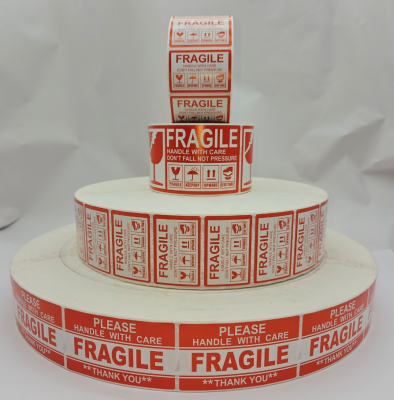


Customized Self-Adhesive Waterproof Stickers Customized Printed Stickers
$0.06 - $0.18
MOQ: 500 Pieces


Custom Sticker Roll Logo Sticker Stickers Packing Waterproof Label Sticker
$0.10 - $0.29
MOQ: 1000 pieces

Self Adhesive Coated Paper Labels Stickers Waterproof OEM Packaging Stickers
$0.10 - $0.27
MOQ: 1000 pieces


The New Label Custom Sticker Adhesive Sticker Waterproof Textured Paper Sticker
$0.02 - $0.05
MOQ: 1000 Pieces


Comprehensive Sourcing Guide
Strategic Sourcing Guide for Waterproof Custom Paper Stickers
Navigating the global market for Waterproof Custom Paper Stickers requires a nuanced understanding of material science, printing technologies, and supply chain logistics. While the term "paper" suggests a traditional, porous substrate, the specific requirement for "waterproof" functionality introduces a critical layer of technical complexity. In the current B2B landscape, buyers must distinguish between water-resistant paper coatings and fully waterproof synthetic alternatives. This guide synthesizes available market data to provide a disciplined framework for procurement, ensuring that the final product meets rigorous performance standards without compromising on customization or cost-efficiency.
Material Composition and Waterproofing Mechanisms
The foundation of any successful sticker procurement lies in the material selection. The observed market data indicates a diverse range of materials, including both paper and vinyl. For a buyer specifically requesting "Waterproof Custom Paper Stickers," it is essential to verify the specific treatment applied to the paper substrate. Standard paper is inherently absorbent; therefore, achieving waterproof status typically involves a specialized lamination process or a synthetic coating.
The supplied facts highlight that surface finishing options include "Glossy or Matt Lamination." This lamination is the primary mechanism for rendering paper waterproof. The process involves bonding a thin, protective plastic film to the paper surface, which creates a barrier against moisture, oils, and abrasion. Buyers must confirm that the lamination is applied to both sides of the sticker to prevent water ingress from the edges, which is a common failure point in outdoor applications.
Furthermore, the market data reveals a significant presence of "Vinyl" as a material option. While the core keyword specifies paper, a prudent procurement strategy involves comparing the cost-benefit ratio of high-quality laminated paper versus self-adhesive vinyl. Vinyl is intrinsically waterproof and durable, often eliminating the need for additional lamination. However, if the project mandate strictly requires a paper aesthetic for sustainability or branding reasons, the lamination quality becomes the single most critical variable. The observed feature set includes "Waterproof," "Heat-resistant," "Oil proof," and "Anti-ultraviolet," suggesting that high-performance laminates are available to meet these specific environmental challenges.
Printing Technologies and Customization Capabilities
The visual fidelity and durability of the sticker design are dictated by the printing technology employed. The available data lists a wide array of printing types, including "Offset Printing," "Transfer Printing," "Letterpress Printing," and various digital methods like "UV digital printing" and "CMYK offset print." For custom orders, the choice of technology depends on the order volume and the complexity of the design.
Offset printing is frequently cited as a standard for high-volume runs, offering consistent color reproduction and cost-effectiveness for large quantities. However, the data also mentions "Laser Printing," "Die cutting printing," and "Thermal transfer printing," which are often preferred for short runs or highly specialized applications. The ability to support "Customized Size" and "Custom Shapes" is a universal feature in this sector, allowing for unique die-cutting that enhances brand visibility.
When evaluating suppliers, buyers should verify the specific printing handling capabilities. The market offers "cmyk & pantone offset printing," "offset silkscreen printing," and "hot stamping." For waterproof stickers, the ink must be compatible with the lamination process to prevent smudging or peeling. The data notes that the product can be "writable," which implies the use of specific ink formulations that do not interfere with the surface coating. Additionally, features like "Barcode" and "Anti-counterfeit" suggest that suppliers possess the technical capacity for high-resolution printing required for security and inventory management applications.
Compliance, Standards, and Quality Verification
In the realm of B2B procurement, compliance is not merely a formality but a risk mitigation strategy. The supplied context mentions "ISO 9001:2000" and "ISO 14001:2004" as background standards, though these should be treated as general industry references rather than guaranteed certifications for every listed product. Buyers must explicitly request current certification documents from potential suppliers, as standards evolve and older certifications may not reflect current manufacturing practices.
The "prod_standard" field indicates that "Any custom size support" is available, alongside specific packing standards like "100pcs into a individual PP bag, 1000pcs into a cart." This highlights the importance of verifying packaging standards to ensure the stickers arrive in pristine condition. The "Packing" attribute lists "Plastic Bag + Carton" and "Box, Wooden Case," suggesting that for international shipping, robust packaging is essential to prevent moisture damage during transit.
Buyers should also verify the "prod_origin," which is listed as "China," specifically "Guangdong, China." This region is a major hub for printing and packaging, but it necessitates rigorous quality control protocols. The "Leading Time" is observed to be "5-7 Work Days," which is a critical factor for supply chain planning. However, this lead time should be confirmed for each specific order, as customizations like complex die-cuts or special lamination can extend production schedules.
Cost Drivers and Economic Considerations
The pricing landscape for Waterproof Custom Paper Stickers is influenced by several dynamic factors. The observed price range in the market is "0-4.53" USD, but this wide range reflects the variability in material quality, order volume, and customization complexity. The "MOQ range" spans from "1" to "50,000," indicating that the market caters to both prototyping startups and large-scale industrial buyers.
Key cost drivers include the type of lamination used. Glossy lamination is generally less expensive than matte or specialized finishes, but the latter may be required for specific branding aesthetics or durability needs. The "Strong Adhesive" feature is another cost variable; high-performance adhesives that withstand extreme temperatures or humidity often command a premium. Additionally, the "Customization" availability allows for bespoke solutions, which inevitably increases the unit cost compared to standard stock items.
Buyers must also consider the "Sample" availability. The data confirms that samples are "Availble," which is a crucial step in the procurement process. Requesting samples allows for real-world testing of the waterproof claims before committing to a large order. The cost of samples should be factored into the total procurement budget, as they serve as the primary quality assurance tool.
Typical Applications and Industry Use Cases
The versatility of Waterproof Custom Paper Stickers is evident in the diverse "Industry Application" and "Usage" categories listed in the market data. These include "Shipping Labels," "Custom Sticker," "Price Tags," "Logist," "Bottled Beverage," "Food," "Promotion," "Supermarket," "Grocery," and "Exhibition."
For the logistics and shipping sector, the "Waterproof" and "Strong Adhesive" features are non-negotiable. Stickers used on shipping containers or pallets must withstand exposure to rain, humidity, and rough handling. The "Barcode" feature is particularly relevant here, ensuring that automated scanning systems can read the labels even in adverse weather conditions.
In the food and beverage industry, the "Food" and "Bottled Beverage" applications require materials that are not only waterproof but also compliant with food safety regulations. While specific food-grade certifications are not explicitly detailed in the provided facts, buyers must verify that the inks and adhesives used are safe for indirect food contact. The "Eco-Friendly" feature mentioned in the data suggests that some suppliers offer sustainable options, which is increasingly important for brands targeting environmentally conscious consumers.
Supplier Evaluation and Quality Control Protocols
Selecting the right supplier requires a systematic evaluation process. The "Brand Name" "CAIHE Printing" is mentioned in the data, but buyers should not limit their search to a single entity. Instead, they should evaluate suppliers based on their technical capabilities, production capacity, and quality assurance processes.
Quality control should begin with the verification of the "Feature" set. Buyers must physically test samples for "Waterproof," "Heat-resistant," and "Oil proof" properties. The "Scratch Off" and "Holographic" features indicate that suppliers can produce complex security and interactive stickers, which requires advanced printing and finishing equipment.
The "Leading Time" of "5-7 Work Days" suggests a relatively agile supply chain, but buyers should establish clear communication channels to manage potential delays. The "Packing" standards, such as "Carton Box" or "Wooden Case," should be agreed upon in the purchase order to ensure that the products are protected during transit. Additionally, the "prod_packing" details, such as "100pcs into a individual PP bag," provide a clear standard for internal organization and inventory management.
Long-Term Procurement and Supply Chain Resilience
Sourcing Waterproof Custom Paper Stickers is not a one-time transaction but a long-term partnership that requires strategic planning. The "Custom Order" acceptance and "Accept" status for customization indicate that suppliers are willing to adapt to changing market needs. However, buyers should establish a framework for continuous improvement and quality monitoring.
Long-term considerations include the scalability of the supplier's production capabilities. With an MOQ range extending to "50,000," suppliers must be able to handle large volume surges without compromising quality. The "Standard" of "Customized" size support ensures that the product can evolve with the brand's packaging requirements.
Furthermore, buyers should monitor the "prod_origin" and "place_of_origin" for geopolitical or logistical risks. Sourcing from "Guangdong, China" offers access to a mature manufacturing ecosystem, but diversifying the supplier base can mitigate risks associated with supply chain disruptions. The "Sample" availability should be leveraged regularly to ensure that the supplier maintains consistent quality over time.
In conclusion, sourcing Waterproof Custom Paper Stickers involves a careful balance of technical specifications, cost management, and supplier reliability. By adhering to the evidence-based guidelines outlined above, buyers can navigate the complexities of this market and secure high-quality products that meet their specific operational needs. The key lies in rigorous verification of material properties, printing capabilities, and quality control measures, ensuring that the final product delivers on the promise of durability and customization.
FAQs
How are Waterproof Custom Paper Stickers made?
Waterproof Custom Paper Stickers are created by applying glossy or matte lamination to the paper substrate. This protective film creates a barrier against moisture, oils, and abrasion, ensuring durability for shipping and beverage applications while maintaining the paper aesthetic.
What printing types are available for these stickers?
Available printing types include offset printing, transfer printing, letterpress printing, and various digital methods like UV digital printing. Buyers can choose from CMYK offset, silkscreen, or hot stamping depending on the order volume and design complexity required for the project.
Can I get custom sizes and shapes for these stickers?
Yes, suppliers support any custom size and custom shapes for Waterproof Custom Paper Stickers. This flexibility allows for unique die-cutting that enhances brand visibility, with standard packing options like individual PP bags or cartons to protect the specific dimensions during transit.
What is the typical lead time for production?
The typical lead time for production is 5 to 7 work days for standard orders. However, this duration may vary based on the complexity of customization, specific lamination requirements, or the volume of the order, so confirmation with the supplier is recommended.
Which adhesive strength is used for these stickers?
These stickers utilize a strong adhesive designed to withstand various environmental conditions. This ensures reliable bonding for applications such as shipping labels, price tags, and bottled beverages, preventing peeling even when exposed to humidity or rough handling during logistics.
Are samples available for testing before bulk orders?
Samples are available for testing before committing to bulk orders. This allows buyers to verify the waterproof claims, adhesive strength, and print quality in real-world conditions, ensuring the product meets specific requirements for food, promotion, or exhibition use cases.
What materials are used for waterproof stickers?
While the core product is paper, vinyl is also a common material option for waterproof stickers. The paper variant achieves water resistance through specialized lamination, whereas vinyl offers intrinsic waterproofing, giving buyers a choice based on their specific durability and sustainability needs.