Source Waterproof Fireproof Inflatable Bouncy House for Park, Market, Amusement Park
Find 30 Waterproof Fireproof Inflatable Bouncy House options from Guangzhou suppliers. Compare sizes, materials, and certifications like CE and EN14960 for use in parks, markets, and amusement parks.
Key considerations
Products List


Customized Color and PVC Inflatable Bouncy Castle Inflatable Bouncy House
$800.00 - $2000.00
MOQ: 1 Pieces


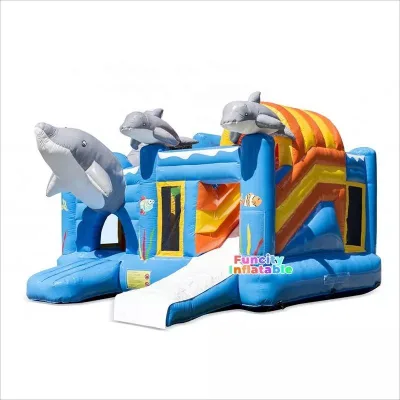


White Wedding Bouncy House Bouncer Inflatable Bounce House Inflatable Bouncy Castle
$700.00 - $720.00
MOQ: 1 Pieces


Commercial Bounce House Commercial Party Inflatable Bouncy House White Bounce Castle
$700.00 - $750.00
MOQ: 1 Pieces


Colorful Inflatable Bouncy Castle Bouncer Mini Inflatable Bounce House with Slide
$378.00 - $450.00
MOQ: 1 Pieces

Portable Fun Party Pink Bouncy Castle Bouncer Jumper Inflatable Bounce House
$546.00 - $599.00
MOQ: 1 Pieces

Jungle Bouncer Combo Bouncy Castle Inflatable Bounce House with Slide
$1798.00 - $1889.00
MOQ: 1 Pieces


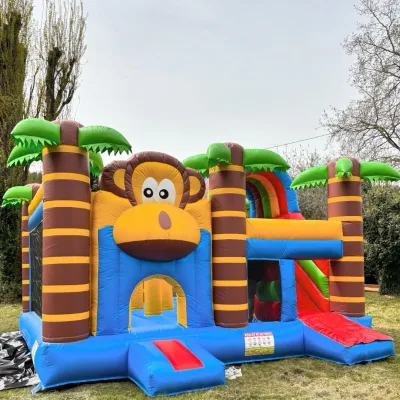

Halloween Inflatable Pumpkin Bouncer inflatable jumper bouncy house for Sale
$1200.00 - $1500.00
MOQ: 1 Pieces

Inflatables Bouncy Jumping Bouncer Inflatable Jumping Castle Inflatable Bounce House for Sale
$10000.00 - $30000.00
MOQ: 1 Pieces
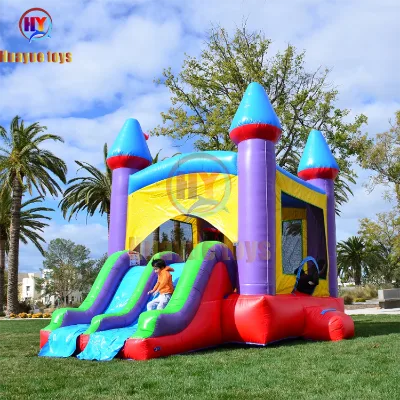

2023 New Outdoor Kids Advertiisng Inflatable Castle Bouncy House for Sale
$600.00 - $1500.00
MOQ: 1 Pieces

2023 New Cheap Commercial Inflatable Castle Bouncer Bouncy House for Sale
$600.00 - $1500.00
MOQ: 1 Pieces


Outdoor Commercial Inflatable Bouncy Castle Bounce House with Slide for Kids
$300.00 - $700.00
MOQ: 1 Pieces
Comprehensive Sourcing Guide
Waterproof Fireproof Inflatable Bouncy House Sourcing Guide
Procuring a waterproof and fireproof inflatable bouncy house requires a rigorous evaluation of material integrity and environmental resistance, as these units are frequently deployed in outdoor settings ranging from community squares to amusement parks. The core challenge lies in distinguishing between products that merely claim durability and those that possess verified specifications for water resistance and flame retardancy. Buyers must prioritize suppliers who explicitly document the fabric thickness and material composition, as these factors directly dictate the unit's ability to withstand rain, humidity, and the high-friction environments typical of commercial play areas.
The sourcing process must also account for the variability in blower inclusion and customization options, which significantly impact the final operational readiness of the equipment. While some listings indicate that blowers are included with repair kits, others specify that the blower is un-included, necessitating a clear definition of the scope of supply before finalizing any purchase order. Understanding these distinctions is critical for budgeting and logistics, as the absence of a blower or the need for custom sizing can alter the lead time and total cost of ownership, particularly when the unit is intended for specific venues like kindergartens or market events.
Product Scope and Observed Listing Signals
The market for inflatable bounce houses presents a wide spectrum of configurations, from standardized models with fixed dimensions to fully customized structures tailored to specific venue requirements. Observed listings reveal that sizes can range from compact 4x4m units to larger structures measuring 6x6x4m or even 5.4x5x3.3m, with many suppliers offering the flexibility to produce custom dimensions to fit unique spatial constraints. This variability means that buyers must clearly define their spatial requirements early in the process, as the "one-size-fits-all" approach is rarely applicable in professional procurement scenarios where venue dimensions are fixed.
Material composition and weight are critical signals that indicate the quality and intended lifespan of the inflatable unit. The supplied data highlights the use of 0.55mm PVC tarpaulin, often sourced from reputable manufacturers like Plato, which serves as a baseline for durability and water resistance. However, the weight of the finished product varies significantly, ranging from 50kg to over 300kg depending on the material thickness and size, which directly influences shipping costs and the logistical complexity of installation. Buyers should verify that the listed weight aligns with the specified material thickness to ensure they are not purchasing a lightweight, less durable version of the product.
Technical Specifications to Verify
Fabric thickness and material grade are the primary technical determinants of a bouncy house's waterproof and fireproof capabilities. A specification of 0.55mm PVC tarpaulin is a common benchmark for commercial-grade units, but buyers must verify that this thickness is consistent across the entire structure, including the floor and walls, to prevent leaks and ensure structural integrity under load. It is essential to confirm that the material is not only waterproof but also treated for flame retardancy, as the "fire-proof" claim in marketing materials must be backed by specific material certifications rather than generic assertions.
The inclusion of accessories and the configuration of the blower system are vital technical considerations that affect the operational safety and efficiency of the unit. While some product listings explicitly state that blowers and repairing kits are included, others note that the blower is un-included, which requires the buyer to source compatible equipment separately. Furthermore, the production time for these units can vary from 8 to 10 days, and the final weight can depend heavily on the chosen material and size, so buyers must ensure that the technical specifications provided in the quotation match the physical reality of the delivered product to avoid installation delays.
Compliance and Safety Documentation
Safety compliance is non-negotiable for inflatable play structures, particularly those intended for use in public spaces like amusement parks, squares, and kindergartens. The EN14960 standard is a recognized benchmark for the safety of inflatable play equipment, and buyers should demand proof of compliance with this standard or equivalent regional regulations. While some listings mention CE and UL certifications, the presence of these marks must be verified against the specific model number and batch, as certifications are often tied to specific production runs rather than the entire product line.
Documentation regarding fire resistance and security guarantees must be explicit and traceable to the specific materials used in the construction. Buyers should request test reports that confirm the fire-proof characteristics of the PVC tarpaulin, ensuring that the material meets the necessary flame retardancy standards for public assembly. Additionally, the "security-guarantee" mentioned in product attributes should be supported by clear warranty terms, such as the 3-year warranty observed in some listings, which provides a contractual basis for addressing defects or safety failures that may arise during the operational life of the unit.
Cost Drivers and Commercial Terms
The final cost of an inflatable bouncy house is driven by a combination of material costs, customization requirements, and logistical expenses. The use of high-grade 0.55mm PVC tarpaulin and the complexity of custom sizing can significantly increase the base price, which is observed to range from $300 to $30,000 depending on the scale and specifications of the unit. Buyers must carefully analyze the trade terms, such as EXW, FOB, CFR, or CIF, to understand who bears the risk and cost during transit, as these terms can drastically alter the total landed cost of the equipment.
Shipping and production timelines are additional cost drivers that require precise planning to avoid budget overruns. Production times can vary between 8 and 10 days, while shipping times by sea can extend to 30-40 days, meaning that lead times must be factored into the procurement schedule well in advance of the intended event or installation date. The choice of shipping method, whether by sea, air, or express, will also impact the cost, with air freight offering speed at a premium and sea freight providing a more economical option for large, heavy units weighing up to 300kg.
Supplier Qualification and Quality Control
Supplier qualification should focus on the manufacturer's ability to deliver consistent quality and adhere to safety standards, rather than just their ability to produce a single unit. Buyers should verify the supplier's origin, with many listings indicating production in Guangzhou or Guangdong, China, and assess their track record in producing units for specific applications like amusement parks or community events. The presence of a brand name, such as Huatong, can be a positive indicator of established manufacturing capabilities, but it should not replace the need for direct verification of the supplier's quality control processes.
Quality control measures must be embedded in the procurement process, starting with the verification of material specifications and ending with the inspection of the final packed product. The packaging method, often described as PVC tarpaulin bags or a combination of PVC bags and cartons, is a critical indicator of how well the supplier protects the unit during transit. Buyers should ensure that the packaging is robust enough to prevent damage to the inflatable structure, especially given the weight and size variations, and that the included repair kits are of sufficient quality to handle minor field repairs.
Long-Term Procurement Checks
Long-term procurement success depends on establishing a clear warranty framework and ensuring the availability of after-sales support for maintenance and repairs. A 3-year warranty, as observed in some listings, provides a significant advantage for buyers looking to minimize long-term operational risks, but the terms of this warranty must be clearly defined regarding what constitutes a defect versus normal wear and tear. Buyers should also verify the availability of spare parts and the supplier's responsiveness to repair requests, as the durability of the unit relies heavily on the ability to quickly address any issues that arise during use.
Regular audits of the supplier's production capabilities and adherence to safety standards are essential for maintaining a reliable supply chain. Buyers should periodically review the supplier's certification status and production times to ensure that they remain consistent with the initial agreement, as changes in these areas can impact the quality and delivery of future orders. By maintaining a proactive approach to supplier management, buyers can ensure that their inflatable bouncy houses remain safe, compliant, and ready for use in high-traffic environments for years to come.
FAQs
What certifications does the inflatable bouncy house have?
The product holds CE and EN14960 certifications for safety compliance. Some listings also reference UL standards, ensuring the inflatable meets international safety requirements for amusement park usage.
How thick is the PVC material used for the bouncer?
The fabric thickness is specified as 0.55mm PVC tarpaulin. This durable material is sourced from Plato and ensures the structure is fire-proof and suitable for heavy commercial use.
Can the size of the inflatable castle be customized?
Yes, the size is fully customizable to meet specific project needs. Standard dimensions include 5x4m or 5.4x5x3.3m, but buyers can request tailored measurements for their venue.
Is the blower included with the inflatable bouncy house?
Blower inclusion varies by specific product listing. Some units come with the blower and repair kits included, while other configurations list the blower as un-included in the package.
What is the production time for a customized order?
Production time typically ranges from 8 to 10 days depending on the order specifics. This lead time applies to the manufacturing process before the item is packed for shipping.
Where are these inflatable bouncers manufactured?
The products originate from Guangzhou and Guangdong, China. This location is a known hub for manufacturing PVC inflatable items intended for global export to amusement parks and communities.
What warranty is provided for the inflatable structure?
A 3-year warranty is offered for the inflatable bouncy house. This coverage applies to the durability and structural integrity of the PVC tarpaulin material used in construction.