Source Waterproof Holographic Die Cut Sticker for Branding, Packaging, and Promotions
Explore 30 listings for Waterproof Holographic Die Cut Sticker options suitable for branding, packaging, and promotional gifts. Buyers can compare customization features, material types like vinyl and PVC, and printing methods to find the right supplier.
Key considerations
Products List


Custom Printing Vinyl Waterproof Holographic Logo Label Design Die Cut Stickers
$0.02 - $0.30
MOQ: 100 pieces


Custom Logo Printed Design Waterproof Vinyl Holographic Die-Cut Stickers
$0.06 - $0.18
MOQ: 500 Pieces


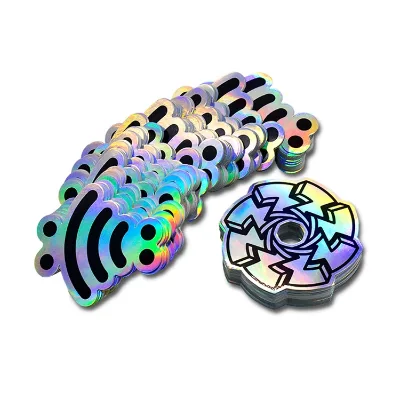

Customize Holographic Printing Outdoor Proof Logo Stickers Decal Die Cut Label
$0.65 - $0.99
MOQ: 1000 Rolls

Customize Holographic Printing Proof Waterproof Vinyl Die Cut Logo Stickers
$0.65 - $0.99
MOQ: 1000 pieces


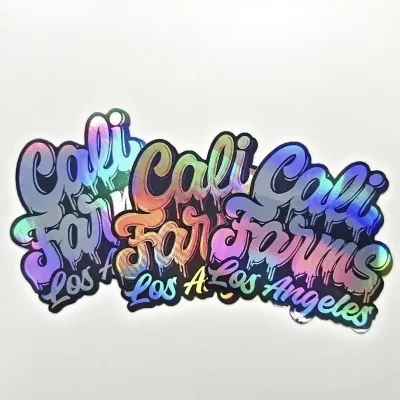


Glossy Sticker Die Cut Holographic Original Sticker Custom Printed Labels
$0.00 - $0.15
MOQ: 500 Pieces
Comprehensive Sourcing Guide
Strategic Sourcing Guide for Waterproof Holographic Die-Cut Stickers
Understanding Product Specifications and Material Composition
When sourcing waterproof holographic die-cut stickers, the primary objective is to identify a product that balances visual appeal with environmental durability. The core keyword implies a specific set of technical requirements: the sticker must resist water exposure, feature a holographic finish for brand differentiation, and be precision-cut to custom shapes. Based on available market data, the material composition is a critical determinant of performance. Vinyl and PVC are the most frequently observed materials for this category, offering the necessary flexibility and water resistance required for industrial and promotional applications. The supply chain also lists synthetic paper, pearlescent film, and polypropylene (PP) or polyethylene (PE) films as viable raw materials, though the specific choice depends on the intended surface and durability needs.
The holographic aspect is not merely a color attribute but a structural feature that requires specific printing and lamination processes. While the provided data confirms that "All Colors" and "Cmyk, Pantone Color, Full Color" options are available, the holographic effect typically demands specialized film stock or a specific lamination layer applied over the printed design. Buyers must verify that the supplier can integrate this effect without compromising the adhesive bond or the die-cut precision. The "Custom Size Accepted" and "Shape: Customized" attributes indicate that the manufacturing process is highly flexible, allowing for intricate die-cutting that follows the contours of the design rather than standard rectangular or circular formats.
Printing technology plays a pivotal role in the final quality. The observed data highlights "Die Cutting Printing" and "Digital Printing" as common methods, alongside "Flexographic Printing." For holographic stickers, digital printing often offers superior color fidelity and the ability to handle complex gradients, while flexographic printing may be preferred for high-volume runs where cost efficiency is paramount. The printing process must accommodate the specific surface finishing required to achieve the holographic sheen. The data notes that "Surface Finishing" is "Custom," which suggests that buyers have the agency to request specific coatings, such as matte, gloss, or soft-touch finishes, in addition to the holographic effect.
Technical Compliance and Certification Verification
In the B2B procurement of adhesive products, compliance is not just a formality but a safeguard against product failure in the field. While the supplied context mentions "ISO9001:2008" and "FSC" in low-confidence background sections, these should not be treated as guaranteed attributes of every listed product. Instead, buyers must treat these as verification points to be confirmed directly with the supplier. The "prod_standard" is listed as "custom," which reinforces the need for buyers to define their own technical standards or request specific compliance documentation before placing an order.
Waterproofing is a functional claim that requires empirical validation. The data explicitly lists "Waterproof" as a high-confidence attribute for this product type, yet the degree of waterproofing can vary. A sticker suitable for a dry indoor environment may differ significantly from one designed for outdoor use or exposure to liquids. Buyers should request test results or data sheets that specify the adhesive's resistance to water immersion, humidity, and temperature fluctuations. The "Industrial Use" category spans from "Packing" to "Gift & Craft," and even "Bottled Beverage" or "Medicine," each of which carries different regulatory and safety implications. For instance, stickers intended for food or medicine packaging must adhere to strict safety standards regarding adhesive migration and toxicity, which are not detailed in the general product attributes.
Certification checks should extend beyond quality management systems like ISO to include material safety and environmental compliance. If the product is intended for export to regions with strict environmental regulations, verifying that the raw materials, such as the "Avery Dennison" branded materials mentioned, meet local standards is essential. The "FSC" mention in the background data suggests a potential for sustainable sourcing, but this must be confirmed on a per-order basis. Buyers should not assume that a supplier offering "Custom" materials automatically meets specific eco-certifications unless explicitly stated in the contract. The "Customization: Available" and "Custom Order: Accept" attributes provide an opportunity to negotiate specific compliance requirements as part of the product definition.
Cost Drivers and Pricing Structure Analysis
The pricing structure for waterproof holographic die-cut stickers is influenced by a complex interplay of variables, including material costs, printing complexity, and order volume. The observed price range in the market data is 0-1.12 USD, but this wide variance likely reflects differences in unit size, material thickness, and the specific holographic technology employed. A unit priced at the lower end of the spectrum may be a simple vinyl sticker with basic die-cutting, while the higher end likely accounts for premium holographic films, complex multi-color printing, and specialized packaging.
Minimum Order Quantity (MOQ) is a significant cost driver. The data indicates an MOQ range of 100 to 2000 units, with a specific high-confidence fact noting an MOQ of 100 or 100PCS. For buyers with lower volume needs, the unit cost will naturally be higher due to the fixed setup costs associated with die-cutting and printing. Conversely, larger orders can leverage economies of scale to reduce the per-unit price. However, the "Custom" nature of the product means that setup costs for tooling and film preparation are often amortized over the order quantity. Buyers must calculate the total cost of ownership, including the cost of custom tooling, rather than focusing solely on the unit price.
Additional cost factors include the complexity of the artwork and the required surface finishing. The "Artwork Format" requirements, such as PDF, AI, EPS, or high-resolution JPG, imply that the supplier may charge for pre-press services if the buyer's files are not production-ready. The "Extra Services" section notes that both OEM and ODM are available, which can add value but also increase costs if the supplier is required to develop the design from scratch. Furthermore, the "Packing" options, ranging from rolls to sheets to individual boxes, will impact the final price. Custom packaging, such as the "Paper Box" or "Box" mentioned, adds a layer of cost that must be factored into the budget.
Typical Applications and Industrial Use Cases
The versatility of waterproof holographic die-cut stickers makes them suitable for a broad spectrum of applications, from industrial packaging to consumer-facing promotional items. The data explicitly lists "Industrial Use" categories including "Packing," "Gift & Craft," and "Promotional Gifts." This indicates that the product is not limited to a single niche but is a multi-purpose solution for various industries.
In the packaging sector, these stickers are frequently used for branding, authentication, and information display on bottles, boxes, and shipping containers. The "Usage" attributes mention "Bottled Beverage," "Shipping Labels," "Food," "Price Tags," and "Medicine," highlighting their adaptability to different surface types and regulatory environments. For example, a holographic sticker on a beverage bottle serves both a decorative purpose and a security function, deterring counterfeiting. In the pharmaceutical industry, the waterproof nature of the sticker ensures that labels remain legible and intact even in humid storage conditions or during transport.
For the gift and craft industry, the "Fashionable" style and "Holographic" finish are key selling points. These stickers are often used for decorating notebooks, laptops, and personal accessories, where the visual impact is the primary driver of purchase. The ability to customize the shape and size allows designers to create unique, eye-catching elements that stand out in a crowded market. The "Custom Sticker" and "Decorative Sticker" product names further emphasize their role in creative and personalized applications.
Supplier Evaluation and Selection Criteria
Selecting the right supplier requires a rigorous evaluation process that goes beyond price comparisons. The "Location" data points to "Shandong, China" and "China" generally, which suggests a concentration of manufacturing capabilities in this region. Buyers should verify the supplier's specific location and logistics capabilities, as this affects lead times and shipping costs. The "Delivery Term" options, including FOB, DAP, DDP, and CIF, indicate that suppliers are experienced in international trade and can accommodate various shipping preferences.
Supplier reliability is paramount, especially for custom orders. The "Samples: Free Stock Samples Available" attribute is a positive indicator, suggesting that the supplier is confident in their product quality and willing to provide tangible proof before a full order is placed. Buyers should utilize this opportunity to test the waterproofing, adhesion, and holographic quality firsthand. The "Customization: Available" and "Extra Services: Both OEM and ODM Are Available" attributes suggest that the supplier is flexible and capable of handling complex requests, but buyers must assess their communication responsiveness and project management capabilities.
Quality control is another critical factor. The "High-resolution" artwork requirements and "Custom" surface finishing options imply a need for a supplier with advanced printing and finishing equipment. Buyers should inquire about the supplier's quality assurance processes, including in-line inspection and final product testing. The "MOQ" flexibility, ranging from 100 to 2000, indicates that the supplier can accommodate both small and large orders, but buyers should confirm if the supplier has the capacity to scale production without compromising quality.
Quality Control and Long-Term Procurement Considerations
Ensuring consistent quality in waterproof holographic die-cut stickers requires a robust quality control framework. The "Die Cutting Printing" and "Digital Printing" methods must be monitored to ensure that the holographic effect is uniform and that the die-cut edges are clean and precise. Any deviation in the cutting process can lead to peeling or misalignment, which would compromise the product's functionality. Buyers should establish clear acceptance criteria for visual defects, adhesive performance, and dimensional accuracy.
Long-term procurement considerations involve building a sustainable relationship with the supplier. The "Custom" nature of the product means that the buyer and supplier must collaborate closely on design iterations and material selection. The "Artwork Format" requirements, such as PDF, AI, EPS, and high-resolution JPG, should be standardized to streamline the production process and reduce errors. Additionally, the "Lead Time" and "Delivery Term" should be clearly defined in the contract to ensure timely delivery and minimize supply chain disruptions.
Sustainability is increasingly important in procurement decisions. While the "FSC" certification is listed in low-confidence background data, buyers should proactively inquire about the environmental impact of the materials used. The availability of "Synthetic Paper, Pearlescent Film, PP, PE" as raw materials offers opportunities to select more eco-friendly options if the supplier supports them. The "Custom" standard allows buyers to specify sustainable materials and processes as part of their procurement strategy.
Comparison of Material and Printing Options
To assist buyers in making informed decisions, the following table compares the common material and printing options observed in the market for waterproof holographic die-cut stickers. This comparison is based on the provided product attributes and general industry knowledge.
| Feature | Vinyl/PVC | Synthetic Paper | Digital Printing | Flexographic Printing |
|---|---|---|---|---|
| Water Resistance | High | Moderate to High | High (depends on ink) | High (depends on ink) |
| Durability | Excellent | Good | Good | Excellent |
| Holographic Finish | Compatible | Compatible | Compatible | Compatible |
| Best For | Outdoor, Wet Environments | Indoor, General Use | Short Runs, Complex Designs | High Volume, Simple Designs |
| MOQ Flexibility | Low to Medium | Medium | Low | High |
| Cost Efficiency | Medium | Medium | Low (for large runs) | High (for large runs) |
This table highlights that while both Vinyl and Synthetic Paper offer water resistance, Vinyl generally provides superior durability for harsh environments. Similarly, Digital Printing is ideal for complex, short-run orders, whereas Flexographic Printing is more cost-effective for high-volume production. Buyers should select the combination of material and printing method that best aligns with their specific application requirements and budget constraints.
Final Procurement Recommendations
Sourcing waterproof holographic die-cut stickers requires a balanced approach that considers technical specifications, compliance, cost, and supplier reliability. By leveraging the "Custom" nature of the product, buyers can tailor the solution to their exact needs, ensuring that the final product meets both functional and aesthetic requirements. The availability of free stock samples, flexible MOQs, and diverse delivery terms provides a strong foundation for building a successful procurement strategy. Buyers should prioritize suppliers who demonstrate transparency in their quality control processes and are willing to collaborate on custom specifications. With careful planning and due diligence, the procurement of these stickers can significantly enhance brand visibility and product protection across various industries.
FAQs
Can I get free samples before placing a large order?
Yes, free stock samples are available for evaluation. This allows you to verify the waterproof quality and holographic finish before committing to a custom order with a minimum quantity of 100 pieces.
What materials are used for these waterproof stickers?
The stickers are primarily made from Vinyl and PVC materials. These options provide the necessary flexibility and water resistance required for industrial packing, gift crafts, and promotional applications.
How flexible is the customization for size and shape?
Customization is fully available for both size and shape. You can request specific dimensions and die-cut shapes to match your design requirements while maintaining the waterproof and holographic features.
What printing methods are supported for these stickers?
Multiple printing methods including Digital, Flexographic, and Die Cutting Printing are supported. You can choose from various color options like CMYK or Pantone to achieve the desired holographic effect.
What is the minimum order quantity for custom stickers?
The minimum order quantity starts at 100 pieces. Some specific product models may require up to 2000 units, so the exact MOQ depends on the selected customization and material type.
Which delivery terms are accepted for international orders?
Accepted delivery terms include FOB, DAP, DDP, and CIF. These options allow you to choose the shipping method that best fits your logistics needs and budget constraints.
What packaging options are available for the finished stickers?
Packaging options include rolls, sheets, individual sheets, and paper boxes. The specific packing method can be customized to suit your industrial use or promotional gift requirements.