Source Wear-Resistant Natural Rubber Arm Pads for Washing Machines, Flooring, and Sports
Find and compare wear-resistant natural rubber arm pads and related industrial components from 30 verified listings. Evaluate options for washing machine steady pads, industrial flooring, and sports protection based on material specs and customization availability.
Key considerations
Products List


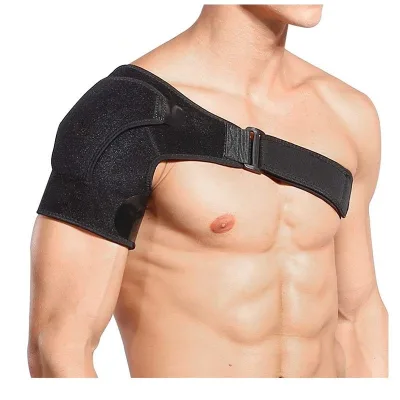


Elastic Elbow Brace Exercise Compression Support Sleeve Sport Elbow Pad
$1.30 - $3.20
MOQ: 2000 Pieces

Adjustable Elbow Brace High Quality Exercise Compression Support Sleeve Sport Elbow Pad
$1.30 - $3.20
MOQ: 2000 Pieces


Comprehensive Sourcing Guide
Wear-Resistant Natural Rubber Arm Pads Sourcing Guide
The procurement of wear-resistant natural rubber arm pads requires a clear distinction between general industrial rubber components and specialized protective gear, as the supply market often blends these categories. While the core keyword suggests protective equipment for athletes or industrial workers, the available product data reveals a diverse inventory ranging from washing machine vibration dampeners to sports elbow pads and industrial flooring slabs. Buyers must carefully align their specific application needs with the actual product attributes listed, such as the distinction between "Natural Rubber" used in industrial slabs and "Spandex" or "SBR" blends found in sport-specific elbow covers.
A critical first step in this sourcing process is verifying the intended use case against the observed product features, as the term "arm pad" can refer to a protective sleeve, a vibration isolation pad, or a structural component depending on the manufacturer's classification. The market data indicates that some products are explicitly designed as "Sport Elbow Pads" with compositions including Ok Cloth and Velcro, while others are described as "Steady Pads for Washing Machine and Dryer" made from pure gum rubber. This divergence means that a buyer seeking a specific ergonomic design for human use must filter out industrial-grade rubber sheets that may lack the necessary flexibility or comfort features for direct skin contact.
Product Scope and Observed Listing Signals
The observed product listings demonstrate a wide variance in material composition and physical form, necessitating a rigorous review of the "Material" and "Medium" fields before placing any order. The data confirms the availability of products made from "Natural Rubber," which aligns with the core keyword, but also highlights the presence of "Silicone Rubber," "Spandex," and "SBR" in similar product categories. Buyers should be aware that a listing for a "wear-resistant" item might actually refer to a "Metal Frame Layer Rubber Sheet" or an "Insulating Rubber Slab" rather than a wearable arm protection device, requiring careful scrutiny of the "Usage" and "Application" descriptions.
Listing signals such as "Customization: Available" and "OEM: Yes" suggest that many suppliers are prepared to modify standard designs, yet the specific customization options vary significantly between product models like "OCT-RP-NR" and "GF-245." Some items are packaged as single units in bags, while others are sold in cartons or as "4PCS/Bag" sets, which impacts the logistics and unit cost calculations for the buyer. The presence of "Can Print Your Logo" indicates branding opportunities, but this feature is often tied to specific minimum order quantities that may not be immediately visible in the initial product summary, requiring direct supplier engagement to confirm feasibility.
Technical Specifications to Verify
When evaluating technical specifications, the buyer must prioritize the verification of material thickness, density, and specific performance ratings to ensure the product meets the intended wear-resistance requirements. The provided data lists specific standards such as "2.4m1.2m3mm" for certain rubber sheets and "dia 67mm" for other components, but these dimensions may not apply to wearable arm pads. It is essential to request detailed dimensional drawings and material density reports for any "Natural Rubber" product intended for arm protection, as the "Weight" of 250g/PC observed in some listings may be indicative of a specific product type that differs from the lightweight, flexible pads required for sports or industrial safety.
Performance characteristics such as "Wear-resistant," "Heat-resistant," and "Cold-resistant" are frequently cited in the product attributes, but these claims must be validated against the specific operating environment of the end-user. For instance, while "Insulating Rubber Slab" products are noted for their electrical properties, a wearable arm pad requires a different balance of flexibility and abrasion resistance. Buyers should verify the "Feature" list for each specific model, ensuring that attributes like "Round Buckle Antiskid" or "Support" are relevant to the specific design of the arm pad, rather than assuming these features apply universally across all rubber products in the catalog.
Compliance and Safety Documentation
Compliance and safety documentation for rubber products often involve verifying material safety data sheets (MSDS) and ensuring that the rubber compounds do not contain harmful substances, particularly for products intended for direct human contact. Although the supplied facts mention "SGS" as a standard for some items, this reference is not explicitly linked to the "Natural Rubber" arm pads in the provided dataset, and buyers should not assume that all listed products have undergone this specific third-party testing. It is crucial to request current test reports that specifically address skin safety, chemical migration, and durability under the expected load conditions for the specific application.
For industrial applications, the verification of "Standard" and "Nonstandard" classifications is vital to ensure the product meets local regulatory requirements for workplace safety equipment. The data indicates that some products are "Non-Waterproof," which may be a critical limitation for users operating in wet environments, while others are described as "Weather Resist." Buyers must confirm whether the "Natural Rubber" material used in the arm pads has been treated for UV resistance or chemical exposure, as standard natural rubber can degrade rapidly when exposed to ozone or harsh industrial chemicals without specific additives or coatings.
Cost Drivers and Commercial Terms
The cost of wear-resistant natural rubber arm pads is heavily influenced by the complexity of the mold, the specific rubber compound formulation, and the volume of the order, as evidenced by the observed MOQ range of 1 to 10,000 units. The wide price range of 0.01 to 12 USD suggests that the market includes both low-cost, simple rubber components and higher-value, engineered products with specialized features like custom logos or complex layering. Buyers should anticipate that the "Customized" standard option will carry a premium over the "Standard" or "Nonstandard" options, and that the cost per unit will likely decrease as the order quantity moves from the lower end of the MOQ spectrum toward the higher tiers.
Commercial terms regarding packaging and shipping are also significant cost drivers, as the data shows variations from "Bag" and "Plastic Bag and Carton" to "Regular Export Package." The "Paacking" specification of "4PCS/Bag" for certain items indicates a specific unit configuration that may affect the total number of packages required for a large order, impacting freight costs and handling efficiency. Additionally, the availability of OEM services and logo printing may introduce additional setup fees or per-unit costs that need to be factored into the total landed cost, especially for smaller order volumes where these fixed costs are amortized over fewer units.
Supplier Qualification and Quality Control
Supplier qualification for rubber products requires a thorough assessment of their manufacturing capabilities, specifically their ability to maintain consistent material properties and dimensional tolerances across large production runs. The presence of "OEM: Yes" and "Customization: Available" in the product attributes suggests that many suppliers have the flexibility to adapt their production lines, but buyers must verify the supplier's track record in producing similar rubber components to ensure they can meet the specific quality standards required for wear-resistant applications. It is advisable to request samples from the specific production batch to test for consistency in hardness, elasticity, and surface finish before committing to a larger order.
Quality control processes should include a detailed inspection of the "Material" and "Raw Materials" to ensure that the "Natural Rubber" and "Pad" components are sourced from reputable suppliers and are free from contaminants. The data mentions "Natural Rubber" and "Pad" as raw materials, but the quality of these inputs can vary significantly between manufacturers. Buyers should implement a rigorous incoming quality control protocol that includes visual inspections for defects such as air bubbles, uneven surfaces, or inconsistent coloring, as well as functional testing to verify the "Wear-resistant" and "Impact-resistant" claims against the specific usage conditions of the end product.
Long-Term Procurement Checks
Long-term procurement success depends on establishing a robust relationship with suppliers who can provide consistent quality and reliable lead times over an extended period. The observed "Lead times" and "Location" data, such as "Fujian, China" or general "China" origin, should be used to assess the logistical feasibility of the supply chain, ensuring that the supplier can meet the delivery schedules required for ongoing production or inventory replenishment. Buyers should also monitor the supplier's ability to maintain the "Standard" and "Nonstandard" product specifications over time, as changes in raw material sourcing or production processes can inadvertently alter the performance characteristics of the rubber pads.
Regular performance reviews and feedback loops are essential to ensure that the "Wear-resistant" and "Support" features of the arm pads continue to meet the evolving needs of the end-users. Buyers should establish a schedule for periodic re-testing of the products to verify that the "Natural Rubber" material has not degraded or lost its elasticity due to aging or storage conditions. Additionally, maintaining open communication regarding any changes in "Customization" options or "OEM" capabilities will help ensure that the procurement strategy remains aligned with the company's long-term goals and product development roadmap.
FAQs
What materials are used for wear-resistant natural rubber arm pads?
The pads are made from natural rubber and natural rubber pad materials. Some variants also include silicone rubber or spandex for specific applications like sports protection.
Can I customize the logo on these rubber arm pads?
Yes, you can print your own logo on the products. The supplier offers OEM services allowing for custom branding on the natural rubber sheets and pads.
What is the standard size for the natural rubber arm pads?
Standard sizes include 2.4m by 1.2m with a 3mm thickness for sheets. Other models feature specific dimensions like a 67mm diameter or customized sizes based on requirements.
How are the wear-resistant rubber pads packaged for shipping?
Packaging options include individual bags, cartons, or regular export packages. Specific items may come in bags containing four pieces or plastic bags within cartons.
Which features make these rubber pads suitable for industrial use?
These pads offer wear resistance, corrosion resistance, heat resistance, and cold resistance. They also provide insulating and impact-resistant properties for various industrial applications.
What is the minimum order quantity for natural rubber arm pads?
The minimum order quantity ranges from 1 to 10,000 units depending on the specific product model. Buyers should check the exact MOQ for their selected item.
Are these rubber pads waterproof or water-resistant?
Some sport elbow pads made with these materials are non-waterproof. However, the natural rubber composition generally provides weather resistance for many industrial and protective applications.