Find Wired Network Thermal POS Printer for Retail, Warehousing, and Logistics
Source 30 Wired Network Thermal POS Printer models with varying interface types, paper widths, and network capabilities. Buyers can compare specifications like print speed, resolution, and packing details to select the right device for document or barcode printing needs.
Key considerations
Products List


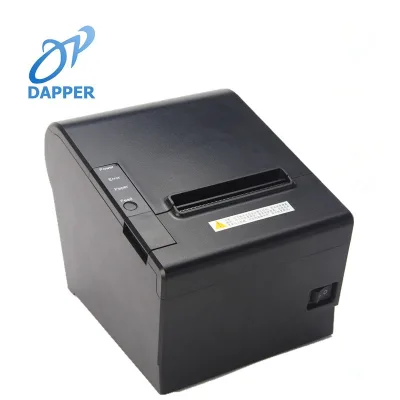
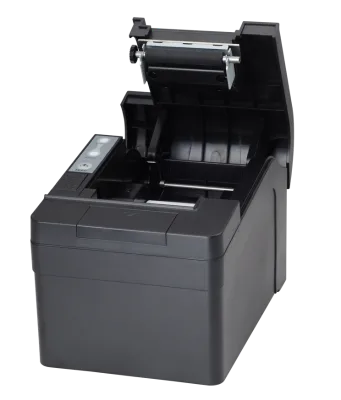


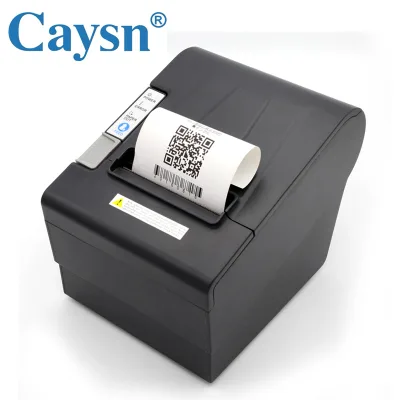
Comprehensive Sourcing Guide
Strategic Sourcing Guide for Wired Network Thermal POS Printers
The procurement of wired network thermal POS printers represents a critical decision point for retail, hospitality, and logistics operations seeking reliable receipt and label generation. Unlike standalone thermal units, wired network models integrate directly into local area networks (LAN), allowing centralized management and data synchronization across multiple terminals. This guide synthesizes observed product attributes, technical specifications, and compliance frameworks to assist buyers in evaluating potential suppliers without relying on unverified market claims. The focus remains strictly on the intersection of wired connectivity, thermal printing technology, and the specific operational requirements of modern point-of-sale environments.
Technical Architecture and Connectivity Protocols
The defining characteristic of a Wired Network Thermal POS Printer is its ability to communicate via physical network interfaces rather than relying solely on Bluetooth or USB connections. In the observed product landscape, connectivity options vary significantly. Some units support a combination of interfaces, including USB, RS232, and LAN, providing flexibility for legacy and modern systems. However, a critical distinction exists between "Wireless Network" capabilities and "Wired Network" support. Buyers must verify that the specific model explicitly supports wired LAN connectivity, as some thermal printers are marketed with wireless features but lack the necessary Ethernet ports or network drivers for stable wired integration.
The printing mechanism is almost universally Direct Thermal or Line Thermal Printing for this category. Direct thermal printing eliminates the need for ink or ribbons, relying on heat-sensitive paper to produce images, which reduces consumable costs and maintenance complexity. The resolution is a vital performance metric; observed data indicates resolutions ranging from 8 dots/mm to 576 dots/mm. Higher dot density ensures crisp text and scannable barcodes, which is essential for compliance and customer satisfaction. Furthermore, the paper width is a standard constraint, with 80mm being a prevalent specification for receipt printers, while print widths often align at 72mm to accommodate the physical paper roll.
Speed is another technical parameter that influences throughput. Some models in the market advertise maximum speeds of 250mm/s, which is crucial for high-volume environments like busy retail chains or warehouses. Buyers should cross-reference these speed claims against the actual interface capabilities; a printer may be capable of 250mm/s, but if the wired network interface has latency issues or insufficient bandwidth, the theoretical speed will not be realized in practice. The character structure, often described as full-width characters, also impacts the printer's ability to handle multi-byte languages, a common requirement for international supply chains.
Compliance, Certification, and Regulatory Standards
Navigating the regulatory landscape is non-negotiable when sourcing industrial-grade printing equipment. The supply chain for thermal POS printers is heavily concentrated in specific manufacturing hubs, with Xiamen, Fujian, China, emerging as a significant production center. Products originating from this region must adhere to international safety and environmental standards to be viable for export to North America and Europe.
Certification verification is the first step in supplier evaluation. Observed product listings frequently cite certifications such as CE, CCC, ISO, CIC, and ROHS. The CE mark indicates conformity with health, safety, and environmental protection standards for products sold within the European Economic Area. The CCC (China Compulsory Certification) is mandatory for products sold within China, serving as a baseline for quality control in the manufacturing origin. ISO certification suggests that the manufacturer follows international management system standards, which often correlates with consistent production quality. ROHS compliance ensures that the device does not contain restricted hazardous substances, a critical requirement for environmental compliance in many jurisdictions.
However, buyers must exercise caution. While "CE" and "RoHS" appear in low-confidence background data, specific product attributes in the high-confidence list explicitly list "CE, CCC, CIC, ROHS" as standards for certain models. This discrepancy highlights the need for buyers to request current, model-specific certification documents rather than relying on general supplier assertions. A supplier claiming a product is CE certified must provide the specific test reports or certificates of conformity for that exact model number, such as the HM-A300E or RCT-216, to ensure the claim is valid and not a generic marketing statement.
Cost Drivers and Economic Considerations
The pricing for wired network thermal POS printers exhibits a wide variance, with observed ranges spanning from 1 to 560 USD. This broad spectrum reflects differences in build quality, feature sets, and brand positioning. Several factors drive these cost variations. First, the interface complexity plays a role; models supporting multiple interfaces (USB/RS232/LAN) often command a higher price point than single-interface units. Second, the printing speed and resolution directly impact the manufacturing cost. A printer capable of 250mm/s with 576 dots/mm resolution requires more advanced thermal heads and control boards than a basic 80mm/s, 8 dots/mm unit.
Minimum Order Quantity (MOQ) is another economic factor that influences the total cost of ownership. The observed MOQ range is 1 to 100 units. For small businesses or pilot projects, an MOQ of 1 allows for low-risk testing of the hardware. Conversely, large enterprises may negotiate lower unit costs by ordering in bulk, potentially reaching the upper end of the MOQ spectrum. Packaging also affects logistics costs; products are typically packed in cartons, with specific configurations like 20 pieces per carton. Buyers must calculate the total landed cost, including shipping and handling, which can be significant if the packaging density is low or if the supplier requires high MOQs that exceed immediate inventory needs.
Operational Applications and Usage Scenarios
Wired network thermal POS printers are designed for specific high-reliability use cases where network stability and data integrity are paramount. The primary application is in retail environments, where the printer serves as a Document Printer and Barcode Printer. In these settings, the ability to print receipts instantly and accurately is vital for transaction completion. The "Manual" and "Automatic" supply paper modes observed in the product data suggest versatility; some models allow for manual loading, which is useful for troubleshooting paper jams, while others offer automatic integration for continuous operation.
Beyond retail, these printers are utilized in logistics and warehousing for label generation. The "One Cartridge" consumable type and "Direct Thermal Line Printing" method make them suitable for shipping labels that require durability and quick production. The "Cashbox Driver Signals" attribute indicates that some models are integrated with cash handling systems, further expanding their utility in point-of-sale setups. However, the "Automatic Two-sided Printing" attribute is noted as "Not Support" in several models, meaning buyers requiring double-sided receipt printing must seek alternative technologies or specific high-end models that explicitly support this feature.
The "Type" of printer is often categorized as "Hand Held" or desktop units. Hand-held thermal printers offer mobility but may lack the robust wired network integration found in desktop models. Desktop units, with their larger form factors (e.g., 150mm192mm144mm or 110117.858mm), are better suited for fixed POS stations where a stable wired connection is required. The "Without Touch Screen" attribute is common, indicating that these devices rely on external host computers or POS terminals for control, which simplifies the user interface and reduces the risk of screen damage in high-traffic environments.
Supplier Evaluation and Quality Assurance
Evaluating a supplier for wired network thermal POS printers requires a rigorous approach to verifying the authenticity of product claims. The supply chain is complex, and the presence of "Wireless Network" attributes in some listings alongside "Wired Network" requirements creates a potential for confusion. Buyers must explicitly request datasheets that confirm the presence of Ethernet ports and network drivers for the specific model. The distinction between "Wireless Network" and "Wired Network" is not merely semantic; it dictates the physical infrastructure required for deployment.
Quality control should focus on the physical construction and component reliability. The "Packed in Carton" standard suggests a need for robust packaging to prevent damage during transit. Buyers should inspect the "Product Packing" details to ensure that the carton density (e.g., 20PCS/CTN) aligns with their logistics capabilities. Additionally, the "Resolution Ration" of 576 Dots/mm or 8 Dots/mm must be verified through sample testing. A supplier that provides samples with inconsistent print quality or incorrect resolution specifications should be flagged as high-risk.
The origin of the product, specifically "Xiamen, China" or general "China" origin, should be cross-referenced with the supplier's business license and export history. While Xiamen is a known manufacturing hub, not all suppliers based there may have the same quality standards. Buyers should verify the "Certificate" claims (ISO, CE, CCC) by asking for the actual certificate numbers and validity dates. A supplier that cannot provide these documents immediately should be considered non-compliant, regardless of their marketing claims.
Long-Term Procurement and Maintenance Strategy
Sourcing wired network thermal POS printers is not a one-time transaction but a long-term commitment to operational efficiency. The "Consumable Type" of "One Cartridge" or direct thermal paper usage means that the printer's performance is closely tied to the quality of the paper and the thermal head's longevity. Buyers should establish a relationship with suppliers who offer consistent supply of compatible consumables. The "Max. Paper Size" and "Paper Thickness" specifications (e.g., 216) must be matched with the paper rolls available in the market to avoid compatibility issues.
Maintenance is another critical consideration. The "Supply Paper Mode" being "Automatic and Manual Integration" allows for flexibility in maintenance, but the lack of "Automatic Two-sided Printing" means that any errors in paper loading or alignment must be corrected manually. Buyers should evaluate the supplier's after-sales support, including the availability of spare parts like thermal heads and power adapters. The "Interface Type" of USB, RS232, or LAN also impacts the ease of troubleshooting; a printer with multiple interface options offers more flexibility if one port fails.
Finally, the "Payment Method" of "Mobile Payment" integration suggests that some printers are part of a broader ecosystem that includes payment processing. Buyers should ensure that the printer's firmware is updatable and compatible with the latest payment security standards. The "Style" of "Black and White" is standard for thermal printing, but the physical design should be durable enough to withstand the rigors of a busy retail floor. By focusing on these long-term factors, buyers can ensure that their investment in wired network thermal POS printers yields reliable performance and minimal downtime over the product's lifecycle.
Comparative Analysis of Key Specifications
To assist in the final selection process, the following table summarizes the key technical attributes observed in the product data. This comparison highlights the variance in specifications that buyers must navigate when selecting a Wired Network Thermal POS Printer.
| Attribute | Model A (HM-A300E) | Model B (RCT-216) | Model C (WH-P04) | General Observation |
|---|---|---|---|---|
| Interface Type | Bluetooth | USB/RS232/LAN | USB | LAN support varies; verify explicitly for wired needs. |
| Network Function | Wireless Network | Wired Network | Not Support Network | "Wired Network" is a specific requirement; do not assume. |
| Print Type | Direct Thermal | Direct Thermal Line | Thermal Line | Direct thermal is standard; no ink required. |
| Resolution | Not Listed | 576 Dots/mm | 8 Dots/mm | Higher dots/mm required for barcode clarity. |
| Paper Width | Not Listed | 80mm | Not Listed | 80mm is the industry standard for receipts. |
| Certification | ISO, CE, CCC | CE, CCC, CIC, ROHS | CE, CCC | Verify specific certificates for target markets. |
| Origin | China | Xiamen, China | Xiamen, China | Xiamen is a primary manufacturing hub. |
| MOQ Range | 1-100 | 1-100 | 1-100 | Flexible MOQs available for small orders. |
This table underscores the importance of verifying each attribute individually. A printer may have the correct network interface but lack the necessary resolution for high-quality barcodes. Similarly, a model with excellent certifications may not support the specific paper width required by the buyer's operations. By systematically cross-referencing these specifications against the buyer's operational needs, the procurement process can be streamlined to ensure the selection of a Wired Network Thermal POS Printer that delivers optimal performance and reliability.
FAQs
Can I find wired network thermal pos printers with CE and CCC certifications?
Yes, models like the RCT-216 and HM-A300E explicitly list CE, CCC, and ISO certifications. These certifications confirm compliance with safety and environmental standards required for international trade and local market entry.
What is the maximum paper width supported by these thermal printers?
The observed specifications indicate a standard paper width of 80mm for receipt models. This dimension aligns with the 72mm print width commonly found in direct thermal line printing devices for retail environments.
Which interface types are available for wired network thermal pos printers?
Available interfaces include USB, RS232, and LAN for wired connectivity. Some models also support Bluetooth or wireless network functions, but buyers must verify specific LAN support for stable wired integration.
How does the printing speed vary across different wired network models?
Print speeds can reach up to 250mm per second in high-performance units. This speed is critical for high-volume retail operations, though actual throughput depends on the network interface stability and host system.
Can these printers support automatic paper supply modes?
Yes, certain models feature automatic and manual integration for paper supply. This flexibility allows operators to switch between manual loading for troubleshooting and automatic feeding for continuous high-volume printing tasks.
What are the typical packaging configurations for these thermal printers?
Products are typically packed in cartons with a density of 20 pieces per carton. This standard packaging ensures safe transit and helps buyers calculate total shipping costs based on their order volume and destination.
Do these printers support automatic two-sided printing capabilities?
No, the observed product attributes indicate that automatic two-sided printing is not supported. Buyers requiring double-sided receipt generation must seek alternative technologies or specific high-end models with explicit dual-sided features.