Source Wireless Portable Car Inflator with Automatic Stop for Cars, Motorcycles, Bikes
Find 30 Wireless Portable Car Inflator with Automatic Stop options featuring digital displays, LED lights, and power bank functions. Compare specifications from manufacturers offering OEM support and various battery capacities for emergency and daily use.
Key considerations
Products List


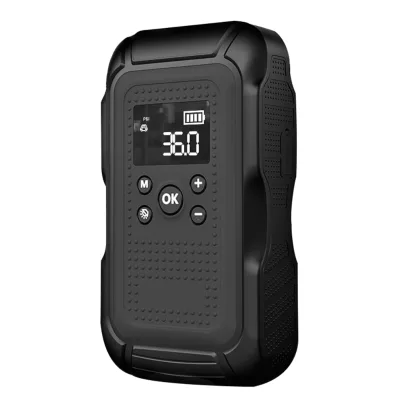


Auto Stop Air Inflator Car Tire Pump Compressor Electric Portable 12V DC
$6.79 - $6.99
MOQ: 200 Pieces

Auto Stop Air Inflator Car Tire Pump Compressor Electric Portable 12V DC
$10.21 - $10.41
MOQ: 200 Pieces

Auto Stop Air Inflator Car Tire Pump Compressor Electric Portable 12V DC
$10.42 - $10.72
MOQ: 200 Pieces

Auto Stop Air Inflator Car Tire Pump Compressor Electric Portable 12V DC
$38.43 - $38.63
MOQ: 200 Pieces

Auto Stop Air Inflator Car Tire Pump Compressor Electric Portable 12V DC
$41.88 - $42.00
MOQ: 200 Pieces

Auto Stop Air Inflator Car Tire Pump Compressor Electric Portable 12V DC
$11.79 - $11.97
MOQ: 200 Pieces


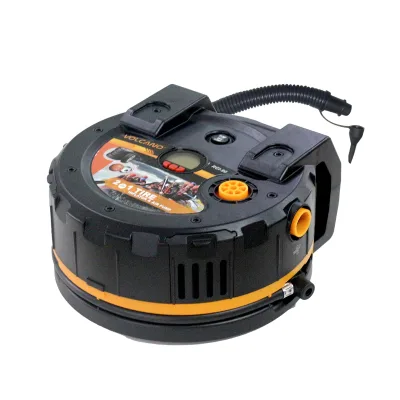
Car Air Compressor, Tire Inflator, Portable Air Pump, Car Pressure Pump
$10.00 - $100.00
MOQ: 100 Pieces

Comprehensive Sourcing Guide
Strategic Sourcing Guide for Wireless Portable Car Inflators with Automatic Stop
Understanding the Product Category and Core Specifications
The Wireless Portable Car Inflator with Automatic Stop represents a critical segment within the automotive emergency equipment market. These devices are designed to provide immediate tire pressure correction without the need for external power sources or cumbersome hoses. Based on the observed product attributes, the core functionality centers on the integration of a digital tire gauge and an automatic stop mechanism, which is essential for preventing over-inflation and ensuring safety. The product is fundamentally categorized as a "Tire Inflator" with specific sub-classifications such as "Digital Tire Gauge" and "Wireless" capabilities.
When evaluating technical specifications, buyers must distinguish between the various power source configurations observed in the market. The supply chain presents a mix of "Battery Powered" units, "Corded Electric" options, and dual-mode devices that support both "Battery" and "DC power" inputs. For a truly wireless solution, the reliance on internal energy storage is paramount. The data indicates the presence of "Lithium Battery" systems, with specific configurations ranging from "2*1800mAh" 18650 cells to larger "6000mAh" capacities. This variance in battery capacity directly influences the device's ability to inflate multiple tires on a single charge, a key performance metric for buyers.
The pressure capabilities are another critical specification. The observed market data lists a maximum pressure range of "101-150psi." This range is suitable for a broad spectrum of vehicles, including passenger cars and motorcycles. However, the specific "Cylinder Type" is noted as "Single Cylinder" in some listings, which may impact the inflation speed compared to dual-cylinder models. The physical dimensions of the units also vary, with standard product standards cited as "115 * 81 * 46mm," suggesting a compact, portable form factor that aligns with the "Portable" carry way attribute. The housing material is predominantly "ABS+Metal" or "ABS/Plastic," providing a balance between durability and weight reduction.
Compliance and Certification Verification Protocols
In the B2B procurement of electronic automotive accessories, compliance is not merely a formality but a prerequisite for market access and liability protection. The supplied product facts highlight several recurring certifications that buyers should verify as part of their due diligence. The most frequently observed certifications include "ISO," "CE," "FCC," "ROHS," and "BSCI."
The "CE" marking indicates conformity with health, safety, and environmental protection standards for products sold within the European Economic Area. The "FCC" certification is essential for electronic devices sold in the United States, ensuring that the device does not emit harmful levels of radio frequency interference. "ROHS" compliance confirms that the product is manufactured without specific hazardous materials, which is a standard requirement for electronic components. Furthermore, "ISO" management certifications suggest that the supplier adheres to international quality management standards, while "BSCI" indicates compliance with social and ethical labor practices.
Buyers must treat these certifications as observations that require validation rather than guaranteed attributes for every listed product. The presence of "Product certifications: CE, FCC" in some listings alongside "Management certifications: ISO" in others suggests that different suppliers or product lines may hold different levels of compliance. It is imperative to request valid, up-to-date certification documents for the specific model number being procured, such as the "GL985-P," "M33," or "Q31B" models observed in the data. Relying on generic claims without physical verification of the certificates can lead to customs seizures or legal liabilities in the destination market.
Cost Drivers and Pricing Structure Analysis
The pricing structure for wireless portable car inflators is influenced by a complex interplay of technical specifications, material costs, and customization requirements. The observed price range in the market spans from $0.1 to $169 USD. This wide variance is not indicative of quality differences alone but reflects the diversity in product configurations, order volumes, and value-added services.
Several key factors drive the cost of these units. First, the battery capacity is a primary cost driver. Units equipped with "6000mAh" batteries or dual "18650" cells will inherently cost more than those with smaller capacities due to the price of lithium cells and the associated battery management systems. Second, the material composition affects the final price. Products utilizing "ABS+Metal" composites generally command a higher price point than those made from standard "ABS" or "Plastic" due to the enhanced durability and perceived premium quality of the metal components.
Third, the level of customization significantly impacts cost. The market data confirms that "Customization: Available" and "OEM & ODM: Acceptable" are standard offerings. Buyers seeking custom branding, specific color schemes (ranging from "Black, Silver, Yellow" to "Custom"), or unique packaging (such as "OEM Package" vs. "Neutral Packing") will incur additional tooling and setup fees. Finally, the "MOQ" (Minimum Order Quantity) plays a crucial role in unit pricing. The observed MOQ range of 1 to 1000 units suggests that buyers can source small quantities for testing or prototyping, but the unit cost will likely decrease as the order volume approaches the higher end of the spectrum. Buyers should be aware that the lowest observed price of $0.1 is likely associated with very high-volume orders or specific component-level pricing, whereas the $169 figure likely represents a fully featured, high-capacity unit with comprehensive certifications and custom packaging.
Typical Applications and Usage Scenarios
The versatility of wireless portable car inflators with automatic stop makes them suitable for a wide array of applications, extending beyond simple passenger vehicle maintenance. The product attributes explicitly list "Use: Motorcycle" and "Use: Passenger car," indicating that these devices are engineered to handle the specific tire pressure requirements of both two-wheeled and four-wheeled vehicles. The "Max Pressure" of 101-150psi is sufficient for standard passenger car tires, which typically require pressures between 30 and 35 psi, as well as for motorcycle tires which may require higher pressures.
Beyond their primary function of tire inflation, these devices often serve as multifunctional emergency tools. The observed "Function" attributes include "Tire Pressure Monitor," "Flashlight," and "Power Bank." This multifunctionality is particularly valuable in emergency scenarios. The "Flashlight" feature, powered by the same internal battery, provides illumination for roadside repairs at night. The "Power Bank" capability, supported by the "18650 Lithium Battery" or "6000mAh" capacity, allows users to charge mobile devices in the event of a vehicle breakdown in remote locations.
The "Automatic Stop" feature is a critical safety mechanism for these applications. It ensures that the inflation process halts precisely when the target pressure is reached, eliminating the risk of over-inflation which can lead to tire blowouts. This feature is essential for users who may not have the expertise to manually monitor pressure gauges. The "Digital Display Type" further enhances usability by providing clear, real-time feedback on pressure levels, making the device accessible to a broad demographic of drivers.
Supplier Evaluation and Sourcing Strategy
When evaluating potential suppliers for wireless portable car inflators, buyers must adopt a rigorous due diligence process that goes beyond the basic product listings. The supply chain data indicates that the "prod_origin" is "China," which is a major manufacturing hub for this category. However, the presence of "OEM" as a "Brand Name" and "Acceptable" "OEM & ODM" support suggests that many suppliers operate as contract manufacturers rather than brand owners.
Buyers should prioritize suppliers who demonstrate transparency regarding their "Management certifications" and "Product certifications." A supplier claiming "ISO" certification should be able to provide the specific certificate number and scope. Similarly, verification of "CE" and "FCC" compliance is non-negotiable for international trade. The "Customized support" capability should be assessed based on the supplier's ability to handle specific requirements such as "Neutral Packing" or "OEM Package," and their flexibility in offering custom colors from the available palette of "Black, Silver, Yellow, Red, Blue, White, Green, Gray, Gold."
The "Small Orders: Accepted" attribute is a positive indicator for buyers looking to minimize initial risk. It suggests that the supplier is willing to accommodate lower volume orders, which is beneficial for testing the market or for startups. However, buyers must also consider the "Lead time" and "MOQ" constraints. While the observed MOQ range starts at 1, the actual lead time for custom orders may vary significantly. Buyers should establish clear communication channels to confirm production schedules and ensure that the "Power Source" and "Voltage" specifications (e.g., "12v," "5v," "7.4v") align with their target market's electrical standards.
Quality Control and Long-Term Procurement Considerations
Ensuring consistent quality in wireless portable car inflators requires a robust quality control (QC) framework. Given the electronic nature of the products, QC should focus on the integrity of the "Core components," specifically the "Pump," and the reliability of the "Battery." The "Cylinder Type" being "Single Cylinder" in some cases necessitates testing for durability and heat dissipation during extended use. Buyers should implement incoming quality inspections that verify the "Material" composition, ensuring that the "ABS+Metal" or "ABS" housing meets the required impact resistance standards.
Long-term procurement considerations involve establishing a relationship with suppliers who can maintain consistency in product specifications. The "Automatic Stop" function must be tested repeatedly to ensure it triggers accurately at the set pressure. Additionally, the "Battery Capacity" should be verified to ensure it matches the stated specifications, as this directly affects the product's reputation and customer satisfaction. The "Voltage" stability is also crucial; devices operating on "12V" or "5V" inputs must be tested for compatibility with various vehicle power outlets and USB charging ports.
Buyers should also consider the "Product Name" consistency and branding. While "Tyre Inflator" and "Tire Inflator" are used interchangeably, maintaining a consistent naming convention in the supply chain helps avoid confusion. The "Package" type, whether "Neutral Packing" or "OEM Package," should be clearly defined in the purchase agreement to ensure that the final product meets the buyer's branding and logistical requirements. Finally, the "Feature" set, including "Wireless" capability and "Digital" display, should be validated through field testing to ensure that the device performs reliably in real-world conditions, such as extreme temperatures or rough terrain.
Conclusion
Sourcing wireless portable car inflators with automatic stop requires a balanced approach that combines technical scrutiny, compliance verification, and strategic supplier evaluation. The market offers a diverse range of products with varying specifications, from battery capacities and pressure limits to material compositions and certification levels. By focusing on the core attributes observed in the supply chain, such as the "Digital Tire Gauge" functionality, "Lithium Battery" power sources, and "CE/ISO" certifications, buyers can make informed decisions that align with their specific market needs. The wide price range and customization options provide flexibility, but they also demand careful analysis to ensure that the selected products deliver the promised performance and safety standards. Ultimately, successful procurement in this category hinges on a commitment to quality control, transparency in supplier relationships, and a thorough understanding of the technical and regulatory landscape.
FAQs
What certifications do these inflators typically have?
These devices commonly hold CE, FCC, and ROHS certifications for safety and compliance. Some suppliers also provide ISO and BSCI management certifications to ensure quality and ethical labor practices during manufacturing.
How much battery capacity do these units usually offer?
Battery capacities vary significantly, ranging from dual 18650 cells with 1800mAh each to larger 6000mAh lithium batteries. This capacity determines the device's ability to inflate multiple tires or serve as a power bank.
Can I get custom branding and packaging for this product?
Yes, customization is available with OEM and ODM support accepted by many suppliers. Buyers can request specific colors, neutral packing, or OEM packages to match their brand identity and market requirements.
What is the maximum pressure these inflators can reach?
The observed maximum pressure range for these units is 101 to 150 psi. This capability is sufficient for inflating tires on both passenger cars and motorcycles effectively.
Where are these wireless inflators typically manufactured?
The product origin is primarily China, which serves as a major manufacturing hub for this category. Buyers should verify specific factory locations and lead times when sourcing from this region.
What power sources are supported by these devices?
These inflators support multiple power sources including battery power, corded electric, and DC power inputs. Specific voltage options include 5V, 12V, and 7.4V depending on the model and configuration.