Source Woven Ice Car Seat Covers for SUVs, Sedans, and Trucks
Find 30 listings for Woven Ice Car Seat Covers featuring materials like ice silk and plush. Compare styles, sizes, and customization options from suppliers in China to find durable, breathable seat cushions for four seasons.
Key considerations
Products List
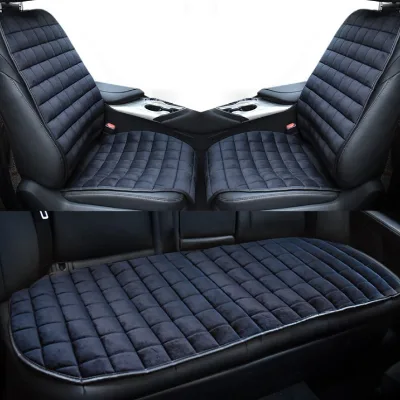
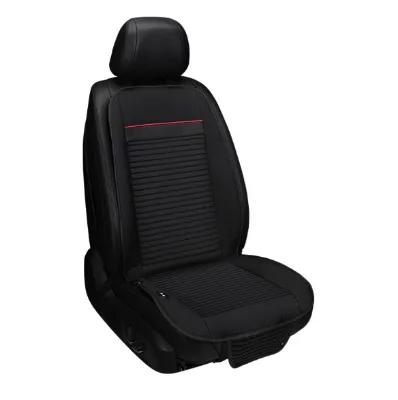
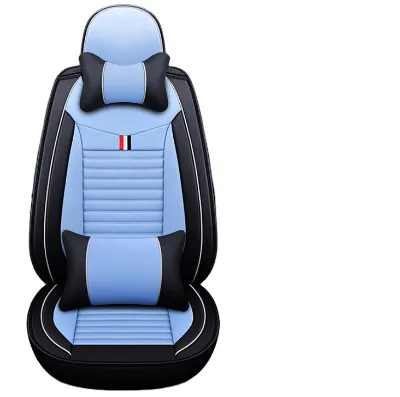


Ice Silk Car Seat Cushion Very Comfortable Breathable Leather Seat Cover
$29.80 - $31.80
MOQ: 100 Sets


Front and Back Car Seat Covers Universal Waterproof Durable Seat Cushion
$29.80 - $31.80
MOQ: 100 Sets
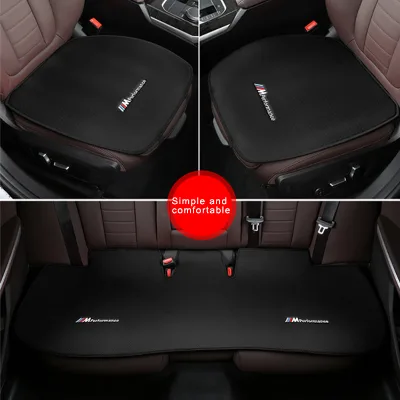


Car Seat Cover Wholesale Car Seat Cushion Universal Well-Fit Car Seat Cover Ice Silk
$17.80 - $19.80
MOQ: 100 Pieces


Breathable Car Seat Cushion Universal Well-Fit Car Seat Cover Car Seat Protector
$16.90 - $26.90
MOQ: 100 Pieces

Popular Five-Seat Universal Ice All-Inclusive Seat Cover Leather Car Cushion
$28.91 - $32.52
MOQ: 35 Pieces

Comprehensive Sourcing Guide
Strategic Sourcing Guide for Woven Ice Car Seat Covers
Understanding Product Specifications and Material Variations
When sourcing Woven Ice Car Seat Covers, buyers must first distinguish between the specific material compositions and structural designs available in the current market. The term "ice silk" often refers to a specific type of synthetic fabric designed for thermal regulation, offering a cool touch during summer months while maintaining breathability. In the observed product data, a distinct category of seat cushions utilizes "Ice silk" as the primary material, contrasting with other listings that specify "Plush" or "Cotton" for different seasonal needs. The "Ice silk" variant is frequently associated with a "Simple" style and is often marketed as a "Health Air Cushion," suggesting a focus on airflow and temperature control rather than heavy insulation.
Conversely, other products in the same category utilize "Plush" materials, which are characterized by a "Stylish and warm" profile, making them suitable for winter conditions. These plush variants often feature a "Down Cotton Pad" for added warmth and are described as "Durable and breathable." The structural differences are equally critical; some listings define the product as a "Nine Piece Suit," indicating a comprehensive set that covers the seat back, seat bottom, and potentially headrests and lumbar supports. Other configurations are described as a "Full Set" or "Universal" fit, which implies a design intended to accommodate a wide range of vehicle seat dimensions without custom tailoring.
The physical dimensions of these products vary significantly based on their intended application and material density. For instance, specific models like the ZA38 are listed with a size of 9748 cm, while others, such as the ZA4, measure 6559*13 cm. The thickness, indicated by the third dimension in the size specification (e.g., 13 cm), is a crucial factor for comfort and fit. A product with a 13 cm thickness, such as the ZA4, likely includes substantial padding, whereas a thinner profile might be designed for a sleeker, more integrated look. Buyers should verify that the "Single package size" aligns with their logistics constraints, as variations like 97X48X3 cm versus 60X50X13 cm will impact shipping costs and storage requirements.
Compliance, Certification, and Safety Standards
In the automotive accessory sector, compliance and safety standards are paramount, particularly for products that come into direct contact with vehicle occupants. While the provided product data does not explicitly list specific certification numbers or third-party test results, buyers must treat the absence of such data as a critical verification point rather than a guarantee of safety. The "prod_standard" field in the source data mentions a packing standard of "10sets in one bag, 0.56cbm," which refers to logistics efficiency rather than product safety compliance.
Buyers should request documentation regarding flame retardancy, as seat covers in vehicles are subject to strict fire safety regulations in many jurisdictions. The material composition, whether "Ice silk," "Plush," or "Cotton," must be verified against relevant automotive interior flammability standards. Additionally, chemical safety is a concern; the dyes used to achieve colors like "Beige," "Blue," "Brown," "Red," and "Black" must be free from harmful substances that could off-gas volatile organic compounds (VOCs) inside the enclosed space of a car.
The "Handmade" technique noted in some product descriptions adds a layer of complexity to quality assurance. While handcrafted items often imply higher attention to detail, they also introduce variability that must be managed through rigorous inspection protocols. Buyers should verify if the manufacturing process adheres to international labor standards and if the materials used meet environmental regulations such as REACH or RoHS, depending on the destination market. Without explicit certification data in the product listing, the procurement strategy must include a pre-shipment audit to ensure that the physical samples meet the necessary safety benchmarks before bulk orders are released.
Cost Drivers and Pricing Dynamics
The pricing of Woven Ice Car Seat Covers is influenced by a complex interplay of material costs, labor intensity, and customization requirements. The observed price range of 1.7 to 35.76 USD reflects the vast spectrum of product quality and complexity. The lower end of this range likely corresponds to basic "Ice silk" or "Cotton" cushions with minimal customization and standard packaging. In contrast, the higher price points are associated with "Plush" materials, "Handmade" techniques, and comprehensive "Nine Piece Suit" configurations that offer superior comfort and aesthetic appeal.
Material selection is a primary cost driver. "Ice silk" fabrics, known for their thermal properties, may carry a different cost structure compared to standard "Plush" or "Cotton" blends. The inclusion of a "Down Cotton Pad" for winter warmth adds significant material weight and cost, which is reflected in the "Single gross weight" of 4.0 kg for certain models compared to 2.0 kg for others. Furthermore, the "Customized Logo" feature introduces additional processing costs. While the product data indicates that logo customization is "Available," the specific fees for screen printing, embroidery, or heat transfer are not standardized and must be negotiated on a case-by-case basis.
Order volume also plays a critical role in unit pricing. The Minimum Order Quantity (MOQ) ranges from 1 set to 1000 sets, offering flexibility for small buyers but potentially limiting economies of scale for larger orders if the supplier's capacity is constrained. The "Payment" terms, listed as "T/T" (Telegraphic Transfer), are standard in the industry but require careful financial planning to manage cash flow. Buyers should consider the "Sample Time" of 5 to 7 days as part of their overall timeline, as the cost of samples and the time required for approval can impact the final landed cost of the project.
Typical Applications and Seasonal Adaptability
Woven Ice Car Seat Covers are designed to address specific seasonal challenges, making their application highly dependent on the climate of the target market. The "Four Seasons" classification found in the product data suggests versatility, yet the material properties indicate distinct seasonal preferences. "Ice silk" cushions are ideally suited for summer applications, providing a cooling effect and breathability to combat heat buildup in vehicle interiors. These are often marketed as "Summer Cushion" solutions, leveraging the material's ability to dissipate heat quickly.
Conversely, "Plush" and "Cotton" variants with "Down Cotton Pad" inserts are optimized for winter use. These products are described as "Stylish and warm," offering insulation against cold temperatures. The "Four Seasons Cushion" label implies that some products are engineered to transition between seasons, though the effectiveness of this transition depends on the specific layering and material blend. For buyers targeting regions with extreme temperature fluctuations, a mixed inventory strategy may be necessary to ensure customer satisfaction year-round.
The "Universal" fit mentioned in the specifications indicates that these products are intended for a broad range of vehicle types, from sedans to SUVs. This universality makes them a staple item for general automotive retailers and fleet managers. However, the "Nine Piece Suit" configuration suggests a more specialized application where complete coverage is required for a premium feel. Buyers should align their product selection with the specific needs of their customer base; for instance, a fleet operator might prioritize durability and ease of cleaning, while a luxury boutique might focus on the "Stylish" and "Simple" aesthetics of the "Ice silk" options.
Supplier Evaluation and Operational Logistics
Evaluating suppliers for Woven Ice Car Seat Covers requires a deep dive into their operational capabilities and geographic context. The product data indicates origins in "Hebei, China" and "Shandong," two major manufacturing hubs in China known for their textile and automotive accessory industries. These regions offer established supply chains, but buyers must verify the specific factory's capacity to handle their order volume and quality expectations. The "Delivery Time" of 15 to 20 days is a standard lead time, but this can vary based on order complexity and the supplier's current workload.
Logistics planning is essential, as the "Standard Package" and "Bag" packaging details suggest that products are shipped in bulk. The "Single package size" and "Single gross weight" are critical for calculating freight costs. For example, a product weighing 4.0 kg with dimensions of 60X50X13 cm will consume more space and weight allowance than a 2.0 kg item with dimensions of 97X48X3 cm. Buyers should request detailed packing lists to optimize container loading and minimize shipping expenses. The "Packaging Details" field notes that suppliers "follow buyers request," offering an opportunity to negotiate custom packaging that aligns with brand identity or retail requirements.
Supplier reliability is further assessed through their response to customization requests. The ability to accept a "Customized Logo" and the "Sample Time" of 5 to 7 days are indicators of a supplier's agility. A supplier that can quickly produce and ship samples demonstrates a streamlined production process, which is crucial for maintaining project timelines. Buyers should also verify the "Selling Units," which are listed as "Single item," to ensure that the supplier can accommodate both small trial orders and large bulk purchases without friction.
Quality Control and Long-Term Procurement Considerations
Implementing a robust quality control (QC) strategy is vital for ensuring that Woven Ice Car Seat Covers meet performance expectations over the long term. The "Feature" of being "Durable" is a common claim, but it must be validated through physical testing. Buyers should establish clear acceptance criteria for seam strength, fabric tensile strength, and color fastness. The "Handmade" nature of some products requires a visual inspection protocol to check for loose threads, uneven stitching, or inconsistencies in the "Down Cotton Pad" distribution.
Long-term procurement considerations involve building a sustainable relationship with suppliers who can maintain consistent quality across multiple production runs. The "Model Number" variations, such as ZA38, ZA4, and ZA5, suggest a diverse product line, but buyers must ensure that the quality standards remain uniform across all models. The "Seasonal Classification" of "for Four Seasons" implies that the products must withstand repeated use and cleaning cycles without degrading.
Buyers should also consider the environmental impact of their procurement choices. The use of "Ice silk" and "Cotton" materials raises questions about sustainability and recyclability. While the product data does not provide specific environmental certifications, buyers can inquire about the sourcing of raw materials and the manufacturing processes used. Establishing a long-term contract with a supplier who demonstrates a commitment to quality and ethical practices can mitigate risks associated with supply chain disruptions and ensure a steady flow of high-quality products.
Comparative Analysis of Product Attributes
To facilitate informed decision-making, the following table summarizes the key attributes of the observed product variants, highlighting the differences in material, size, and intended use.
| Attribute | Variant A (Plush/Winter) | Variant B (Ice Silk/Summer) | Variant C (Cotton/Universal) |
|---|---|---|---|
| Model Number | ZA38 | ZA4 | ZA5 |
| Primary Material | Plush | Ice silk | Cotton |
| Style | Stylish and warm | Simple | Sport |
| Size (L x W) | 97 * 48 cm | 65 * 59 cm | 65 * 50 cm |
| Thickness | 3 cm | 13 cm | 13 cm |
| Gross Weight | 2.000 kg | 4.0 kg | N/A |
| Season | Winter focus | Summer focus | Four Seasons |
| Cushion Type | Seat Cushion | Health Air Cushion | Full Set |
| Customization | Accept Customized Logo | Available | Available |
| Origin | Hebei, China | Shandong | Shandong |
This comparison underscores the importance of matching product specifications to specific market needs. The significant difference in weight and thickness between the Plush and Ice Silk variants suggests distinct use cases, with the heavier, thicker Ice Silk option potentially offering superior comfort for long-term sitting, while the lighter Plush option prioritizes warmth and portability. Buyers must carefully evaluate these attributes to ensure their procurement strategy aligns with customer expectations and operational requirements.
FAQs
What materials are available for Woven Ice Car Seat Covers?
Available materials include ice silk, plush, and cotton. Ice silk offers breathability for summer, while plush provides warmth for winter. Cotton options are also listed with handmade techniques for specific cushion types.
Can I customize the logo on these car seat covers?
Yes, customized logos are available for these products. Buyers can request specific branding, though the exact fees for screen printing or embroidery must be negotiated based on the order volume and design complexity.
What is the minimum order quantity for these seat cushions?
The minimum order quantity ranges from 1 set to 1000 sets depending on the supplier. Some listings accept a single set as the starting point, while larger bulk orders may require higher quantities to secure pricing.
How long does delivery take for these car seat covers?
The standard delivery time is 15 to 20 days after order confirmation. This lead time applies to the production and shipping process, though sample times for approval are typically 5 to 7 days.
Which colors are offered for the four-season car cushions?
Colors include beige, blue, brown, red, and black. Specific models may have limited color options, such as beige for ice silk variants or black for certain plush styles, depending on the manufacturer.
What are the standard packaging details for these seat covers?
Products are typically shipped in standard packages or bags with custom packaging available upon request. One standard packing configuration involves 10 sets in one bag with a volume of 0.56 cubic meters.