Source Yoga Jacket for Yoga, Running, and Gym Training
Find 30 Yoga Jacket options from suppliers in China featuring polyester and spandex blends. Buyers can compare thermal sublimation prints, sizes from S to XXXL, and OEM services for custom logos and colors.
Key considerations
Products List


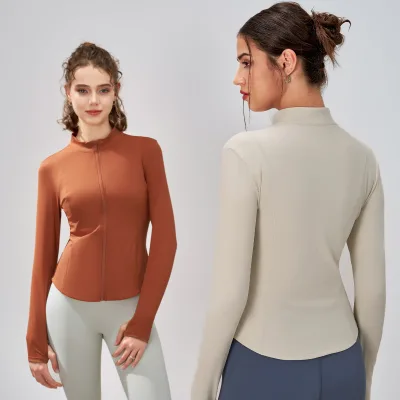


Breathable Aop Female Zip Outdoor Coat Stand up Neck Yogawear Sports Jacket
$7.85 - $8.50
MOQ: 500 Pieces

Hoody Tight Workout Stretchy Performance Running 2021 Womens Yoga Sport Jackets
$7.85 - $8.50
MOQ: 500 Pieces


Breathable Women's Training Jacket - Lightweight Running Yoga Sportswear
$24.34 - $25.00
MOQ: 2 Pieces


Comprehensive Sourcing Guide
Strategic Sourcing Guide for Yoga Jackets
Understanding Product Specifications and Material Composition
When sourcing yoga jackets, the primary objective is to align technical specifications with the functional demands of high-intensity movement. Based on current market observations, the core construction of these garments typically involves a dual-fabric approach. The shell is frequently composed of polyester, providing durability and shape retention, while the lining often utilizes spandex to ensure a compressive, skin-tight fit. This combination is critical for yoga and pilates applications where unrestricted movement is paramount. Some variations in the active wear category may substitute the material blend with a spandex and nylon mix, which offers similar elasticity but may differ in moisture management properties.
The physical attributes of the jacket must be scrutinized for specific design elements that define the user experience. The sleeve length is a decisive factor; observed listings indicate a prevalence of long-sleeve designs, often described as "full" length in centimeter specifications, which provides coverage and sun protection during outdoor activities. The fit type is predominantly "skinny" or "fit," designed to hug the body without restricting range of motion. Necklines are generally standardized as crew necks, offering a classic aesthetic that pairs well with various yoga tops. Additionally, the fashion element often includes a "crop top" style, which is a distinct trend in modern athleisure, requiring precise length measurements to ensure the garment remains functional during bending and stretching exercises.
The color and pattern capabilities of the supplier are equally important for branding and aesthetic customization. Market data reveals a diverse palette, with options ranging from eight solid colors to five tie-dye prints, and some suppliers offering up to 26 solid shades including black, ivory, and raspberry. Customization via Pantone matching is frequently available, allowing brands to maintain strict color consistency. The printing methods observed include thermal sublimation for full-page printing, which is ideal for complex, all-over designs, and heat-transfer printing for specific logos or graphics. The pattern types vary between solid and printed designs, with the latter often featuring custom logo printing capabilities.
Technical Standards and Compliance Verification
In the B2B procurement of athletic apparel, verifying compliance and adherence to standards is a non-negotiable step. While specific certification statuses such as GOTS or OEKO-TEX are sometimes mentioned in broader market contexts, buyers must treat these as variables to be confirmed rather than inherent guarantees. The supplied data indicates that the product standard is often defined by "multiple sizes and customization," suggesting that compliance is frequently tied to the specific order requirements rather than a blanket certification for all stock items.
Buyers should prioritize verifying the material safety and environmental claims directly with the supplier. The feature set of these jackets often includes claims of being anti-bacterial, sweat-wicking, anti-UV, and anti-odor. These are performance attributes that require validation through independent testing rather than relying solely on product descriptions. For instance, the "four-way stretch" and "active stretch" capabilities must be confirmed to ensure the fabric returns to its original shape after repeated use. Similarly, claims of being lightweight, quick-dry, and breathable need to be substantiated by fabric weight specifications, which are observed to be around 240 grams for certain models.
The origin of the product is a significant factor in compliance and logistics. The primary production hub identified is Shanghai, China, which implies a specific supply chain ecosystem. Buyers must ensure that the manufacturing facility adheres to local labor laws and international trade standards relevant to their target market. While the data mentions "OEM service" and "accept OEM," this confirms the supplier's capability for custom manufacturing but does not automatically imply adherence to specific ethical or environmental standards. Therefore, the procurement strategy must include a request for third-party audit reports or specific compliance documentation for the batch being ordered.
Cost Drivers and Pricing Structure Analysis
The pricing structure for yoga jackets is influenced by a complex interplay of material costs, customization levels, and order volume. The observed price range in the market spans from 4.7 to 25 USD, a wide variance that reflects differences in material quality, design complexity, and order quantity. Several key drivers contribute to this fluctuation. First, the material composition plays a significant role; jackets utilizing a nylon-spandex blend may command a different price point compared to those using polyester-spandex combinations due to raw material cost differences.
Second, the level of customization is a major cost determinant. Suppliers offering "custom Pantone" colors, "customized logo printing," and "full page printing" via thermal sublimation will typically charge a premium over standard off-the-shelf items. The complexity of the print design, particularly for tie-dye or multi-color patterns, can also increase production costs. Furthermore, the "7 days sample order lead time" support offered by some suppliers suggests a more agile, potentially higher-cost production model compared to those that do not support rapid sampling.
Order volume is another critical factor. The observed Minimum Order Quantity (MOQ) ranges from 1 to 1000 units. While some suppliers may accommodate single-item orders for sampling purposes, the unit cost will be significantly higher at this level. As the order quantity increases, economies of scale typically reduce the per-unit cost. The "available quantity" of 100,000 units for certain models indicates that large-scale procurement is feasible, but buyers must negotiate pricing tiers based on their specific volume requirements. Additionally, packaging requirements, such as individual recyclable PE zipper bags versus bulk carton packing, can influence the final landed cost.
Typical Applications and Market Segmentation
Yoga jackets are versatile garments designed for a wide array of athletic and lifestyle applications. The primary use cases identified include yoga, pilates, gym training, running, and high-intensity interval training (HIIT). These activities demand fabrics that offer superior breathability, moisture management, and flexibility. The "skinny" fit and "four-way stretch" features are specifically engineered to support the dynamic movements required in these sports, ensuring the jacket does not impede performance.
Beyond dedicated fitness activities, these jackets are increasingly marketed for "athleisure street" wear. The stylish design elements, such as the crop top style and various solid shades, make them suitable for casual wear, commuting, or light outdoor activities. The "anti-UV" and "windproof" features extend their utility to outdoor running and cycling, where environmental protection is necessary. Some listings also mention suitability for ball sports and soccer, indicating a broader application in team sports where mobility and comfort are essential.
The target demographic is predominantly women, as indicated by the "gender" attribute in the product specifications. However, the functional attributes like "quick dry" and "breathable" are universally applicable. The "ideal use" categories suggest that the product is positioned for both professional athletes and fitness enthusiasts who prioritize comfort and style. The ability to customize logos and colors allows brands to target specific niche markets, such as boutique yoga studios or corporate wellness programs, further expanding the potential application scope.
Supplier Evaluation and Operational Capabilities
Evaluating a supplier for Yoga Jacket procurement requires a deep dive into their operational capabilities and service flexibility. The "supply type" is a critical indicator; while some suppliers offer "in-stock items" for immediate fulfillment, others specialize in "OEM service," which is essential for brands requiring custom designs. The presence of "7 days sample order lead time" support is a strong positive signal, indicating a supplier's ability to respond quickly to design changes and market trends. However, conflicting data exists where some listings state "Not Support" for this lead time, necessitating careful verification during the negotiation phase.
The production capacity and logistics capabilities must also be assessed. The "available quantity" of 100,000 units suggests that some suppliers have the capacity for large-scale orders, but buyers must confirm the actual production lead time for their specific order size. The "single package size" of 30x20x5cm and "single gross weight" of 0.300kg are vital for calculating shipping costs and storage requirements. Packaging standards, such as "each set in recyclable PE zipper bag" with "50 sets per carton," should be aligned with the buyer's sustainability goals and logistical preferences.
When selecting a supplier, buyers should prioritize those who demonstrate transparency in their customization process. The ability to accept "custom Pantone" colors and "customized logo printing" is a key differentiator. Additionally, the "stylish" attribute and "accept OEM" status suggest a supplier that is adaptable to design trends. However, the lack of specific certification data in the provided facts means that buyers must conduct their own due diligence regarding the supplier's ethical and environmental practices.
Quality Control and Long-Term Procurement Strategy
Establishing a robust quality control (QC) protocol is essential for maintaining brand reputation in the competitive yoga apparel market. Given the diverse feature set including "anti-bacterial," "sweat-wicking," and "anti-static" properties, buyers must implement rigorous testing protocols. These claims should not be accepted at face value; instead, buyers should request test reports from accredited laboratories to verify the performance of the fabric against industry standards. The "fabric weight" of 240 grams should be measured consistently across batches to ensure uniformity.
Long-term procurement considerations involve building a resilient supply chain. The "7 days sample order lead time" capability is a strategic asset for brands that need to iterate designs rapidly. However, buyers must balance this agility with the stability of the supply chain. The "location" of Shanghai, China, offers access to a mature textile industry but also introduces potential logistical complexities. Buyers should develop contingency plans for lead time variations, especially given the conflicting data on sample support times.
Sustainability is another critical long-term factor. The mention of "recyclable PE zipper bags" indicates a move towards eco-friendly packaging, but buyers should explore further opportunities for sustainable materials and production processes. As the market evolves, the demand for certified sustainable apparel is likely to increase. Therefore, maintaining a relationship with suppliers who are open to adopting new standards and certifications will be crucial for future-proofing the product line.
| Feature Category | Key Attributes to Verify | Importance Level |
|---|---|---|
| Material Composition | Polyester/Spandex vs. Nylon/Spandex; Fabric Weight (240g) | High |
| Fit & Design | Skinny Fit, Crew Neck, Long Sleeve, Crop Top Style | High |
| Performance | Sweat-Wicking, Anti-UV, Four-Way Stretch, Quick Dry | Critical |
| Customization | Pantone Matching, Logo Printing, Full Page Sublimation | Medium |
| Logistics | MOQ (1-1000), Lead Time, Packaging (PE Bag/Carton) | High |
| Compliance | Third-party Test Reports, Ethical Audits | Critical |
By adhering to these guidelines and maintaining a disciplined approach to verification, buyers can successfully navigate the complex landscape of Yoga Jacket sourcing, ensuring high-quality products that meet both functional and aesthetic demands.
FAQs
What fabric composition is used for the Yoga Jacket shell and lining?
The shell is made of polyester while the lining uses spandex to ensure a compressive fit. Some variations may use a spandex and nylon blend for similar elasticity. This dual-fabric approach supports unrestricted movement during yoga and pilates.
Which sleeve lengths and fit types are available for this garment?
Long sleeve designs are prevalent, often described as full length to provide coverage. The fit type is predominantly skinny or fit, designed to hug the body without restricting range of motion during high-intensity activities.
Can buyers customize colors and logos for bulk orders of yoga jackets?
Yes, customization is available including custom Pantone matching and logo printing. Suppliers offer options ranging from eight solids to twenty-six shades and support thermal sublimation for full-page printing designs.
How does the MOQ range and lead time affect sourcing decisions?
The minimum order quantity ranges from one to one thousand units depending on the supplier. While some support a seven-day sample lead time, others do not, so buyers must verify specific timelines before ordering.
What performance features are claimed for these athletic yoga jackets?
Features include anti-bacterial, sweat-wicking, anti-UV, and four-way stretch capabilities. The fabric is also described as lightweight, quick-dry, breathable, and windproof to support various athletic and outdoor activities.
Where are these yoga jackets manufactured and what is the packaging standard?
The primary production hub is Shanghai, China. Each set is typically packed in a recyclable PE zipper bag, with fifty sets per carton, though batch packing can be adjusted as required.