Biodegradable Wooden Ice Cream Cup Suppliers and Manufacturers
Find 14 verified suppliers offering biodegradable wooden ice cream cups with varying lead times, certifications, and MOQs. Compare response times, locations, and product specs to select the right factory for your needs; review the available evidence before requesting comparable quotations from suitable candidates.
Updated
Suppliers List

Wuhan Haokelao Packaging Technology Co., Ltd.
- Verified by BV
- Trading Company,Manufacturer/Factory
- China Hubei
- Lead time23 days
- Avg. response≤ 4h
Main productsPaper Bowl, Paper Cup, Paper Bag, Paper Box, Coffee Cup, Disposable Bowl, Disposable Cup
Main marketsSouth America,Eastern Europe,Mid East,North America,Southeast Asia,Eastern Asia,Oceania,Western Europe,Africa


500ml Disposable Ice Cream Logo Printed Cups with Lid and Wooden Spoon
$0.01 - $0.02
MOQ: 30000 Pieces


Wuhan Huiyou Wood Products Co., Ltd.
- Verified by TüVRheinland
- Manufacturer, Trading Company
- Lead time15 days
- Avg. response≤ 13h
Main productsBamboo Wooden Ice Cream Sticks, Bamboo Wooden Skewers Sticks, Bamboo Wooden Cutlery Plates, Bamboo Wooden Tableware Food Package, Drinking Straws
Main marketsEastern Europe(25%), Northern Europe(25%), North America(10%)
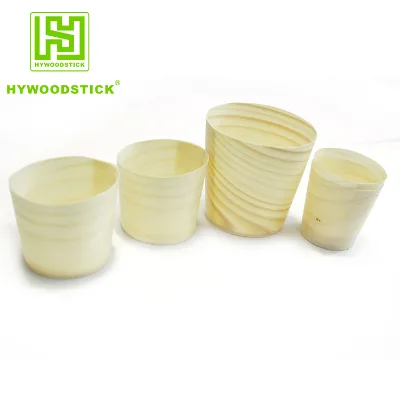
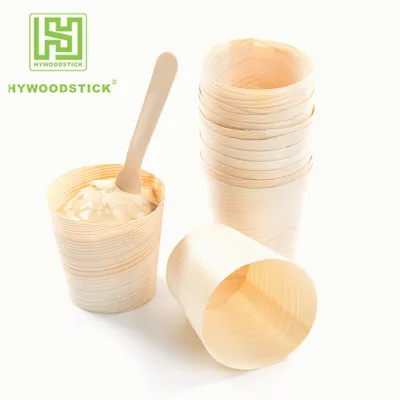
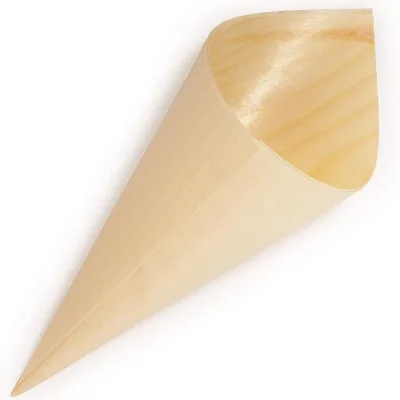
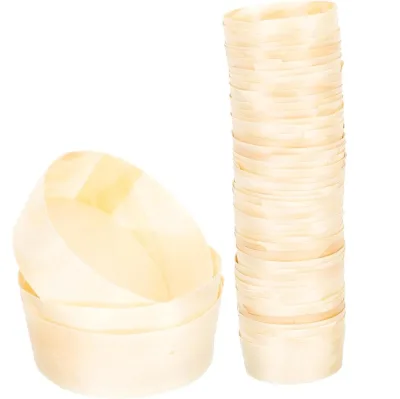
Disposable Biodegradable Eco-Friendly Wooden Ice Cream & Snack Cups for Party Use
$20.00 - $25.00
MOQ: 10
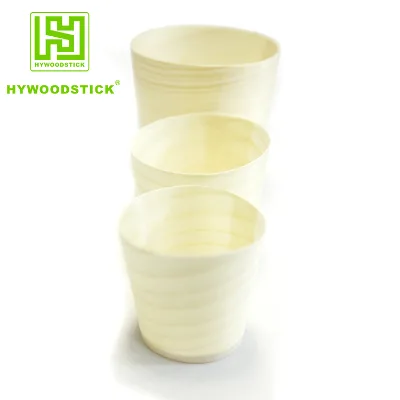
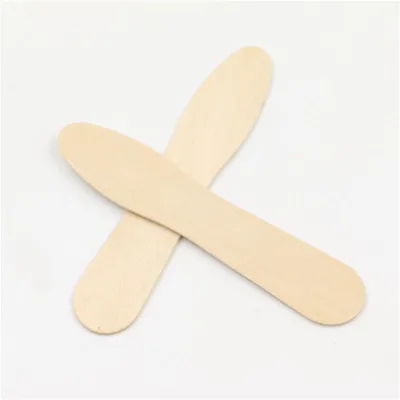
Biodegradable Yogurt Spoon and Ice Cream Sticks Wood Cup with Lid for Party Occasions
$15.00 - $17.00
MOQ: 100000
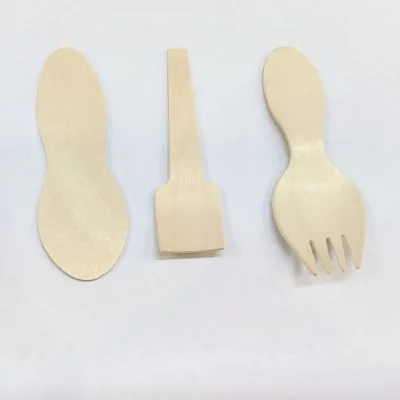
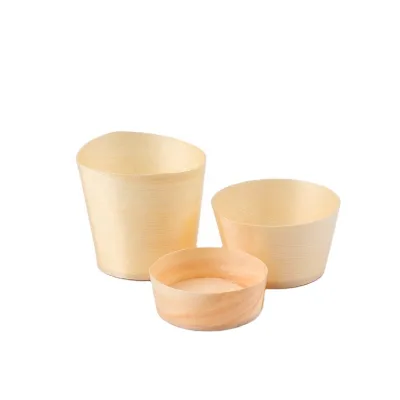
Children's Disposable Wood Cup for Ice Cream Dessert Cola and Cheese Tasting
$30.00 - $50.00
MOQ: 10 boxes

- Verified by SGS
- Combined
- China Hebei
- Lead time15 days
- Avg. response≤ 7h
Main productsPaper Cups Paper Bags, Aluminum Foil Containers
Main marketsDomestic


Ice Cream Paper Cup with Paper Lid and Spoon Custom Various Ice Cream Paper Cup
$0.05 - $1.00
MOQ: 1000 Pieces


Hubei Xinyujie Import and Export Trading Co., Ltd.
- Verified by SGS
- Combined
- China Hubei
- Lead time15 days
- Avg. response≤ 4h
Main productsSingle Wall Paper Cup, Double Wall Paper Cup, Embossed Wall Paper Cup, Ripple Wall Paper Cup, Soup Paper Cup, Ice Cream Paper Cup, Paper Bucket, Paper Bowl, PP / Pet / PLA Plastic Cup, Fruit Plastic Barrel
Main marketsDomestic

Ice Cream Paper Bowl Paper Cup Ice Cream Paper Container Biodegradable Ice Cream Cup
$0.03 - $0.06
MOQ: 49999 Pieces


Wholesale Manufacturer Paper Ice Cream Biodegradable Ice Cream Cup with Lid
$0.03 - $0.06
MOQ: 49999 Pieces


EVER GREATER IMP. & EXP. CO., LIMITED
- Verified by TUVRHEINLAND
- Trading Company
- China Zhejiang
- Lead time15 days
- Avg. response≤ 6h
Main productsDisposable Cup, Paper Cup, Pet Cup, PLA Cup, Sleeve, Coaster, Food Packag Box, Pizza Box, Cake Box, Paper Box
Main marketsSoutheast Asia/ Mideast,Europe,Australia,North America

Ice Cream Cup Cups Coffee Cups Ice Cream Packaging Cup Biodegradable Disposable
$0.01 - $0.03
MOQ: 30000 Pieces

Hefei Craft Tableware Co., Ltd.
- Verified by SGS Group
- Manufacturer, Trading Company
- Lead time30 days
- Avg. response≤ 3h
Main productsWooden Cutlery, Bamboo Skewers, Sugarcane Bagasse Containers, Wooden Stirrers, Bamboo Cutlery
Main marketsWestern Europe(30%), North America(16%), Oceania(12%)
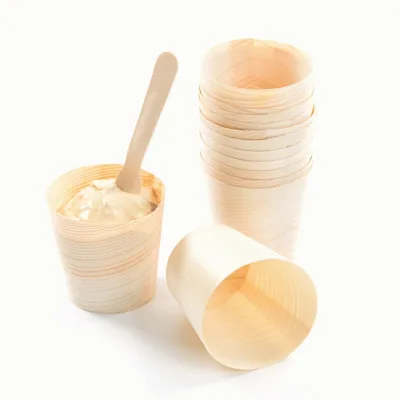
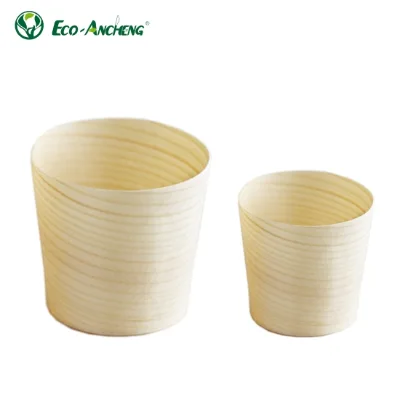
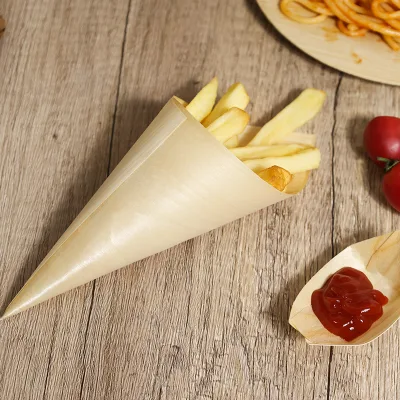
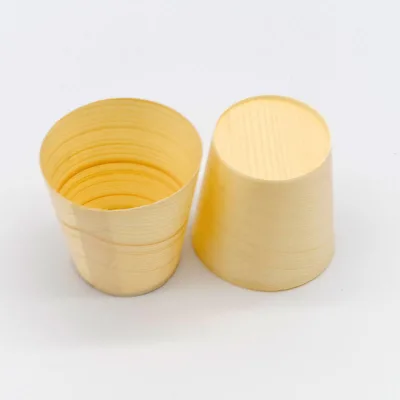
Factory Price Biodegradable Wooden Cup Suitable for Camping Custom Engaged Wooden Cup
$0.03 - $0.10
MOQ: 50000
Dalian Excellent Wood Products Co., Ltd.
- Verified by TüVRheinland
- Manufacturer, Trading Company
- Lead time15 days
- Avg. response≤ 6h
Main productsDisposable Wooden Knives/Forks/Spoons, Disposable Wooden Coffee Sticks, Disposable Wooden Container, Disposable Wooden Ice Cream Sticks, Disposable Wooden Chopsticks

- Verified by SGS
- Trading Company
- China Anhui
- Lead time30 days
- Avg. response≤ 3h
Main productsPeper Cup, Plastic Cup, Paper Bowl, Biodegrable Cup, Straw, Paper Bag, Cup Carry Tray, Cup Sleeves
Main marketsSoutheast Asia/ Mideast,Europe,Australia,North America


Biodegradable Coffee Hot Sale Compostable Ice Cream Tea Cup with Lids
$0.008 - $0.013
MOQ: 50000 Pieces

Cheap Disposable 8oz Cold Biodegradable Paper Ice Cream Cup for Drink
$0.008 - $0.015
MOQ: 50000 Pieces
Guangzhou Baobang Paper-Plastic Products Co., Ltd.
- Verified by TüVRheinland
- Manufacturer, Trading Company
- Lead time10 days
- Avg. response≤ 9h
Main productsCoffee And Bakery Packaging, Fast Food Packaging, Food And Beverage Packaging, Eco-friendly Packaging, Luxury Packaging
Main marketsNorth America(20%), Oceania(16%), Western Europe(15%)
Shijiazhuang Daina Machinery Commerce Co., Ltd.
- Verified by SGS Group
- Trading Company
- Lead time15 days
- Avg. response≤ 1h
Main productsIce Cream Machine, Ice Cream Cups, Deck Oven, Snack Machines, Baking Oven
Main marketsNorth America(20%), Africa(20%), Mid East(20%)
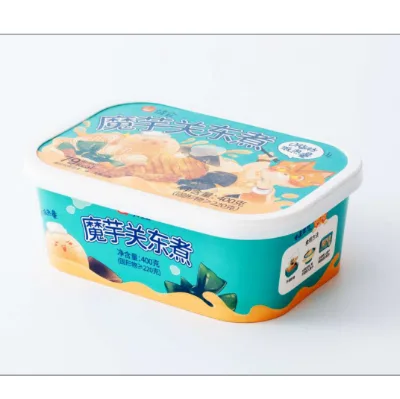
Ice Cream Cup Recyclable Ice Cream Disposable Cups 3oz Ice Cream Cups With Lids
$0.02 - $0.06
MOQ: 30000 sets
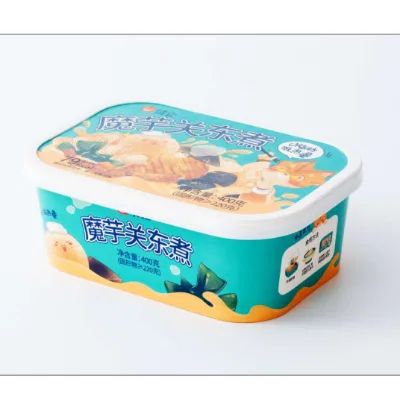
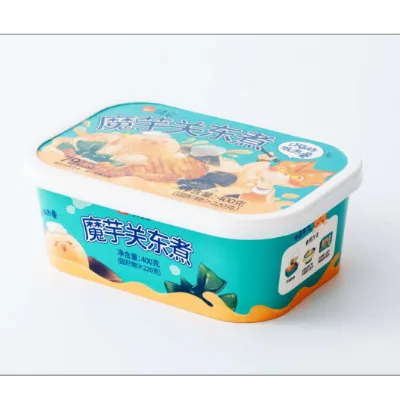
Custom Printed Disposable Ice Cream Disposable Paper Cup Ice Cream Cup with Lid
$0.02 - $0.06
MOQ: 30000 sets
Chongqing Sturdy paper products co., ltd.
- Verified by SGS Group
- Trading Company
- Lead time7 days
- Avg. response≤ 2h
Main productsDisposable Paper Cup, Disposable Paper Bag, Disposable Plastic Cup, Disposable Paper Products, Disposable Plastic Products
Main marketsNorth America(50%), Western Europe(50%)
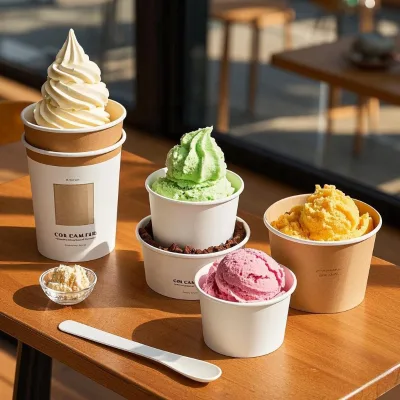
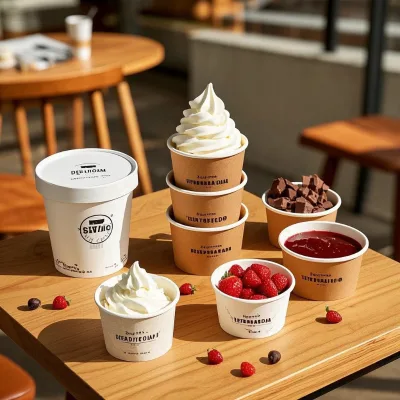
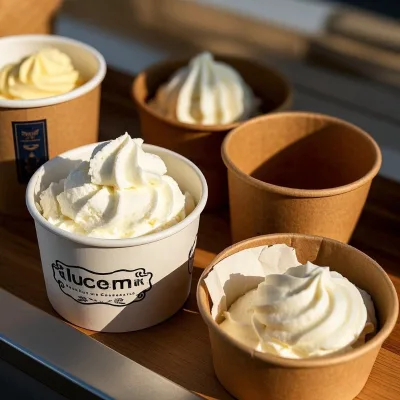
"9oz Eco-Friendly Biodegradable Ice Cream Paper Tub Lid & Cups Compostable 300ml"
$0.012 - $0.06
MOQ: 1 Minimum
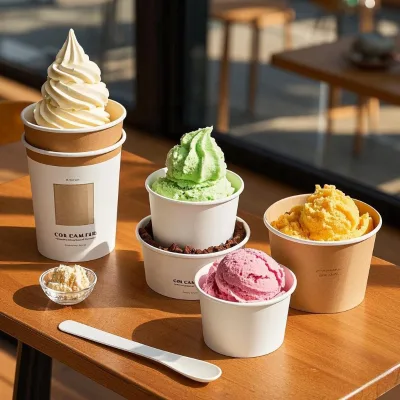
$0.0125 - $0.0624
MOQ: 1 Minimum

Hangzhou Meshine Import And Export Co., Ltd
- Trading Company,Manufacturer/Factory
- China Zhejiang
- Lead time23 days
- Avg. response≤ 4h
Main productsFood Packaging, Paper Bag, Paper Cup, Paper Box, Tableware, Sushi Box, Food Box, Salad Bowl, Plastic Packaging, Fast Food Box
Main marketsSouth America,Eastern Europe,Mid East,North America,Southeast Asia,Eastern Asia,Oceania,Western Europe,Africa

Disposable Biodegradable Packaging Eco Friendly Ice Cream Paper Cups with Lid Spoon
$0.015 - $0.06
MOQ: 20000 Pieces


Zhejiang Jinhao Packing Material Co., Ltd.
- Verified by SGS
- Combined
- China Zhejiang
- Lead time15 days
- Avg. response≤ 8h
Main productsPaper Cup, Paper Bowl, Paper Food Tray, Paper Food Container, Paper Cup Sleeve, Soup Cup, Disposable Cup, Salad Bowl, Lunch Box, Plate
Main marketsSoutheast Asia/ Mideast,East Asia(Japan/ South Korea),Domestic,Europe,North America

Biodegradable Paper Container: Disposable Takeout Soup & Ice Cream Bowl
$0.024 - $0.038
MOQ: 100000 Pieces


Changsha Mingkai Paper Products Co., Ltd.
- Combined
- China Hunan
- Lead time30 days
- Avg. response≤ 4h
Main productsCoffee Cup, Disposable Plastic Cup, OPP Bag, Brown Craft Paper Cup
Main marketsSouth America,Africa,Southeast Asia/ Mideast,East Asia(Japan/ South Korea),Domestic,Europe,Australia,North America


Comprehensive Sourcing Guide
Biodegradable Wooden Ice Cream Cup Supplier Concentration and Factory Types
The current supplier landscape for biodegradable wooden ice cream cups reveals a distinct concentration of manufacturing and trading entities located in China, specifically within the Hubei region. This geographic clustering suggests a localized supply chain ecosystem where raw material sourcing, particularly bamboo and birch wood, is integrated with processing facilities. Buyers evaluating this market should note that the primary output includes not only the cups themselves but also related items such as bamboo wooden ice cream sticks, skewers, cutlery, plates, and drinking straws. This indicates that many factories operate with a diversified portfolio of wooden tableware, allowing for consolidated shipping and potentially more flexible production scheduling. The presence of both manufacturers and trading companies in this region provides buyers with options ranging from direct factory engagement to intermediary services that may offer broader product assortments or simplified communication channels. Understanding this regional focus is crucial for logistics planning, as it centralizes the origin of goods and simplifies the identification of suppliers who specialize in wood-based disposable products.
Within this concentrated area, the operational models vary between pure manufacturing factories and hybrid trading companies. Factories typically possess the machinery for cutting, shaping, and treating wood, while trading companies may aggregate products from multiple smaller workshops or offer additional services like custom branding and quality control. The available data indicates that some suppliers offer OEM and ODM capabilities, suggesting that they can adapt their production lines to meet specific design requirements for ice cream cups. This flexibility is essential for brands looking to differentiate their packaging while maintaining the eco-friendly appeal of wooden materials. The coexistence of these entity types in Hubei creates a competitive environment where buyers can compare direct manufacturing costs against the value-added services provided by traders. It is important for purchasers to distinguish between these models to ensure they are getting accurate pricing and realistic lead times, as trading companies may add layers to the supply chain that affect both cost and communication efficiency.
How to Verify Biodegradable Wooden Ice Cream Cup Suppliers
Verifying the legitimacy and capability of suppliers requires a multi-layered approach that goes beyond simple profile reviews. Buyers should prioritize suppliers who have undergone third-party verification processes, such as those conducted by BV or TüV Rheinland, as these audits provide an independent assessment of the company’s business scope and operational integrity. The presence of such verification badges is a strong indicator that the supplier has been physically inspected and their claims regarding manufacturing capacity and business registration have been validated. Additionally, examining the system certifications held by the supplier is critical for ensuring compliance with international standards. Certifications like ISO 9001, BSCI, and ISO 14001 demonstrate a commitment to quality management, social responsibility, and environmental protection, which are particularly relevant for biodegradable products. These credentials suggest that the supplier has established robust internal processes for maintaining product consistency and ethical labor practices, reducing the risk of supply chain disruptions due to non-compliance issues.
Beyond certifications, buyers must assess the responsiveness and transparency of the supplier’s communication channels. A key metric for evaluation is the response time, which serves as an indicator of the supplier’s operational efficiency and customer service dedication. Suppliers with faster response times are generally more reliable in addressing urgent inquiries and resolving potential issues during the procurement process. Furthermore, buyers should request detailed product specifications and samples to verify the actual quality of the biodegradable wooden cups. The material composition, such as the use of birch wood or other sustainable sources, should be clearly documented and matched against the supplier’s claims. It is also advisable to check for specific product certifications, such as FDA or CE/EU compliance, which are necessary for food-contact applications. By combining verification badges, certification audits, response speed analysis, and physical sample evaluation, buyers can build a comprehensive profile of each supplier’s reliability and suitability for their specific sourcing needs.
What to Compare Across Biodegradable Wooden Ice Cream Cup Suppliers
When evaluating multiple suppliers, buyers must systematically compare key operational metrics to identify the most suitable partner for their business. One of the primary factors is the minimum order quantity (MOQ), which varies significantly across different suppliers and product types. Some suppliers may offer low MOQs for custom designs, while others require larger volumes to achieve cost-effective production runs. Comparing these thresholds helps buyers align their order sizes with their inventory management strategies and cash flow capabilities. Additionally, the lead time for production is a critical variable that impacts supply chain planning. Suppliers with shorter and more consistent lead times can offer greater flexibility in responding to market demands and seasonal peaks. Buyers should also consider the range of main products offered, as suppliers with a broader portfolio of wooden tableware may have more stable production lines and better resource utilization, potentially leading to more competitive pricing and reliable delivery schedules.
Price structures and customization options are another vital area for comparison. While base prices provide a starting point, buyers must evaluate the total cost of ownership, including shipping, tariffs, and any additional fees for customization. Suppliers that offer flexible customization services, such as logo printing or specific size adjustments, can add significant value to the final product. It is also important to assess the supplier’s capacity for handling complex orders, including their ability to manage graphic processing and sample production. The availability of free samples can be a useful tool for quality assessment, allowing buyers to physically inspect the product before committing to a large order. Furthermore, comparing the supplier’s response time can provide insights into their customer service quality and operational efficiency. By systematically analyzing MOQs, lead times, product ranges, pricing, customization capabilities, and response speeds, buyers can make informed decisions that balance cost, quality, and service reliability.
Common Biodegradable Wooden Ice Cream Cup Sourcing Risks
Sourcing biodegradable wooden ice cream cups involves several inherent risks that buyers must proactively manage to ensure a smooth procurement process. One significant risk is the variability in material quality, as wood is a natural product that can differ in grain, strength, and treatment. Inconsistent quality can lead to product failures, such as cups breaking during use or failing to meet biodegradability claims. Buyers must ensure that suppliers adhere to strict quality control standards and provide consistent material specifications. Another risk is the potential for delays in production and delivery, which can disrupt supply chains and lead to stockouts. This is particularly relevant for suppliers with longer lead times or those who may face raw material shortages. Buyers should establish clear communication channels and monitor production progress to mitigate these delays. Additionally, the complexity of customs clearance and international shipping can introduce unforeseen costs and delays, especially if documentation is incomplete or incorrect.
Regulatory compliance is another critical area of risk, as biodegradable products are subject to varying environmental regulations across different markets. Suppliers must provide accurate documentation regarding the biodegradability and compostability of their products to ensure compliance with local laws. Failure to do so can result in product seizures, fines, or reputational damage. Buyers should verify that suppliers hold the necessary certifications and test reports to support their environmental claims. Furthermore, the risk of intellectual property infringement exists when working with suppliers who offer custom designs. Buyers must ensure that their branding and designs are protected and that suppliers do not share them with competitors. Clear contractual agreements and non-disclosure agreements can help mitigate this risk. By identifying and addressing these risks through rigorous supplier vetting, clear communication, and robust contractual safeguards, buyers can protect their interests and ensure a successful sourcing experience.
Biodegradable Wooden Ice Cream Cup Regional Sourcing and Logistics
The regional concentration of suppliers in China, particularly in Hubei, offers distinct advantages and challenges for international buyers. Sourcing from this region allows buyers to benefit from established manufacturing clusters and efficient logistics networks. However, it also requires careful planning to manage transportation costs and delivery times. Buyers should consider the proximity of the supplier to major ports, as this can significantly impact shipping efficiency and costs. Additionally, the type of product, whether it is a paper-based or wooden cup, can influence packaging requirements and shipping volume. Wooden cups may be heavier and require more robust packaging to prevent damage during transit, which can affect freight costs. Buyers must also be aware of the seasonal variations in production capacity, as demand for disposable tableware can fluctuate throughout the year. Planning orders well in advance can help secure production slots and avoid delays during peak seasons.
Logistics planning also involves understanding the import regulations and duties applicable in the buyer’s home country. Different regions may have varying tariffs on wooden products, which can affect the total landed cost. Buyers should work with experienced freight forwarders who can navigate these complexities and optimize shipping routes. Additionally, the use of container loading optimization can help reduce shipping costs by maximizing the volume of goods per container. For buyers in distant markets, considering the use of sea freight versus air freight is crucial, as the choice will impact both cost and delivery speed. Sea freight is generally more cost-effective for large volumes but takes longer, while air freight is faster but more expensive. By carefully evaluating these logistical factors and working closely with suppliers and logistics partners, buyers can ensure that their biodegradable wooden ice cream cups are delivered efficiently and cost-effectively.
Biodegradable Wooden Ice Cream Cup Commercial Terms and Order Planning
Effective order planning and clear commercial terms are essential for successful procurement of biodegradable wooden ice cream cups. Buyers should establish detailed purchase agreements that specify product specifications, quality standards, delivery schedules, and payment terms. Clear communication regarding customization requirements, such as logo printing or specific sizes, is crucial to avoid misunderstandings and ensure that the final product meets expectations. Buyers should also negotiate favorable payment terms, such as partial payments or escrow services, to mitigate financial risk. Additionally, establishing a clear process for sample approval and quality inspection before mass production can help prevent costly errors and ensure product consistency. Buyers must also consider the long-term relationship with the supplier, as consistent ordering can lead to better pricing and priority treatment during peak seasons.
Order planning should also account for inventory management and demand forecasting. Buyers should analyze historical sales data and market trends to estimate future demand accurately. This information can be used to determine optimal order quantities and timing, reducing the risk of overstocking or stockouts. Buyers should also consider the shelf life and storage requirements of the wooden cups, as improper storage can affect product quality. Establishing a regular ordering schedule can help maintain a steady supply and simplify logistics planning. Furthermore, buyers should maintain open communication with their suppliers to stay informed about any changes in production capacity or raw material availability. By combining detailed commercial terms with strategic order planning, buyers can optimize their supply chain, reduce costs, and ensure a reliable supply of high-quality biodegradable wooden ice cream cups.
FAQs
What is the typical lead time for biodegradable wooden ice cream cups?
Manufacturers in China Hubei generally require 15 to 23 days for production. This timeframe applies to standard orders of paper or wooden cups. Buyers should confirm specific delivery windows with suppliers before finalizing contracts to ensure timely arrival for seasonal demand.
What certifications are available for these eco-friendly cups?
Suppliers often provide FDA, CE/EU, ISO 9001, and BSCI certifications. These documents verify food safety and quality management systems. Buyers should request valid certificates to ensure compliance with international standards and regulatory requirements for food packaging materials.
What is the minimum order quantity for custom printed cups?
Minimum order quantities typically range from 10,000 to 30,000 pieces for paper cups. Some suppliers offer lower MOQs for wooden cups, starting at 10 cartons. Buyers should verify specific thresholds based on customization needs and material selection.
Are samples available for quality testing before bulk orders?
Many suppliers offer free samples for evaluation purposes. This allows buyers to assess material quality, print accuracy, and structural integrity. Buyers should contact suppliers directly to request samples and confirm any shipping costs or specific sample requirements.
What materials are used for biodegradable ice cream cups?
Options include 100% food-grade paper and biodegradable birch wood. Paper cups often feature flexo and offset printing for custom logos. Wooden cups provide a natural aesthetic and are suitable for sticky foods. Buyers should choose based on product requirements.
How quickly do suppliers respond to sourcing inquiries?
Response times vary, with some suppliers replying within 3 hours. Others may take up to 13 hours to provide initial feedback. Prompt communication helps streamline the sourcing process. Buyers should prioritize suppliers with faster response rates for efficient project management.