Source Kitchen Dish Drying Rack with Mat for Home, Hotel, and Restaurant
Source a Kitchen Dish Drying Rack with Mat from 30 verified listings. Compare options made from carbon steel or diatomaceous stone, featuring classic or American styles. Evaluate MOQs, lead times, and customization support for your procurement needs; compare the available evidence and request quotations based on your requirements.
Updated
Key considerations
Products List











Comprehensive Sourcing Guide
Kitchen Dish Drying Rack with Mat Sourcing Guide
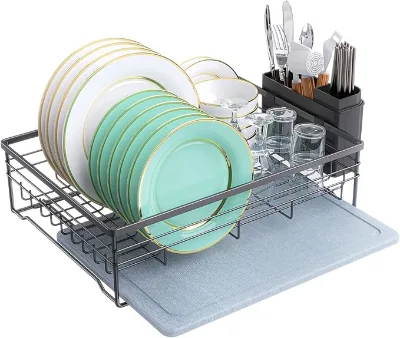
Buyers evaluating this category must first distinguish between rigid metal structures and absorbent stone-based solutions, as the supplied data reveals distinct material profiles for different product types. The market offers carbon steel racks designed for structural support alongside diatomaceous stone mats intended for rapid water absorption, requiring a clear definition of the primary function before initiating contact.
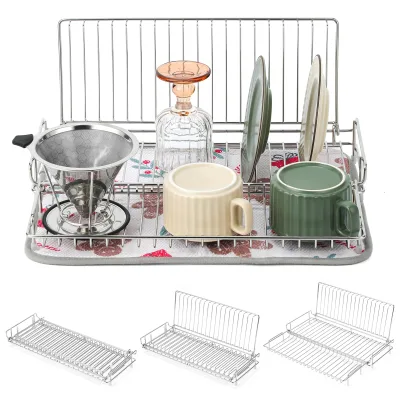
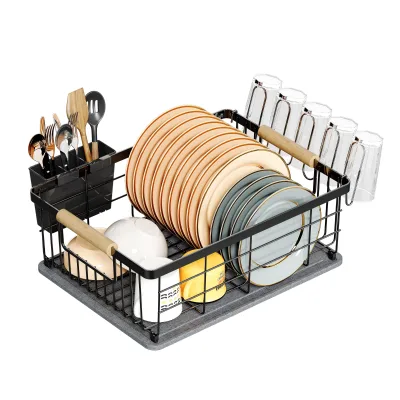
Procurement teams should verify whether the supplier provides a unified system or separate components, as some listings pair a metal rack with a silicone or stone mat while others offer standalone drying mats. This distinction impacts the logistics of packaging and the final assembly requirements at the destination warehouse, influencing both the unit cost and the complexity of the supply chain.
Product Scope and Observed Listing Signals
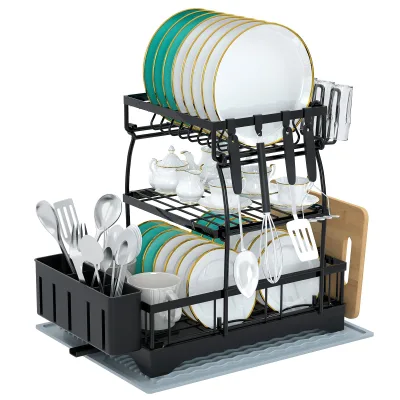
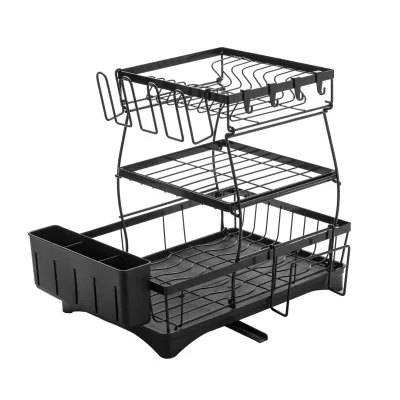
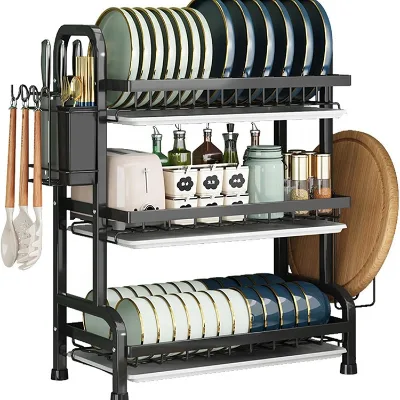
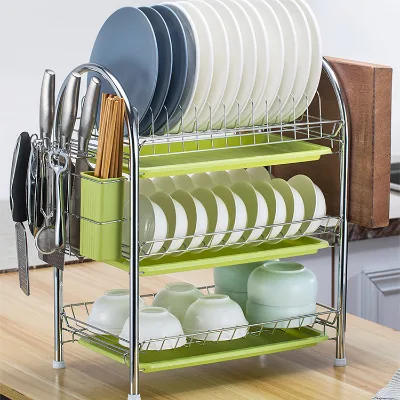
The observed product range includes classic carbon steel racks with a rectangular or square footprint, often featuring three tiers to maximize vertical storage space in compact kitchen environments. These units typically originate from Zhejiang or Guangdong provinces, with specific model numbers like Hc-15-31 indicating standardized production lines that buyers can reference for consistency across large orders.
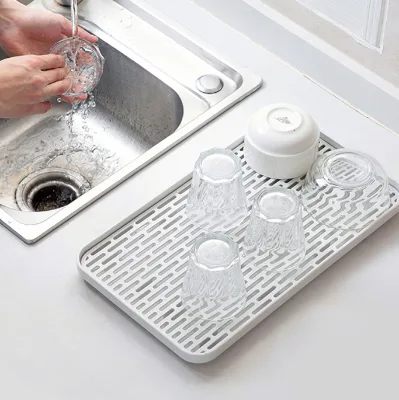
In contrast, the scope also encompasses large stone drying mats made from diatomaceous earth, which serve as a complementary accessory to traditional racks or function as standalone drying surfaces. These mats are available in styles ranging from American to classic designs, with color options including silver and black, allowing buyers to align the aesthetic with specific kitchen decor requirements while ensuring functional drainage.
Technical Specifications to Verify
Buyers must confirm the precise dimensional tolerances and single package sizes, as the data indicates variations such as 35x45x5 cm for certain racks and 32x13x45 cm for others, which directly affects container loading efficiency. The thickness of mats is often listed as "as picture," necessitating a request for physical samples or detailed technical drawings to ensure the product meets the specific drainage and durability expectations of the target market.
It is critical to validate the gross weight per unit, which ranges from 2.0 kg to 3.0 kg depending on the material composition and tier configuration, to accurately calculate shipping costs and freight charges. Additionally, the installation type should be confirmed as standing rather than wall-mounted, ensuring the product fits the intended counter space without requiring additional hardware or structural modifications at the retail location.
Compliance and Safety Documentation
While specific certification status is not explicitly confirmed in the provided listing data, buyers should request evidence of compliance with relevant safety standards such as RoHS for metal components to ensure the absence of hazardous substances. The presence of ISO 9001 in background contexts suggests a potential quality management framework, but this must be verified through valid certificates issued by accredited bodies before finalizing any purchase agreement.
Documentation regarding the food-contact safety of diatomaceous stone mats and silicone accessories is essential, as these materials come into direct contact with wet dishes and kitchen surfaces. Procurement teams should demand material safety data sheets and test reports that verify the non-toxic nature of the stone and the heat resistance of any silicone elements included in the drying system.
Cost Drivers and Commercial Terms
The commercial landscape for these items shows a wide price variance, with observed listings ranging from 0.95 to 17.58 USD, driven primarily by the complexity of the design and the specific material mix of metal and stone. Buyers must account for the minimum order quantity constraints, which vary significantly from 100 pieces for mats to 3000 sets for larger rack systems, impacting the initial capital outlay and inventory risk.
Payment terms typically require a 30% deposit followed by a 70% balance before shipment via T/T, a standard practice that protects the supplier while requiring the buyer to manage cash flow effectively. Lead times are also a critical cost factor, with delivery windows ranging from 20 to 30 days, meaning that production scheduling must be aligned with seasonal demand peaks to avoid stockouts or expedited shipping fees.
Supplier Qualification and Quality Control
Suppliers in this sector often offer OEM and ODM services, allowing for customization of packaging and branding, which is a key differentiator for private label strategies. However, the availability of samples is a prerequisite for verifying the quality of the carbon steel finish and the absorbency of the stone mat before committing to a bulk order, ensuring that the final product matches the visual and functional expectations.
Quality control protocols should include checks on the dimensional accuracy of the metal frame and the structural integrity of the three-tier design to prevent collapse under the weight of wet dishes. Buyers should also inspect the packaging to ensure it is customized and robust enough to protect the delicate stone mats during transit, preventing breakage that could lead to significant financial losses.
Long-Term Procurement Checks
Sustaining a successful supply relationship requires regular audits of the supplier's ability to maintain consistent lead times and adhere to the agreed-upon payment schedules. The variability in MOQs across different product lines suggests that buyers should negotiate volume-based pricing tiers to optimize costs as order quantities increase over the contract period.
Continuous monitoring of material quality is necessary to ensure that the carbon steel does not corrode and that the diatomaceous stone retains its absorbency properties over time. Buyers should establish a feedback loop with the supplier to address any recurring defects or design flaws, ensuring that the product remains competitive and reliable in the long-term kitchen storage organization market.
FAQs
What materials are used for kitchen dish drying racks with mats?
Kitchen dish drying racks with mats are primarily constructed from carbon steel and metal frames. The accompanying drying mats are made from eco-friendly diatomaceous earth or silicone. These materials ensure durability and effective water absorption. The classic style often features a black or silver finish. This combination provides a sturdy structure for holding dishes while keeping the kitchen counter dry and clean.
Can I customize the packaging for these dish drying racks?
Yes, customized packaging is welcomed for these kitchen dish drying racks with mats. Buyers can request specific packaging solutions to meet their branding or logistical needs. The standard single package size is approximately 35x45x5 cm for some models. This flexibility allows for efficient shipping and presentation. Customization options help align the product with specific market requirements or retail standards.
What is the typical lead time for ordering these racks?
The typical delivery time for these kitchen dish drying racks with mats ranges from 20 to 30 days. This lead time depends on the specific model and order volume. For instance, certain carbon steel models have a 20-day delivery time. Other models with stone mats may require 30 days. Buyers should confirm the exact timeline with the supplier based on their chosen product specifications.
Which specifications are available for the dish drying rack models?
Available specifications include various sizes and shapes such as rectangle or square. Common dimensions are 40x30 cm or 35x45x5 cm packages. Some models feature a three-tier standing type design. The dimensional tolerance is typically less than plus or minus 1 mm. These specifications cater to different kitchen storage needs and space constraints for efficient dish organization.
How does the diatomaceous earth mat function in the rack?
The diatomaceous earth mat in the Kitchen Dish Drying Rack with Mat absorbs water rapidly from wet dishes. This feature keeps the countertop dry and prevents water pooling. The mat is eco-friendly and easy to clean. It works in conjunction with the carbon steel rack to provide a complete drying solution. This design enhances kitchen cleanliness and organization by managing moisture effectively.
What are the MOQ requirements for these dish drying racks?
The minimum order quantity for these kitchen dish drying racks with mats varies by model. Some carbon steel racks require an MOQ of 300 sets. Other models may have an MOQ of 500 sets. Specific items like the stone mat rack might have an MOQ of 100 pieces. Buyers should check the specific product details to determine the exact MOQ for their desired item.