Carnation Flower Suppliers and Manufacturers in China
Source 10 verified suppliers for Carnation Flower products, comparing response times, lead times, and certifications like ISO 9001 and TUV. Review pricing and MOQs to identify suitable partners for your procurement needs; review the available evidence before requesting comparable quotations from suitable candidates.
Suppliers List

WUXI SUNGRASS SPORTS CO., LTD.
- Verified by TUVRHEINLAND
- Trading Company,Manufacturer/Factory
- China Jiangsu
- Lead time23 days
- Avg. response≤ 14h
Main productsSynthetic Turf, Synthetic Grass, Artificial Turf, Artificial Grass, Landscape Artificial Grass, Sports Artificial Grass, Football Grass, Football Turf, Football Lawn, Sport Turf
Main marketsSouth America,Eastern Europe,Mid East,North America,Southeast Asia,Eastern Asia,Oceania,Western Europe,Africa

$0.42 - $0.43
MOQ: 1000 Pieces

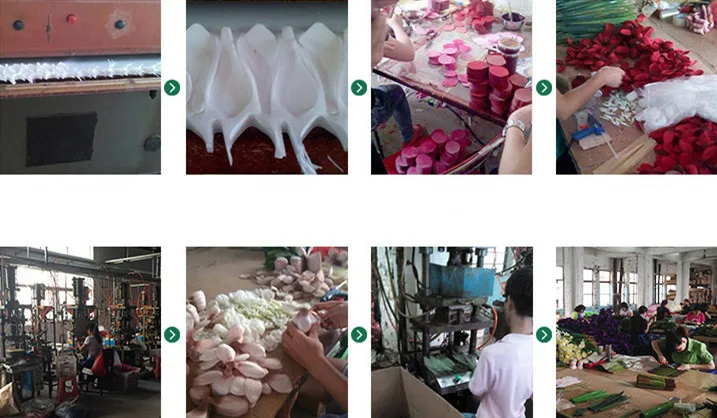
Qingdao Kewei Crafts Co., Ltd.
- Manufacturer, Trading Company
- Shandong, China
- Lead time8 days
- Avg. response≤ 2h
Main productsArtificial Flower,wedding decoration,Wedding Flower Wall,Wedding Flower Centerpieces,Wedding Flower Runner
Main marketsNorth America(30.00%), Western Europe(20.00%), Oceania(10.00%), Eastern Europe(6.00%), Northern Europe(5.00%), Central America(5.00%), South America(5.00%), Mid East(5.00%), Southeast Asia(5.00%), Southern Europe(5.00%), South Asia(2.00%), Africa(2.00%)
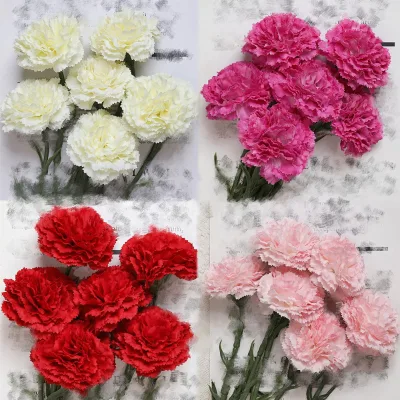
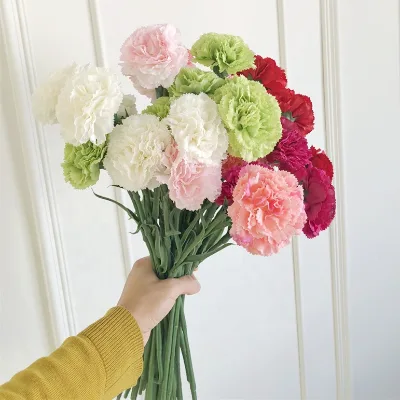
A-433 Artificial Flower Carnations Plant White Carnation Real Touch Latex Carnations Flower
$1.29 - $1.50
MOQ: 50 pieces
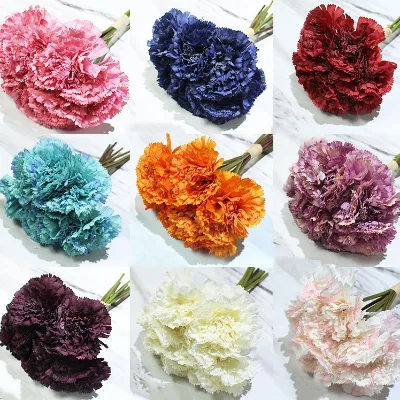
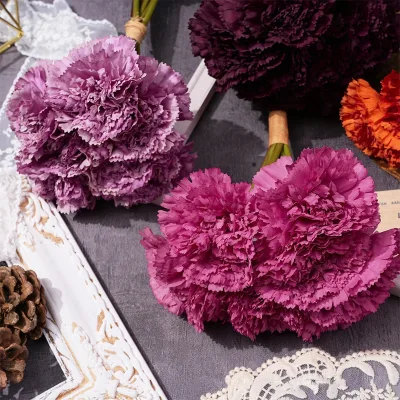
A-427 Artificial Autumn Flower Burnt Edge Carnation Flowers Silk Red Burgundy Carnation Bouquets
$1.80 - $1.91
MOQ: 100 pieces

- Verified by BV
- Manufacturer/Factory
- China Yunnan
- Lead time0 days
- Avg. response≤ 10h
Main productsFlower, Fresh Cut Flower, Preserved Flower, Plants Leaves

Yunnan Blue Bell Flower Co., Ltd.
- Verified by SGS
- Trading Company
- China Yunnan
- Lead time15 days
- Avg. response≤ 7h
Main marketsSoutheast Asia/ Mideast


Luxurious Fresh Cut Flowers Carnation Flowers for Wedding and Event Decoration
$0.10 - $0.30
MOQ: 100 piece

- Trading Company
- China Liaoning
- Lead time15 days
- Avg. response≤ 3h
Main productsArtificial Flowers, Christmas Decorations, Artifical Animal Decorations, Halloween Decorations, Wedding Decorations, Easter Decorations, Home Decorations, Artificial Green Plants, Valentines Day Decorations, Event Decorations
Main marketsEurope,North America
Qingdao Fuboyuan Arts And Crafts Co., Ltd.
- Manufacturer, Trading Company
- Shandong, China
- Lead time7 days
- Avg. response≤ 3h
Main productsFlower Wall, Artificial Plants, Wedding Decoration Floral, Artificial Flowers, Cherry Blossom Trees
Main marketsNorth America(28.00%), Western Europe(22.00%), Oceania(10.00%), Southeast Asia(7.00%), Eastern Europe(6.00%), South America(5.00%), Southern Europe(5.00%), Central America(5.00%), Northern Europe(5.00%), Mid East(5.00%), South Asia(2.00%)
Kunming Kainajin Trading Co., Ltd.
- Manufacturer, Trading Company
- Yunnan, China
- Lead time3 days
- Avg. response≤ 10h
Main productsPreserved rose,Preserved hydrangea,Preserved carnation,Preserved Hydrangea,Preserved moss
Main marketsNorth America(30.00%), South America(19.00%), Southeast Asia(15.00%), Western Europe(7.00%), Northern Europe(5.00%), Eastern Europe(5.00%), South Asia(5.00%), Mid East(2.00%), Southern Europe(2.00%)
Guangzhou Evergreen Paper Products Co., Ltd.
- Verified by TüVRheinland
- Trading Company
- Lead time0 days
- Avg. response≤ 7h
Main productsFlower Box, Flower Wrapping Paper, Satin Ribbons, Flower Packages
Main marketsNorth America(35%), South America(10%), Eastern Europe(5%)

Guangzhou MyWow Decor Co., Ltd
- Combined
- China Guangdong
- Lead time15 days
- Avg. response≤ 20h
Main productsWallpaper, Wall Paper, 3D Wallpaper, 3D Wall Panel, Window Blinds, Artificial Grass, Wall Tiles, Center Rugs, Wall Mural, Natural Grasscloth
Main marketsSouth America,Europe,North America

ZHANGZHOU XIANGCHENG GREENHOME HORTICULTURE CO., LTD
- Trading Company,Manufacturer/Factory
- China Fujian
- Lead time15 days
- Avg. response≤ 15h
Main productsOrchid, Live Plants, Seedlings, Indoor Plants & Outdoor Plants, Flowerpot
Main marketsSouth America,Eastern Europe,Mid East,North America,Southeast Asia,Eastern Asia,Oceania,Western Europe,Africa





Comprehensive Sourcing Guide
Carnation Flower Supplier Concentration and Factory Types
Current data indicates a concentration of suppliers in specific Chinese provinces, with Jiangsu and Shandong emerging as notable hubs for artificial flower manufacturing. In Jiangsu, facilities often operate as a hybrid of trading companies and manufacturers, producing synthetic turf alongside decorative items like artificial carnations. These entities frequently list ISO 9000 and ISO 9001 certifications, suggesting a structured approach to quality management for their synthetic product lines. The presence of TUVRHEINLAND verification on some profiles in this region adds a layer of third-party validation regarding their operational standards. Buyers should note that while these suppliers offer a mix of products, their primary focus often includes landscape materials and sports turf, with artificial flowers serving as a secondary category within their broader catalog.
In contrast, suppliers located in Shandong and Yunnan present different operational profiles. Shandong-based entities are identified as manufacturers and trading companies specializing in wedding decorations and specific artificial flower models, often with faster response times compared to other regions. Meanwhile, the Yunnan cluster is distinct for its focus on fresh cut flowers and preserved botanicals, with suppliers there often holding BV verification. This regional split implies that sourcing artificial carnations requires targeting Jiangsu or Shandong, whereas fresh carnations are best sourced from Yunnan. Buyers must verify the specific product type against the supplier's location, as a factory in Jiangsu may not stock fresh cut flowers, and a Yunnan supplier might not manufacture synthetic variants. Understanding these geographic and typological distinctions is essential for aligning product needs with the correct manufacturing cluster.
How to Verify Carnation Flower Suppliers
Verification of suppliers requires a careful examination of third-party credentials and company type declarations found in the search results. For artificial flower manufacturers, look for ISO 9001 certification and specific verification badges like TUVRHEINLAND or BV, which indicate that an independent body has audited their business practices. A supplier in Jiangsu might display ISO 9000 and ISO 9001, while a Yunnan-based fresh flower grower may carry BV verification. These credentials are not universal; some suppliers may lack them entirely, requiring the buyer to request proof directly. Do not assume that a company type listed as "Manufacturer/Factory" guarantees direct factory access, as some entities operate as trading companies that source from other factories. Always cross-reference the stated company type with the verification badge to ensure the entity has the capacity to fulfill orders directly.
Response time and lead time data provide additional layers of verification regarding a supplier's operational readiness. A supplier with a response time of two hours, as seen in some Shandong profiles, suggests a highly active sales team capable of addressing inquiries quickly. Conversely, a response time of over thirteen hours might indicate a larger organization with slower communication channels or a different time zone. Lead times also vary significantly, ranging from zero days for fresh flowers in Yunnan to twenty-three days for synthetic products in Jiangsu. Buyers should treat these numbers as indicators of current capacity rather than absolute guarantees. If a supplier claims a short lead time but lacks a verification badge, it is prudent to request a sample order or a video call to confirm their actual production capabilities before committing to a large purchase.
What to Compare Across Carnation Flower Suppliers
When evaluating potential partners, buyers should prioritize comparing lead times, minimum order quantities (MOQ), and response speeds to determine logistical feasibility. Artificial flower suppliers in Jiangsu may have a lead time of twenty-three days and an MOQ of one thousand units, reflecting the production cycle for synthetic materials. In contrast, suppliers in Shandong offering specific artificial models might have a lead time of eight days and an MOQ as low as fifty units, suitable for smaller decorative orders. Fresh flower suppliers in Yunnan often list a lead time of zero days, indicating immediate availability, but their pricing and packaging standards differ significantly from synthetic options. Comparing these metrics helps buyers align their inventory needs with supplier capabilities, ensuring that the order volume matches the supplier's production constraints and delivery promises.
Product attributes and certification details are equally critical when comparing suppliers across different regions. Artificial flower listings often specify material composition, such as PP or PE, and include certifications like CE, SGS, TUV, and anti-fire or anti-UV properties. These details are vital for buyers targeting specific markets, such as Europe or Russia, where such standards are mandatory. Fresh flower suppliers, however, focus on attributes like stem count, color variety, and freshness guarantees rather than synthetic material certifications. A supplier in Yunnan might offer a mix of colors and a specific packing standard of 100cm by 40cm by 40cm, while a Jiangsu supplier might emphasize a height of 30mm and a complex ground cloth for their artificial turf. Buyers must ensure that the specific product attributes listed match their project requirements, as a mismatch in material or certification can lead to rejection at customs or in the final market.
Common Carnation Flower Sourcing Risks
One significant risk involves the discrepancy between product descriptions and actual specifications, particularly regarding material composition and certification claims. Artificial flower suppliers may list products with attributes like "International Class" grade or specific heights, but without a verified test report, these claims remain unconfirmed. Buyers should be wary of suppliers who do not provide detailed product attributes such as yarn length, ground cloth type, or specific certification numbers like TUV or SGS. For fresh flowers, the risk lies in the perishability and the accuracy of the "fresh cut" designation. A supplier claiming zero lead time might face logistical delays that compromise flower freshness, especially if the packing standard is not explicitly defined. Always request physical samples or video evidence of the product to verify that the material, color, and condition match the online description before finalizing any order.
Another risk is the variability in commercial terms and the potential for hidden costs related to shipping and customs. While some suppliers list a price range, such as 0.42 to 0.43 dollars per unit for artificial flowers, this may not include packaging, freight, or insurance costs. Fresh flower suppliers might have a wider price range, from 1.00 to 5.00 dollars, depending on the stem count and color mix. Buyers must clarify whether the quoted price includes the specific packing method, such as carton boxes, and if the supplier handles export documentation. Additionally, the main market destination listed by a supplier, such as Europe or Latin America, might imply specific compliance requirements that the buyer needs to meet. Failing to verify these details can result in unexpected expenses or compliance issues upon arrival, making it essential to confirm all cost components and regulatory requirements before payment.
Carnation Flower Regional Sourcing and Logistics
Sourcing strategies must account for the distinct logistical profiles of different Chinese regions, particularly regarding transportation and handling. Suppliers in Jiangsu and Shandong, which focus on artificial flowers, typically require longer transit times due to the manufacturing lead time of twenty-three days or more. These regions are well-connected to major ports, facilitating the export of heavy synthetic goods, but buyers should plan for the extended production window. In contrast, suppliers in Yunnan, specializing in fresh cut flowers, offer immediate availability with a zero-day lead time, but the logistics involve specialized cold chain transport to maintain freshness. The origin location, such as Kunming in Yunnan, dictates the specific shipping routes and handling requirements, which differ significantly from the standard container shipping used for synthetic products.
Logistics planning also depends on the specific product attributes and packaging standards provided by the supplier. Artificial flower suppliers often use carton boxes for packaging, with dimensions that may vary based on the product model, such as a height of 30mm or a specific bundle size. Fresh flower suppliers in Yunnan might use different packing standards, such as 100cm by 40cm by 40cm, to accommodate the delicate nature of the blooms. Buyers must verify the packing details to ensure compatibility with their storage and display requirements. Furthermore, the main market destination influences the choice of logistics provider; suppliers targeting Europe or Russia may have established relationships with specific freight forwarders. Understanding these regional and logistical nuances allows buyers to optimize their supply chain, reducing the risk of delays or damage during transit.
Carnation Flower Commercial Terms and Order Planning
Order planning for carnation flowers requires a clear understanding of pricing structures, MOQs, and warranty terms to ensure financial viability. Artificial flower suppliers often have a defined price range, such as 0.42 to 0.43 dollars per unit, with an MOQ of one thousand units, which suits bulk buyers. Smaller orders might be feasible with suppliers in Shandong, where MOQs can be as low as fifty units, though the unit price may be higher. Fresh flower suppliers in Yunnan offer a broader price range, from 1.00 to 5.00 dollars, depending on the variety and stem count. Buyers should calculate the total cost of ownership, including the MOQ impact on inventory levels, to determine the most cost-effective supplier. Additionally, warranty terms, such as the 5-8 year warranty often cited for artificial grass and turf, should be considered for long-term projects, whereas fresh flowers typically do not carry such warranties.
Commercial terms also encompass customization options and payment security measures that protect the buyer's investment. Many artificial flower suppliers offer customization services, allowing buyers to specify colors, heights, or materials to meet unique project needs. However, these customizations may extend lead times or increase costs, requiring careful negotiation. Payment security is another critical factor; buyers should utilize escrow services or verified payment methods to ensure funds are only released upon satisfactory delivery. Suppliers with high response times or those lacking verification badges may pose a higher risk, necessitating stricter payment terms. By carefully reviewing the commercial terms, including customization availability, pricing, and payment security, buyers can mitigate risks and establish a reliable partnership that supports their specific sourcing goals.
FAQs
What materials are carnation-style artificial flowers typically made from?
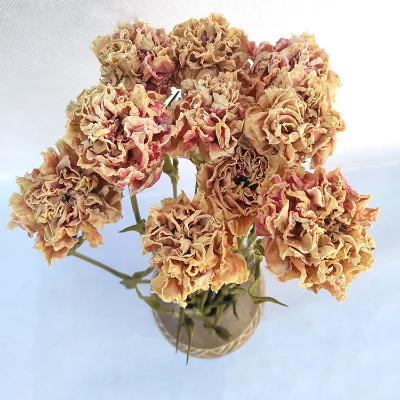
Artificial carnations are commonly made from silk, latex, or plastic, with stems often using PP or PE plastics. Latex real-touch carnations feel softer and more natural, while plastic versions are cheaper and more durable. Silk burnt-edge carnations suit bouquets and wedding decoration. Ask suppliers which material best matches your target price point and intended use.
What is the typical minimum order quantity for artificial carnation flowers?
MOQs vary widely by product and supplier. Some carnation bouquets list MOQs as low as 50 pieces, while bundles and multi-head arrangements often require 100 pieces or more. Lower-priced synthetic flower products may require 1,000 pieces minimum. Always confirm the MOQ for the specific carnation model and color you want before requesting a quotation.
How fast can suppliers respond to inquiries for carnation flowers?
Response times differ among suppliers, with some answering within a couple of hours and others taking a full working day or more. Manufacturers and trading companies that respond quickly help you move through sampling and quotation faster. Contact several suppliers in parallel and note their response speed as one factor in your shortlist.
What is the typical lead time for Carnation Flower orders?
Lead times range from under one week to several weeks depending on the supplier, order size, and customization. Some artificial flower suppliers list around 8 days lead time, while others take about 23 days. Fresh cut carnations ship quickly since they are perishable. Confirm production and shipping time in writing before placing an order.
What size carnation products are available for bulk purchase?
Carnation products come in multiple formats: individual stems around 30 to 46 centimeters long, bundles of roughly 8 pieces per stem bundle, and multi-head bouquets with 8 or more heads. Fresh cut carnations are often sold in 20-stem packs packed in cartons. Check the size specifications on each listing before requesting samples.
Which color options are common for wholesale carnation flowers?
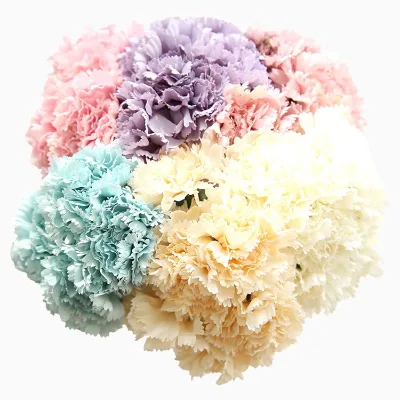
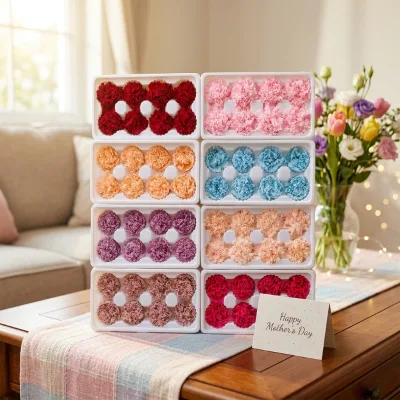
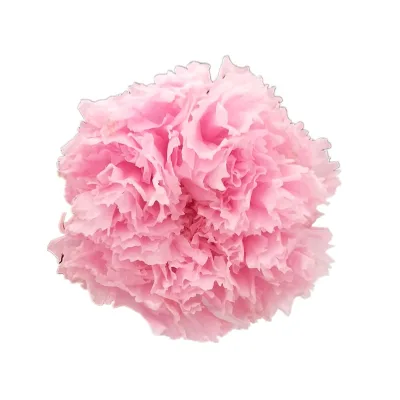
Suppliers typically offer carnations in numbered color series, often five to eight shades per model, including white, pink, red, burgundy, and peach tones. Fresh cut carnations are commonly sold as mixed colors. Request the full color chart and a sample in your target shade, since dyeing can vary slightly between production batches.
Do artificial carnation suppliers offer customization for orders?
Many suppliers list customization as available, which can include color adjustments, packaging, and product specifications. Some manufacturers also offer OEM services for buyers with their own designs. Customization usually affects price, MOQ, and lead time, so discuss requirements early. Ask whether customized samples incur fees and how those costs are treated for bulk orders.
How are carnation flowers packed and shipped from suppliers?
Artificial carnations are generally packed in carton boxes, with stems sometimes bundled in groups of eight pieces. Fresh cut carnations are packed in cartons with standard internal dimensions around 100 by 40 by 40 centimeters. Confirm carton dimensions, packing quantity per carton, and gross weight so you can estimate freight volume and shipping costs accurately.