Cargo Control Ratchet Buckle Suppliers and Manufacturers
Source 16 verified suppliers for Cargo Control Ratchet Buckle components. Compare key dimensions including lead times, MOQs, and certifications like GS and CE. Review product specifications and request quotes directly from manufacturers in China; review the available evidence before requesting comparable quotations from suitable candidates.
Suppliers List

Hangzhou Yale Industrial Co., Ltd.
- Verified by SGS
- Combined
- China Zhejiang
- Lead time15 days
- Avg. response≤ 12h
Main productsRatchet Lashing, Webbing Sling, Polyester Woven Lashing, Composite Strap, Safety Harness, Slackline Set, Corner Protector, Safety Lanyard, Round Sling, Air Dunnage Bags
Main marketsSouth America,Southeast Asia/ Mideast,East Asia(Japan/ South Korea),Domestic,Europe,Australia


Metal Handle Ratchet, 40mm/3ton, Ratchet Tie Down, Lashing Strap, Cargo Ratchet
Contact supplier
MOQ: 1000 Pieces

- Verified by SGS
- Combined
- China Jiangsu
- Lead time30 days
- Avg. response≤ 2h
Main productsWebbing Sling, Flexible Round Sling, Ratchet Strap/Tie Down, Webbing for Ratchet, Cargo Lashing, Auto Parts Lashing, Lifting Net, Webbing for Sling, Buckle, Tow Strap
Main marketsEurope

Shandong Yifa Casting & Forging Co., Ltd.
- Verified by SGS
- Manufacturer/Factory
- China Shandong
- Lead time45 days
- Avg. response≤ 6h
Main productsRigging Hardware, Shackle G209 G210 G2130 G2150, Load Binder L140 L150 EU. Safety Type, Wire Rope Clip DIN741 DIN1142 JIS Type, Hook G70 G80 Grab Hook Slip Hook Rtj Hook, Power Line Fittings Turnbuckle Wire Rope, Carabiner& Belt Hook Quick Links, Chain En818-2 G100 Alloy Lifting&Lashing DIN766, Stainless Steel Items&Swivel&Thimble&Block, Construction Accessories Links Eyebolt&Nut
Main marketsSouth America,Eastern Europe,Mid East,North America,Southeast Asia,Eastern Asia,Oceania,Western Europe,Africa

Yuhuan Liyun Machinery Co., Ltd.
- Verified by BV
- Combined
- China Zhejiang
- Lead time23 days
- Avg. response≤ 25h
Main productsRatchet Strap, Ratchet Tie Down, Winch Strap, Logistic Strap, Lashing Strap, Cargo Lashing, Ratchet Buckle, Cam Buckle, Wire Hook, Flat Hook
Main marketsDomestic

ZHEJIANG ALL-LIFTING CO., LTD.
- Combined
- China Zhejiang
- Lead time30 days
- Avg. response≤ 18h
Main productsWebbing Sling
Main marketsSoutheast Asia/ Mideast,Europe,North America

Xinyuan Metal Products of Dongqian Lake Tourist Resot Co., Ltd
- Verified by TUVRHEINLAND
- Combined
- China Zhejiang
- Lead time23 days
- Avg. response≤ 1h
Main productsRatchet Buckle, Overcenter Buckle, Cargo Lashing Strap, Pulley
Main marketsSoutheast Asia/ Mideast,Domestic

QINGDAO LIFT-SUNNY MACHINERY IMP. & EXP. CO., LTD.
- Trading Company,Manufacturer/Factory
- China Shandong
- Lead time23 days
- Avg. response≤ 19h
Main productsChain, Rigging, Casting Steel, Rubber, Marine, Ropes, Webbing Slings, Anchor, Cargo Control, Shackles
Main marketsSouth America,Eastern Europe,Mid East,North America,Southeast Asia,Eastern Asia,Oceania,Western Europe,Africa

Qingdao Yanfei Rigging Co., Ltd.
- Trading Company
- China Shandong
- Lead time30 days
- Avg. response≤ 19h
Main productsRigging Hardware, Stainless Steel Rigging, Steel Wire Rope, Chain, Cargo Control, Lifting Equipements, Hook, Shackle, Turnbuckle, Ratchet Strap
Main marketsSouth America,Africa,Southeast Asia/ Mideast,East Asia(Japan/ South Korea),Domestic,Europe,Australia,North America

Ningbo Jingli Machinery Manufacturing Co., Ltd.
- Verified by SGS
- Manufacturer
- China Zhejiang
- Lead time30 days
- Avg. response≤ 6h


Heavy Duty Stainless Steel Ratchet Buckles Cargo Control Secure Fastener
$0.85 - $8.60
MOQ: 500 Pieces


Qingdao Xinquanxi Metal Products Co., Ltd.
- Verified by TUVRHEINLAND
- Combined
- China Shandong
- Lead time15 days
- Avg. response≤ 5h
Main productsShackle, Turnbuckle, Standard Conneting Link, Eye Bolts & Nuts, Wire Rope Clips, Snap Hooks, D Rings, Wire Rope Thimbles, Pulley Blocks, Casting
Main marketsEast Asia(Japan/ South Korea),Domestic,Europe,North America

Metal Galvanized Ratchet Tie Down Buckle 1500kg Ratchet Cargo Tie Down Buckle
$1.62 - $2.45
MOQ: 100 Pieces


Tormays Technology (Hebei) Co., Ltd.
- Verified by SGS
- Trading Company,Manufacturer/Factory
- China Hebei
- Lead time0 days
- Avg. response≤ 3h
Main productsL Track, E Track, Track Fitting, Ratchets, Forged Hook, Flat Hook, Wire Hook, Pan Fitting, Cargo Bar
Main marketsSouth America,Eastern Europe,Mid East,North America,Southeast Asia,Eastern Asia,Oceania,Western Europe,Africa


Quickly Secure Quickly Release Works with Webbing Convenient 2" Cam Buckle
$1.00 - $5.00
MOQ: 500 Pieces
Ningbo Xuma Cargo Lashing Co., Ltd.
- Verified by SGS Group
- Manufacturer, Trading Company
- Lead time30 days
- Avg. response≤ 6h
Main productsRatchet Strap, Slack Line, Lifting Sling, Tow Strap, Buckle Strap
Main marketsNorth America(38%), South America(14%), Eastern Europe(14%)

Shandong Jinyu Trading Co., Ltd.
- Verified by BV
- Combined
- China Shandong
- Lead time15 days
- Avg. response≤ 4h
Main marketsSoutheast Asia/ Mideast

Nanjing Lijing Safety Sling Co., Ltd.
- Verified by TUVRHEINLAND
- Trading Company
- China Jiangsu
- Lead time30 days
- Avg. response≤ 2h
Main productsLifting Sling, Webbing Sling, Round Sling, One Way Sling, Ratchet Strap, Cargo Net, Fall Protection, Tow Strap, Sling Webbing, Polyester Sling
Main marketsAfrica

LINYI XIANGYU RIGGING CO., LTD.
- Verified by BV
- Manufacturer/Factory
- China Shandong
- Lead time15 days
- Avg. response≤ 2h
Main productsRatchet Tie Down, Car Tow Strap, Cargo Lashing Belt, Cargo Belt, Ratchet Strap, Ratchet Tie Down Strap, Cargo Strap, Lashing Strap, Double J Hook Ratchet Tie Down, Safety Belt
Main marketsSouth America,Eastern Europe,Mid East,North America,Southeast Asia,Eastern Asia,Oceania,Western Europe,Africa

Jiangsu Gostern Rigging Co., Ltd.
- Verified by TUVRHEINLAND
- Combined
- China Jiangsu
- Lead time15 days
- Avg. response≤ 2h
Main productsWebbing Sling, Steel Wire Rope Sling, Plate Clamp, C Hook, Chain Sling, Wire Rope, Sockets, Billet Clamp, Shackle, Spreader Beam
Main marketsOthers(foreignTradeCapacity.exportBusinessCapacityMarketOther),Southeast Asia/ Mideast,Domestic




Comprehensive Sourcing Guide
Cargo Control Ratchet Buckle Supplier Concentration and Factory Types
The current search results indicate a concentration of suppliers located in China, specifically within the Zhejiang and Jiangsu provinces. These regions host a mix of combined company types that function as both manufacturers and trading entities. The primary product focus for these entities includes Ratchet Lashing, Webbing Slings, Polyester Woven Lashing, and various safety harnesses alongside the core Cargo Control Ratchet Buckle. This clustering suggests a mature industrial ecosystem where raw materials for webbing and metal components are readily available, facilitating efficient production cycles for these specific hardware items.
When evaluating the factory types, buyers should note that the available data identifies these entities as "Combined" suppliers rather than pure manufacturers or pure traders. This distinction is critical because combined entities often manage their own production lines while also handling distribution. The presence of ODM (Original Design Manufacturer) capacity in the Zhejiang cluster and ODM plus OEM (Original Equipment Manufacturer) capacity in the Jiangsu cluster indicates flexibility in customization. Buyers must verify if the specific factory they engage has the direct manufacturing capability for the metal components or if they rely on third-party metal workshops, as this impacts quality control and lead time consistency for the ratchet mechanisms.
How to Verify Cargo Control Ratchet Buckle Suppliers
Verification of supplier credentials requires a careful review of the specific certifications and verification statuses provided in the search results. Some product listings explicitly display "GS" certification, while others list "TUV, GS" or "GS, CE" standards. One specific listing mentions "ISO Customized:Customized" as a certification attribute, which requires clarification to ensure it refers to a valid ISO management system rather than a generic label. Additionally, the verification status for the supplier group is marked as "SGS," which serves as a third-party validation of the company's existence and basic operational capabilities. Buyers should treat these certifications as product-specific attributes rather than blanket guarantees for the entire supplier organization.
Beyond certifications, the response time and verification status offer immediate indicators of supplier reliability. The data shows a response time of 11.29 hours for one cluster and 1.53 hours for another, suggesting significant variance in communication speed. A faster response time often correlates with a more active sales team and potentially better project management. Buyers should prioritize suppliers with verified statuses like SGS and cross-reference the specific product certifications against their own compliance requirements. It is essential to request physical copies of the GS or CE certificates for the specific ratchet buckle models being ordered, as the presence of a certification keyword in a product title does not guarantee the specific item has been tested and approved by the issuing body.
What to Compare Across Cargo Control Ratchet Buckle Buckle Suppliers
Comparing suppliers requires a detailed analysis of lead times, minimum order quantities (MOQ), and pricing structures found in the product data. Lead times vary significantly, with one cluster showing a 15-day lead time and another indicating 30 days. This difference can be decisive for time-sensitive logistics. Furthermore, MOQs range from 10 units for specific ratchet buckles to 100 or even 1000 units for other configurations. Buyers must align their order volume with these thresholds to avoid excessive per-unit costs or the inability to place an order. Price ranges also fluctuate, with some ratchet buckles listed between $2.00 and $6.00, while others range from $4.80 to $7.25, depending on the width, material, and hook type.
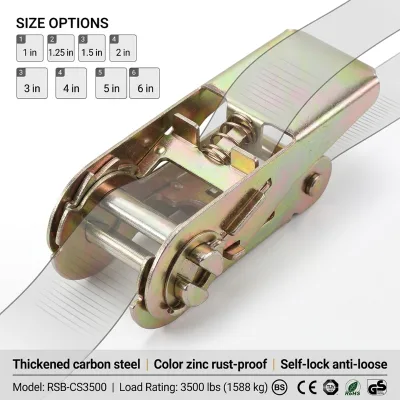
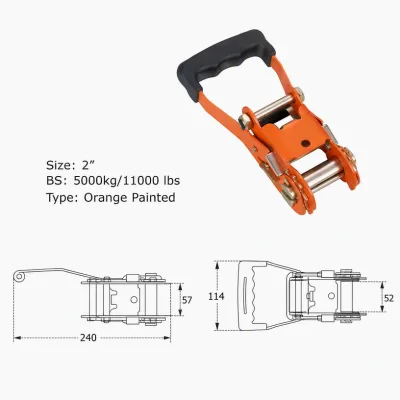
In addition to cost and time, the technical specifications and customization options are vital comparison points. The data reveals widths ranging from 25mm to 100mm and breaking strengths from 500kg to 20 tons. Some suppliers offer "Customization: Available" for width, length, and color, while others have fixed specifications like 50mm width or specific hook types such as DJ Hook or Flat Hook. Buyers should compare the standard product attributes, such as the "Steel Handle" or "Alloy Buckle" materials, against their operational needs. The ability to customize the ratchet buckle model, such as the HRL or RSF-2-27' models mentioned, allows for tailored solutions, but this often comes with higher MOQs or longer lead times that must be factored into the final supplier selection.
Common Cargo Control Ratchet Buckle Sourcing Risks
One significant risk involves the discrepancy between claimed certifications and actual product compliance. While product attributes list "GS," "CE," and "TUV," the system certification for the supplier group is marked as "NIL." This suggests that while individual products may carry specific test marks, the overarching factory management system might not be certified. Buyers face the risk of receiving products that meet the specific test criteria but lack the consistent quality control processes associated with a fully certified facility. It is crucial to verify that the specific batch of ratchet buckles matches the certification claims, as the absence of a general system certification could indicate a reliance on ad-hoc testing rather than a robust quality assurance program.
Another risk lies in the variability of response times and the potential for communication bottlenecks. With response times ranging from 1.53 hours to over 11 hours, there is a risk of delayed order processing or unclear instructions regarding customization. If a buyer requires urgent changes to the ratchet buckle design or packaging, a slower response time could lead to production delays. Additionally, the "Combined" supplier type introduces a layer of complexity where the buyer might be dealing with a trading company rather than the direct factory. This can obscure the true source of the metal components or webbing, making it difficult to trace quality issues back to the raw material supplier. Buyers must ensure clear communication channels are established to mitigate these operational risks.
Cargo Control Ratchet Buckle Regional Sourcing and Logistics
The regional sourcing landscape is dominated by suppliers in Zhejiang and Jiangsu provinces in China. These locations are established hubs for hardware and textile manufacturing, providing a logistical advantage for sourcing cargo control ratchet buckles. The Zhejiang cluster, with its ODM capacity, appears well-suited for customized orders, while the Jiangsu cluster offers a mix of OEM and ODM services. Buyers should consider the proximity of these factories to major ports, as this influences shipping costs and transit times. The specific mention of "Hangzhou Zhejiang China" and "China Jiangsu" as origins confirms that the supply chain is centralized in these eastern coastal regions, which typically have efficient export infrastructure.
Logistics planning must account for the specific packaging and shipping requirements indicated in the product data. Packaging options include "Plastic Shrink Film," "Polybag+Carton," or "in Carton Box," which affects the volume and weight of the shipment. For example, shrink film packaging might be more compact but less protective than carton boxing, potentially influencing the choice of shipping method. Buyers should also note that some products have specific packing instructions like "Shrink Film Per Product," which could increase the number of individual units to be handled during customs clearance. Understanding these regional logistics nuances helps in estimating the total landed cost and ensuring that the cargo control ratchet buckles arrive in the condition required for immediate use or resale.
Cargo Control Ratchet Buckle Commercial Terms and Order Planning
Commercial terms for cargo control ratchet buckles vary based on the supplier's location and the specific product configuration. Pricing data shows a range from $1.00 to $7.25, heavily influenced by the width, breaking strength, and customization level. Buyers must plan their orders around the Minimum Order Quantities (MOQ), which can be as low as 10 units for standard buckles or as high as 1000 units for specialized models. Understanding these thresholds is essential for budgeting and inventory management. Additionally, the lead times of 15 to 30 days must be integrated into the production schedule to ensure timely delivery. Buyers should calculate the total cost of ownership, including potential tariffs and shipping fees, to determine the most cost-effective supplier.
Order planning also requires attention to the customization capabilities and the associated lead time extensions. While many suppliers offer "Customization: Available" for width, color, and hook types, these customizations often require longer production cycles. The data indicates that some models have specific standard lengths like 6m, 8m, or 10m, while others allow for "Customized" lengths. Buyers should confirm the exact specifications and lead times for custom orders before finalizing the purchase. Furthermore, the presence of "ISO Customized:Customized" certifications suggests that some suppliers may require additional documentation or testing for custom batches. Clear communication of these commercial terms and order requirements is vital to avoid misunderstandings and ensure a smooth procurement process for cargo control ratchet buckles.
FAQs
What certifications do the ratchet buckles have?
Many products carry GS certification, while some specific models also include CE and TUV marks. One supplier lists ISO standards alongside GS and CE for certain metal handle ratchets. Buyers should verify the exact certification for each item before ordering to ensure compliance with local safety regulations.
What are the typical lead times for orders?
Lead times vary significantly between suppliers, ranging from 15 days to 30 days depending on the manufacturer. Some facilities in Zhejiang offer faster turnaround, while others in Jiangsu may require a month for production. Buyers must confirm the specific delivery schedule with the chosen supplier before finalizing the purchase.
What is the minimum order quantity for these items?
Minimum order quantities differ by product type, with some ratchet buckles requiring only 10 units while others need 100 or even 1000 units. The specific MOQ depends on the supplier and the customization level requested. Always check the product listing details to confirm the exact threshold for your order size.
Where are the suppliers located?
Suppliers are primarily located in Zhejiang and Jiangsu provinces within China. Specific manufacturing hubs include Hangzhou in Zhejiang and various locations in Jiangsu. These regions are known for producing webbing slings, ratchet straps, and related cargo lashing hardware for international markets.
What customization options are available for ratchet buckles?
Customization is widely available for width, length, color, and hook types. Buyers can select from various widths like 25mm or 50mm and choose colors such as orange, blue, or yellow. Some suppliers also offer custom lengths and specific hook configurations like DJ hooks or flat hooks to meet unique cargo securing needs.
What is the price range for ratchet buckles?
Prices vary based on specifications, ranging from approximately 1.00 to 7.25 per unit. Lower costs apply to basic buckles, while specialized cargo winch straps or heavy-duty ratchets command higher prices. The final cost depends on the selected width, breaking strength, and any custom features included in the order.
What response times can buyers expect from suppliers?
Response times vary, with some suppliers replying within 1.53 hours and others taking around 11.29 hours. Faster response rates are often associated with suppliers in specific regions or those with higher verification status. Buyers should check individual supplier profiles to gauge communication speed before initiating contact.