Combine Feed Accelerator Wear Plate Suppliers and Manufacturers
Find 15 verified suppliers offering Combine Feed Accelerator Wear Plate with varying lead times, certifications, and response speeds. Compare dimensions, MOQ, and pricing to select the right partner for your needs today; review the available evidence before requesting comparable quotations from suitable candidates.
Suppliers List

Zhejiang Hongfei Machinery Manufacturing Co., Ltd.
- Combined
- China Zhejiang
- Lead time30 days
- Avg. response≤ 6h
Main productsJaw Plate, Mantle, Bowl Liner, Blow Bar, Hammer, Roller, Mill Ring, Side Plate, Liner Plate, Impact Block
Main marketsAfrica,Europe,Australia


Customized OEM High Quality Jaw Crusher Spare Wear Parts Jaw Plate Tooth Plate
$1.60 - $2.40
Moq: 1000

Customized OEM High Quality Jaw Crusher Spare Wear Parts Tooth Plate Jaw Plate
$1.60 - $2.40
Moq: 1000

Shenzhou Tuohang Machinery Fittings Factory
- Manufacturer, Trading Company
- hebei, China
- Lead time15 days
- Avg. response≤ 3h
Main productsMetal stampings,Metal tensile parts,Brake band assembly,Friction plate
Main marketsWestern Europe(20.0%), Oceania(20.0%), Domestic Market(5.0%), South Asia(5.0%), Southern Europe(5.0%), Northern Europe(5.0%), Central America(5.0%), South America(5.0%), Eastern Asia(5.0%), Mid East(5.0%), North America(5.0%), Africa(5.0%), Southeast Asia(5.0%), Eastern Europe(5.0%)
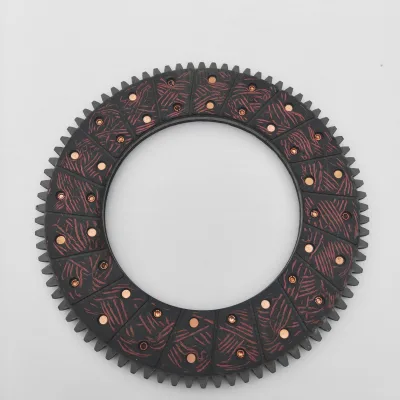
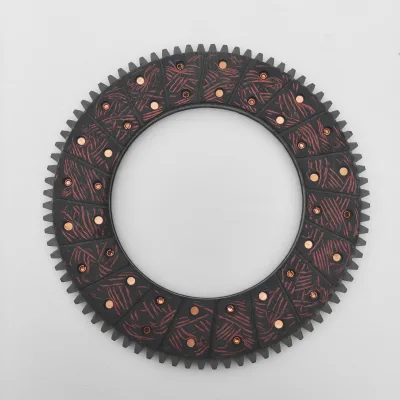
High Friction Clutch Plate of Agricultural MachineryPower Take-off Clutch Plate
$22.68 - $23.86
Moq: 100

Ma An Shan Shi Bo Da Jing Shen Machinery Co.,Ltd
- Verified by TUVRHEINLAND
- Trading Company,Manufacturer/Factory,Group Corporation
- China Anhui
- Lead time23 days
- Avg. response≤ 4h
Main productsJaw Crusher Jaw Plate, Crusher Wear Parts, Crusher Spare Parts, Crusher Bowl Liner, Crusher Copper Parts, Cone Crusher Spare Parts, Jaw Crusher Spare Parts, VSI Crusher Rotor, Barmac Rotor Tip, Crusher Copper Bushing
Main marketsSouth America,Eastern Europe,Mid East,North America,Southeast Asia,Eastern Asia,Oceania,Western Europe,Africa
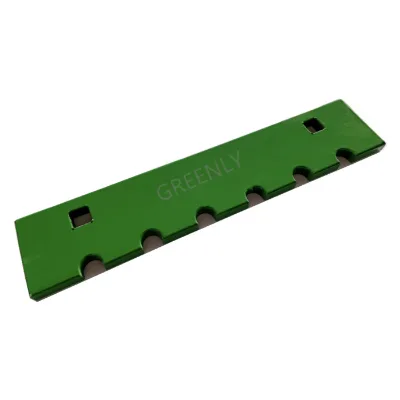
Ningbo Greenly Machinery Co., Ltd.
- Verified by SGS Group
- Manufacturer, Trading Company
- Lead time60 days
- Avg. response≤ 5h
Main productsAgricultural Machinery Parts, Springs, Sprockets, Chains, Bearing Housings
Main marketsNorth America(30%), South America(25%), Eastern Europe(10%)

Jinhua Liweida Mechanical Equipment Co., Ltd.
- Verified by SGS
- Trading Company,Manufacturer/Factory
- China Zhejiang
- Lead time45 days
- Avg. response≤ 1h
Main productsHigh Managanse Wear Parts, Jaw Plate, Mantle and Concave, Hammer, Shredder, Jaw Crusher Parts, Cone Crusher Parts, Mining Machinery
Main marketsSouth America,Eastern Europe,Mid East,North America,Southeast Asia,Eastern Asia,Oceania,Western Europe,Africa

Hebei Zhuhong Industrial Co., Ltd.
- Verified by TUVRHEINLAND
- Trading Company
- China Hebei
- Lead time30 days
- Avg. response≤ 14h
Main productsCrusher Wear Parts, Crusher Spare Patrs, Jaw Plate, Mantle Liner, Concave Ring, Blow Bar, Cheek Plate, Toogle Plate, Bowl Liner, Vertical Shaft Impact
Main marketsSouth America,Southeast Asia/ Mideast,Europe,North America

- Verified by SGS
- Trading Company
- China Zhejiang
- Lead time30 days
- Avg. response≤ 16h
Main productsCrusher Parts, Concave, Mantle, Jaw Plate, Cheek Plate, Track Shoe, Feeder Pan, Hammer, Mill Liner, Blow Bar
Main marketsSoutheast Asia/ Mideast

Shenzhen DENP Industrial Co., Ltd.
- Verified by SGS
- Trading Company
- China Shanghai
- Lead time30 days
- Avg. response≤ 4h
Main productsStone Crusher, Jaw Crusher Parts, Cone Crusher, Impact Crusher, Jaw Crusher, Impact Crusher Parts, Mining Equipment, Cone Crusher Parts, Jaw Plate, Toggle Plate
Main marketsSouth America,Africa,Southeast Asia/ Mideast,Europe,Australia,North America

SHENYANG HUAYUE BRILLIANT MINING MACHINERY MANUFACTURING CO.,LTD
- Verified by SGS
- Manufacturer/Factory
- China Liaoning
- Lead time23 days
- Avg. response≤ 2h
Main productsHydraulic Cone Crusher, Jaw Crusher, Ball Mill, Symons Cone Crusher, Gyratory Crusher, Vibrating Screen, Belt Conveyor, Vibrating Feeder, Sand and Gravel Washer, Crusher Wear Parts
Main marketsSouth America,Eastern Europe,Mid East,North America,Southeast Asia,Eastern Asia,Oceania,Western Europe,Africa

HangZhou Ever-Power Transmission Co., Ltd.
- Verified by SGS
- Combined
- China Zhejiang
- Lead time45 days
- Avg. response≤ 7h
Main productsGearbox, Reducer, Sprocket, Gear, Chain, Pulley, Motor, Cylinder, Shaft, Coupling
Main marketsSouth America,Southeast Asia/ Mideast,East Asia(Japan/ South Korea),Europe,Australia,North America

Qingdao Merid Machinery Co., Ltd
- Verified by CTI
- Combined
- China Shandong
- Lead time15 days
- Avg. response≤ 3h
Main productsMachining Part, Sheet Metal Fabrication, Mounting Bracket, Precast Lifting Parts, Metal Hardware, CNC Maching Part, Stamping Parts, Welding Parts, CNC Maching Parts
Main marketsDomestic,Europe,Australia,North America

HENAN CRUSHTECHS MACHINERY CO., LTD.
- Verified by TUVRHEINLAND
- Trading Company,Manufacturer/Factory
- China Henan
- Lead time45 days
- Avg. response≤ 2h
Main productsCrusher, Crusher Parts, Jaw Plate, Jaw Crusher Parts, Impact Crusher Parts, Cone Crusher Parts, VSI Crusher Parts, Cone Crusher Mantle Liner, Cone Crusher Concave Liner, Bowl Liner
Main marketsSouth America,Eastern Europe,Mid East,North America,Southeast Asia,Eastern Asia,Oceania,Western Europe,Africa

Taian Yimeite Machinery Co., Ltd
- Verified by TUVRHEINLAND
- Combined
- China Shandong
- Lead time15 days
- Avg. response≤ 3h
Main productsTelehandler, Tmr Feed Mixer Wagon, Skid Loader, Manure Spreader, Feeder Spreader, Feed Pusher, Cow Headlock and Free Stall, Manure Collector, Backhoe Loader, Cow Milking Machine
Main marketsDomestic

Nanchang Bestway Cemented Carbide Co., Ltd.
- Verified by SGS
- Combined
- China Jiangxi
- Lead time23 days
- Avg. response≤ 23h
Main productsCarbide Tip, Carbide Plates, Scarifier Cutter, Tct Cutters, Tungsten Carbide, Tungsten Carbide Cutter
Main marketsSouth America,Africa,Southeast Asia/ Mideast,East Asia(Japan/ South Korea),Europe,Australia,North America

Ningbo Yinzhou Nord Machinery Co., Ltd.
- Verified by SGS
- Trading Company,Manufacturer/Factory,Group Corporation
- China Zhejiang
- Lead time45 days
- Avg. response≤ 13h
Main productsInvestment Casting, Precision Casting, Steel Casting China, Sand Casting, Lost Wax Casting, Lost Foam Casting, Open Die Forging, Steel Forging, Excavator Buckets, Mini Excavator Buckets
Main marketsSouth America,Eastern Europe,Mid East,North America,Southeast Asia,Western Europe,Africa




Comprehensive Sourcing Guide
Combine Feed Accelerator Wear Plate Supplier Concentration and Factory Types
The current search results indicate a concentration of manufacturing capabilities in specific Chinese provinces, with Zhejiang and Hebei emerging as key industrial hubs for heavy machinery components. Suppliers in these regions often operate as combined entities, functioning as both manufacturers and trading companies to offer broader product ranges. This dual role allows them to manage complex supply chains while maintaining direct oversight of production processes for items like crusher wear parts and metal stampings. Buyers should look for these combined company types when seeking flexibility in order fulfillment and customization options.
Factory types vary significantly across the available results, ranging from pure manufacturers to group corporations with extensive trading networks. Some suppliers explicitly list their capacity for OEM and ODM services, indicating a robust ability to produce custom-branded components or adapt existing designs to specific client requirements. Others focus on trading activities, leveraging relationships with multiple factories to source diverse items such as clutch plates and jaw crusher parts. Understanding whether a supplier is a direct factory or a trading intermediary is crucial for assessing quality control capabilities and the potential for direct communication regarding technical specifications.
How to Verify Combine Feed Accelerator Wear Plate Suppliers
Verification begins with examining system certifications that demonstrate adherence to international management standards. Several suppliers in the current dataset hold ISO 9001:2015, ISO 14001:2015, and ISO 45001:2016 certificates, which validate their commitment to quality, environmental management, and occupational health and safety. Additionally, third-party verification marks such as TÜV Rheinland provide an external layer of trust regarding the supplier's operational integrity. Buyers must request current copies of these documents to ensure they are valid and not expired, as certification status can change over time.
Beyond certifications, buyers should scrutinize product-specific evidence and technical attributes to confirm manufacturing competence. Look for detailed product attributes that specify materials like cast steel or manganese alloys, along with manufacturing processes such as sand casting or mold forging. The presence of machinery test reports and video outgoing-inspection services offers tangible proof of quality control measures before shipment. It is essential to verify that the supplier provides these reports for the specific items being ordered, ensuring that the final product meets the required hardness, dimensional accuracy, and material composition standards.
What to Compare Across Combine Feed Accelerator Wear Plate Suppliers
When evaluating potential partners, lead time is a critical metric that directly impacts project scheduling and inventory management. The observed data shows lead times ranging from 15 to 30 days, with some suppliers offering faster turnaround capabilities. Buyers must compare these durations against their specific production deadlines to determine which suppliers can meet their delivery requirements without causing bottlenecks. A shorter lead time does not always equate to better value, so it should be weighed against the supplier's reliability and capacity to handle volume spikes.
Minimum Order Quantity (MOQ) and response speed are equally vital factors in the comparison process. Current results indicate MOQs as low as 100 pieces for certain components, while others may require higher volumes, such as 1000 units. Response times also vary, with some suppliers replying within three hours and others taking slightly longer. Buyers should align these constraints with their order volume and communication needs, ensuring that the supplier can accommodate small batch orders if necessary. Comparing these operational parameters helps identify suppliers that offer the best balance between flexibility and efficiency for the specific sourcing scenario.
Common Combine Feed Accelerator Wear Plate Sourcing Risks
One significant risk involves the discrepancy between advertised capabilities and actual production capacity, particularly when suppliers claim to offer both OEM and ODM services. While many suppliers list these capacities, the actual ability to deliver custom designs depends on their internal engineering resources and tooling availability. Buyers must verify that the supplier has the specific technical support, such as drawing and surveying services, required to execute custom orders accurately. Failure to confirm these capabilities can lead to delays or products that do not meet the precise engineering specifications required for the application.
Another risk lies in the variability of warranty terms and after-sales service commitments across different suppliers. The data shows warranty periods ranging from three months to six months, with some suppliers offering 24-hour online service and others providing limited support. Inconsistent warranty coverage can leave buyers vulnerable to defects or premature wear, especially in high-stress environments. Buyers should clearly define warranty expectations in their contracts and ensure that the supplier explicitly agrees to these terms before placing an order, rather than relying on general statements found in product listings.
Combine Feed Accelerator Wear Plate Regional Sourcing and Logistics
Geographic location plays a pivotal role in determining shipping costs and delivery timelines for heavy industrial components. The current results highlight suppliers located in Zhejiang, Hebei, and Anhui provinces, each offering distinct logistical advantages based on their proximity to major ports and transportation networks. Buyers should assess the specific location of the supplier to estimate freight costs accurately, as shipping from inland provinces may incur additional handling fees compared to coastal manufacturing hubs. Understanding the origin of the goods is essential for calculating the total landed cost of the order.
Logistics planning must also account for packaging standards and shipment flexibility. Suppliers in the dataset offer packaging options that can be customized according to client requests, which is crucial for protecting heavy wear parts during transit. Some suppliers specify single package sizes and weights, while others allow for bulk shipping arrangements. Buyers should confirm that the packaging method aligns with their storage and handling capabilities at the destination. Additionally, verifying the supplier's ability to handle different shipping terms ensures that the goods arrive safely and on schedule, minimizing the risk of damage or loss during the transit phase.
Combine Feed Accelerator Wear Plate Commercial Terms and Order Planning
Price is a fundamental component of commercial terms, yet it must be evaluated in the context of total value rather than unit cost alone. The observed price ranges for similar industrial components vary significantly, with some items listed between $1.60 and $2.40, while others range from $22.68 to $131.86 depending on material and complexity. Buyers should request detailed quotations that break down costs for materials, processing, and packaging to understand the pricing structure. Comparing unit prices across suppliers with similar specifications helps identify outliers that may indicate quality issues or hidden costs.
Order planning requires careful attention to payment terms, customization availability, and standard compliance. Many suppliers offer customization services and adhere to standards such as GB or ISO, but buyers must confirm that these standards apply to their specific order requirements. It is also important to verify the availability of technical support and documentation, such as material certificates and inspection reports, which are essential for regulatory compliance in many industries. By integrating these commercial details into the initial planning phase, buyers can mitigate risks and ensure a smooth transaction process from order placement to final delivery.
FAQs
What is the typical lead time for jaw plate orders?
The typical lead time for jaw plate orders is 30 days based on current supplier data. Some suppliers offer faster delivery with a 15-day lead time for specific items like clutch plates. Buyers should confirm exact timelines with the supplier before placing an order.
What certifications do these wear part manufacturers hold?
Manufacturers often hold ISO 9001, ISO 14001, and ISO 45001 certifications. Some suppliers also possess CE certification and GMP standards. Verification services like TÜV Rheinland may be available for certain trading companies to ensure quality compliance and safety standards.
What is the minimum order quantity for crusher spare parts?
The minimum order quantity for crusher spare parts like jaw plates is typically 1000 units. For other items such as clutch plates, the MOQ can be as low as 100 pieces. Buyers must check specific product listings to confirm the exact quantity requirements.
Where are the suppliers of these wear parts located?
Suppliers are primarily located in China, specifically in Zhejiang, Hebei, and Anhui provinces. These regions host manufacturers and trading companies specializing in mining machinery parts. Buyers can filter results by these specific locations to find nearby or regional partners.
What materials are used for manufacturing jaw plates?
Jaw plates are commonly manufactured using cast steel with manganese grades like Mn13, Mn18, and Mn22. The production process often involves sand casting or mold forging. Surface treatments like spray-paint are applied to enhance durability and resistance against wear during operation.
How quickly do suppliers typically respond to inquiries?
Suppliers typically respond within 3 to 5 days based on recorded response times. Some manufacturers offer 24-hour online service for technical support. Buyers should expect a response within this window but should verify specific response times for each supplier before initiating contact.
What is the price range for manganese jaw plates?
The price range for manganese jaw plates varies from 1.60 to 2.40 per unit. Other related parts like clutch plates may range from 22.68 to 131.86 depending on specifications. Prices are subject to change based on order volume and customization requirements.