DSP Subwoofer Plate Amplifier Suppliers and Manufacturers
Browse 13 suppliers of DSP Subwoofer Plate Amplifier products and compare grounded dimensions such as Guangdong location, OEM and ODM capability, 15-day lead times, response times, CE and RoHS standards, MOQ, and pricing. Request quotes to verify specifications directly; review the available evidence before requesting comparable quotations from suitable candidates.
Suppliers List

Sanway Audio Equipment Co., Ltd.
- Combined
- China Guangdong
- Lead time15 days
- Avg. response≤ 10h
Main productsAudio Power Amplifiers, PRO Audio Amplifier, Professional Amplifier PA Speakers, Professional Audio, Line Array Speakers System, Switching Power Amplifier, Professional Speaker Sound Box, Active Line Array System, DJ Equipment Power AMPS, Active Speaker Box
Main marketsSouth America,Europe


D1-800d 800W Single Channel Class-D Subwoofer Speaker Plate Amplifier with DSP
$100.00 - $200.00
Moq: 1


Guangzhou Xinbaosheng Audio Equipment Co., Ltd.
- Verified by SGS
- Combined
- China Guangdong
- Lead time15 days
- Avg. response≤ 6h
Main productsLine Array, Subwoofer, Fp Power Amplifier, Digital Amplifier, Audio Processor, Professional Speaker, Professional Microphone, Other Audio Equipment
Main marketsEurope,North America

DSP20000q Professional Subwoofer Plate Amplifier Audio Power Amplifier Module DSP
$530.00 - $910.00
Moq: 1

Factory Price Subwoofer Module Plate AMP DSP22000q 10000W Amplifier DSP Stage Stereo Amplifier
$500.00 - $1000.00
Moq: 1

DJ Subwoofer Amplifier Fp22000q Professional 4 Channel 10000W Powerful PA Amplifier
$500.00 - $820.00
Moq: 1

Power Amplifier professional DSP20000q 4 Channel 1000W Subwoofer Amplifier Audio
$530.00 - $910.00
Moq: 1

Audio Amplifier Subwoofer High Power Amplifier Fp22000q Professional Audio Class D Amplifier
$500.00 - $820.00
Moq: 1

Guangzhou Xinbaosheng Audio Equipment Company Limited
- Verified by TüVRheinland
- Manufacturer, Trading Company
- Lead time7 days
- Avg. response≤ 4h
Main productsPower Amplifier, DSP Amplifier, Digital Amplifier, Class TD Amplifier, Professional Amplifier
Main marketsNorth America(23%), South America(15%), Central America(15%)

Guangzhou MINGXUAN Stage Light Equipment CO.,LTD
- Verified by BV
- Trading Company,Manufacturer/Factory
- China Guangdong
- Lead time38 days
- Avg. response≤ 17h
Main productsMoving Head Light, Line Array Speaker, Truss Stage, Tent, Microphone, LED Screen, Mixer, LED PAR Can, LCD Screen, Small Speaker
Main marketsSouth America,Eastern Europe,Mid East,North America,Southeast Asia,Eastern Asia,Oceania,Western Europe,Africa

- Verified by TUVRHEINLAND
- Manufacturer/Factory
- China Guangdong
- Lead time23 days
- Avg. response≤ 9h
Main productsPRO-Audio, Line Array System, Speaker Box, Amplifier, PA Subwoofers, Sound System, Audio Mixer, Stage Speaker
Main marketsSouth America,Eastern Europe,Mid East,North America,Southeast Asia,Eastern Asia,Oceania,Western Europe,Africa

Guangzhou Lingyin Electronic Co., Ltd.
- Verified by BV
- Combined
- China Guangdong
- Lead time30 days
- Avg. response≤ 6h
Main productsPRO Audio, Speaker, Amplifier, PA Address System, IP Network System, Wireless Broadcast, Wireless Mic, PA Lectern, Professional Audio, Line Arry
Main marketsOthers(foreignTradeCapacity.exportBusinessCapacityMarketOther),Southeast Asia/ Mideast,Europe,Australia,North America

Resonance Audio Equipment Co., Ltd.
- Verified by CTI
- Combined
- China Guangdong
- Lead time45 days
- Avg. response≤ 4h
Main marketsDomestic

GZ SKYRANN ELECTRONIC TECH CO., LTD.
- Trading Company,Manufacturer/Factory
- China Guangdong
- Lead time23 days
- Avg. response≤ 6h
Main productsAmplifier, Speaker, Woofer and Driver, Mixer
Main marketsEastern Europe,North America,Southeast Asia

Guangzhou Ruifeng Intelligence Technology Co., Ltd
- Combined
- China Guangdong
- Lead time30 days
- Avg. response≤ 19h
Main productsLine Array Speakers, Full Range Speakers, Monitor Speakers, Subwoofer, Amplifiers, Processors
Main marketsDomestic
Guangzhou Xinbaosheng Audio Equipment Company Limited
- Manufacturer, Trading Company
- Lead time旺季: "1 - 1":7,"> 1":"To be negotiated", 淡季: "1 - 1":7,"> 1":"To be negotiated"
- Avg. response≤ 3h
Main productsPower Amplifier, DSP Amplifier, Digital Amplifier, Line Array, Subwoofer

Ningbo Jumboaudio Industrial Co., Ltd.
- Verified by TUVRHEINLAND
- Combined
- China Zhejiang
- Lead time30 days
- Avg. response≤ 5h
Main productsPortable Speaker Box, Speaker, Subwoofer Speaker Box, HiFi Speaker
Main marketsSouth America,Africa,Southeast Asia/ Mideast,East Asia(Japan/ South Korea),Domestic,Europe,North America


12inch 2.1 Channel 460W RMS Class D Amplifier with DSP Tws Wooden Active Subwoofer
$86.00 - $111.00
Moq: 50


Hangzhou Zhonghe Electronic Equipment Co., Ltd.
- Combined
- China Zhejiang
- Lead time45 days
- Avg. response≤ 25h
Main productsAmplifier, Speaker, Microphone, Sound Mixer
Main marketsSoutheast Asia/ Mideast,Europe

Guangzhou Temeisheng Audio Technic Co Ltd
- Verified by BV
- Combined
- China Guangdong
- Lead time15 days
- Avg. response≤ 5h
Main productsLoudspeaker, Amplifier, Conference System, Portable Speaker, Home Audio, Microphone
Main marketsAustralia




Comprehensive Sourcing Guide
DSP Subwoofer Plate Amplifier Supplier Concentration and Factory Types
Buyers searching for a DSP Subwoofer Plate Amplifier will encounter suppliers concentrated in Guangdong, China, which appears in the current results as the confirmed location for this category. Guangdong is a recognized electronics and professional audio manufacturing region, so it is reasonable to treat it as a cluster anchor when filtering supplier lists. The results also show companies described as "Combined" in company type, meaning they may operate as both manufacturer and trader. This matters because a combined entity can quote flexibly on standard plate amplifier modules and on finished active speaker systems, but it can also obscure who actually builds the board in your enclosure.
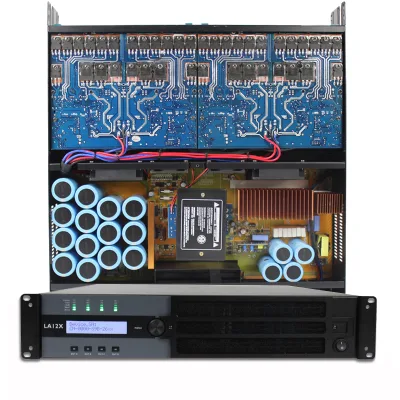
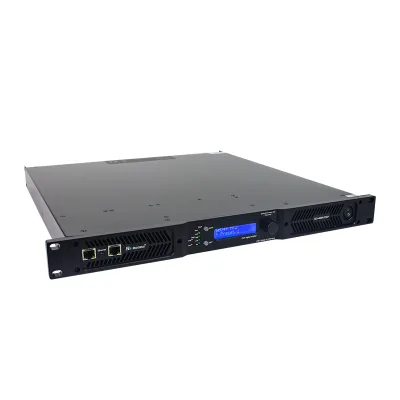
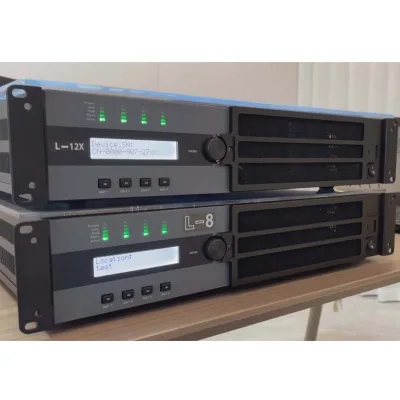
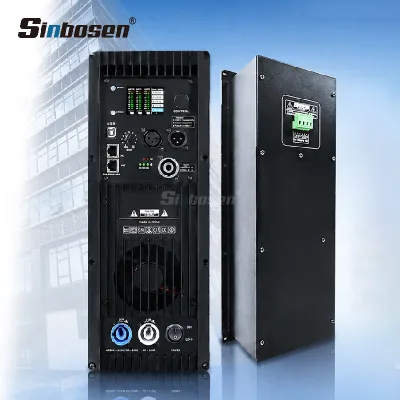
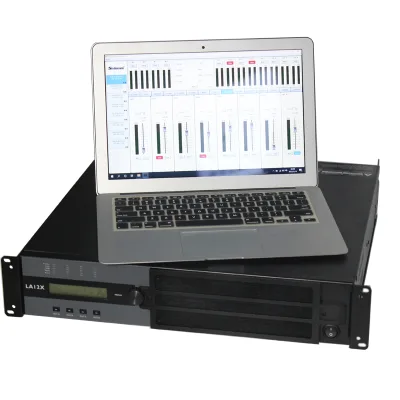
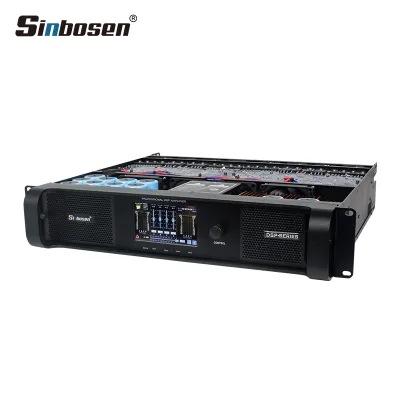
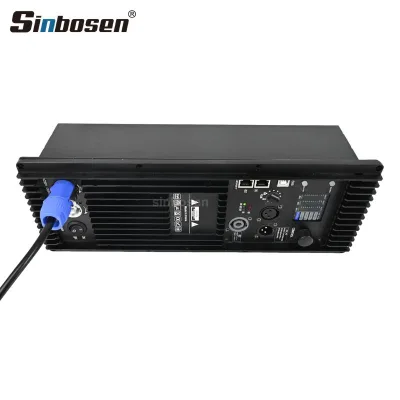
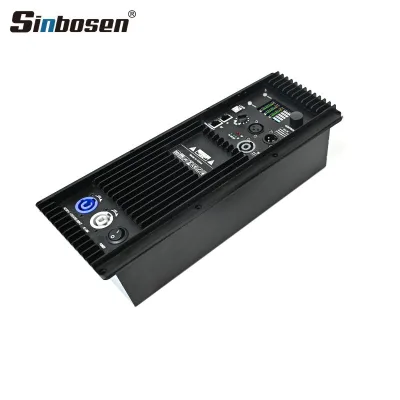
The main products listed across these suppliers extend beyond amplifiers into professional PA speakers, line array systems, active line array systems, DJ equipment power amps, and professional audio equipment generally. That breadth signals factories serving the live sound and installation trades rather than consumer-only audio assemblers. Within the amplifier range itself, the results show distinct product families: high-power touring subwoofer amplifiers such as the FP14000 format, single-channel Class-D plate modules with DSP like the D1-800D, and two-channel networked DSP amplifiers such as the D14. When building a supplier shortlist, categorize each supplier by whether its core business is plate modules for OEM speaker builders, rack amplifiers for rental and touring companies, or a mixed portfolio, then prioritize those whose catalog matches your intended application.
How to Verify DSP Subwoofer Plate Amplifier Suppliers
Verification should begin with the attributes suppliers choose to display, since these are the facts you can check before contacting anyone. In the current results, relevant displayed signals include location in Guangdong, company type marked as combined, a stated lead time of 15 days, a response time of roughly 9.7 hours, and a research-and-development capacity described as own brand with ODM and OEM services. None of these labels is proof on its own. Confirm the factory address through a business registry check or third-party audit, and ask whether the ODM/OEM claim refers to amplifier board design, DSP firmware, or only cabinet assembly, because those imply very different engineering depth.
The product listings themselves give you concrete items to verify in a technical exchange. One listed plate amplifier declares CE certification, a two-year warranty, USB and RS-485 DSP control, and a stated operating voltage range of 90V–135V / 180V–265V; another rack amplifier lists CE and RoHS with a signal-to-noise ratio above 112 dBA. Ask each supplier to produce the actual test reports behind those claims, not just the labels, and to state which certification body issued them. Request DSP function documentation covering mute, polarity, gain, delay, limiter, mixer, EQ, and crossover settings so you can confirm the feature list matches the listing. Finally, ask for a sample unit and measure its claimed THD, frequency response, and noise floor independently before trusting any printed specification.
What to Compare Across DSP Subwoofer Plate Amplifier Suppliers
Build a comparison table from the dimensions actually shown on supplier profiles: location, company type, main products, lead time, response speed, and whether establishment year or trade assurances such as escrow are displayed. Do not assume every supplier shows the same fields; some will omit establishment year or escrow status, and an empty field should trigger a direct question rather than a disqualification. Where the results show a lead time of 15 days, treat it as one data point, and compare every shortlisted supplier's quoted lead time for your specific configuration, since DSP-loaded modules typically take longer than stock amplifiers.
Technical and commercial comparisons should be equally structured. On the product side, compare conductive class (Class D versus the TD-class variants listed), channel count, DSP control interface (USB, RS-485, Ethernet, or WiFi where offered), operating voltage range, heatsink material, dimensions, weight, and warranty length — one listing shows a 2-year warranty while others display none, which is a meaningful differentiator. On pricing, the displayed ranges vary widely: one plate amplifier module lists at roughly 100–200 dollars with a minimum order of one unit, another rack amplifier at 500–1000 dollars with a minimum of five, and a third digital amplifier spanning 1–900 dollars with a minimum of three. These ranges reflect different product types, so normalize comparisons per watt and per channel, and always request quotes against your exact DSP feature list rather than comparing headline price bands across dissimilar listings.
Common DSP Subwoofer Plate Amplifier Sourcing Risks
The first risk cluster involves specification ambiguity. Several listings in this category display incomplete or inconsistent attributes: one amplifier lists its "standard" field as a physical dimension (483x377x88mm) rather than a compliance standard, another lists the class as "Td" which is not a standard class designation, and voltage or frequency response values are sometimes shown only partially. If you order against a listing rather than a written specification sheet, you may receive a unit whose DSP feature set, power rating, or thermal design differs from what you assumed. Mitigate this by requiring a signed datasheet with serial-number-tracked test results before production, and by treating any attribute the supplier cannot explain as a red flag.
The second risk cluster involves certification and quality claims. Listings show CE on one module, CE and FCC on another, and CE plus RoHS on a third, while the suppliers' own system certification field shows "NIL" — meaning no company-level management system certification is displayed. Self-declared product marks without traceable reports are a common failure point for importers into markets with strict EMC and safety enforcement. Additional risks worth planning for include: minimum-order quantities that force you into unwanted inventory (one listing shows a minimum of five units for a high-power amplifier), packing that may not survive freight (confirm whether the stated double corrugated carton or optional flight case is included), and warranty enforcement, since a two-year written warranty is only as good as the supplier's willingness to ship replacement boards.
DSP Subwoofer Plate Amplifier Regional Sourcing and Logistics
The confirmed regional picture in these results is straightforward: suppliers are located in Guangdong, China, and the product listings state Guangdong as the place of origin. Guangdong's professional audio ecosystem means you can typically source plate amplifier modules, rack amplifiers, speaker cabinets, and DSP firmware support within one province, which simplifies supplier visits and consolidated shipping. If you expand your search beyond these results, apply cluster-identification methods yourself: look for regions where multiple suppliers list professional audio, switching power amplifiers, and line array systems as main products, since that overlap usually indicates a genuine manufacturing base rather than a trading office.
Logistically, plan around the packaging and weight realities of the category. Listings show net weights from 1.7kg for a plate module up to 13kg net and 18kg gross for a rack amplifier, with packing described as double corrugated cartons, double durable cartons, dual durable cartons, or flight case options. Plate modules ship cheaply by air or express; rack amplifiers quickly become sea-freight candidates in volume. With a stated lead time of 15 days on at least one listing, assume four to eight weeks total from order to arrival once you add production confirmation, inland transport to a port, and ocean or air transit. For mixed orders — modules plus finished speakers — ask suppliers in the same region about consolidated packing and combined documentation, and confirm who handles export clearance before you commit.
DSP Subwoofer Plate Amplifier Commercial Terms and Order Planning
Structure commercial negotiations around the displayed data points and the gaps between them. Current results show minimum order quantities of one, three, and five units depending on the listing, and price bands from roughly 100–200 dollars for a single-channel Class-D plate module to 500–1000 dollars for a high-power subwoofer amplifier, with one broad digital amplifier listing spanning 1–900 dollars. Use these as opening references only: request a written quotation broken into unit price at your quantity, DSP customization cost (customization is marked as available across listings), sample price, and tooling or firmware fees if you need branded DSP presets. A lead time of 15 days is displayed for this category, but confirm it in writing per order size, with a stated penalty or reconfirmation clause for delays.
Payment and protection terms deserve equal scrutiny. Because the supplier profiles here display no system-level certification and do not uniformly show escrow availability, ask each candidate which secure payment arrangements they support and whether trade assurance or escrow-style protection is offered through their listing channel. For first orders, consider splitting payment: a deposit against production start and a balance after independent inspection of finished goods, with the inspection covering DSP functionality, voltage range, and packing quality against your datasheet. Finally, plan warranty logistics in the contract — a listed two-year warranty should specify who pays freight on replacement modules and whether repair is handled locally or by return to Guangdong, since that decision materially affects your long-term service cost.
FAQs
What is the price range for DSP subwoofer plate amplifiers?
Prices for these amplifiers typically range from $100 to $1,000 depending on the model and power output. Basic single-channel modules start around $100, while high-power professional units can reach up to $1,000. Buyers should check specific product listings for exact pricing tiers and bulk discounts.
What is the minimum order quantity for these amplifiers?
The minimum order quantity varies by supplier, generally ranging from 1 to 5 units. Some manufacturers allow single-unit purchases for testing, while others require a minimum of 3 or 5 pieces. Buyers should verify the specific MOQ on individual product pages before placing an order.
What certifications do these amplifiers usually have?
Most DSP subwoofer plate amplifiers carry CE and RoHS certifications, ensuring compliance with safety and environmental standards. Some models also include FCC certification. Buyers should verify the specific certification list on the product details page to ensure they meet their regional regulatory requirements.
What is the typical lead time for these products?
The typical lead time for manufacturing and shipping these amplifiers is approximately 15 days. This timeframe allows for production and quality checks. Buyers should confirm the exact delivery schedule with the supplier, as lead times may vary based on order volume and customization requirements.
Where are these amplifiers manufactured?
These amplifiers are primarily manufactured in Guangdong, China. This region is a major hub for professional audio equipment production. Buyers can expect products to originate from this location, which is known for its robust supply chain and manufacturing capabilities in the consumer electronics sector.
What customization options are available for these amplifiers?
Customization is generally available for these amplifiers, including OEM and ODM services. Buyers can often request specific branding, packaging, or technical modifications. The availability of customization depends on the supplier's capabilities and the minimum order quantity, so buyers should discuss their specific needs directly with the manufacturer.