Eco-Friendly Detachable Cat Tree Suppliers and Manufacturers
Compare 14 verified suppliers offering Eco-Friendly Detachable Cat Tree options with varying lead times, MOQs, and response speeds. Review product materials like solid wood and bamboo, then request quotes to confirm customization availability and pricing tiers; review the available evidence before requesting comparable quotations from suitable candidates.
Suppliers List

FUZHOU SHOO-IN IMP & EXP CO., LTD.
- Verified by SGS
- Trading Company
- China Fujian
- Lead time15 days
- Avg. response≤ 7h
Main productsSports Wear, Promotional Gift, Lanyards, Badges, Caps, Sports Training Products, Sports Balls, Tennis Accessories, Golf Accessories, Pet Products
Main marketsEast Asia(Japan/ South Korea),North America
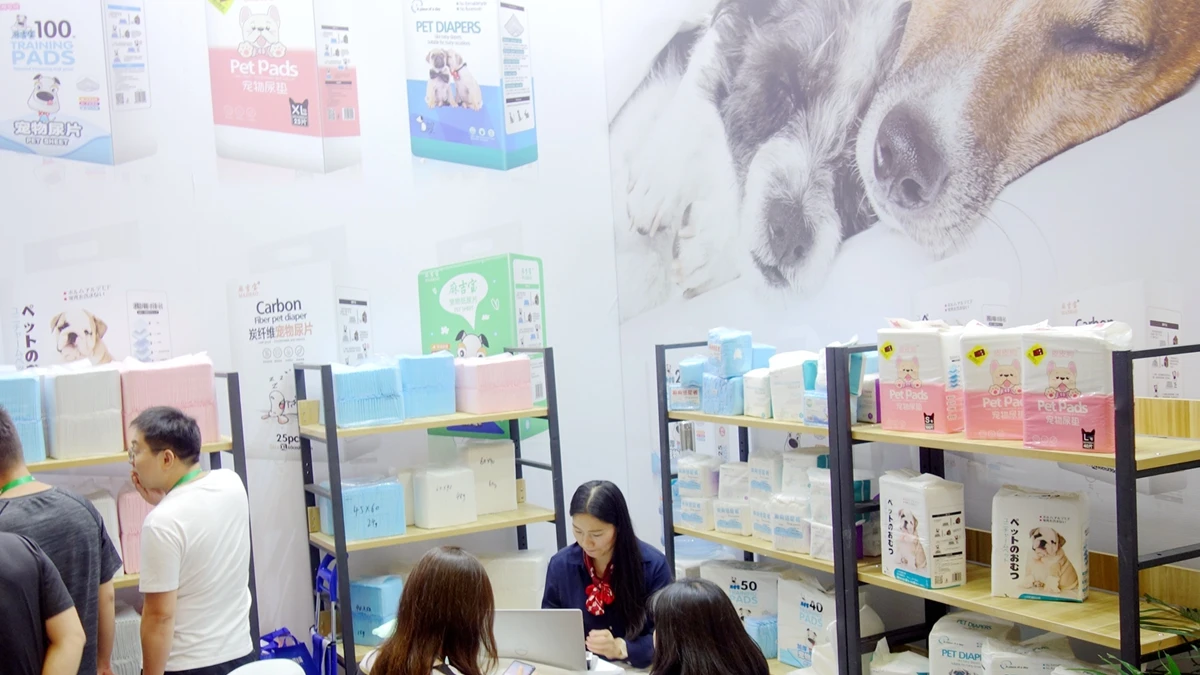
- Trading Company
- Jiangsu, China
- Lead time21 days
- Avg. response≤ 18h
Main productsPet Pad,Dog Diaper,Toilet Paper,Cat Litter,Dog Leash
Main marketsSouth Asia(100.00%), Domestic Market(100.00%), Eastern Asia(25.00%), South America(15.00%), North America(15.00%), Southeast Asia(10.00%), Southern Europe(5.00%), Northern Europe(5.00%), Central America(5.00%), Western Europe(5.00%), Eastern Europe(5.00%), Mid East(5.00%), Africa(4.00%), Oceania(1.00%)
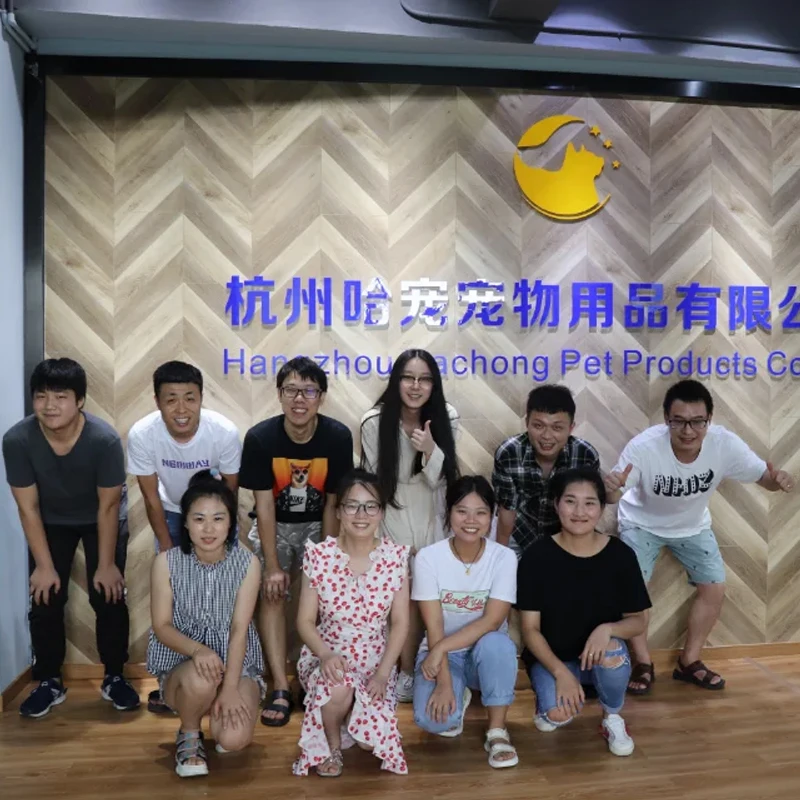
Hangzhou Hachong Pet Products Co., Ltd.
- Trading Company
- Zhejiang, China
- Lead time30 days
- Avg. response≤ 3h
Main productsPet Beds, Pet Toys, Pet Clothes, Cat Tree, Pet Grooming
Main marketsNorth America(40.00%), Western Europe(20.00%), Eastern Asia(20.00%), Oceania(10.00%), Northern Europe(10.00%)

Hangzhou Tianyuan Pet Products Co., Ltd.
- Verified by TUVRHEINLAND
- Combined
- China Zhejiang
- Lead time30 days
- Avg. response≤ 17h
Main productsPet Beds, Cat Trees, Pet Products, Pet Accessories, Pet Supplies, Pet Collar, Pet Toy, Pet Brush, Pet Bowl, Pet Clothes
Main marketsEurope,North America


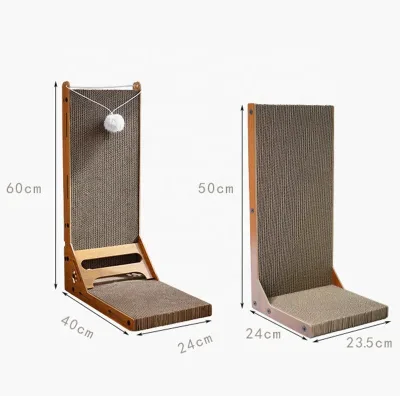
Petstar New Design Two in One Multifunctional Modern Cat Tree with Removable Cat Scratch Board
$8.98 - $11.98
MOQ: 100 Pieces


Shaoxing Senmao Pet Products Co., Ltd.
- Verified by TüVRheinland
- Manufacturer, Trading Company
- Lead time0 days
- Avg. response≤ 4h
Main productsCat Tree, Cat Scratcher, Pet Bed
Main marketsNorth America(70%), Eastern Europe(20%), Southeast Asia(10%)
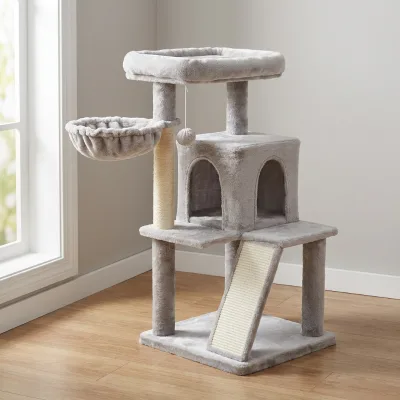
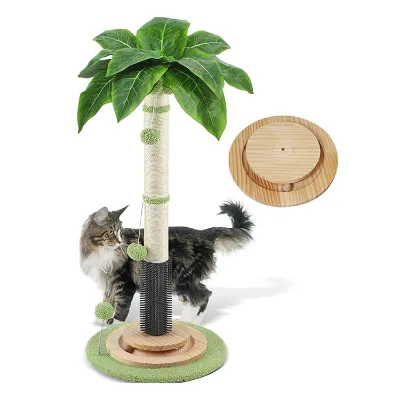

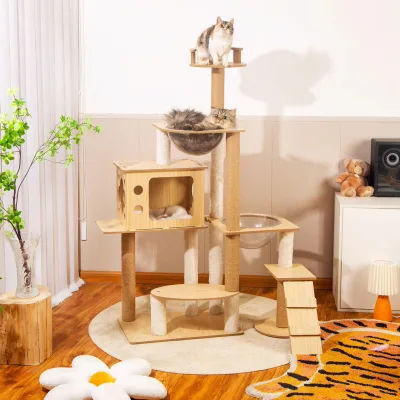
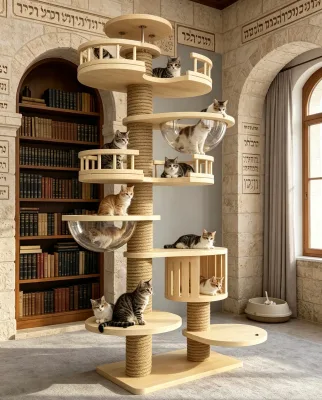
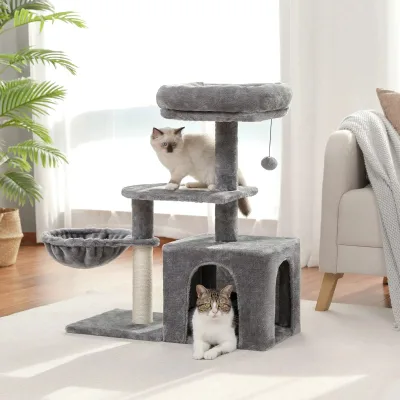
Custom Design Wholesale Wooden Pet Climbing Decorative Solid Cat Climbing Tree
$22.00 - $23.00
MOQ: 50
Hebei Saiweisi International Trade Co., Ltd.
- Trading Company
- Heibei, China
- Lead time0 days
- Avg. response≤ 3h
Main productsCat Litter,Pet Food,Pet Supplies,Pet Toys,Pet Clothing
Main marketsSoutheast Asia(30.00%), Mid East(30.00%), Eastern Asia(20.00%), North America(20.00%)

PUYANG SELFAIDING INDUSTRIAL CO., LTD.
- Verified by SGS
- Manufacturer
- China Henan
- Lead time15 days
- Avg. response≤ 3h
Main productsAdult Bib, Pet Pad, Underpad, Baby Bib, Protective Panties, Washable Sanitary Pad, Compression Stockings, Patient Care Clothing, Pet Nest, Pet Toy
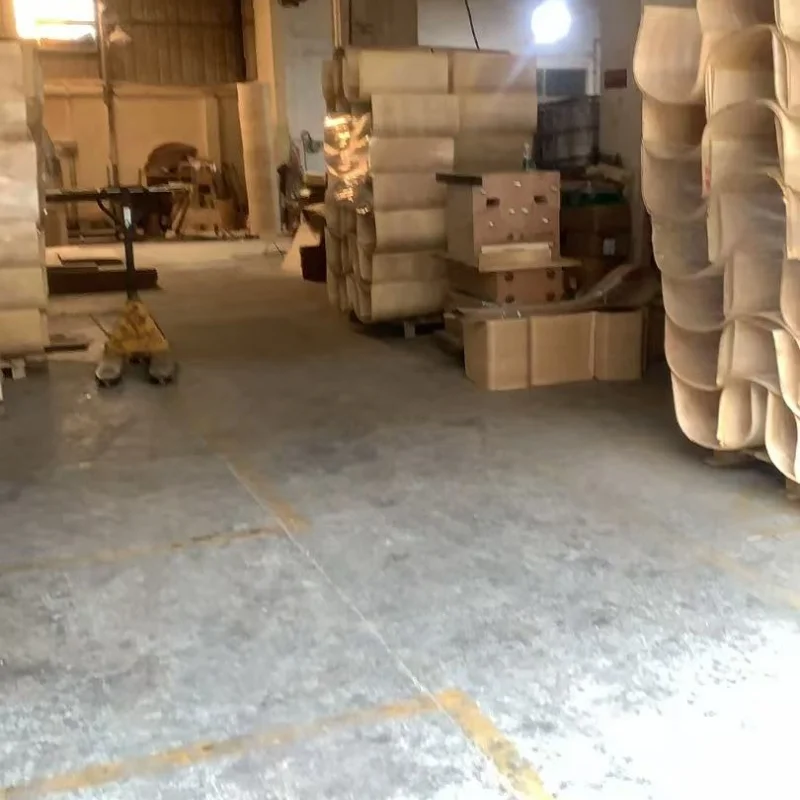
Dongguan Fangjin Wood Industry Co., Ltd.
- Manufacturer, Trading Company
- Guangdong, China
- Lead time15 days
- Avg. response≤ 3h
Main productsOEM/ODM Custom Wood Products,wood crafts,wooden home decor,custom wooden box,sporting goods
Main marketsNorth America(15.00%), Southeast Asia(12.00%), Eastern Europe(12.00%), South America(12.00%), Central America(8.00%), Western Europe(8.00%), Southern Europe(6.00%), Mid East(6.00%), Northern Europe(5.00%), South Asia(5.00%), Domestic Market(4.00%), Eastern Asia(3.00%), Oceania(2.00%), Africa(2.00%)

FUZHOU SHOO-IN IMP & EXP CO., LTD.
- Verified by SGS
- Trading Company
- China Fujian
- Lead time15 days
- Avg. response≤ 4h
Main productsPadel Ball, Tennis Ball, Hat, Pet Leash, Pickleball, Yoga Mat, Sports Towel
Main marketsEast Asia(Japan/ South Korea),North America
Shaoxing Shangyu Jiani Household Products Co., Ltd.
- Verified by SGS Group
- Manufacturer, Trading Company
- Lead time30 days
- Avg. response≤ 6h
Main productsCat Tree, Pet Bed
Main marketsNorth America(30%), Eastern Europe(10%), Oceania(10%)

Jiangmen Muyjis Pet Products Co., Ltd.
- Verified by SGS
- Combined
- China Guangdong
- Lead time15 days
- Avg. response≤ 6h
Main productsPet, Pet Travel Carrier, Pet Harness, Pet Supplies, Pet Accessories, Pet Clothes, Pet Shoes
Main marketsEast Asia(Japan/ South Korea),Europe,North America

Suzhou Becpet E-commerce Co.,Ltd.
- Verified by BV
- Trading Company
- China Jiangsu
- Lead time15 days
- Avg. response≤ 2h
Main productsPet Food Container, Storage Container, Pet Bowls, Pet Toys, Pet Feed Bins, Pet Feeder, Dog Leash, Pet Bed
Main marketsSouth America,Europe,North America

Shandong Clearsight International Trade Co, . Ltd
- Verified by SGS
- Trading Company
- China Shandong
- Lead time15 days
- Avg. response≤ 3h
Main marketsDomestic

Beautiful Cat Tree with Multi Layer Structure for Indoor Cats Comfortable Life
$18.90 - $24.90
MOQ: 100 Pieces

Cute Stylish Small Cat Tree with Platform for Kitten Leisure Activities
$30.90 - $36.90
MOQ: 100 Pieces

Beautiful Cat Tree with Soft Mat for Kittens Sweet Playing and Resting
$30.90 - $36.90
MOQ: 100 Pieces

Sturdy Indoor Cat Tree with Multi Platform for Adult Cats Climbing and Resting
$35.90 - $41.90
MOQ: 100 Pieces

Premium Luxury Cat Tree with Soft Mat for Indoor Cat Luxury Living Experience
$35.90 - $41.90
MOQ: 100 Pieces

Space Saving Compact Cat Tree with Platform for Small Apartment Indoor Cat Use
$13.90 - $19.90
MOQ: 100 Pieces

NINGBO BANGZHIYOU ARTS INDUSTRY AND TRADE CO., LTD.
- Verified by BV
- Trading Company
- China Zhejiang
- Lead time30 days
- Avg. response≤ 19h
Main productsPet Supplies, Pet Foods Snacks, Pet Trainer Collar, Pet Bed, Pet Toys, Pet Clothes, Equestrian Supplies, Pet Backpack, Cat Scratcher
Main marketsSouth America,Africa,Southeast Asia/ Mideast,East Asia(Japan/ South Korea),Europe,Australia,North America







Comprehensive Sourcing Guide
Eco-Friendly Detachable Cat Tree Supplier Concentration and Factory Types
Current data indicates that suppliers offering eco-friendly detachable cat trees are concentrated in specific Chinese provinces, with verified results showing active listings from Fujian, Jiangsu, and Zhejiang. These regions host a mix of trading companies and manufacturers specializing in pet supplies, including sports wear, promotional gifts, and various pet products. The presence of trading companies suggests a supply chain structure where intermediaries aggregate goods from multiple factories, potentially offering a wider range of designs such as solid wood, bamboo, and cardboard options. Buyers should note that while some suppliers list OEM capabilities, the primary company type observed is trading, which may influence direct factory communication and customization flexibility.
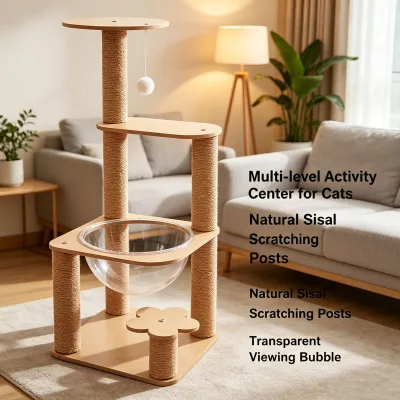
When evaluating the factory types, it is essential to distinguish between entities that manufacture the core components and those that simply resell finished goods. The observed product evidence includes items made from solid wood, MDF, particle board, rattan, and metal, alongside corrugated cardboard structures. This variety implies that some suppliers may source different materials from different sub-suppliers before assembling the final detachable unit. Buyers must verify if the listed company handles the actual production of the wooden frames or sisal rope wrapping, as this impacts quality control and the ability to implement specific eco-friendly material changes. Understanding this distinction helps in assessing whether a supplier can truly deliver on custom material requests or if they are limited to existing stock configurations.
How to Verify Eco-Friendly Detachable Cat Tree Suppliers
Verification of supplier credibility relies heavily on third-party audit reports and specific platform verification badges rather than self-declared claims. In the current dataset, one supplier is explicitly marked as verified by SGS, a recognized international inspection and certification body. This verification status provides a baseline of confidence regarding the supplier's business legitimacy and operational stability. Buyers should prioritize suppliers displaying similar third-party verification badges, as these indicate that an independent entity has reviewed the company's business license, production capacity, and quality management systems. Without such external validation, claims about eco-friendly materials or production standards remain unproven assertions that require further due diligence.
Beyond verification badges, buyers must scrutinize the specific product attributes and certifications listed in the supplier's catalog to ensure material safety. The available data highlights products with attributes like "Eco-Friendly," "Non-Toxic," and specific materials such as bamboo and solid wood. However, the absence of explicit certification names like FSC or specific chemical test reports in the provided facts means buyers cannot assume compliance with international safety standards without direct confirmation. It is critical to request copies of material safety data sheets or third-party lab reports for the specific cat tree models being considered. This step ensures that the "eco-friendly" label is backed by tangible evidence regarding the absence of harmful chemicals in the wood treatments, glues, or sisal ropes used in the construction.
What to Compare Across Eco-Friendly Detachable Cat Tree Suppliers
Comparing suppliers requires a systematic analysis of key operational metrics such as lead time, minimum order quantity, and response speed to determine fit for specific business needs. The observed data reveals significant variation in these areas; for instance, response times range from 3 to 18 hours, while lead times span from 15 to 30 days. A supplier with a 3-hour response time may offer better communication support for urgent orders, whereas a 30-day lead time might be acceptable for planned inventory replenishment but risky for time-sensitive launches. Buyers should create a comparison matrix that weighs these operational speeds against their own supply chain requirements to identify which suppliers can meet their specific delivery schedules without causing bottlenecks.
Minimum order quantities and pricing structures also vary widely and must be evaluated in the context of the buyer's volume strategy. Current facts show MOQs ranging from 6 pieces to 100 pieces, with price ranges extending from approximately $2.59 to $99.00 per unit depending on the model and material complexity. A supplier with a low MOQ of 6 pieces might be ideal for testing new designs or small boutique orders, while a supplier requiring 100 pieces may offer better economies of scale for larger retailers. Additionally, the main products listed by each supplier, such as pet beds, toys, or grooming tools, can indicate their specialization depth. A supplier focusing primarily on pet products may offer more cohesive design options and better material sourcing for cat trees compared to a general trading company with a broad product mix.
Common Eco-Friendly Detachable Cat Tree Sourcing Risks
One significant risk in sourcing eco-friendly cat trees is the potential discrepancy between claimed materials and actual product composition. While product attributes list materials like solid wood, bamboo, and MDF, the specific type of wood treatment or adhesive used is often not detailed in the initial listing. There is a risk that "eco-friendly" claims may refer only to the raw wood source while ignoring toxic glues or finishes that compromise the safety of the final product. Buyers must explicitly verify the chemical composition of all components, including the sisal rope and any faux fur coverings, to ensure they meet the intended environmental and safety standards. Without this verification, the product may fail to meet the expectations of eco-conscious consumers or regulatory requirements in the destination market.
Another critical risk involves the reliability of the supply chain regarding production capacity and consistency. The observed lead times vary from 15 to 30 days, and some suppliers indicate a trading company structure rather than direct manufacturing. This structure can introduce delays if the supplier relies on multiple sub-contractors who may not have synchronized production schedules. Furthermore, the complexity of detachable designs, which often require precise engineering for assembly without tools, increases the risk of quality issues if the supplier lacks specialized production experience. Buyers should assess the supplier's ability to handle custom orders and their track record with similar complex assemblies to mitigate the risk of receiving products that are difficult to assemble or prone to structural failure.
Eco-Friendly Detachable Cat Tree Regional Sourcing and Logistics
Regional sourcing strategies should focus on the specific manufacturing hubs identified in the supplier data, namely Fujian, Jiangsu, and Zhejiang provinces in China. These regions have established infrastructure for pet product manufacturing, with suppliers in Fujian offering a mix of sports and pet goods, while Jiangsu and Zhejiang hosts specialized pet furniture producers. The concentration of suppliers in these areas suggests a mature supply chain with access to raw materials like wood and sisal, as well as established logistics networks for exporting. Buyers should consider the proximity of the supplier to major ports, as this can influence shipping costs and transit times. However, without specific port data in the current facts, buyers must verify the exact shipping origin and associated freight costs for each supplier to accurately calculate the landed cost of the product.
Logistics planning must also account for the packaging dimensions and weight of the cat trees, which vary significantly by model. The data shows single package sizes ranging from 53x53x20 cm to 62x62x23 cm, with gross weights between 15 kg and 17 kg. These dimensions impact container loading efficiency and shipping costs, particularly for larger detachable units that may require flat-pack shipping to reduce volume. Buyers should request detailed packing lists and dimensional data for the specific models they intend to order to optimize container utilization. Additionally, the delivery time estimates provided by suppliers, such as 15-30 days, should be cross-referenced with current shipping schedules and customs clearance times to ensure realistic arrival dates. Proper logistics planning prevents unexpected delays and cost overruns that can erode profit margins.
Eco-Friendly Detachable Cat Tree Commercial Terms and Order Planning
Commercial terms and payment conditions are pivotal factors in finalizing a sourcing agreement, with current data indicating a preference for T/T (Telegraphic Transfer) as a payment method. Buyers should clarify the specific payment schedule, such as the percentage required for deposits versus final payments, and whether escrow services are available to protect funds during production. The observed data does not explicitly confirm escrow availability for all suppliers, so buyers must inquire about this option to mitigate financial risk. Additionally, understanding the sample time, which is noted as 5-7 days for some suppliers, is crucial for planning the product development timeline. Early sample approval can prevent costly errors in mass production and ensure that the final product meets the desired eco-friendly specifications.
Order planning must also integrate the supplier's capacity for customization and their ability to handle volume fluctuations. The data shows that customization is available for many models, with options for different sizes, colors, and materials like bamboo or solid wood. However, the MOQs vary from 6 to 100 pieces, requiring buyers to align their order quantities with their sales forecasts and storage capabilities. For suppliers with higher MOQs, buyers may need to negotiate lower initial orders or plan for longer lead times to build inventory. It is also essential to confirm the supplier's ability to handle repeat orders and their policy on price adjustments for larger volumes. A clear understanding of these commercial terms ensures a sustainable partnership and allows for strategic inventory management that supports long-term business growth.
FAQs
What materials are commonly used in eco friendly detachable cat trees?
Most eco friendly detachable cat trees use solid wood, MDF, particle board, bamboo, or rattan, with sisal rope on scratching posts. Suppliers also list washable or removable covers and faux rabbit fur options. Ask each supplier to confirm the exact board grade, adhesive type, and fabric certifications before ordering, since material claims vary considerably between listings.
What is the typical MOQ for eco friendly detachable cat trees?
MOQs vary widely by listing. Supplied listings show MOQs from 10 pieces on a custom pet-friendly solid wood cat tree, 6 pieces on a Jiangsu wood cat tree play house, 50 to 55 pieces on other Jiangsu models, and 100 pieces on a Zhejiang cardboard climbing house. Confirm MOQ per model, since customization usually raises the minimum.
How long do production and delivery usually take?
Lead times in the current listings range from about 15 days for a Fujian trading company, 21 days for a Jiangsu supplier, to 15 to 30 days for a Zhejiang supplier, with sample lead times of 5 to 7 days. Detachable designs with custom logos or colors may add production time, so confirm final schedules in writing before paying.
Can I customize the color, size, and logo of a detachable cat tree?
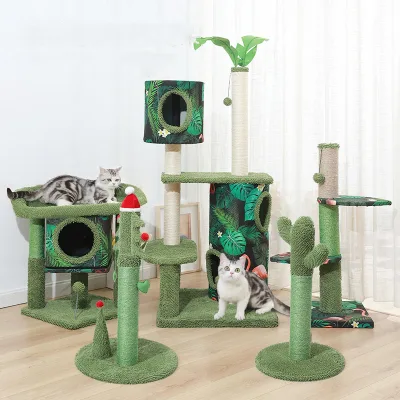
Yes, customization is widely offered. Listings show OEM and ODM acceptance, available customization, custom sizes, and logos accepted as customized on a Zhejiang model. Suppliers also offer style choices such as minimalist modern, ins style, forest style, and cartoon designs. Provide your specifications early and request a sample to verify fit, stability, and finish quality.
How much does an Eco-Friendly Detachable Cat Tree cost?
Prices vary by size and materials. Supplied listings show a range from 2.59 to 99.00 USD per unit for Fujian cat tree models, while a Jiangsu wood cat tree play house is quoted at 24.50 to 26.80 USD. Quotations depend on materials like solid wood versus particle board, so request itemized quotes for your exact configuration.
How should I verify a cat tree supplier before ordering?
Check the supplier type, verification status, and product match first. Current listings include an SGS-verified trading company in Fujian and suppliers in Jiangsu and Zhejiang whose main products include cat trees. Verify business licenses, request material test reports for toxicity claims, ask for references, and use secure payment terms rather than full advance payment.
How fast do these suppliers typically respond to inquiries?
Response times differ noticeably. The Fujian trading company shows an average response time of about 6.66 hours, the Jiangsu supplier around 18 hours, and the Zhejiang supplier around 3 hours. Send detailed inquiries covering model numbers, quantities, and customization to get accurate quotes faster, and compare response consistency across several messages.
Which cat tree structures work best for multi-cat households?
Multi-cat designs benefit from stable structures like double posts, triangular supports, and wider bases, which listings confirm as available options. Choose models covering core functions of climbing, scratching, resting, perching, and hiding, with heights suited to adult cats or kittens. Detachable modules let you reconfigure levels as your cats grow or your space changes.