Eco-Friendly Reusable Printed Shopping Bags Suppliers and Manufacturers
Compare 15 verified suppliers offering Eco-Friendly Reusable Printed Shopping Bags with varying lead times, certifications, and MOQs. Review response times and factory audits to select the right partner for your packaging needs today; review the available evidence before requesting comparable quotations from suitable candidates.
Suppliers List

Shanghai Hongyun Packaging Co., Ltd.
- Verified by TUVRHEINLAND
- Trading Company,Manufacturer/Factory
- China Shanghai
- Lead time15 days
- Avg. response≤ 3h
Main productsPaper Box, Gift Box, Packaging Box, Cartons, Paper Bags, Stickers, Hang Tags, Labels, Food Bags, Shopping Bags
Main marketsSouth America,Eastern Europe,Mid East,North America,Southeast Asia,Eastern Asia,Oceania,Western Europe,Africa

- Manufacturer, Trading Company
- Fujian, China
- Lead time20 days
- Avg. response≤ 10h
Main productsCar cover fabrics,3 layers non-woven,4 layers non-woven,PE film Laminate nonwoven,SMPE SMSPE
Main marketsWestern Europe(25.0%), Southern Europe(10.0%), Northern Europe(10.0%), Domestic Market(10.0%), North America(10.0%), Southeast Asia(10.0%), Eastern Europe(10.0%), South America(10.0%), Central America(5.0%)

XIAMEN J-MAX INDUSTRY AND TRADE CO., LTD.
- Trading Company,Manufacturer/Factory
- China Fujian
- Lead time45 days
- Avg. response≤ 7h
Main productsSustainable Bags, Foldable Bags, Shopping Bags, Cooler Bags, Travel Bags, Backpack, ...etc
Main marketsSouth America,Eastern Europe,Mid East,North America,Southeast Asia,Eastern Asia,Oceania,Western Europe
Hangzhou Langjie Technology Co., Ltd.
- Verified by TUVRHEINLAND
- Trading Company
- China Zhejiang
- Lead time15 days
- Avg. response≤ 4h
Main productsNon-Woven Bag, Paper Box, Laminated Bag, Thermal Insulation Bag, Paper Bag, Canvas Bag, Notebook, Clothing Dust-Proof Bag, Sticker, Cosmetics Bag
Main marketsDomestic,North America

Lianyungang Yuede Packaging New Materials Co., Ltd.
- Verified by TUVRHEINLAND
- Combined
- China Jiangsu
- Lead time30 days
- Avg. response≤ 2h
Main productsPackaging Materials
Main marketsNorth America

Guangzhou Blf Packing Co., Ltd.
- Verified by TUVRHEINLAND
- Trading Company,Manufacturer/Factory
- China Guangdong
- Lead time15 days
- Avg. response≤ 11h
Main productsPaper Bag, Paper Box, Gift Box, Non Woven Bag, Book, Tag, Sticker, Air Freshener, Cards, Jewelry Box
Main marketsSouth America,Eastern Europe,Mid East,North America,Southeast Asia,Eastern Asia,Oceania,Western Europe,Africa

Shanghai Touch Industrial Development Co., Ltd.
- Verified by TUVRHEINLAND
- Combined
- China Shanghai
- Lead time15 days
- Avg. response≤ 5h
Main productsInstant Hot Pack, Hot Cold Pack, Gel Eye Mask, Gel Ice Pack, Gel Bottle Cooler, Instant Ice Pack, Hand Warmer, Heat Pack, Cooling Scarf, Gel Beads
Main marketsSouth America,Others(foreignTradeCapacity.exportBusinessCapacityMarketOther),Southeast Asia/ Mideast,East Asia(Japan/ South Korea),Domestic,Europe,Australia,North America
Dongguan Xinyali Hardware Products Co., Ltd.
- Verified by BV
- Combined
- China Guangdong
- Lead time23 days
- Avg. response≤ 1h
Main productsStainless Steel Components, CNC Prototype Customisation, Hardware Precision Parts Milling, CNC Prototype Customised Parts, Hardware Precision Parts Lathe Machining, Aluminium Alloy Parts, Medical Device Parts, Aluminium Alloy Shaped Parts, Special Parts, Stainlesssteel
Main marketsDomestic
Wenzhou Lvlin Bag Making Co., Ltd.
- Verified by SGS
- Combined
- China Zhejiang
- Lead time15 days
- Avg. response≤ 4h
Main productsNonwoven Bag, Canvas Bag, Tote Bag, PP Woven Bag, Jute Bag
Main marketsDomestic

Fujian Angel Nonwoven Fabric Tech Co., Ltd.
- Verified by SGS
- Manufacturer
- China Fujian
- Lead time15 days
- Avg. response≤ 7h
Main productsNonwoven Fabric, Disposable Bed Sheet, Meltblown, Nonwoven Bag, Mattress Cover, Earloop/Nose Wire for Mask, PLA/Pet Nonwoven Fabric, Landscape Cover, Weed Control, TNT Table Cloth
Main marketsSoutheast Asia/ Mideast,Europe


Biodegradable Shopping Bag: Environmentally Conscious Tote for Sustainable Shopping
$0.07 - $0.15
Moq: 1000
Weifang Dafeng Packaging Co., Ltd.
- Verified by BV
- Trading Company,Manufacturer/Factory
- China Shandong
- Lead time23 days
- Avg. response≤ 4h
Main productsPP Woven Bag, BOPP Woven Bag, Weed Mat, FIBC Bag, PP Woven Fabric Roll
Main marketsSouth America,Mid East,North America,Africa

Weifang Golden Grain Bio Material Co., Ltd.
- Verified by BV
- Combined
- China Shandong
- Lead time30 days
- Avg. response≤ 19h
Main productsBiodegradable Bags, Biodegradable Shopping Bags, Biodegradable Garbage Bags, Biodegradable Poop Bags, Biodegradable Food Bags, Biodegradable D-Cut Bags, Biodegradable Aprons
Main marketsSoutheast Asia/ Mideast,Australia,North America

Wenzhou Guanmin Import and Export Co., Ltd.
- Verified by BV
- Trading Company,Manufacturer/Factory
- China Zhejiang
- Lead time120 days
- Avg. response≤ 6h
Main productsShopping Bag, Cooler Bag, Notebook, Pen, Color Pencil, Lanyard, Beach Ball, Umbrella, Sunshade, Air Freshener
Main marketsSouth America,Eastern Europe,Mid East,North America,Southeast Asia,Eastern Asia,Western Europe

Longgang Green Harmony Bags & Trading Co., Ltd.
- Verified by SGS
- Trading Company
- China Zhejiang
- Lead time15 days
- Avg. response≤ 2h
Main productsNon Woven Bags, Canvas Bags, Non Woven Laminated Bags, Tyvek Bags, Jute Bags, Non Woven Suit Cover, Cotton Bags, Non Woven Ultrasonic Bags, PP Woven Bags, Polyester Drawstring Bags
Main marketsSouth America,North America
Sichuan Fennidi Trading Co., Ltd
- Verified by BV
- Trading Company
- China Sichuan
- Lead time30 days
- Avg. response≤ 2h
Main productsCanvas Bag, Tote Bag, Shopping Bag, Customized Bag, Sports Bag, Non Woven Bag, Cosmetic Bag, Womens Shoes, Fashion Shoes
Main marketsSouth America,Africa,Others(foreignTradeCapacity.exportBusinessCapacityMarketOther),Southeast Asia/ Mideast,East Asia(Japan/ South Korea),Europe,North America


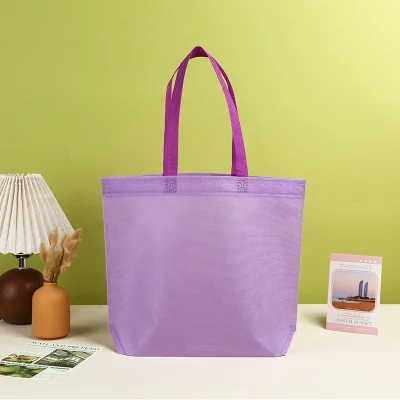
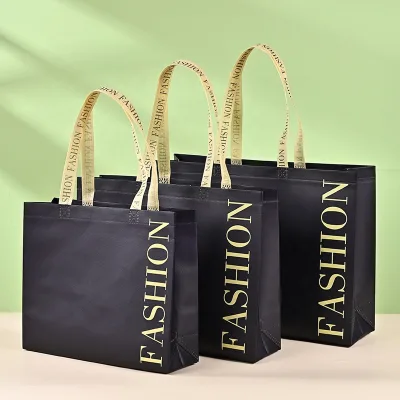
Customizable Reusable Non-Woven Tote Bag Eco-Friendly Shopping Bag Promotional Bag
$0.54 - $0.97
Moq: 1000




Comprehensive Sourcing Guide
Eco-Friendly Reusable Printed Shopping Bags Supplier Concentration and Factory Types
Buyers searching this category will encounter two distinct production bases in the current supplier results. Shanghai-based suppliers concentrate on paper shopping bags, gift boxes, cartons, labels and food bags, and they operate as both trading companies and manufacturer/factory entities. Their listing pages show cardboard construction, full-color printing, hot stamping, gloss or matte lamination, embossing and gold or silver foiling, with custom sizes and OEM/ODM capability explicitly available. Fujian-based suppliers cover a complementary position: one cluster produces non-woven promotional and foldable shopping totes with customizable sizes, while another specializes in sustainable, foldable and cooler-style reusable bags under its own brand alongside OEM and ODM services. Recognizing which material family each cluster serves is the first filter, because printed paper gift bags and laminated non-woven grocery totes rarely come from the same production line.
Within these clusters, supplier types differ in ways that affect your project. A factory-type entity can usually control printing, die-cutting and lamination schedules directly, while a trading-company label may consolidate several bag categories into one quotation. Some suppliers list system certifications such as ISO 9001 or ISO 14000 and carry third-party platform verification; others emphasize factory audits like BSCI or Sedex referenced on their product pages. Treat these labels as starting evidence rather than proof. Because search results change, always confirm whether a listing's stated origin, such as Shanghai or Fuqing, matches the entity that would actually hold your tooling and print plates.
How to Verify Eco-Friendly Reusable Printed Shopping Bags Suppliers
Verification should begin with the attributes a supplier actually displays, then extend to what you must request. In this category, one supplier shows TÜV Rheinland verification, ISO 9001, ISO 14000 and IFS system certifications, while a Fujian reusable-bag supplier lists BSCI, BRC, SEDEX and additional audit schemes such as Tesco and M&S on its product attributes, together with quality standards including Reach, Prop65 and LFGB. These are strong signals, but certificates belong to specific scopes and dates. Ask each candidate for the current certificate number, issuing body and scope, and check that the scope covers bag manufacturing or the specific material you are buying, not an unrelated product line.
Second, verify the factory behind the listing. Product pages in this category state origins such as Shanghai and Fuqing, and supplier type labels distinguish Manufacturer from Trading Company, but you should confirm which legal entity invoices you, which entity owns the printing equipment, and whether a factory audit report is recent. Request a sample run of your artwork to test color registration, handle attachment strength and lamination quality before committing to volume. For eco claims, ask what "eco friendly" and "recyclable" mean in material terms — recycled content percentage, non-woven fabric weight or FSC-type paper sourcing — and demand documentation. A supplier whose attribute table already discloses bearing capacity, color fastness levels and carton packing details is generally more transparent than one listing only a photo and a price band.
What to Compare Across Eco-Friendly Reusable Printed Shopping Bags Suppliers
Build a comparison table from the dimensions the listings already expose. Lead time is the clearest differentiator in the current results: a Shanghai paper-bag supplier shows a 15-day lead time, a Fujian non-woven supplier shows 20 days, and a Fujian reusable-bag producer states a 40–45 day order lead range. Response speed varies similarly, from roughly two hours to ten hours, which matters when artwork revisions and pre-production samples drive your schedule. Price bands also diverge by material: non-woven totes in the results span a low per-unit range, printed cardboard bags sit in a mid range, and heavier reusable grocery bags price higher, so normalize quotes against fabric weight, paper grade, print coverage and handle type.
Compare MOQ next. The paper-bag listing discloses a 500-piece minimum, which suits boutique and promotional buyers, while other listings do not state a minimum and must be asked directly. Main products reveal focus: a supplier listing paper bags, boxes, labels and hang tags is a packaging specialist, whereas one listing cooler bags, backpacks and travel bags treats shopping bags as part of a broader lifestyle range. Location matters for freight consolidation — Shanghai versus Fujian changes port and inland cost. Finally, weigh establishment-year data, escrow or platform payment protection, and OEM/ODM labels where shown, but never assume a displayed attribute applies to every supplier; check each row of your table against its source listing.
Common Eco-Friendly Reusable Printed Shopping Bags Sourcing Risks
The most frequent risk is ambiguity in the eco claim itself. Listings in this category describe products as eco friendly, recyclable or reusable, but attribute tables rarely quantify recycled content or certify compostability. If your market requires substantiated green claims, a generic label is insufficient; you need material declarations and, where relevant, test reports against the standards your retailer or regulator demands. Closely related is the print-quality risk: full-color printing, hot stamping and foiling are offered widely, but color fidelity on kraft or art paper and on non-woven fabric behaves differently, and a supplier strong in one may underperform on the other.
Second, lead-time and MOQ assumptions create schedule risk. A stated 15-day lead time typically excludes artwork approval, plate making and shipping; the 40–45 day range quoted for heavier reusable bags shows how much timelines vary within the same keyword. Confirm whether quoted lead times start at artwork sign-off or at deposit. Third, entity risk: where a supplier is labeled both trading company and manufacturer, clarify who controls production and who bears responsibility for defects. Weight limits also matter — listings in this category range from under 0.5 kg capacity on paper gift bags to a stated 15 kg bearing capacity on reusable totes, and a mismatch with your use case triggers returns and reputational damage. Finally, avoid locking tooling with an intermediary; confirm plate ownership in writing before the first deposit.
Eco-Friendly Reusable Printed Shopping Bags Regional Sourcing and Logistics
The supplier results place this category in two Chinese regions with different logistics profiles. Shanghai suppliers of printed paper bags and gift packaging sit near a major export port with dense freight options, which generally supports faster vessel availability and consolidated LCL shipments for mixed packaging orders. Fujian suppliers of non-woven and reusable shopping bags ship through southern and eastern coast ports, and their longer stated lead times — 20 days for non-woven totes and 40–45 days for heavier reusable grocery bags — reflect production complexity rather than distance alone. When planning, ask each supplier which port they ship from and whether they quote FOB, since inland trunking from Fuqing or Shanghai affects landed cost differently.
Logistics planning should also account for packaging density disclosed on the listings: one reusable-bag product specifies 40 units per export carton with a 46×42×45 cm carton, which lets you calculate containers per 1,000 units before negotiation. Paper gift bags, being lighter and foldable, usually cube out differently than rigid reusable totes, so request carton dimensions and gross weights for your exact size. Confirm whether standard shipping cartons are included, as one paper-bag listing states carton packing explicitly while others are silent. Finally, align your Incoterms choice with the supplier's type: a factory shipping direct may prefer ex-works, while a trading entity often quotes FOB more readily. Document the loading port and carton specifications in the purchase contract.
Eco-Friendly Reusable Printed Shopping Bags Commercial Terms and Order Planning
Structure commercial terms around the evidence each listing provides. Start with the price bands: the current results show non-woven promotional bags at a low per-unit band, printed cardboard gift bags spanning roughly 0.23 to 0.78 per unit, and custom reusable grocery bags at a higher band — but these are listing prices, not binding quotes. Ask every shortlisted supplier for a formal quotation that specifies paper type or fabric weight, print method, handle construction, lamination and packaging, since each variable moves the price materially. Match MOQ to your plan: a disclosed 500-piece minimum suits test orders and boutique runs, while suppliers without a stated minimum may accept pilot quantities but price them unfavorably.
Payment and milestone planning should reflect the lead-time spread. For the 15–20 day suppliers, tie deposits to artwork approval and pre-production samples; for the 40–45 day reusable-bag producer, add a mid-production inspection milestone. Use platform escrow or verified payment protection where offered, and confirm the invoicing entity matches the verified profile. Order planning should also account for tooling: print plates for custom logos are typically reusable, so negotiate retention and reuse terms for repeat orders. Finally, plan reorders against stated response times — a supplier answering in about two hours versus ten hours will handle repeat-order art changes differently. Lock all agreed attributes, including size tolerances and carton specifications, into a written specification sheet before any deposit.
FAQs
What is the typical lead time for custom printed shopping bags?
Manufacturers in China generally require 15 to 45 days for production. Shanghai-based suppliers often offer faster turnaround times around 15 days, while Fujian facilities may need up to 45 days. Buyers should confirm specific schedules with their chosen vendor before placing orders.
What is the minimum order quantity for custom paper bags?
The standard minimum order quantity is 500 pieces for custom printed paper bags. This threshold applies to most suppliers offering cardboard or art paper options. Buyers seeking smaller quantities may need to explore different suppliers or accept higher per-unit costs.
Are these suppliers verified for quality and safety standards?
Yes, several suppliers hold recognized certifications such as ISO 9001, IFS, and ISO 14000. Others have passed BSCI, SEDEX, or BRC audits. Some are verified by TÜV Rheinland. Buyers should request current certificates to ensure compliance with their specific market requirements.
What is the price range for eco-friendly reusable shopping bags?
Prices typically range from $0.10 to $1.62 per unit depending on material and customization. Non-woven bags start around $0.10, while premium paper bags cost between $0.23 and $0.78. Higher-end reusable options can reach $1.62. Volume discounts usually apply for larger orders.
Can suppliers provide custom logo printing and design services?
Most suppliers offer full customization including logo printing, custom designs, and various surface treatments like hot stamping or UV coating. OEM and ODM services are widely available. Buyers can choose from rope handles, string handles, or other styles to match their brand identity.
How quickly do suppliers typically respond to inquiries?
Response times vary between 2.10 and 10 hours on average. Shanghai-based trading companies often respond within 2.10 hours, while other manufacturers may take up to 10 hours. Faster response times indicate better communication channels and readiness to handle urgent sourcing requests efficiently.