Eco-Friendly Round Soap Dispenser Suppliers and Manufacturers
Source 17 verified suppliers for Eco-Friendly Round Soap Dispenser products. Compare key dimensions including location, lead time, MOQ, and response time to find the right partner. Review detailed product specifications and pricing to initiate your procurement process; review the available evidence before requesting comparable quotations from suitable candidates.
Suppliers List

Tonglin Wood Industry (Dalian) Co., Ltd
- Verified by BV
- Trading Company
- China Liaoning
- Lead time30 days
- Avg. response≤ 3h
Main productsWooden Stair Product, Wooden Skirting Line, Wooden Baseball Bat, Wooden Pet Product, Wooden Knob, Wooden Handle, Wood Wine Box, Wooden Balusters, Wooden Cutting Board, Wooden Door Jamb
Main marketsNorth America


Bamboo Soap Dispenser, Environmentally Friendly, Harder and More Beautiful
$2.90 - $3.20
MOQ: 1000 Pieces

Eagle Catering Equipment Co., Ltd.
- Manufacturer/Factory
- China Guangdong
- Lead time30 days
- Avg. response≤ 9h
Main productsTrolleys, Gastronorm Containers, Table, Shelves, Sink, Barrier Post, Cookware, Buffetware, Barware, Kitchen Utensils
Main marketsSouth America,Eastern Europe,Mid East,North America,Southeast Asia,Eastern Asia,Oceania,Western Europe,Africa

Zhongshan Zoomerry Bathroom Accessories Co.,Ltd
- Manufacturer/Factory
- China Guangdong
- Lead time23 days
- Avg. response≤ 3h
Main productsGrab Bar, Shower Door, Shower Enclosure, Bathroom Accessories, LED Bathroom Mirror, Electric Towel Warmer, Shower Curtain Rod, Shower Seat, Shower Shelf, Towel Bar
Main marketsSouth America,Eastern Europe,Mid East,North America,Southeast Asia,Eastern Asia,Oceania,Western Europe,Africa

- Trading Company
- China Guangdong
- Lead time15 days
- Avg. response≤ 5h
Main productsHouseware, Bathroom Set, Bathroom Accessory, Kitchenware, Tableware, Wine Accessory, Bath Set, Home Decoration, Soap Dispenser, Bath Ensembles
Main marketsDomestic,North America

Ningbo Risen Electronics Technology CO., LTD.
- Verified by SGS
- Trading Company
- China Zhejiang
- Lead time30 days
- Avg. response≤ 3h
Main productsAutomatic Soap Dispenser, Automatic Hand Sanitizer, Sensor Soap Dispenser, Auto Foam Soap Dispenser, Sensor Dustbin, Automatic Dustbin, Touch Free Soap Dispenser, Automatic Foam Dispenser, Auto Soap Dispenser
Main marketsSoutheast Asia/ Mideast,Europe,North America

Easton Hotel Supplies Co., Ltd.
- Verified by TUVRHEINLAND
- Trading Company
- China Guangdong
- Lead time15 days
- Avg. response≤ 4h
Main productsHotel Accessories, Hotel Amenity, Hotel Supplies, Wall Mounted Hair Dryer, Magnifying Mirror, Ironing Board, Welcome Tray, Wooden Hanger, Digital Safe, Luggage Rack
Main marketsSoutheast Asia/ Mideast
- Trading Company
- China Zhejiang
- Lead time30 days
- Avg. response≤ 11h
Main productsHome Appliance, Cookware Set, Thermos, Home Storage, Furniture, Pet Supplies, Garden Tools, Outdoor Supplies, Baby Supplies, Houesehold Items
Main marketsSouth America,Africa,Southeast Asia/ Mideast,East Asia(Japan/ South Korea),Domestic,Europe,Australia,North America


Double Outlet Bathroom Soap Dispenser Waterproof Hotel Hand Press Gel Dispenser
$1.80
MOQ: 1500 Pieces

ningbo crown commodity co.,ltd
- Verified by SGS
- Combined
- China Zhejiang
- Lead time30 days
- Avg. response≤ 25h
Main productsPerfume Sprayer, Lotion Pump, Trigger Sprayer, Pet Bottle, Cosmetic Package, Eyeliner Package
Main marketsAfrica,Southeast Asia/ Mideast,Europe,North America
Jiangmen Yako Hardware Manufacturer Co., Ltd.
- Verified by SGS Group
- Manufacturer, Trading Company
- Lead time30 days
- Avg. response≤ 1h
Main productsDoor Handle; Door Hinge; Door Lock; Door Accessories, Bathroom Accessories
Main marketsWestern Europe(40%), North America(20%), South America(10%)
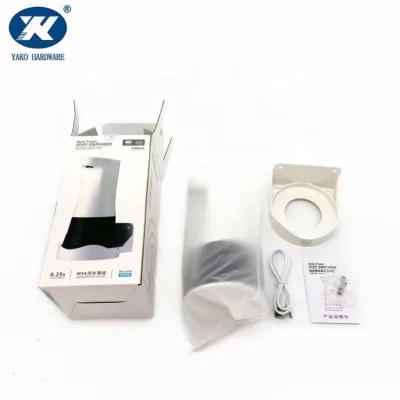
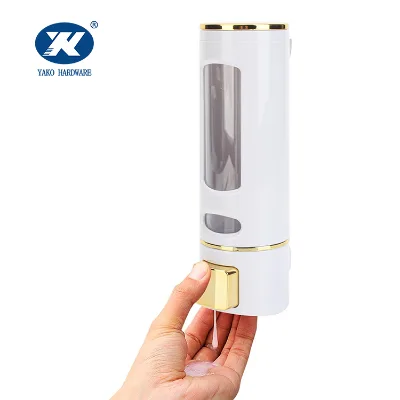
$1.47 - $1.68
MOQ: 200 pieces

GUANGZHOU ATGET DECORATION & HARDWARE CO., LTD.
- Verified by SGS
- Combined
- China Guangdong
- Lead time15 days
- Avg. response≤ 12h
Main productsSoap Dispenser, Paper Towel Dispenser, Paper Holder, Bathroom Grab Bar, Floor Drain, Handrail for The Disabled, Bathroom Shower Shelf, Cosmetic Mirror, Bathroom Accessories, Miscellaneous Hardware
Main marketsSouth America,Southeast Asia/ Mideast,Europe

- Verified by TUVRHEINLAND
- Trading Company
- China Guangdong
- Lead time15 days
- Avg. response≤ 2h
Main productsDoor, Fire Rated Door, Fire Rated Window, Medical Hospital Door, Cleanroom Window, Sliding Door System, Door Hardware, Aluminum Panel, Medical Furniture, Soap Dispenser
Main marketsSouth America,Southeast Asia/ Mideast

Ningbo Jiahua Plastic Co., Ltd.
- Verified by TUVRHEINLAND
- Combined
- China Zhejiang
- Lead time23 days
- Avg. response≤ 7h
Main productsLotion Pump, Trigger Sprayer, Sprayer, Mist Sprayer, Plastic Cap, Pet Bottle, Crimp Sprayer, Perfume Sprayer, Screw Microsprayer
Main marketsSouth America,Europe,North America

- Trading Company,Manufacturer/Factory
- China Guangdong
- Lead time23 days
- Avg. response≤ 12h
Main productsHotel Amenity, Hotel Supplies, Hair Dryer, Ironing Board, Safe Box, Ice Bucket, Magnifying Mirror, Luggage Rack, Waste Bin, Electric Kettle
Main marketsSouth America,Eastern Europe,Mid East,North America,Southeast Asia,Eastern Asia,Oceania,Western Europe,Africa


Plastic Wall Mounted Soap Dispenser for Hotel Bathroom
MOQ: 100 Pieces

YUYAO YUHUI COMMODITY CO., LTD.
- Verified by BV
- Combined
- China Zhejiang
- Lead time30 days
- Avg. response≤ 3h
Main productsTrigger Sprayer, Lotion Pump, Cosmetic Jar, Plastic Bottle, Plastic Case, Plastic Cap, Fine Mist Sprayer, Foam Pump, Treatment Pump, Plastic Travel Bottle Set
Main marketsSouth America,Africa,Southeast Asia/ Mideast,East Asia(Japan/ South Korea),Europe,Australia,North America


Customizable Plastic Lotion Liquid Soap Dispenser with Adjustable Feature
$0.07 - $0.09
MOQ: 10000 Pieces

Yuyao Jinhai Glass and Plastics Manufacturing Plant
- Combined
- China Zhejiang
- Lead time30 days
- Avg. response≤ 8h
Main productsGlass Ball, Gasket, Tube, Trigger Sprayer, Mist Sprayer, Lotion Pump, Steel Ball, Crime Pump
Main marketsSouth America,Africa,Southeast Asia/ Mideast,Domestic,Europe,Australia

Precision Liquid Soap Dispenser with Ergonomic Design for High-Accuracy Use
$0.06 - $0.07
MOQ: 10000 Pieces

Chaozhou Chaoan Caitang Town Yajie Hardware Products Factory
- Manufacturer, Trading Company
- Guangdong, China
- Lead time15 days
- Avg. response≤ 7h
Main productsFloor Drain,Towel Rack,Tissue Box,Storage Rack,Soap Dispenser
Main marketsSouth Asia(15.00%), Southern Europe(15.00%), Western Europe(15.00%), Eastern Europe(13.00%), Southeast Asia(12.00%), Eastern Asia(10.00%), Central America(5.00%), Domestic Market(5.00%), South America(5.00%), Mid East(3.00%), Africa(2.00%)

- Manufacturer/Factory,Other
- China Shanghai
- Lead time0 days
- Avg. response≤ 16h
Main productsBottle Cap Bottle Cover Bottle Closure, Plastic Cap Plastic Lid, Metal Screw Cap Tin Cap Tin Lid, Bottle Rings Screw Rings, Silicon Cap, Glass Candle Holder Candle Cup Candle Jar, Votive Holder Tea Light Holder, Glass Cup, Glass Jar Spice Jar Wine Bottle

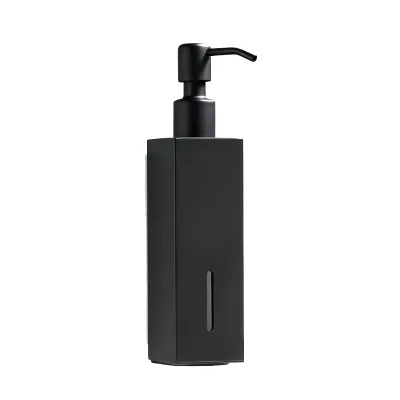
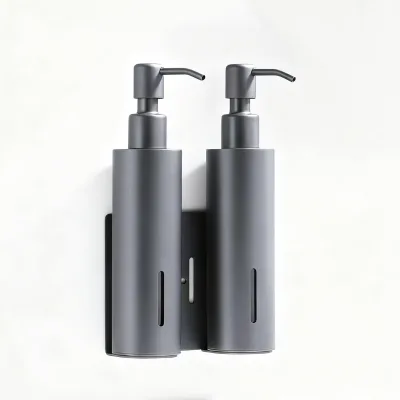
Lotion Dispenser / Lotion Pump / Soap Dispenser (SS4601-2)
MOQ: 20000 Sets

Lotion Dispenser / Lotion Pump / Soap Dispenser (SS4601-4)
MOQ: 20000 Sets


Comprehensive Sourcing Guide
Eco-Friendly Round Soap Dispenser Supplier Concentration and Factory Types
When sourcing an Eco-Friendly Round Soap Dispenser, understanding the shape of the supply base helps you target the right type of partner. Current results point to suppliers concentrated in China, with locations including Liaoning and Guangdong provinces. Liaoning appears as a trading company listing a bamboo soap dispenser marketed as environmentally friendly, alongside a broad wooden-goods portfolio. Guangdong appears multiple times, with manufacturers offering plastic wall-mounted dispensers, porcelain bathroom dispensers, and stainless steel dispenser stands — the latter useful if your round dispenser design needs a complementary stand or hygiene-station configuration.
Factory types differ in ways that matter for this category. Manufacturer/factory suppliers in Guangdong advertise OEM and ODM capability, and one also promotes its own brand, suggesting in-house design capacity for a custom round shape or logo. Trading companies, by contrast, may aggregate bamboo, wood, and mixed-material products from several workshops, which can simplify sourcing across a range but adds a layer between you and the production floor. Note that materials in the visible listings — bamboo, porcelain, plastic, and stainless steel — each imply different tooling, finishing, and eco-credential verification. When location data is not displayed for a given listing, treat the supplier as unverified geographically and ask directly for the production address, since real cluster proximity affects audit cost, material sourcing, and consolidation of shipments.
How to Verify Eco-Friendly Round Soap Dispenser Suppliers
Verification starts with the credentials a listing actually displays, and checking that they match the product you intend to buy. One Liaoning listing shows a third-party verification mark (BV) — a useful signal, but it applies to the company, not automatically to every product, so confirm which entity was audited and what scope the verification covered. Response time is another verifiable dimension shown on listings here, ranging from roughly two hours to nearly nine; a fast displayed response time only proves responsiveness at enquiry stage, so test it yourself with a technical question about the round dispenser's material and finish.
Go beyond displayed badges with targeted questions. For an eco friendly claim, ask what specifically makes the product eco friendly — bamboo sourcing, recyclable components, low-VOC lacquer — and request evidence you can check, since none of the visible listings documents a certification for the dispensers themselves. One bamboo listing does display useful technical attributes you can verify against samples: moisture content of 12%, well-sanded surface, PU lacquer, and logo application by burning or engraving. For manufacturers, confirm business type, original place of production (one Guangdong listing states Zhongshan), and whether customization is genuinely available, as several listings claim it. Finally, ask for a video walkthrough or third-party inspection of the workshop, and cross-check the registered company name, so that verification reflects the actual factory producing your round dispensers rather than the storefront alone.
What to Compare Across Eco-Friendly Round Soap Dispenser Suppliers
Build a comparison sheet around the dimensions visible on real listings. Price ranges differ sharply by material: a bamboo dispenser is listed at roughly $2.90–$3.20, plastic wall-mounted units at about $1.55–$1.85, porcelain at $2.00–$10.00, and stainless steel dispenser stands at $25.00–$40.00. Record the range, not just the floor, and note what spec sits at each end. MOQ is equally varied here — 1,000 units for the bamboo model, 50 for the steel stands, 100 for the plastic dispensers, 300 for the porcelain piece — so match MOQ to your order size and the material you actually want.
Lead time is another directly comparable field: displayed values include 30 days (Liaoning), 23 days (Guangdong plastic), and 15 days (Guangzhou porcelain), which materially affects replenishment planning. Response time — from about 2.25 to 8.72 hours in these listings — indicates communication speed but should be validated live. Compare main-products breadth too: a supplier whose core catalog is bathroom accessories or houseware is more likely to have stable dispensing-pump supply chains than one listing dispensers incidentally. Check customization flags, model numbers (such as YH-disp01/02 or SD-01/02), packing formats, and whether OEM/ODM capacity or own-brand activity is stated. Do not assume every supplier displays the same attributes; where a field is missing, request it explicitly and score incomplete listings accordingly in your comparison matrix.
Common Eco-Friendly Round Soap Dispenser Sourcing Risks
The most common risk in this category is an unverified eco claim. Several listings use words like "environmentally friendly" without attaching a certification, standard, or test report to the dispenser itself. If your market requires documented sustainability claims, an unverifiable adjective is a compliance risk, not just a marketing gap. Ask for material composition, finish chemistry, and any third-party testing, and treat refusal or vagueness as a red flag worth pricing into your decision.
Quality and specification risks follow. A bamboo listing shows 12% moisture content — plausible, but confirm what measurement method was used and whether it holds in your destination climate, since moisture swings cause cracking in round, turned bodies. Lacquer and pump quality are frequent failure points: pumps leak, chrome finishes pit, and engraved logos drift between batches, so inspect pre-production samples against the stated spec sheet rather than listing photos. Structural risks include dimension ambiguity — some listings give standard sizes, others say dimensions "can be customized," which means you must fix and document final measurements. Commercial risks include MOQ mismatch (a 1,000-unit floor on bamboo versus a 50-unit floor on steel stands), long lead times compressing your launch window, and packing that suits export cartons but not retail shelves. Trading-company structures add a transparency risk: confirm who manufactures, who owns tooling, and who is liable for replacements if a shipment fails inspection.
Eco-Friendly Round Soap Dispenser Regional Sourcing and Logistics
The visible listings sit in China, specifically Liaoning in the northeast and Guangdong in the south, and this geographic split has logistical consequences. Guangdong hosts several manufacturers across bathroom accessories, plastic, and porcelain products, with one listing citing Zhongshan as the origin — a location associated with dense supplier networks that can shorten travel for audits and sample runs. Liaoning's listing is a trading company with a 30-day lead time, the longest displayed here, which may reflect its distance from southern ports or a multi-workshop aggregation model; either way, build that timeline into planning.
Material geography also matters. Bamboo and wooden products are the Liaoning listing's core, while Guangdong listings cover plastic, porcelain, and stainless steel, so the eco-material you choose partly determines where capable suppliers cluster. For logistics, note the packing details on display: box-and-carton packing for bamboo, export cartons for steel stands, and standard safety packing for plastic units — details that affect container fill and damage rates. Several listings state customization availability and hotel application, which suggests business buyers are the norm and export documentation should be routine, but confirm Incoterms, port of loading, and who arranges freight, since none of the listings states these. Where a supplier displays no location at all, do not infer one; request the production address, then plan an audit route and consider consolidating multiple dispensers and stands from co-located suppliers into one shipment.
Eco-Friendly Round Soap Dispenser Commercial Terms and Order Planning
Order planning should reconcile MOQ, price, and lead time into a realistic schedule. The displayed figures illustrate the trade-offs: bamboo dispensers carry the highest MOQ (1,000) at a mid-range price ($2.90–$3.20) and the longest lead time (30 days); plastic units offer the lowest entry cost ($1.55–$1.85) with an MOQ of 100 and 23-day lead; porcelain spans $2.00–$10.00 with an MOQ of 300 and the shortest shown lead time of 15 days; steel stands sit at $25.00–$40.00 with an MOQ of just 50. Negotiate against these published floors, but confirm what quantity, material, and finish each quoted price assumes before committing.
On terms, ask about payment structure, sample cost and credit, and defect remedies — none of these appears on the listings, and one porcelain listing explicitly shows no warranty and no after-sales service, which you should treat as the starting position to negotiate away, not a given. Customization is claimed on several listings, including logo burning or engraving on bamboo and customized dimensions on plastic, so define artwork approval, tolerance, and sign-off procedures in writing. For production, sequence milestones: sample confirmation, deposit, mass production, inspection, balance payment, and shipment, mapped against the stated lead time plus buffer. If order volumes are small, consider pairing dispensers with higher-MOQ complementary items from the same supplier's catalog — bathroom sets or kitchenware in several listings — to reach workable quantities while keeping one consolidated shipment and one point of accountability.
Word count: approximately 1,382 words
FAQs
What is the price range for eco friendly soap dispensers?
Prices vary by material and supplier. Bamboo models range from $2.90 to $3.20 per unit with a minimum order of 1000 pieces. Plastic wall-mounted options are available between $1.55 and $1.85 with a lower minimum order of 100 units. Porcelain dispensers cost between $2.00 and $10.00 per piece.
What materials are used for eco friendly soap dispensers?
Manufacturers offer dispensers made from bamboo, plastic, and porcelain. Bamboo options feature chrome finishes and desk-mounted installation. Plastic models are wall-mounted with rectangular bases. Porcelain dispensers are available in black with custom logos. Stainless steel stands are also available for holding dispensers in hotel or restaurant settings.
What are the minimum order quantities for these products?
Minimum order quantities depend on the specific product type and supplier. Bamboo soap dispensers require a minimum order of 1000 units. Plastic wall-mounted dispensers have a lower minimum order of 100 units. Porcelain alphabet design dispensers require a minimum order of 300 units. Stainless steel stands have a minimum order of 50 units.
How long does production take for these items?
Lead times vary by supplier and location. Some suppliers in Liaoning have a lead time of 30 days. Suppliers in Guangdong may have a lead time of 23 days. Other manufacturers offer a faster lead time of 15 days. Buyers should verify specific production schedules with individual suppliers before placing orders.
Are customization options available for these dispensers?
Yes, customization is available for most products. Bamboo dispensers allow logo burning or engraving. Plastic models can be customized in dimension and base shape. Porcelain dispensers support customized logos and designs. Stainless steel stands also offer customization. Buyers should confirm specific customization requirements with the supplier to ensure the product meets their needs.
Where are these suppliers located?
Suppliers are located in China, specifically in Liaoning and Guangdong provinces. Some porcelain products originate from Guangzhou. Plastic dispensers may originate from Zhongshan. Buyers can filter results by these locations to find suppliers closer to their shipping preferences or to verify regional manufacturing capabilities.