Hotel Ceramic Hob Suppliers and Manufacturers in China
Compare 19 verified suppliers offering Hotel Ceramic Hob solutions with ISO 9001 certification and response times under 13 hours. Review lead times, pricing, and customization options before requesting quotes for your commercial kitchen needs; review the available evidence before requesting comparable quotations from suitable candidates.
Suppliers List

Guangzhou Sunrry Kitchen Equipment Co., Ltd.
- Verified by CTI
- Trading Company,Manufacturer/Factory
- China Guangdong
- Lead time30 days
- Avg. response≤ 3h
Main productsCommercial Kitchen Solutions, Turnkey Kitchen Solutions, Catering Equipment, Restaurant Equipment, Commercial Refrigeration Equipment, Commercial Bakery Equipment, Commercial Cooking Equipment, Stainless Steel Equipment, Commercial Food Prep Equipment, Commercial Kitchen Equipment
Main marketsSouth America,Eastern Europe,Mid East,North America,Southeast Asia,Eastern Asia,Oceania,Western Europe,Africa

FOSHAN KITCHENSTAR ELECTRICAL APPLIANCES CO., LTD.
- Combined
- China Guangdong
- Lead time30 days
- Avg. response≤ 13h
Main productsInduction Hob
Main marketsSoutheast Asia/ Mideast,Europe,North America

Zhongshan Longstar Electrical Appliance Co., Ltd.
- Verified by BV
- Combined
- China Guangdong
- Lead time30 days
- Avg. response≤ 7h
Main productsInduction Cooker, Infrared Cooker
Main marketsSoutheast Asia/ Mideast
Guangdong Built Electronic Appliance Manufacture Co., Ltd.
- Verified by Intertek
- Manufacturer, Trading Company
- Lead time60 days
- Avg. response≤ 7h
Main productsRangehood, Built-in Oven, Built-in Gas Hob, Built-in Induction Hob, Built-in BBQ Grill
Main marketsSoutheast Asia(50%), Mid East(30%), South America(5%)

ZHONGSHAN AI LI PU ELECTRICAL APPLIANCE CO., LTD.
- Verified by TUVRHEINLAND
- Combined
- China Guangdong
- Lead time30 days
- Avg. response≤ 9h
Main productsInduction Cooker, Infrared Cooker, Halogen Cooker, Electric Pressure Cooker, Rice Cooker, Kettle, Commercial Induction Cooktop, Double Burns Induction Cooker, Double Burns Infrared Cooker, Four Burns Induction Cooker
Main marketsDomestic


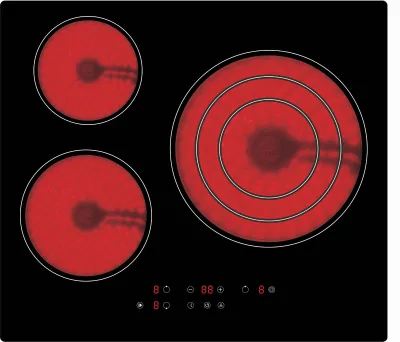
60CM Ceramic hob with 3 hobs/cooking zone with CB and CE certification
$70.60 - $72.00
MOQ: 100 Pieces


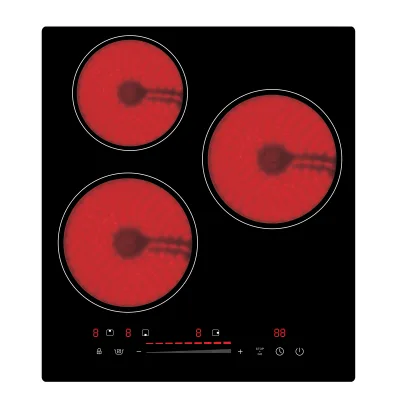
2021 Slide control with timer child lock function 3 burner built in type electric ceramic hob
$62.00 - $65.00
MOQ: 100 Pieces

Zhongshan Ruihu Industry and Trade Co., Ltd.
- Verified by TUVRHEINLAND
- Trading Company
- China Guangdong
- Lead time30 days
- Avg. response≤ 1h
Main productsInduction Cooker
Main marketsSouth America,Domestic


4 Burner Built-in Electric Infrared Cooktop Ceramic Hob with Touch Control
$56.35 - $56.50
MOQ: 100 Pieces

- Verified by SGS
- Trading Company
- China Guangdong
- Lead time30 days
- Avg. response≤ 5h
Main productsAir Fryer, Air Fryer Oven, Toaster Oven, Electric Oven, Toaster, Pressure Cooker, Commercial Microwave Oven, Commercial Oven, Aroma Diffuser, Ice Maker
Main marketsEast Asia(Japan/ South Korea),Europe,North America

Zhongshan Jiaye Electric Appliance Co., Ltd.
- Verified by SGS
- Combined
- China Guangdong
- Lead time23 days
- Avg. response≤ 9h
Main productsGas Hob, Gas Stove, Range Hood, Built-in Oven, Microwave Oven, Induction Cooker, Ceramic Hob
Main marketsSouth America,Africa,Southeast Asia/ Mideast,Europe

Qingdao Vestar International Industry Co., Ltd.
- Verified by BV
- Trading Company
- China Shandong
- Lead time30 days
- Avg. response≤ 2h
Main productsRefrigerator, Air Conditioner, Range Hood, Gas Hobs, Oven, Washing Machine, Microwave, Dishwasher, Showcase, Chest Freezer
Main marketsSouth America,Africa,Southeast Asia/ Mideast,Domestic,Europe,Australia,North America
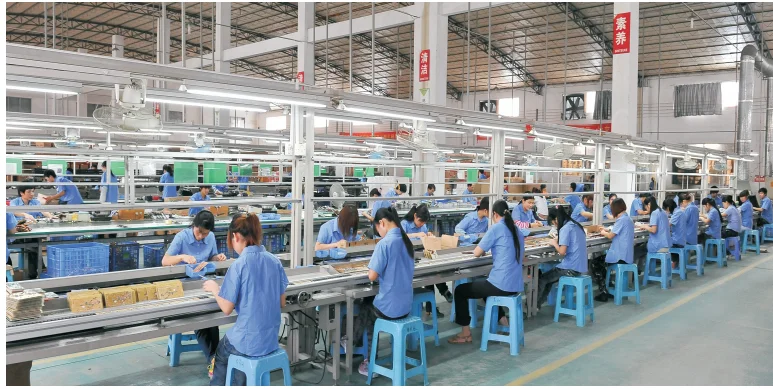
Zhongshan Ai Li Pu Electrical Appliance Co., Ltd.
- Manufacturer, Trading Company
- Guangdong, China
- Lead time30 days
- Avg. response≤ 11h
Main productsInduction cooker,Infrared cooker,Industrial cooker,2 burners cooker
Main marketsSoutheast Asia(22.00%), Domestic Market(18.00%), North America(14.00%), Mid East(13.00%), South America(9.00%), Eastern Europe(5.00%), Africa(5.00%), Northern Europe(3.50%), South Asia(3.50%), Central America(2.00%), Southern Europe(2.00%), Eastern Asia(1.50%), Western Europe(1.50%)

- Verified by BV
- Combined
- China Guangdong
- Lead time15 days
- Avg. response≤ 2h
Main productsHood Type Dishwasher, Conveyor Type Dishwasher, Ultrasonic Dishwasher, Undercounter Dishwasher, Bakery Equipment, Food Processor
Main marketsSouth America,Africa,Others(foreignTradeCapacity.exportBusinessCapacityMarketOther),North America

Zhongshan Daofey Electrical Co., Ltd.
- Verified by TUVRHEINLAND
- Combined
- China Guangdong
- Lead time30 days
- Avg. response≤ 9h
Main productsInduction Cooker, Infrared Cooker, Built in Cooker, Induction Cooktop, Ceramic Cooker, Built Induction Cooker, Built Ceramic Cooker, Hot Plate
Main marketsOthers(foreignTradeCapacity.exportBusinessCapacityMarketOther),Europe


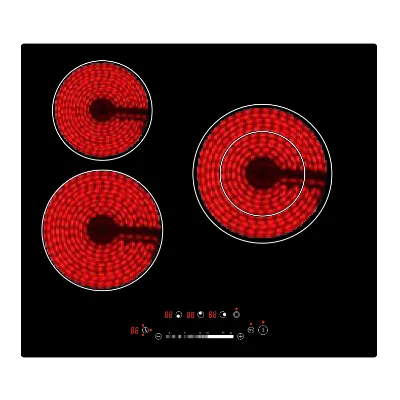
High Power Home Kitchen Dedicated Factory Price 4 Burners Electric Ceramic Hob
$40.00 - $45.00
MOQ: 400 Pieces

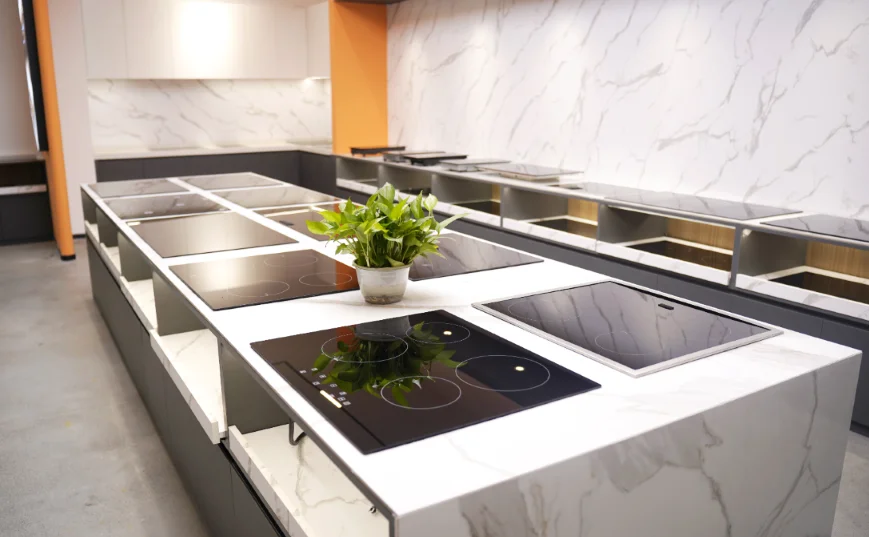
Foshan Classy-Cook Electrical Technology Co., Ltd.
- Manufacturer, Trading Company
- Guangdong, China
- Lead time35 days
- Avg. response≤ 6h
Main productsInduction Hob, Ceramic Hob
Main marketsWestern Europe(50.00%), North America(20.00%), South America(20.00%), Eastern Europe(3.00%), Southeast Asia(3.00%), Africa(2.00%), Mid East(2.00%)

Zhongshan Linfeng Electric Appliance Co., Ltd.
- Manufacturer
- Guangdong, China
- Lead time25 days
- Avg. response≤ 3h
Main productsinduction cooker,ceramic hob,induction and ceramic hob,PCBA design,invisible cooker
Main marketsAfrica(30.00%), South Asia(20.00%), North America(20.00%), Eastern Asia(10.00%), Southeast Asia(10.00%), Western Europe(10.00%), Eastern Europe(8.00%), Mid East(2.00%)
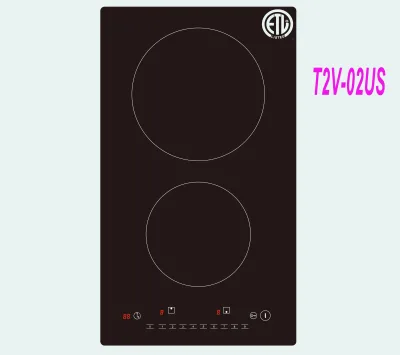
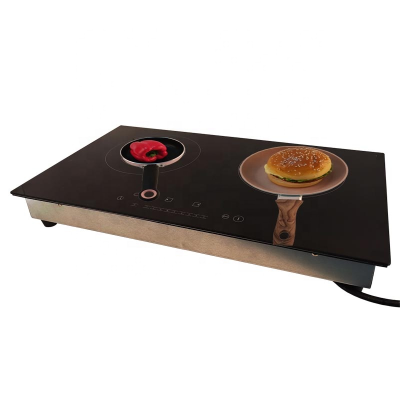
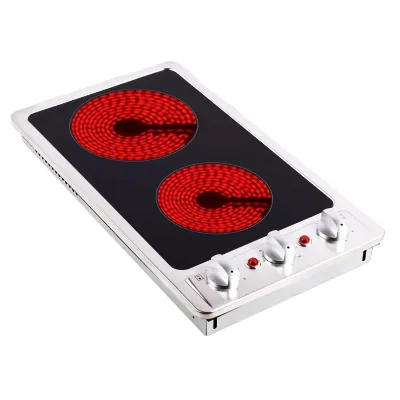
3000W Two Burners Ceramic Hob with ETL Certification
$40.00 - $55.00
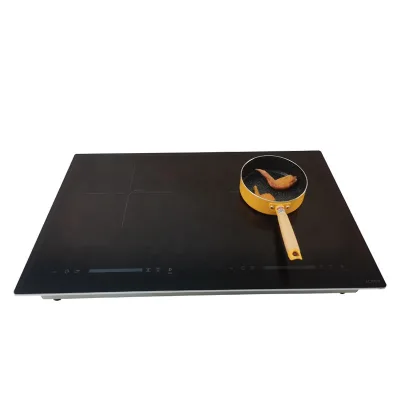
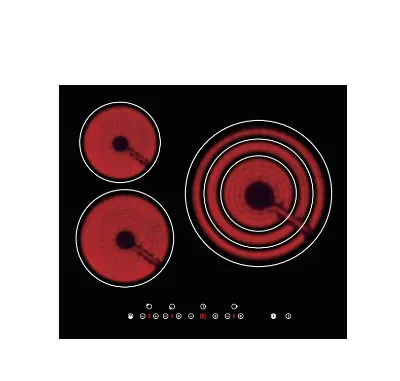
Double Ring Radiant Hob Build in 3400W
$48.00 - $60.00
- Trading Company
- Anhui, China
- Lead time20 days
- Avg. response≤ 16h
Main productsmicrowave oven,dish washer,built in oven,ice cream maker,toaster oven
Main marketsWestern Europe(14.29%), Eastern Asia(14.29%), Mid East(14.29%), Southeast Asia(14.29%), Northern Europe(14.29%), South America(14.29%), Eastern Europe(13.00%)
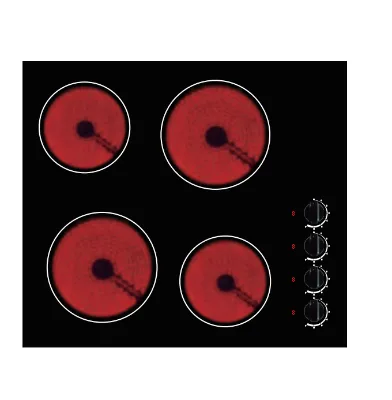
Black Suppliers Chinese Ceramic Cooker Hob With Mechanical Knob Control
$99.34 - $109.68
MOQ: 100 pieces

Foshan Yutaole Electric Appliance Factory
- Manufacturer
- Guangdong, China
- Lead time30 days
- Avg. response≤ 4h
Main productsInduction cooker,electric ceramic hob,infrared ceramic hob,electric stove,PCBA
Main marketsNorthern Europe(35.00%), Western Europe(25.00%), Southern Europe(10.00%), South America(10.00%), Africa(5.00%), Southeast Asia(5.00%), Eastern Europe(5.00%), Mid East(5.00%)

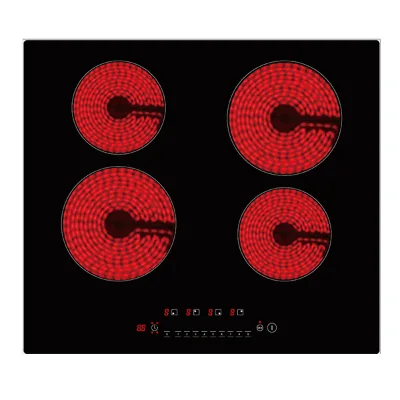
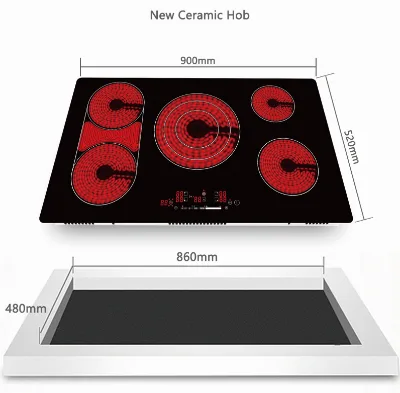
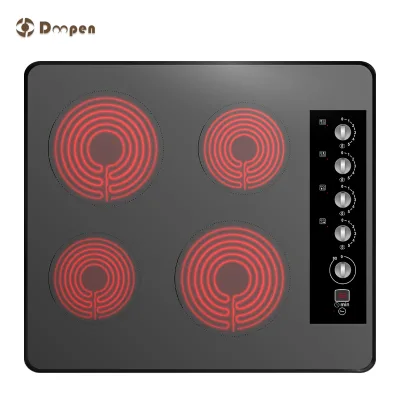
Dual Rings Built- in Vitro Ceramic Hob with 4 Burner 7200W Ceramic Glass Stove
$72.00 - $78.00
MOQ: 200 pieces

Zhejiang Haoda Electrical Appliance Co., Ltd.
- Combined
- China Zhejiang
- Lead time30 days
- Avg. response≤ 4h
Main productsFloor Cleaner, Deep Fryer, Infrared Ceramic Cooker, Electric Hotplate, Electric Buffet Warmer, Electric BBQ, Electric Chopper, Vacuum Cleaner, Air Fryer
Main marketsSoutheast Asia/ Mideast,Europe,North America
DOPEN INTERNATIONAL CO., LIMITED
- Manufacturer, Trading Company
- Hong Kong S.A.R.
- Lead time30 days
- Avg. response≤ 7h
Main productsinduction cooktop,electric cooktop,induction hob,electric hob,hybrid cooktop
Main marketsSoutheast Asia(30.00%), North America(30.00%), Western Europe(10.00%), Mid East(10.00%), South America(10.00%), Eastern Europe(10.00%)

ZHONG SHAN MEILONG ELECTRONIC CO.,LTD
- Verified by BV
- Combined
- China Guangdong
- Lead time30 days
- Avg. response≤ 3h
Main productsGas Stove, Range Hoods, Induction
Main marketsSouth America,Africa,Southeast Asia/ Mideast










Comprehensive Sourcing Guide
Hotel Ceramic Hob Supplier Concentration and Factory Types
The current supplier landscape for hotel ceramic hobs reveals a distinct concentration of manufacturing and trading entities located in China Guangdong. This regional clustering is significant because it indicates a mature industrial ecosystem where supply chains for commercial kitchen solutions are highly developed. Buyers evaluating these suppliers will find that the majority operate as either Trading Companies or Manufacturer/Factory entities, with some classified as Combined types. This structural diversity offers flexibility, allowing purchasers to choose between direct factory engagement for cost efficiency or trading company support for logistical ease. The presence of established manufacturers suggests that the region possesses the necessary infrastructure for producing complex appliances like ceramic hobs, which require precise engineering for heat distribution and durability in high-traffic hotel environments.
Understanding the company type is crucial for assessing capability and service levels. Manufacturer/Factory entities often possess their own brand capabilities, such as the SUNRRY brand observed in some results, indicating a capacity for original equipment manufacturing and brand development. These suppliers typically have direct control over production lines, which can facilitate customization and quality control. On the other hand, Trading Companies may offer a broader portfolio of related products, such as turnkey kitchen solutions or catering equipment, providing a one-stop-shop experience for hotel procurement teams. The distinction between these types affects negotiation dynamics, intellectual property handling, and after-sales support structures. Buyers must carefully review the company type to align their sourcing strategy with their specific needs for customization, volume, and supply chain transparency.
How to Verify Hotel Ceramic Hob Suppliers
Verification is a critical step in mitigating risk when sourcing hotel ceramic hobs from international suppliers. Buyers should prioritize suppliers who have undergone third-party verification processes, such as CTI verification, which provides an additional layer of confidence regarding the supplier's operational legitimacy and business scope. This verification status serves as a foundational check, confirming that the entity exists and operates within the declared parameters. Beyond basic verification, buyers must scrutinize the system certifications held by the supplier. The presence of ISO 9001 certification is a key indicator of a supplier's commitment to quality management systems, ensuring that their production processes are standardized and consistently monitored. This certification is particularly important for ceramic hobs, where consistency in material quality and assembly precision directly impacts product longevity and safety in commercial settings.
In addition to corporate certifications, product-specific certifications are essential for ensuring compliance with international safety and performance standards. Suppliers offering hotel ceramic hobs should provide evidence of relevant certifications such as UR, ETL, GS, CE, RoHS, EMC, and CB. These marks indicate that the products have been tested and meet specific regulatory requirements for electrical safety, electromagnetic compatibility, and environmental standards in various markets. Buyers should request copies of these certificates and verify their validity with the issuing bodies. Furthermore, examining the supplier's response time can offer insights into their operational efficiency and customer service quality. A faster response time, such as the 2.92 hours observed in some results, suggests a responsive team capable of addressing technical queries and order issues promptly, which is vital for maintaining project timelines in hotel renovation or construction projects.
What to Compare Across Hotel Ceramic Hob Suppliers
When evaluating multiple suppliers for hotel ceramic hobs, buyers must compare a range of operational and product-specific metrics to identify the most suitable partner. Key dimensions for comparison include lead time, minimum order quantity (MOQ), and response speed. Lead times vary significantly, with some suppliers offering a standard 30-day delivery window after confirmation, while others may have different schedules based on customization requirements. Understanding these timelines is crucial for aligning supplier capabilities with project deadlines. Similarly, MOQs can range from single-unit orders to bulk requirements, such as an MOQ of 100 units for certain models. Buyers should assess whether the supplier's MOQ aligns with their procurement volume, as mismatched expectations can lead to increased costs or inventory issues. Response speed is another critical factor, as it impacts the efficiency of communication and problem resolution throughout the sourcing process.
Product specifications and pricing structures also require careful comparison. Buyers should examine the technical attributes of the hobs, such as voltage requirements, power source, and control modes. For instance, some models operate on 380V electric power, while others may be gas-powered or feature induction technology. The presence of features like touch controls, timer functions, and safety mechanisms like child locks or residual heat indicators adds value and functionality. Pricing should be analyzed in the context of these features, with costs ranging from approximately $64 to over $1,100 depending on the model and complexity. Additionally, buyers should compare the customization options available, such as the ability to tailor dimensions or branding. Suppliers offering ODM and OEM capabilities provide greater flexibility for unique hotel design requirements. By systematically comparing these factors, buyers can make informed decisions that balance cost, quality, and service.
Common Hotel Ceramic Hob Sourcing Risks
Sourcing hotel ceramic hobs involves several inherent risks that buyers must proactively manage to ensure successful procurement. One significant risk is the variability in product quality and compliance, particularly when dealing with suppliers who may not consistently adhere to international standards. Even with ISO 9001 certification, the actual product performance can vary, making it essential for buyers to request samples or conduct third-party inspections before placing large orders. Another risk is the potential for miscommunication regarding technical specifications, such as voltage, frequency, or installation dimensions. Errors in these details can lead to compatibility issues with existing hotel infrastructure, resulting in costly modifications or delays. Buyers must ensure that all technical requirements are clearly documented and confirmed with the supplier before production begins.
Logistical and supply chain risks are also prevalent in international sourcing. Lead time fluctuations can occur due to raw material shortages, production bottlenecks, or shipping disruptions. Buyers should establish clear agreements on delivery schedules and penalties for delays to mitigate these risks. Additionally, the risk of intellectual property infringement exists, especially when working with suppliers offering OEM services. Buyers must ensure that their brand designs and specifications are protected through appropriate legal agreements. Another risk is the lack of after-sales support, which can be critical for maintaining equipment in a hotel environment. Buyers should verify the supplier's warranty terms and service capabilities to ensure that any defects or issues can be resolved promptly. By identifying and addressing these risks early in the sourcing process, buyers can enhance the reliability and success of their procurement efforts.
Hotel Ceramic Hob Regional Sourcing and Logistics
The geographic concentration of suppliers in China Guangdong offers both advantages and challenges for international buyers. This region is a major hub for manufacturing and exporting commercial kitchen equipment, providing access to a dense network of suppliers and specialized logistics providers. The proximity of suppliers to major ports facilitates efficient shipping, reducing transit times and costs for international orders. However, buyers must also consider the complexities of managing logistics from this region, including customs clearance, documentation requirements, and potential tariffs. Understanding the specific logistics capabilities of each supplier is crucial, as some may offer door-to-door delivery services, while others may require buyers to arrange their own freight forwarding.
Buyers should also evaluate the packaging and handling practices of suppliers to ensure that ceramic hobs arrive in pristine condition. The observed use of export cartons or plywood cases indicates a standard approach to protecting products during transit. However, buyers must verify that the packaging is suitable for the specific shipping route and handling conditions. Additionally, the lead time for production and shipping must be carefully coordinated to align with project schedules. Buyers should establish clear communication channels with suppliers to track production progress and shipping status. By leveraging the logistical advantages of the Guangdong region while mitigating potential risks through careful planning and verification, buyers can ensure the timely and secure delivery of hotel ceramic hobs.
Hotel Ceramic Hob Commercial Terms and Order Planning
Effective order planning and clear commercial terms are essential for successful procurement of hotel ceramic hobs. Buyers must negotiate terms that protect their interests, including payment conditions, warranty provisions, and dispute resolution mechanisms. Payment terms should be structured to balance risk and cash flow, with options such as escrow services providing security for both parties. It is crucial to define the scope of customization and any associated costs upfront to avoid unexpected expenses. Buyers should also clarify the responsibilities for shipping, insurance, and customs duties to prevent disputes over delivery obligations. Clear communication of these terms ensures that both parties have a shared understanding of the transaction.
Order planning should account for the supplier's production capacity and lead times. Buyers must provide accurate forecasts and order quantities to allow suppliers to schedule production efficiently. For customized orders, additional time may be required for design approval and prototyping. Buyers should also consider the MOQ requirements and plan their orders accordingly to optimize costs. Establishing a long-term relationship with a reliable supplier can lead to better pricing and priority service. By focusing on robust commercial terms and strategic order planning, buyers can minimize risks and maximize the value of their procurement of hotel ceramic hobs. This approach ensures that the sourcing process is smooth, cost-effective, and aligned with the operational needs of the hotel.
FAQs
What is the typical lead time for ceramic hobs from China suppliers?
The typical lead time for ceramic hobs from China suppliers is 30 days after order confirmation. This duration applies to standard production runs for commercial kitchen equipment. Buyers should verify specific timelines for custom orders or large volume purchases to ensure timely delivery.
Do suppliers offer customization options for commercial ceramic hobs?
Yes, suppliers offer customization options for commercial ceramic hobs including voltage and size adjustments. Many manufacturers provide OEM and ODM services to meet specific kitchen requirements. Buyers can request custom branding or specific power ratings to fit their operational needs.
What certifications are available for ceramic hobs from these manufacturers?
Available certifications for ceramic hobs include ISO 9001, CE, RoHS, ETL, GS, and CB. These ensure compliance with international safety and quality standards. Buyers should request specific certification documents to verify product safety and regulatory compliance for their target markets.
What is the minimum order quantity for ceramic hobs?
The minimum order quantity varies by product, ranging from one unit for some models to 100 units for others. Buyers should check specific product listings for exact MOQ requirements. Lower MOQs are often available for standard models while custom orders may require higher quantities.
Where are the ceramic hob manufacturers located?
The ceramic hob manufacturers are located in Guangdong, China. This region is a major hub for commercial kitchen equipment production. Buyers can expect efficient logistics and established supply chains from this location for international shipping.
What is the price range for commercial ceramic hobs?
The price range for commercial ceramic hobs varies from approximately 64 to 1151 USD depending on specifications. Factors influencing price include power rating, certification level, and customization options. Buyers should compare specific product details to determine the exact cost for their needs.
How quickly do suppliers typically respond to inquiries?
Suppliers typically respond to inquiries within 2.92 to 12.64 hours on average. Response times may vary based on the specific supplier and time zone differences. Buyers should expect prompt communication for standard inquiries regarding product availability and pricing.