Industrial Grade Dtpmp Suppliers and Manufacturers
Compare 11 verified suppliers offering Industrial Grade Dtpmp with dimensions like location, lead time, and certifications. Review product attributes and response times to select a partner for your chemical needs; review the available evidence before requesting comparable quotations from suitable candidates.
Suppliers List

Shandong Zhonglu New Energy Technology Development Co., Ltd.
- Verified by CTI
- Trading Company
- China Shandong
- Lead time30 days
- Avg. response≤ 4h
Main productsDOP, Totm, Dotp, DINP, DOS
Main marketsEast Asia(Japan/ South Korea),Domestic

- Verified by SGS
- Trading Company,Manufacturer/Factory,Group Corporation
- China Shandong
- Lead time0 days
- Avg. response≤ 2h
Main productsAdipic Acid, Propylene Glycol, Maleic Anhydride, Dipropylene Glycol, Diethylene Glycol, MMA, Sofa, Mea/Dea/Tea, Phthalic Anhydride, Peg
Main marketsSouth America,Eastern Europe,Mid East,North America,Southeast Asia,Eastern Asia,Oceania,Western Europe,Africa

- Trading Company,Manufacturer/Factory
- China Liaoning
- Lead time15 days
- Avg. response≤ 1h
Main productsSoya Lecithin, Calcium Propionate, Propylene Glycol, Propylene Carbonate, Maltitol, Citric Acid, Gel Wax, Sapp/SHMP/Tspp/STPP/Tkpp, Vitamins
Main marketsSouth America,Eastern Europe,Mid East,North America,Southeast Asia,Eastern Asia,Oceania,Western Europe,Africa

Qingdao Ever Century Chemical Co., Ltd.
- Verified by BV
- Trading Company
- China Shandong
- Lead time15 days
- Avg. response≤ 8h
Main productsAdipic Acid, Urea, Plasticizer, Ammonium Chloride, Pure Terephthalic Acid, Isophthalic Acid, Dioctyl Phthalate, Propylene Glycol, Dipa
Main marketsAustralia
- Manufacturer, Trading Company
- Shandong, China
- Lead time0 days
- Avg. response≤ 3h
Main productsAdditives And Catalysts,Plant Extracts,Food Pharmaceutical Chemicals
Main marketsSouthern Europe(25.0%), Western Europe(25.0%), South America(25.0%), North America(25.0%)

Shandong Chemic Chemical Co., Ltd.
- Verified by SGS
- Trading Company
- China Shandong
- Lead time30 days
- Avg. response≤ 9h
Main productsPropylene Glycol, Potassium Formate, Calcium Formate, Phthalic Anhydride, Sodium Formate, Maleic Anhydride, Adipic Acid, Citric Acid, Trimethylolpropane, Polyvinyl Alcohol
Main marketsOthers(foreignTradeCapacity.exportBusinessCapacityMarketOther),Europe,North America
Sichuan Sundia Chemical Limited Company
- Verified by SGS
- Trading Company
- China Sichuan
- Lead time30 days
- Avg. response≤ 4h
Main productsSTPP SHMP Tsp Phosphoric Acid Aeo2 Aeo7 SLES
Main marketsSoutheast Asia/ Mideast,Europe

Mikem Chemical (Shandong) Co., Ltd.
- Verified by BV
- Trading Company,Manufacturer/Factory,Group Corporation
- China Shandong
- Lead time15 days
- Avg. response≤ 11h
Main productsSurfactant, Flavors and Flagrances, Chemical Reagents, Catalyst and Auxiliary, Food Addtitives, Dyes and Pigments, Natural Products, Organic Chemitry, Inorganic Chemistry, API
Main marketsSouth America,Eastern Europe,Mid East,North America,Southeast Asia,Eastern Asia,Oceania,Western Europe,Africa

- Verified by TUVRHEINLAND
- Trading Company,Manufacturer/Factory
- China Shaanxi
- Lead time15 days
- Avg. response≤ 4h
Main productsHPMC, Rdp, HEC, Ethyl Cellulose, CMC, Mhec, Methyl Cellulose, HPS, PVA
Main marketsSouth America,Eastern Europe,Mid East,North America,Southeast Asia,Eastern Asia,Oceania,Western Europe,Africa

Jiangsu Juming Chemical Technology Co., Ltd.
- Verified by SGS
- Trading Company
- China Jiangsu
- Lead time30 days
- Avg. response≤ 1h
Main productsWater Treating Agents, Photoinitiators, Organic Intermediates, Flavour & Fragrance, Customized Chemicals
Main marketsEurope,North America

YIFEIPU (XIANGYANG) BIOTECHNOLOGY CO.,LTD
- Verified by SGS
- Trading Company
- China Henan
- Lead time15 days
- Avg. response≤ 1h
Main productsFeed Additive, Disinfectants, Chemical Products
Main marketsSoutheast Asia/ Mideast,Domestic


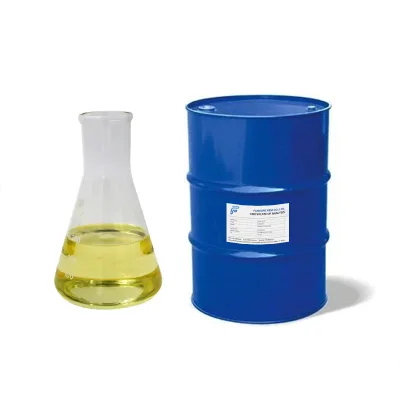
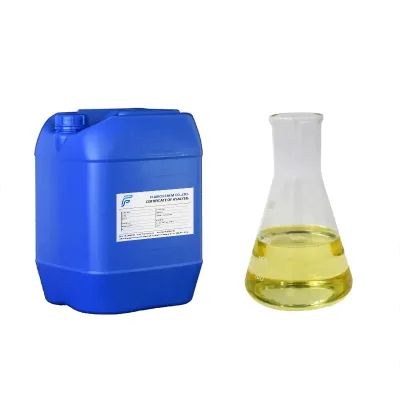


Comprehensive Sourcing Guide
Industrial Grade Dtpmp Supplier Concentration and Factory Types
When buyers search for Industrial Grade Dtpmp, the supplier pool typically mixes manufacturers with trading companies, and this distinction shapes everything from pricing transparency to technical support. In the current results, listings include suppliers self-identified as trading companies, as manufacturer/factory operations, and as group corporations combining both roles. Some suppliers also carry third-party verification labels, such as CTI or SGS, which signals that a platform or verification body has reviewed company credentials, though verification of a business entity is not the same as verification of product quality. Buyers should treat company type as a starting question rather than a conclusion: a trading company may offer broader portfolio access, while a factory may offer deeper process knowledge.
Geographic concentration matters as well. The observed results include a supplier located in Shandong, China, which is consistent with the broader pattern of chemical auxiliary agent and water treatment chemical production clustering in China's eastern provinces. However, because search results change, buyers should not assume that any single province defines the supply base. A practical approach is to map where listed suppliers are located across several pages of results, note whether manufacturers or traders dominate in each region, and then prioritize outreach accordingly. Main product lines are another concentration clue: suppliers whose catalogs center on plasticizers, intermediates, or glycols may resell DTPMP rather than produce it, so asking directly about production versus distribution is essential before investing time in sampling.
How to Verify Industrial Grade Dtpmp Suppliers
Verification begins with the labels a supplier already displays, then moves to evidence the buyer requests. In the observed listings, some suppliers carry platform verification marks such as CTI or SGS, and one shows an ISO 9001 system certification while another displays a broad suite including BRC, ISO 22000, GMP, HACCP, HSE, and ISO 20000. These credentials indicate audited management systems, but none of them confirms DTPMP-specific quality, so buyers should request a certificate of analysis for the exact grade, batch traceability documentation, and, where possible, an independent pre-shipment inspection. Asking whether the verifying body audited the production site itself, or only the trading office, clarifies what the label actually covers.
Beyond certificates, behavioral evidence is persuasive. Response time is one measurable signal visible in the results: observed values range from under one hour to nearly four hours, and slower responses during the quoting stage often predict slower responses when quality problems arise. Buyers should also confirm that the entity on the contract matches the entity on the certificate and the bank account, since group corporations with multiple branches can create ambiguity. Requesting references from buyers in a similar application, such as water treatment or detergent formulation, adds another layer. Finally, a small trial order, even at minimum quantity, tests documentation quality, packaging integrity, and communication reliability before any large commitment is made.
What to Compare Across Industrial Grade Dtpmp Suppliers
A structured comparison grid prevents decisions based on price alone. Useful dimensions visible in this category's results include lead time, minimum order quantity, response speed, location, company type, and main product lines. For example, one listing shows a 30-day lead time while another shows immediate availability, and MOQs in the observed data range from a single drum or bag to 15 units, so the differences between suppliers can be decisive for a trial purchase. Response times ranging from roughly one to nearly four hours also differentiate suppliers on service level. Not every supplier displays every attribute, so buyers should note gaps in the grid and treat missing data as a question to ask, not a value to assume.
Product-side comparison matters just as much. Listings for adjacent chemicals in these results show detailed specifications such as purity percentages, hydroxyl values, melting points, appearance descriptions, and HS codes, and DTPMP listings should offer the same rigor: active content, chloride or iron limits as relevant to the grade, appearance, and packaging format. Main product portfolios also reveal positioning; a supplier whose catalog is dominated by plasticizers or food additives may be brokering DTPMP, which affects technical depth. Buyers should score each supplier on specification completeness, willingness to share batch data, and customization availability, several listings advertise customization options, then weight those scores against logistics realities before shortlisting.
Common Industrial Grade Dtpmp Sourcing Risks
The most frequent risk in this category is specification drift: a supplier ships material meeting a general industrial description but with active content, color, or impurity levels unsuitable for the buyer's formulation. Because DTPMP competes with other phosphonates and chelants in some applications, substitution or blending misrepresentation is a known industry concern, so incoming QC against an agreed specification sheet is not optional. A second risk is identity confusion between the broker and the producer. Trading companies are well represented in the observed results, and while many are excellent partners, buyers who assume they are dealing with a factory may face slower root-cause analysis when a batch fails. Asking directly, and validating with site audit offers or video walkthroughs, reduces this exposure.
Commercial risks cluster around lead time and scale mismatch. One observed supplier quotes a 30-day lead time, which is workable for planned replenishment but hazardous for urgent reformulation projects, and MOQs that suit drum-scale buyers may not suit bulk consumers, or vice versa. Packaging is another quiet risk: listings in this category show formats ranging from 25 kg bags to 260 kg drums and 1,300 kg IBC totes, and a mismatch between quoted packaging and actual shipment causes demurrage and handling costs. Buyers should also verify that quoted prices are valid for the stated purity and packaging, since low headline quotes sometimes assume lighter packaging or shorter shelf-life material.
Industrial Grade Dtpmp Regional Sourcing and Logistics
Location affects freight cost, lead time reliability, and port access. The observed results place at least one supplier in Shandong, China, a province with dense chemical manufacturing and reasonable access to major northern and eastern Chinese ports, which typically supports consolidated container shipments. Other results include a supplier in Liaoning, China, in the northeast. Buyers sourcing from these clusters should confirm which port the supplier ships from, whether drummed goods can be consolidated with other chemicals in a mixed container, and what inland trucking costs apply before the container reaches the port. Because search results refresh, treat any single province observation as a snapshot and re-map locations each sourcing cycle.
Chemical logistics compliance deserves early attention. DTPMP as an industrial grade liquid or aqueous solution is generally shipped in drums or IBC totes, and the observed listings for adjacent products confirm these formats are standard in the category. Buyers should confirm the product's classification under applicable dangerous goods or chemical inventory rules in both the origin and destination countries before booking, and request the safety data sheet in advance. Lead time planning should include production time, booking time, and potential customs inspection; with one observed supplier quoting a 30-day lead time and others faster, building buffer into the first shipment is wise. Buyers in landlocked regions should also compare landed cost from alternative origin ports, not just FOB price.
Industrial Grade Dtpmp Commercial Terms and Order Planning
Order planning starts with matching MOQ and packaging to actual consumption. Observed listings in adjacent category products show MOQs from single units to 15 units and packaging from 25 kg bags to 1,300 kg IBC totes, illustrating how wide the entry points are. A first order at minimum quantity, in the smallest seal-intact packaging available, limits risk while still allowing full laboratory evaluation. Payment terms should be negotiated explicitly; one observed listing notes T/T, L/C, D/P and other negotiable options, and buyers balancing risk may prefer terms with inspection rights before final payment. Escrow or platform-protected payment, where available, adds a layer of recourse on early orders.
Price comparison must normalize for purity, packaging, and Incoterms. Observed price ranges in this results set span roughly 600 to 1,500 per unit depending on product, which shows how misleading unnormalized quotes can be. Buyers should request quotations on identical specifications, identical packaging, and identical delivery terms, then add freight, insurance, and duty to reach landed cost. Lead time should be contracted, not assumed: with observed values from zero to 30 days, a written delivery commitment with a remedy clause protects production schedules. Plan reorders around confirmed lead time plus freight plus a safety buffer, and revisit the grid each quarter, since verification status, response speed, and pricing can all shift between sourcing cycles.
FAQs
What is the price range for industrial grade DMP plasticizer?
Industrial grade DMP plasticizer typically costs between $1200 and $1500 per metric ton. This pricing reflects the current market rates for high-purity chemical auxiliary agents. Buyers should verify specific quotes based on order volume and packaging requirements.
What certifications are available for DMP plasticizer products?
Suppliers offer DMP plasticizer with REACH and CCIC certifications. These credentials ensure compliance with international chemical safety and quality standards. Buyers requiring specific regulatory approvals should confirm the exact certification documents provided by the manufacturer before placing orders.
What is the minimum order quantity for DMP plasticizer?
The minimum order quantity for industrial grade DMP plasticizer is one metric ton. This low MOQ allows buyers to test product quality without committing to large volumes. Suppliers often accommodate smaller trial orders to establish long-term business relationships.
How long does delivery take for DMP plasticizer orders?
Standard delivery time for DMP plasticizer is approximately 30 days. Some suppliers indicate faster shipping options within three days for specific stock items. Buyers should confirm lead times with the supplier to ensure timely arrival for production schedules.
What is the purity level of industrial grade DMP?
Industrial grade DMP plasticizer is available with a purity of 99% or 99.5%. This high purity ensures effective performance in applications like water pipes and coatings. Buyers should request product specifications to confirm the exact purity grade required for their use.
What packaging options are available for DMP plasticizer?
DMP plasticizer is packaged in 260kg drums, 1300kg IBCs, or 23-ton flexibags. These options suit various storage and handling needs. Buyers should select packaging based on their facility capabilities and transportation logistics to ensure safe and efficient delivery.
What is the response time for supplier inquiries?
Supplier response times for DMP inquiries average around 3.72 hours. This indicates a relatively quick turnaround for initial communications. Buyers can expect timely replies regarding pricing, availability, and technical specifications from verified trading companies and manufacturers.