Industrial Paperless Recorder Suppliers and Manufacturers
Source 10 verified Industrial Paperless Recorder suppliers from Taiwan and China. Compare response times, lead times, certifications, and pricing to find the right partner. Contact suppliers directly to discuss customization and order details; review the available evidence before requesting comparable quotations from suitable candidates.
Suppliers List
- Manufacturer
- Taiwan, China
- Lead time0 days
- Avg. response≤ 5h
Main productsWater Heater Thermostat,Thermal Switch,Thermometer,Power Supply,Capillary Thermostat

Hangzhou Supmea International Trading Co., Ltd.
- Verified by BV
- Trading Company
- China Zhejiang
- Lead time15 days
- Avg. response≤ 5h
Main productsPaperless Recorder, Chart Recorder, Pressure Transmitter, Level Transmitter, Electromagnetic Flowmeter, Temperature Transmitter, Signal Generator, Pressure Sensor, Paper Recorder, Level Recorder
Main marketsSouth America,Africa,Southeast Asia/ Mideast,East Asia(Japan/ South Korea),Europe,Australia,North America

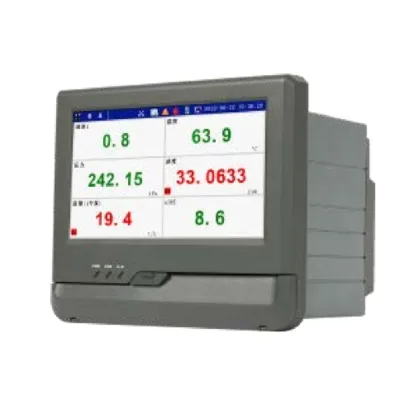
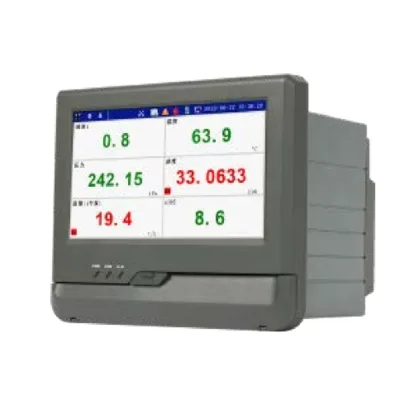
Paperless Temperature Recorder 8 Channles Paperless Recorder Chromatic Paperless Recorder
$330.00 - $350.00
MOQ: 2 Pieces

Color Display Paperless Recorder 32 Channels Temperature Paperless Recorder
$330.00 - $350.00
MOQ: 2 Pieces

Colorful Paperless Recorder Data Logger Recorder for Temperature Multi Channel Paperless Recorder
$330.00 - $350.00
MOQ: 2 Pieces


Color Paperless Chart Recorder Paperless Recorder 16 Channel Recorder with RS232
$330.00 - $350.00
MOQ: 2 Pieces

Wuhu Jujie International Trade Co., LTD
- Verified by TUVRHEINLAND
- Trading Company,Manufacturer/Factory
- China Anhui
- Lead time15 days
- Avg. response≤ 3h
Main productsLiquid Turbine Flow Meter, Electromagnetic Flow Meter, Vortex Flow Meter, Pression Vortex Flow Meter, Gas Turbine Flow Meter, Data Recorder, Ultrasonic Fow Meter, Ultrasonic Level Meter, Oval Gear Flow Meter, Batch Filling Controller
Main marketsSouth America,Eastern Europe,Mid East,North America,Southeast Asia,Eastern Asia,Oceania,Western Europe,Africa

Data Logger Industrial Paperless Recorder Relay Alarm Outputs Real Time Clock Temperature Recording
$300.00 - $340.00
MOQ: 1 Pieces

Touch Screen Recorder Dual Communication Timed Print Data Recording Backup Paperless Recorder
$350.00 - $380.00
MOQ: 1 Pieces


8 Channels Paperless Recorder Color Paperless Chart Recorder with RS485 RS232 Data Logger
$350.00 - $380.00
MOQ: 1 Pieces


Anhui Huazhong Industrial Control Intelligent Equipment Co., Ltd.
- Trading Company,Manufacturer/Factory
- China Anhui
- Lead time15 days
- Avg. response≤ 4h
Main productsFlowmeter, Pressure Sensor, Level Sensor, Temperature Sensor, Signal Isolator, Isolated Safety Barrier, Current Sensor, Voltage Sensor
Main marketsSouth America,Eastern Europe,Mid East,North America,Southeast Asia,Eastern Asia,Oceania,Western Europe,Africa

Hangzhou Pangu Automation System Co., Ltd
- Verified by TUVRHEINLAND
- Combined
- China Zhejiang
- Lead time15 days
- Avg. response≤ 3h
Main productsElectromagnetic Flowmeter, Recorder, Vacuum Gauge
Main marketsSoutheast Asia/ Mideast

10.4 Inch Industrial Paperless Data Recorder, up to 48 Multi-Universal Input Channels
$180.00 - $204.00
MOQ: 1 Pieces

Kt500 Series Industrial Paperless Recorder 5.6" Blue Display, Multi-Channel Input
$180.00 - $204.00
MOQ: 1 Pieces

Advanced Color Screen Paperless Data Recorder with Versatile Signal Inputs
$350.00 - $390.00
MOQ: 1 Pieces

Advanced Paperless Recorder for Multi-Channel Environmental Data Logging
$350.00 - $390.00
MOQ: 1 Pieces


Holykell Technology Company Limited
- Verified by BV
- Combined
- China Hunan
- Lead time15 days
- Avg. response≤ 3h
Main productsLevel Sensor, Flow Meter, Pressure Sensor
Main marketsSoutheast Asia/ Mideast,Europe,North America

Shenzhen Toprie Electronics Co., Ltd.
- Verified by SGS
- Manufacturer
- China Guangdong
- Lead time15 days
- Avg. response≤ 3h
Main productsPressure Sensor, Power Meter, Sensor, Temperature Sensor, Level Transmitter, Paperless Recorder, Iiot Gateway, Data Logger, Data Acquisition Module, Liquid Level Sensor
Main marketsEurope,North America


LCD Universal Digital Paperless Recorder with RS485 /Ethernet/ Relay Data Logger
$629.00 - $1296.00
MOQ: 1 pcs


Anhui Hechuang Intelligent Manufacturing Co. Ltd
- Verified by SGS
- Combined
- China Anhui
- Lead time15 days
- Avg. response≤ 1h
Main productsDifferential Pressure Transmitter, Pressure Transmitter, Temperature Transmitter, Electromagnetic Flowmeter, Magnetic Level Gauge, Bimetallic Thermometer, Differential Pressure Switch, Sensor, Float Level Gauge, Vortex Flowmeter
Main marketsDomestic

Huaibei Huadian Automation Technology Co., Ltd.
- Verified by TUVRHEINLAND
- Combined
- China Anhui
- Lead time15 days
- Avg. response≤ 2h
Main productsLevel Transmitter, Flow Meter, Pressure Transmitter, Temperature Transmitter, Signal Isolator, Current Transducer
Main marketsOthers(foreignTradeCapacity.exportBusinessCapacityMarketOther),Southeast Asia/ Mideast,North America

TZONE DIGITAL TECHNOLOGY CO., LTD.
- Combined
- China Guangdong
- Lead time23 days
- Avg. response≤ 4h
Main productsGPS Tracker, GPS, Tracking Software
Main marketsSouth America,Africa,Southeast Asia/ Mideast,East Asia(Japan/ South Korea),Europe,Australia,North America


Comprehensive Sourcing Guide
Industrial Paperless Recorder Supplier Concentration and Factory Types
Current data indicates a concentration of manufacturers and trading companies operating within specific regions of China, including Taiwan, Zhejiang, and Anhui. Suppliers in these areas list core competencies ranging from thermal switches and power supplies to specialized testing instruments like paperless recorders. The supply base includes both direct manufacturers and trading entities, with some companies holding dual roles as both factory and trading partners. This mix allows buyers to access products with varying degrees of customization and direct factory pricing, though the specific company type must be verified for each listing.
When evaluating the factory type, buyers should distinguish between entities that design and assemble units versus those that source and resell. Manufacturer profiles often highlight in-house capabilities such as OEM and ODM services, alongside specific brand ownership. Trading companies may offer a broader portfolio of instruments, including flow meters and pressure transmitters, alongside the primary recorder units. The presence of a manufacturer status suggests potential for deeper technical collaboration, while trading companies might provide faster aggregation of diverse components. Buyers must confirm the actual operational model to align with their supply chain strategy.
How to Verify Industrial Paperless Recorder Suppliers
Verification of supplier credentials is critical when sourcing industrial instrumentation, as the market contains both established factories and intermediaries. Buyers should look for third-party verification badges such as BV or TÜV Rheinland, which indicate that an independent auditor has reviewed the company's business license and operational capacity. These badges provide a baseline of trust but do not guarantee product quality on their own. It is essential to cross-reference these verification statuses with the specific product certifications listed for the recorder models, such as ISO or CE marks, to ensure the specific unit meets regulatory requirements.
Beyond corporate verification, buyers must scrutinize the product-specific attributes provided in the listing to confirm technical legitimacy. Key indicators include detailed specifications for power supply ranges, display types, and storage capacities that match the intended application. For instance, a valid listing will explicitly state power consumption limits, working temperature ranges, and internal storage sizes like 128MB or 32GB SD card support. If a supplier lists a product with vague attributes or missing technical data, it suggests a lack of direct engineering control. Buyers should request detailed datasheets to validate that the claimed specifications, such as sampling periods or IP ratings, are accurate for industrial environments.
What to Compare Across Industrial Paperless Recorder Suppliers
Comparing suppliers requires a systematic review of operational metrics such as lead times, minimum order quantities, and response speeds. Available data shows response times varying from approximately 2.5 to 5 hours, which can significantly impact project timelines for urgent procurement needs. Lead times also differ, with some suppliers indicating a 15-day window while others may have different schedules based on stock availability. Buyers should prioritize suppliers whose response times align with their communication needs and whose lead times fit within their production schedules to avoid bottlenecks.
Pricing and order volume constraints are equally vital comparison points that vary significantly across the supplier base. Some listings show minimum order quantities as low as one unit, while others require bulk purchases of 100 units or more. Price ranges can fluctuate based on channel count, display size, and storage capacity, with some models priced around $190 to $310 and others reaching higher tiers. Buyers must calculate the total cost of ownership, including the impact of high MOQs on inventory costs. Comparing these commercial terms side-by-side helps identify the most cost-effective partner for the specific volume requirements of the project.
Common Industrial Paperless Recorder Sourcing Risks
One significant risk involves the discrepancy between claimed product capabilities and actual performance in harsh industrial environments. Listings may advertise features like high channel counts or specific memory sizes, but without verified test results, these claims remain unproven. Buyers face the risk of receiving units that do not meet the required accuracy or durability standards, particularly if the supplier is a trading company without direct quality control over the manufacturing process. It is crucial to verify that the product attributes, such as working temperature ranges and humidity resistance, are explicitly tested and documented.
Another risk stems from inconsistent supply chain reliability, particularly regarding lead times and customization support. While some suppliers offer customized support, others may state that such services are available only upon inquiry, creating uncertainty for projects requiring specific modifications. If a supplier cannot confirm their ability to meet a specific delivery date or provide a customized panel thickness, the project may face delays. Buyers should assess the supplier's track record for fulfilling orders on time and their willingness to provide clear, written commitments regarding customization and delivery schedules before placing an order.
Industrial Paperless Recorder Regional Sourcing and Logistics
Sourcing from regions like Zhejiang and Anhui offers access to established manufacturing clusters for industrial instruments, but logistics planning must account for regional variations. Suppliers in these areas often list their place of origin explicitly, which helps in estimating shipping times and potential tariffs. For example, units originating from Hangzhou or other parts of Zhejiang may have different logistical advantages compared to those from Anhui. Buyers should verify the specific origin of the product to ensure it aligns with their import regulations and to anticipate any regional shipping constraints that could affect delivery speed.
Logistics considerations also extend to the packaging and handling requirements of sensitive electronic equipment. Product listings often specify packing details, such as carton packaging, which influences how the units are protected during transit. Buyers must ensure that the packaging standards meet the requirements for long-distance shipping to prevent damage to delicate components like LCD screens or internal storage drives. Additionally, understanding the origin helps in calculating accurate freight costs, as shipping from different provinces within China may involve varying transport networks and costs.
Industrial Paperless Recorder Commercial Terms and Order Planning
Commercial terms for industrial paperless recorders often include specific warranty conditions and payment structures that vary by supplier. Many listings indicate that warranty terms are available upon inquiry rather than being fixed in the initial product description. This variability requires buyers to negotiate clear warranty periods and coverage details before finalizing the order. Similarly, payment terms and the use of escrow services should be confirmed to protect the buyer's financial interest, ensuring that funds are only released once the goods meet the agreed-upon specifications and quality standards.
Order planning must also account for the specific model numbers and technical configurations required for the application. Suppliers may offer different models, such as the AR7000 or SUP-6000C, each with distinct features like panel thickness compatibility or channel counts. Buyers should carefully match these model numbers to their technical requirements to avoid purchasing incompatible units. Furthermore, understanding the selling units, whether single items or bulk packs, is essential for accurate budgeting. Clear communication regarding these commercial and technical details ensures a smooth transaction and prevents costly errors in the procurement process.
FAQs
What is the typical response time for suppliers of paperless recorders?
Suppliers listed on this page show response times ranging from 2.48 to 5 hours. This indicates that most vendors can reply to inquiries within a single business day. Buyers should expect faster communication from verified manufacturers compared to trading companies.
Where are the manufacturers of industrial paperless recorders located?
Manufacturers and trading companies are primarily located in Taiwan, China, Zhejiang, and Anhui. Specific products originate from Taiwan or Hangzhou in Zhejiang. Buyers can filter results by these regions to find local suppliers or those with specific regional certifications.
What certifications do these paperless recorders typically hold?
Many products display ISO and CE certifications as standard compliance markers. Some suppliers also hold ISO 9000, ISO 9001, and ISO 14001 system certifications. Verification badges like BV or TÜV Rheinland may appear on specific supplier profiles to confirm their operational status.
What is the minimum order quantity for paperless recorders?
Minimum order quantities vary significantly between suppliers, ranging from 1 unit to 100 units. Some vendors offer single item purchases for testing, while others require bulk orders of 100 pieces. Buyers must check specific product listings to confirm the exact MOQ before placing an order.
How long does it take to receive an order after purchase?
Lead times for these products are reported as 0 to 15 days depending on the supplier. Some manufacturers indicate immediate availability, while others require up to two weeks for production or shipping. Buyers should confirm the specific lead time with the vendor before finalizing payment.
What power supply options are available for these recorders?
Most devices support AC power supplies ranging from 85 to 264 volts at 50 or 60 Hz. Some models also accept DC 24V inputs for flexibility. Specific voltage ranges and power consumption details are listed in the product attributes section for each individual item.
Can these recorders be customized for specific industrial needs?
Customization is available for many models, including specific panel thicknesses and branding options. Buyers can inquire about tailored solutions for installation requirements or data logging features. The level of customization depends on the specific manufacturer and their OEM or ODM capabilities.