Joint Hard Plastic Swim Bait Suppliers and Manufacturers
Source 16 verified suppliers for Joint Hard Plastic Swim Bait across China. Compare response times, lead times, and MOQs to find the right partner. Contact suppliers directly to discuss customization and pricing; review the available evidence before requesting comparable quotations from suitable candidates.
Suppliers List

Nanjing Honor Fishing Gear Ltd.
- Verified by TUVRHEINLAND
- Combined
- China Jiangsu
- Lead time30 days
- Avg. response≤ 4h
Main productsFishing Tackle, Fishing Lure, Fishing Reel, Fishing Rod, Fishing Line, Fishing Equipment, Fishing, Fishing Hook, Fishing Bait, Fishing Pole
Main marketsSouth America

Weihai P.F. Outdoor Products Co., Ltd.
- Trading Company
- China Shandong
- Lead time0 days
- Avg. response≤ 7h
Main productsInflatable Paddle Board, Inflatable Boats, Air Tracks, Hard Lures, Soft Lures, Spinner Baits, Frog Lure, Metal Lures, Jigs, Kayak

- Trading Company
- China Zhejiang
- Lead time30 days
- Avg. response≤ 5h
Main productsFishing Products, Hand Dryer, Soap Dispenser, Paper Dispenser
Main marketsSouth America,Europe,North America

Weihai Lotus Outdoor Co., Ltd.
- Manufacturer/Factory,Group Corporation
- China Shandong
- Lead time38 days
- Avg. response≤ 22h
Main productsFishing Reel, Fishing Lure, Fishing Tackle, Reel, Rod, Terminal Tackle, Fishing Rigs, Outdoor Products, Fishing Line, Fishing Rod
Main marketsSouth America,Eastern Europe,Mid East,North America,Southeast Asia,Eastern Asia,Oceania,Western Europe,Africa


New Design Pop Lure Fishing Lure Hard Lure Plastic Hard Lure Fishing Bait Fishing Lure
$0.42 - $0.51
Moq: 1000


Nanjing Bewe Intl Trading Co., Ltd.
- Verified by BV
- Trading Company
- China Jiangsu
- Lead time38 days
- Avg. response≤ 18h
Main productsPadel, Beach Tennis, Pickleball Paddle, Volleyball, Squash, Badminton, Golf, Tennis, Soccer Ball, Basketball
Main marketsSouth America,Eastern Europe,Mid East,North America,Southeast Asia,Eastern Asia,Oceania,Western Europe,Africa
Weihai Black Fox Sports Goods Co., Ltd.
- Manufacturer, Trading Company
- Shand, China
- Lead time30 days
- Avg. response≤ 4h
Main productsFishing Tackle,Fishing Lure,Hard lure,Fishing rods,Fishing tools
Main marketsNorth America(40.0%), Southeast Asia(20.0%), South Asia(10.0%), Northern Europe(10.0%), Western Europe(10.0%), Oceania(10.0%)
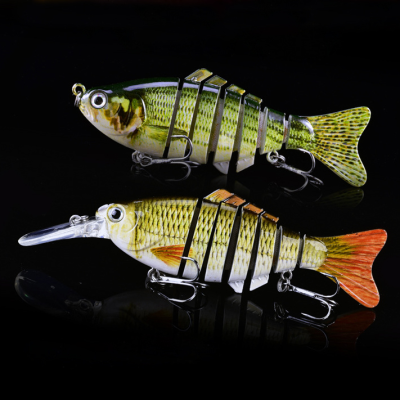
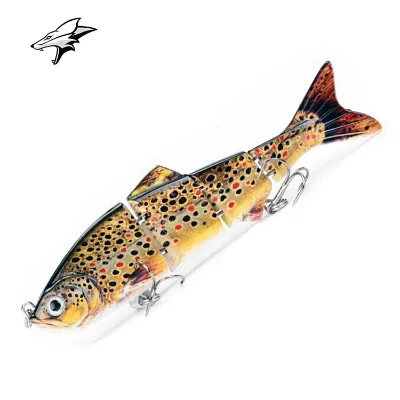
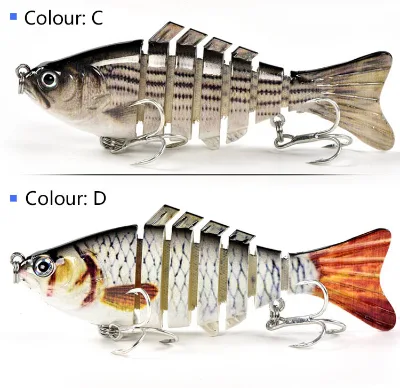
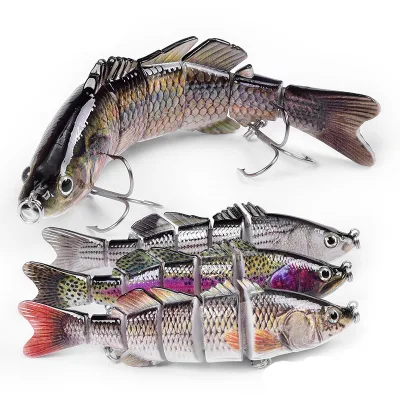
10cm 15g top quality sectioned swim bait joint hard plastic bait artificial bait
$2.63 - $2.73
Moq: 50

Weihai Jinjiang Fishing Tackle Co., Ltd.
- Verified by TUVRHEINLAND
- Combined
- China Shandong
- Lead time30 days
- Avg. response≤ 13h
Main productsSpinner Bait, Metal Jig Lure, Silicon Soft Lure, Plastic Hard Lure, Wooden Lure, Jig Head Lure, Jointed Lure, Slow Pitch, Assist Hook, Spoon Bait
Main marketsEurope,Australia

Changzhou Dawson I. A. E. Co., Ltd.
- Trading Company
- China Jiangsu
- Lead time23 days
- Avg. response≤ 2h
Main productsFishing Tackle, Contact Juggling Ball, Carbon Fiber Fabric, Diabolo, Wrist Power Ball, Fishing Soft Lure, Solar Water Heater, Bearing Diabolo, Hourglass, Wall Covering
Main marketsOthers(foreignTradeCapacity.exportBusinessCapacityMarketOther),East Asia(Japan/ South Korea),Europe,North America


Best-Selling Custom Floating ABS Freshwater Hard Fishing Lures for Shore Fishing
$0.19 - $0.99
Moq: 500

Zhejiang New Vision I. /E. Co., Ltd.
- Trading Company,Manufacturer/Factory
- China Zhejiang
- Lead time0 days
- Avg. response≤ 23h
Main productsFishing Tackle, Fishing Lure, Fishing Swivel/Snap, Swimbaits, Fishing Hook, Nylon Thread, Swivel/Snap, Prewound Bobbin Thread, Fishing Soft Bait, Fishing Terminal Tackle

Weihai Huayue Sports Co., Ltd.
- Combined
- China Shandong
- Lead time45 days
- Avg. response≤ 10h
Main productsFishing Tackle, Fishing Rod, Fishing Combo, Fishing Reel, Fishing Lure, Fishing Tackle Set
Main marketsSouth America,Africa,Southeast Asia/ Mideast,East Asia(Japan/ South Korea),Domestic,Europe,Australia,North America

- Trading Company,Manufacturer/Factory
- China Shandong
- Lead time60 days
- Avg. response≤ 23h
Main productsNet, Fishing Net, Float, Rope, Hook, Batting Cage Net, Lead Rope, Gill Net, Twine, Golf Net
Main marketsSouth America,Eastern Europe,Mid East,North America,Southeast Asia,Eastern Asia,Oceania,Western Europe,Africa

WEIHAI ONETE OUTDOOR PRODUCTS CO., LTD.
- Verified by BV
- Trading Company
- China Shandong
- Lead time45 days
- Avg. response≤ 10h
Main productsFishing Lures, Fishing Tackle, Fishing Rods, Fishing Reels, Fishing Line, Fly Fishing, Ice Rods, Tackle Box, Fishing Rod Handle, CNC Metal Parts
Main marketsNorth America

- Verified by SGS
- Trading Company
- China Zhejiang
- Lead time15 days
- Avg. response≤ 13h
Main productsTents, BBQ Grill, Folding Table and Chair, Cooler Bag, Outdoor Lamp, Beach Mat, Picnic Blanket, Sleeping Bag, Water Bottle, Hammock
Main marketsEurope,Australia


Shallow Deep Diving Swimbait Crankbait Wobble Multi Jointed Trout Fishing Lures
$1.01 - $1.21
Moq: 900

Swimming Bass Trout Topwater Multi Jointed Swimbaits Slow Sinking Fishing Lures
$0.71 - $0.91
Moq: 1100

Ningbo Rodcore International Co., Ltd.
- Trading Company
- China Zhejiang
- Lead time60 days
- Avg. response≤ 5h
Main productsFly Rod, Fly Reel, Fly Line, Fly Box, Bamboo Fly Rod, Fishing Rod, Fishing Lure, Fishing Reel, Fishing Line, Fishing Hook
Main marketsSouth America,North America

Shandong Zhoutai Outdoor Products Co., Ltd.
- Trading Company
- China Shandong
- Lead time30 days
- Avg. response≤ 4h
Main productsFishing Rod, Fishing Line, Fishhook, Fish Reel, Fishing Lure
Main marketsDomestic

Nanjing Suleho Imp.& Exp.Co., Ltd.
- Trading Company
- China Jiangsu
- Lead time23 days
- Avg. response≤ 12h
Main productsFishing Tackle, Nylon Monofilament, Braided Line, Fishing Lure, Fishing Rods, Fishing Reels, Fishing Boxes, Fishing Hooks, Fishing Swivels, Fishing Floats
Main marketsSouth America,Africa,Southeast Asia/ Mideast,Europe,North America


Comprehensive Sourcing Guide
Joint Hard Plastic Swim Bait Supplier Concentration and Factory Types
The current supplier landscape for joint hard plastic swim baits reveals a distinct geographic and structural diversity that buyers must navigate carefully. Evidence indicates that manufacturing entities are concentrated in specific Chinese provinces, with Jiangsu and Shandong emerging as notable hubs for this specialized tackle. Suppliers in Jiangsu often operate as combined entities, suggesting a hybrid model that may blend manufacturing capabilities with trading functions. This structure can offer flexibility in product range, including items like the SP-02 sinking pencil lure, which utilizes PVC materials and is designed for lake environments. In contrast, suppliers located in Shandong are predominantly identified as trading companies. This distinction is critical because trading companies typically source from various factories rather than producing the items in-house. The main products listed for these Shandong-based entities include a wide array of fishing gear, from inflatable paddle boards to specific hard lures like the multi-jointed swimbaits. Understanding whether a supplier is a factory or a trader directly impacts your ability to negotiate customizations, verify production quality, and manage lead times. The presence of "Own brand" capacity in some combined suppliers suggests they may have established proprietary designs, while trading companies often focus on OEM/ODM services, accepting custom orders for multi-segmented lures. Buyers should prioritize understanding this operational model early in the sourcing process to align their expectations with the supplier's actual capabilities.
Furthermore, the product evidence highlights a strong emphasis on customization and material variety within these clusters. Many suppliers explicitly state that customization is available, allowing buyers to tailor aspects such as hook types, packaging, and specific lure actions. For instance, some listings specify ABS material for sea fishing applications, offering durability and specific buoyancy characteristics compared to the PVC options seen in lake-focused products. The concentration of suppliers in these regions implies a mature supply chain for raw materials like ABS and PVC, as well as specialized molding equipment required for creating complex, multi-jointed structures. This regional clustering facilitates easier logistics for bulk shipments but also means that buyers must be diligent in verifying the actual production location. A trading company in Shandong might source from a factory in Zhejiang or elsewhere, adding layers to the supply chain. Therefore, while the geographic concentration provides a clear starting point for identifying potential partners, the internal structure of each supplier—whether they are a direct manufacturer, a combined entity, or a pure trader—remains the primary determinant of service quality, pricing transparency, and communication efficiency. Buyers should not assume that all suppliers in these regions operate identically; rather, they should use the supplier type and main product lists as key filters to narrow down candidates that match their specific operational needs.
How to Verify Joint Hard Plastic Swim Bait Suppliers
Verification is the cornerstone of mitigating risk when sourcing joint hard plastic swim baits, particularly given the prevalence of trading companies in the current results. Buyers must rigorously assess the verification status provided by third-party inspection bodies. For example, some suppliers display verification from TÜV Rheinland, a globally recognized standard that adds a layer of credibility regarding business legitimacy and operational compliance. However, verification alone is not a guarantee of product quality or production capacity. It is essential to cross-reference this status with other tangible evidence, such as system certifications. One observed supplier holds an ISO9001:2015 certificate, which indicates a standardized quality management system. This certification is particularly relevant for manufacturers producing complex items like multi-jointed swimbaits, where consistency in molding and assembly is crucial. Buyers should request copies of these certificates and verify their validity through the issuing body’s database. Additionally, the presence of specific product attributes, such as detailed material compositions (ABS vs. PVC) and standardized dimensions, serves as indirect evidence of a supplier’s technical proficiency. A supplier that can provide precise specifications for their HDY series lures, including exact weights and lengths, is likely more reliable than one offering vague descriptions.
Beyond documentation, direct engagement metrics provide valuable insights into a supplier’s responsiveness and operational maturity. Response time is a critical indicator of how quickly a supplier can address inquiries, resolve issues, or provide samples. In the current data, response times vary significantly, ranging from approximately 3.54 hours to over 6 hours. A faster response time often correlates with a more dedicated sales team and better communication channels, which are vital for managing custom orders and troubleshooting production issues. Buyers should also look for evidence of past performance, such as detailed product keywords and images that demonstrate a deep understanding of the niche. For instance, suppliers listing specific terms like "3D Printing Fishing Lure" or "Segment Jointed Swimbait" show a specialized focus rather than a generic catalog. Furthermore, verifying the origin of the products is essential; some listings explicitly state "China" as the origin, while others may be less clear. Buyers should insist on clear origin declarations to ensure compliance with import regulations and to accurately calculate landed costs. Finally, checking for escrow protection or trade assurance options can provide financial security, ensuring that payments are only released upon satisfactory delivery. By combining verification badges, certification checks, response time analysis, and product detail scrutiny, buyers can build a comprehensive profile of each supplier’s reliability and suitability for their specific sourcing needs.
What to Compare Across Joint Hard Plastic Swim Bait Suppliers
When evaluating multiple suppliers for joint hard plastic swim baits, buyers must systematically compare key operational and commercial dimensions to identify the best fit for their business model. One of the most critical factors is the Minimum Order Quantity (MOQ), which varies widely across the current supplier base. Some suppliers offer low MOQs, such as 50 pieces for certain PVC-based lures, making them suitable for small businesses or testing new markets. In contrast, others require significantly higher volumes, such as 300 pieces per color or even 1500 pieces for specific multi-jointed models. This disparity directly impacts inventory management and cash flow, so buyers must align their order sizes with their sales forecasts and storage capabilities. Additionally, lead times are a crucial comparison point. While some suppliers list a lead time of 30 days, others indicate 50-60 days or even zero days for ready stock. Longer lead times are common for customized orders involving complex jointed structures, while shorter times may apply to standard items. Buyers should clarify whether the stated lead time includes production, quality control, and shipping preparation to avoid delays.
Price is another vital dimension, but it must be analyzed in conjunction with MOQ and product specifications. The price range for these lures can vary from as low as $0.55 to over $3.60 per unit, depending on the material, complexity, and order volume. For example, simple PVC lures may be priced lower, while intricate ABS multi-jointed swimbaits command higher prices due to the complexity of their assembly and material costs. Buyers should request detailed quotations that break down costs by unit, packaging, and any customization fees. It is also important to compare the main products offered by each supplier to ensure they specialize in the specific type of swim bait you need. Some suppliers focus heavily on hard lures and swimbaits, while others have a broader range including inflatable boats or hand dryers. A specialized supplier is more likely to have deeper expertise and better quality control for joint hard plastic swim baits. Furthermore, comparing response times can help gauge the level of customer service and support you can expect. A supplier with a faster response time may be more responsive to urgent requests or changes in order specifications. By systematically comparing MOQs, lead times, prices, product specialization, and response speeds, buyers can make informed decisions that balance cost, quality, and operational efficiency.
Common Joint Hard Plastic Swim Bait Sourcing Risks
Sourcing joint hard plastic swim baits involves several inherent risks that buyers must proactively manage to ensure a smooth procurement process. One significant risk is the discrepancy between sample quality and mass production output. Multi-jointed swimbaits are complex products with multiple moving parts, and ensuring consistent joint flexibility and durability across large batches can be challenging. Buyers must request physical samples before placing bulk orders to test the lure’s action, material integrity, and hook attachment strength. Relying solely on product images or descriptions can lead to disappointment if the actual product does not match the expected performance. Another risk is the potential for miscommunication regarding customization requirements. Suppliers may interpret specifications differently, leading to errors in hook types, packaging, or even material composition. For instance, a buyer might request ABS material for sea fishing, but the supplier might inadvertently use PVC, which has different buoyancy and durability characteristics. Clear, detailed written specifications and regular communication are essential to mitigate this risk. Additionally, buyers should be aware of the variability in supplier types. Trading companies may not have direct control over production quality, making it harder to address issues that arise during manufacturing.
Logistical and compliance risks also pose challenges in this category. The use of specific materials like ABS and PVC must comply with international environmental and safety standards, particularly if the products are destined for markets with strict regulations. Buyers should verify that suppliers adhere to relevant standards and can provide necessary documentation, such as material safety data sheets. Furthermore, lead time variability can disrupt supply chains, especially if suppliers do not provide accurate estimates or fail to meet agreed-upon deadlines. Some suppliers list lead times as "negotiable," which can introduce uncertainty into production schedules. Buyers should insist on firm lead time commitments in their contracts and include penalties for delays to protect their interests. Another risk is the potential for hidden costs, such as additional fees for custom packaging, mold creation, or expedited shipping. These costs can significantly impact the final landed cost of the products if not accounted for in the initial quotation. Buyers should request a comprehensive cost breakdown that includes all potential additional charges. Finally, the risk of intellectual property infringement exists if suppliers use proprietary designs without authorization. Buyers should ensure that any custom designs are protected by appropriate intellectual property rights and that suppliers agree to confidentiality clauses. By identifying and addressing these risks early, buyers can establish a more secure and reliable sourcing relationship.
Joint Hard Plastic Swim Bait Regional Sourcing and Logistics
The geographic concentration of Joint Hard Plastic Swim Bait suppliers in China presents both opportunities and logistical considerations for international buyers. Suppliers located in Jiangsu and Shandong offer access to established manufacturing clusters with mature supply chains for plastics and fishing tackle components. This regional clustering can facilitate faster production times and potentially lower costs due to economies of scale and proximity to raw material suppliers. However, buyers must carefully consider the logistics of shipping from these specific locations. Jiangsu, with its major ports like Shanghai and Ningbo, often provides efficient access to global shipping routes, which can reduce transit times and costs for ocean freight. Shandong, while also having significant port infrastructure, may have different logistical advantages depending on the specific destination market. Buyers should evaluate the proximity of the supplier to major ports to minimize inland transportation costs and time. Additionally, the type of supplier—whether a factory or a trading company—can impact logistics management. Factories may have more direct control over shipping arrangements, while trading companies might rely on third-party logistics providers, potentially adding layers of complexity.
Furthermore, buyers must account for the specific packaging requirements of joint hard plastic swim baits to ensure they arrive in good condition. These lures are often fragile due to their multi-jointed structure, and improper packaging can lead to damage during transit. Suppliers typically use packaging methods such as PVC boxes, blister packs, or pet boxes with cards, each offering different levels of protection. Buyers should discuss packaging options with suppliers to ensure they meet the durability requirements for long-distance shipping. Additionally, the weight and dimensions of the products, as indicated by specifications like "157mm 49g" or "105mm 17
FAQs
What is the typical lead time for joint hard plastic swim baits?
Manufacturers in China generally require 30 days for standard production runs. Some suppliers offer a 50-60 day window for complex multi-segmented models or custom OEM orders. Buyers should confirm specific timelines during negotiation to ensure timely delivery for seasonal demand.
What is the minimum order quantity for these fishing lures?
Minimum order quantities typically range from 50 pieces for basic hard baits to 300 pieces for specialized jointed swimbaits. Some suppliers require 300 pieces per color option. Bulk orders often start at 1500 pieces to secure better pricing tiers and production efficiency.
Are joint hard plastic swim baits customizable for private labels?
Yes, most suppliers accept OEM and ODM customization requests. Buyers can specify custom hooks, packaging designs, and specific lure actions. Customization is available for materials like ABS or PVC, allowing brands to create unique products that stand out in the competitive fishing tackle market.
What materials are used to make joint hard plastic swim baits?
These lures are primarily constructed from durable ABS plastic or PVC. ABS is preferred for multi-segmented swimbaits due to its flexibility and resistance to cracking. Some models also incorporate metal components for heavy-duty deep-sea jigging applications, ensuring longevity in harsh saltwater environments.
What is the price range for wholesale joint hard plastic swim baits?
Wholesale prices generally range from $0.55 to $3.61 per unit depending on complexity. Simple hard baits start around $0.55, while multi-jointed swimbaits cost between $1.20 and $3.61. Prices vary based on material quality, hook specifications, and the total order volume purchased.
Where are joint hard plastic swim baits typically manufactured?
Major manufacturing hubs are located in China, specifically in Jiangsu, Shandong, and Zhejiang provinces. These regions host verified suppliers with ISO9001:2015 certifications. Buyers can source from trading companies or combined manufacturers offering diverse product lines including fishing rods, reels, and various artificial bait types.