Man Truck Belt Tensioner Assembly Suppliers and Manufacturers
Source Man Truck Belt Tensioner Assembly from 19 listed suppliers on SourcingX. Buyers can compare grounded dimensions including verified status, company type, response times, lead times, MOQs, and product evidence such as TS 16949 certification, casting materials, and Wenzhou origins. Review detailed supplier profiles and request quotes directly to shortlist candidates efficiently.
Suppliers List

Zhuji Bosswinn Springs Co., Ltd.
- Verified by TUVRHEINLAND
- Combined
- China Zhejiang
- Lead time30 days
- Avg. response≤ 11h
Main productsCompression Spring, Tension Spring, Auto Spring, Torsion Spring, Punching / Stamping Parts, Spiral Spring, Disc Spring, Fine Machining Parts, Small Spring, Die / Moulds Spring
Main marketsEurope

Keep Your Engine Running Smoothly with a High-Performance Drive Belt Tensioner Assembly
$0.99
MOQ: 10000000 Pieces


Maintain Your Engine's Smooth Operation with a High-Performance Drive Belt Tensioner Assembly
$0.99
MOQ: 10000000 Pieces


Zhejiang Ouchai Technology Co., Ltd.
- Verified by BV
- Manufacturer/Factory
- China Zhejiang
- Lead time23 days
- Avg. response≤ 4h
Main productsTensioner, Belt Tensioner, Pulley, Idler Pulley, Tensioner Pulley, Truck Belt Tensioner Assembly, Construction Drive Belt Tensioner, Diesel Engine Belt Tensioner, Automotive Tensioner, Belt Pulley
Main marketsSouth America,Eastern Europe,Mid East,North America,Southeast Asia,Eastern Asia,Oceania,Western Europe


for Man Tgs I 18.400 Truck Engine Belt Tensioner 51958007445 51958007478
$12.50 - $18.00
MOQ: 100 Pieces

Heavy-Duty Truck Accessories Engine Belt Tensioner for Man Tga Tgl 51958006092 51958006076
$4.00 - $8.00
MOQ: 100 Pieces

Engine Belt Tensioner for Man Truck Tga Tgs Tgx51958007434 51958007437 51958007479
$11.50 - $13.00
MOQ: 100 Pieces

for Man Tgs Tga Truck Accessories Engine Belt Tensioner 51958007396 51958007393 51958007397
$14.00 - $18.00
MOQ: 100 Pieces

Ruian Ouri I/E Trade Co., Ltd.
- Verified by TUVRHEINLAND
- Trading Company,Manufacturer/Factory
- China Zhejiang
- Lead time45 days
- Avg. response≤ 4h
Main productsHeavy Duty Truck Tensioner & Pulley, Truck Sensor, Truck Combination Power Window Switch, Truck Coolant Expansion Tank, Heavy Duty Truck Gas Spring, Truck Cabin Door Handle, Heavy Duty Trucks Accessories, Truck Gear Shift Lever Cable, Truck Cable Wiring Harness, Truck Air Brake Valve
Main marketsSouth America,Eastern Europe,Mid East,North America,Southeast Asia,Eastern Asia,Oceania,Western Europe,Africa

Aftermarket Heavy-Duty Replacement Iron Belt Tensioner for Man Truck OEM Spec
$3.80 - $25.00
MOQ: 20 pieces

Replacement Iron Truck Belt Tensioner with Automatic Performance and Vibration Dampening
$3.80 - $25.00
MOQ: 20 pieces


Durable Automatic Belt Tensioner for Truck Engine with Vibration Dampening Iron
$3.80 - $25.00
MOQ: 20 pieces


Hangzhou Yes New Energy Tech Co., Ltd
- Verified by SGS
- Combined
- China Zhejiang
- Lead time30 days
- Avg. response≤ 9h
Main productsDiesel Engine Spare Parts, Generator Set Parts, Agriculture Machinery Parts, Construction Machine Parts, Aerial Work Platform Parts, Refrigeration Transport Parts
Main marketsSoutheast Asia/ Mideast,Europe,North America
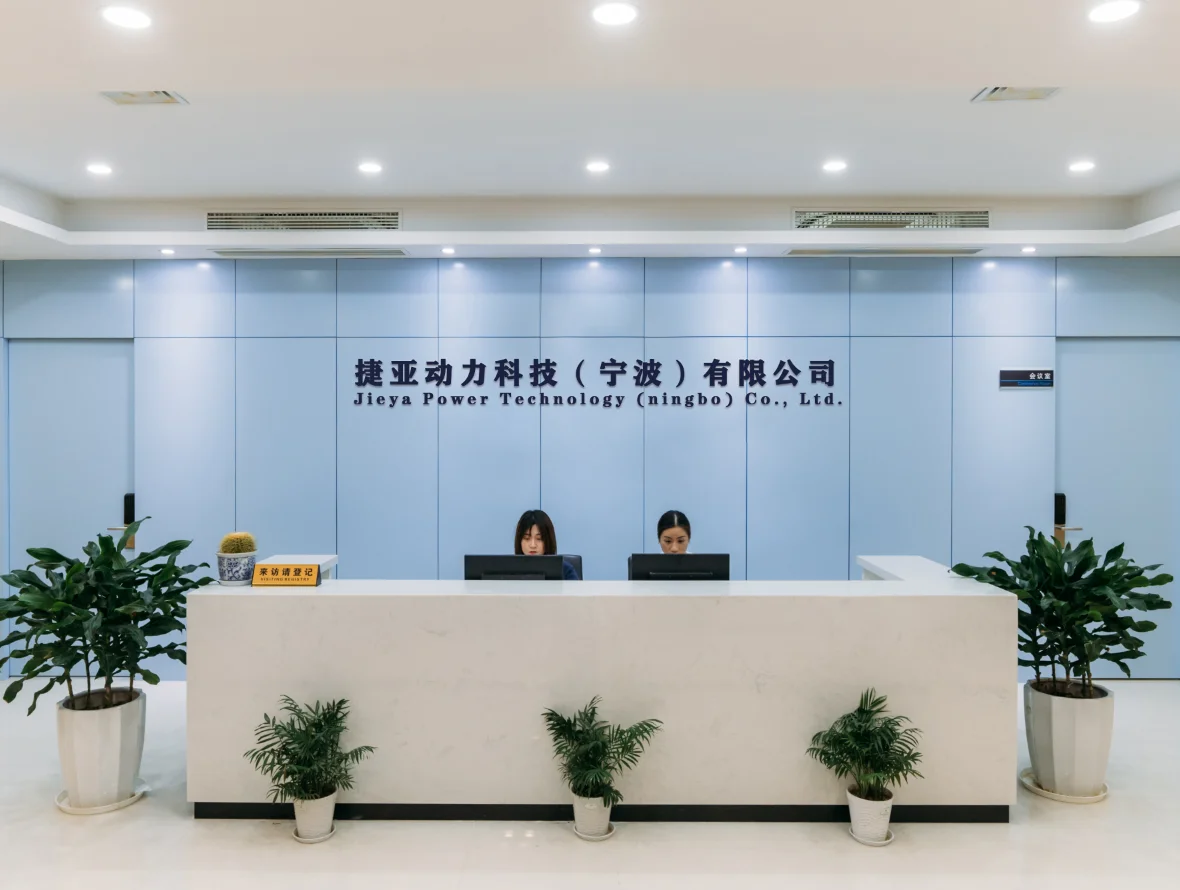
Jieya Power Technology (ningbo) Co., Ltd.
- Trading Company
- Zhejiang, China
- Lead time90 days
- Avg. response≤ 3h
Main productsCylinder body,cylinder head,Cylinder Liner,Crankshafts,Connecting Rod
Main marketsDomestic Market(80.00%), Southeast Asia(8.00%), South America(6.00%), Mid East(6.00%)

Changsha Eucrown Automobile Parts Co., Ltd.
- Verified by CTI
- Combined
- China Hunan
- Lead time30 days
- Avg. response≤ 4h
Main productsAuto Parts, Truck Parts, Bus Parts
Main marketsDomestic,Europe

Truck Belt Tensioner for Man Tga/Tgl/Tgm/Tgs/Tgx Bus / Neoplan 51958007494
$10.00 - $40.00
MOQ: 20 Pieces


New Development Truck Engine Part Belt Tensioner 9362002770 9362003670 9362001870 for MB
$15.00 - $38.00
MOQ: 10 Pieces

51958007396 51958007393 51958007384 Belt Tensioner for Man Tga/Tgl/Tgm/Tgs/Tgx
$10.00 - $40.00
MOQ: 20 Pieces


Xingtai Dalaran Sports Products Factory
- Combined
- China Hebei
- Lead time23 days
- Avg. response≤ 2h
Main productsGraphite Gasket; Airbag Cover
Main marketsSouth America,Southeast Asia/ Mideast,North America

$10.00 - $15.00
MOQ: 50 Pieces

$10.00 - $15.00
MOQ: 50 Pieces

JINAN GUYUE AUTO PARTS CO., LTD.
- Verified by SGS
- Trading Company
- China Shandong
- Lead time15 days
- Avg. response≤ 7h
Main productsFAW Sinotruck Shacman Beiben Truck Spare Part, Bus Spare Parts, Light Truck Spare Parts, Tyre, Construction Machinery, Fuwa Ror BPW Trailer Spare Parts
Main marketsAfrica,Southeast Asia/ Mideast,North America

- Trading Company
- China Zhejiang
- Lead time30 days
- Avg. response≤ 5h
Main productsRubber Belt
Main marketsSouth America,Europe,Australia,North America

MOQ: 10 Pieces

Timing Belt Pulley and Tensioner 2
MOQ: 10 Pieces

Qingdao Euro Auto Parts Co., Ltd.
- Trading Company
- Shandong, China
- Lead time25 days
- Avg. response≤ 3h
Main productsBody Parts,Engine Parts,Spare Parts,Electrical Systems,Brake Systems
Main marketsMid East(50.00%), Africa(10.00%), Eastern Europe(6.00%), Western Europe(5.00%), Northern Europe(5.00%), North America(5.00%), Oceania(5.00%), South America(5.00%), Central America(5.00%), Eastern Asia(2.00%), Southeast Asia(2.00%)
Guangzhou Grand Auto Parts Co., Ltd.
- Trading Company
- Lead time旺季: "1 - 20":15,"> 20":"To be negotiated", 淡季: "1 - 20":15,"> 20":"To be negotiated"
- Avg. response≤ 10h
Main productstruck parts,benz truck parts,scania truck parts,volvo truck parts,man truck parts
Shandong Chiron Auto Parts Co., Ltd.
- Verified by SGS
- Trading Company
- China Shandong
- Lead time23 days
- Avg. response≤ 5h
Main marketsNorth America

Foshan Hzw Import and Export Trading Company Ltd
- Verified by SGS
- Trading Company
- China Guangdong
- Lead time15 days
- Avg. response≤ 4h
Main marketsSoutheast Asia/ Mideast,Europe,Australia,North America

Shandong Lianwo Heavy Truck Components Co., Ltd.
- Trading Company
- China Shandong
- Lead time15 days
- Avg. response≤ 3h
Main productsTruck Part, Truck Spare Part, Sinotruk HOWO, Gear Box, Mining Truck, Axle Part
Main marketsAfrica,Southeast Asia/ Mideast,Europe

Wenzhou Yize Industrial Co., Ltd.
- Trading Company,Manufacturer/Factory
- China Zhejiang
- Lead time0 days
- Avg. response≤ 16h
Main productsAutomobile Pumps, Suspension Parts, C. V. Joint, Auto Parts, Car Parts, Air Filter, Auto Filter, Wheel Hub Bearing, Shork Absorber, Brake Pad

Changsha Tuorunjie Auto Parts Co., Ltd.
- Manufacturer/Factory
- China Hunan
- Lead time15 days
- Avg. response≤ 7h
Main productsChina Turck Spare Parts, Power Series, Chassis Series, Gearbox Series, Cab and Electrical Series
Main marketsSouth America,Eastern Europe,Mid East,North America,Southeast Asia,Eastern Asia,Oceania,Western Europe,Africa
Shiyan Chezhou Auto Parts Co., Ltd.
- Trading Company
- Hubei, China
- Lead time7 days
- Avg. response≤ 3h
Main productsDongfeng DANA products,Cummins series parts,Renault engine parts,Bosch spare parts,Truck electric parts
Main marketsSouth America(14.00%), Africa(13.00%), Southeast Asia(12.00%), Eastern Europe(10.00%), Mid East(9.00%), South Asia(8.00%), Northern Europe(8.00%), Domestic Market(5.00%), Southern Europe(5.00%), Oceania(4.00%), Eastern Asia(4.00%), North America(3.00%), Central America(3.00%), Western Europe(2.00%)
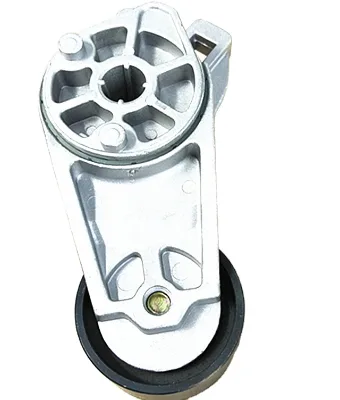
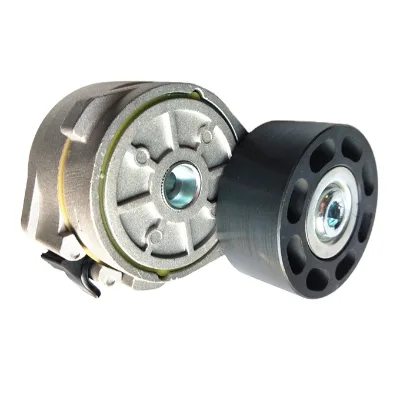
ISZ QSZ diesel engine 4320327 belt tensioner with best price and high quality
$15.00 - $18.00
MOQ: 2 pieces
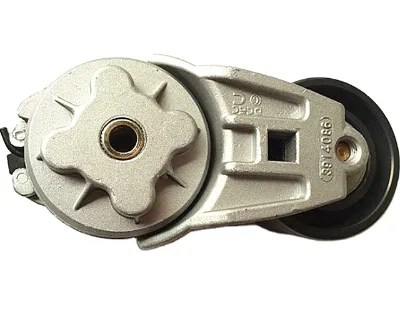
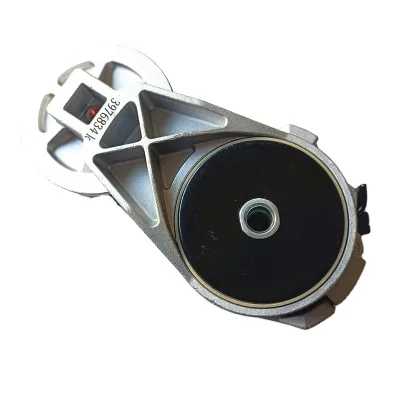
High Quality Engine Belt Tensioner 3914086
$12.50 - $13.50

- Verified by BV
- Combined
- China Zhejiang
- Lead time30 days
- Avg. response≤ 17h
Main productsEuropean Truck Parts, Truck Oil Sump, Truck Adblue Tank, Truck Cabin Stabilizer, Truck Towing Hook
Main marketsDomestic

EIton (Jinan) Trading Co., Ltd.
- Verified by TUVRHEINLAND
- Trading Company
- China Shandong
- Lead time15 days
- Avg. response≤ 6h
Main productsWheel Loader Parts, Excavator Parts, Road Roller Parts, Grader Parts, Bulldozer Parts, Heavy Truck Parts, Diesel Engine Parts, Filter, Skid Steer Loader Parts, Crane Parts
Main marketsNorth America






Comprehensive Sourcing Guide
Man Truck Belt Tensioner Assembly Supplier Concentration and Factory Types
The available data indicates a concentration of manufacturing activity within China, specifically noting locations in Zhejiang and Wenzhou. These regions serve as hubs for suppliers offering a diverse range of components, including compression springs, tension springs, and specialized auto springs alongside the primary focus on belt tensioner assemblies. The supplier base includes both combined entities and dedicated manufacturers or factories, suggesting a mix of trading capabilities and direct production capacity. Buyers should verify if a specific facility operates as a pure manufacturer or a combined entity, as this distinction impacts direct control over the production line and customization flexibility.
When evaluating the factory types, it is essential to distinguish between those offering Original Design Manufacturing (ODM) and those providing Original Equipment Manufacturing (OEM) services. Some suppliers in the current results list capabilities for both OEM and ODM, while others maintain their own brands. The presence of specific product lines like punching and stamping parts, as well as fine machining parts, suggests that these facilities possess the necessary machinery to handle complex metalworking tasks required for tensioner pulleys and assemblies. Buyers must confirm the specific factory type to ensure the supplier can meet unique engineering requirements without relying on third-party subcontractors.
How to Verify Man Truck Belt Tensioner Assembly Suppliers
Verification of supplier credentials is a critical step when sourcing heavy-duty truck components. The current results show that some suppliers hold verification from recognized bodies such as TÜV Rheinland and Bureau Veritas (BV). These third-party validations provide a baseline of trust regarding the company's operational stability and compliance with international standards. Buyers should prioritize suppliers with these active verification badges, as they indicate a higher level of scrutiny regarding business legitimacy and quality management systems. It is important to note that verification status can change, so confirming the current validity of these badges is necessary before proceeding with any transaction.
Beyond general verification, specific system certifications like TS 16949 are highlighted in the product attributes for several tensioner assemblies. This standard is particularly relevant for automotive applications, ensuring that the manufacturing processes meet the rigorous quality requirements of the vehicle industry. Buyers should request proof of this certification and verify that it covers the specific production lines for the Man truck parts they intend to purchase. Additionally, checking for other certifications such as ISO, RoHS, and CE can further validate the supplier's commitment to environmental and safety standards. Always cross-reference these claims with the supplier's official documentation to avoid relying solely on platform listings.
What to Compare Across Man Truck Belt Tensioner Assembly Suppliers
Comparing suppliers requires a detailed analysis of operational metrics such as response time, lead time, and minimum order quantities (MOQ). The data reveals significant variation in these areas, with response times ranging from approximately 3 hours to nearly 11 hours, and lead times spanning from 23 to 30 days. A faster response time often correlates with better communication channels, which is vital for resolving technical queries regarding part compatibility. Similarly, shorter lead times can be crucial for maintaining inventory levels in a supply chain that demands high reliability. Buyers should calculate the total time from order placement to delivery, factoring in these internal processing times alongside shipping durations.
Minimum order quantities and pricing structures also vary widely across the available options. Some listings indicate an MOQ of 100 units with prices ranging between $4.00 and $23.00, while others show an extremely high MOQ of 10,000,000 units with a uniform price point. This disparity suggests that different suppliers target different market segments, from small batch procurement to massive industrial volume orders. Buyers must align their order volume with the supplier's capacity and pricing tier to avoid unnecessary costs or rejection of smaller orders. Additionally, comparing the material specifications, such as stainless steel versus aluminum alloy or iron, is essential to ensure the component meets the durability requirements of the specific Man truck engine model.
Common Man Truck Belt Tensioner Assembly Sourcing Risks
One significant risk in sourcing these components is the potential mismatch between product specifications and actual application requirements. The product attributes list various materials, including stainless steel, aluminum alloy, and iron, alongside different technologies like casting and machining. Selecting a part with the wrong material composition can lead to premature failure under the high stress conditions typical of heavy-duty truck engines. Buyers must rigorously verify the material grade and technology used for each specific part number to ensure it matches the original equipment manufacturer (OEM) specifications for their vehicle fleet.
Another risk involves the variability in packaging and standardization, which can affect logistics and inventory management. Some suppliers offer customized packing options, while others provide neutral packing or specific branded boxes like "Ouchai Box." Inconsistent packaging can lead to damage during transit or confusion in warehouse sorting, especially when managing mixed orders. Furthermore, the presence of multiple part numbers for similar applications, such as various codes for Man TGA, TGS, and TGX models, increases the risk of ordering the incorrect component. Buyers should double-check part numbers against the vehicle's engine assembly details to prevent costly returns and production delays.
Man Truck Belt Tensioner Assembly Regional Sourcing and Logistics
The primary sourcing region identified in the data is China, with specific mentions of Zhejiang and Wenzhou as key production hubs. These locations are well-established for automotive parts manufacturing, offering a dense network of suppliers and supporting industries. However, the distance from these manufacturing centers to international destinations can introduce logistical complexities and extended transit times. Buyers should factor in the geographical location of the factory when planning their supply chain, as shipping from inland cities like Wenzhou may differ in cost and speed compared to coastal ports. Understanding the specific origin of the goods is crucial for accurate freight cost estimation and delivery scheduling.
Logistics planning must also account for the specific packaging standards provided by the supplier, which can influence container utilization and shipping costs. The data indicates that products are often packed in cartons or on pallets, with some suppliers offering customized packing solutions. Standardized packaging like "Ouchai Box" or neutral packing can streamline the loading process, but buyers need to confirm the exact dimensions and weight of the packed units. For instance, some tensioner assemblies have weights ranging from 0.62kg to 2kg, which affects the total load per container. Accurate weight and dimension data are essential for calculating freight charges and ensuring that the shipment complies with carrier restrictions.
Man Truck Belt Tensioner Assembly Commercial Terms and Order Planning
Commercial terms regarding pricing and order volume are critical for effective budget management and inventory planning. The observed price range for these assemblies varies significantly, with some items listed between $0.99 and $13.00, while others range from $4.00 to $23.00. This variation often correlates with the material used, the complexity of the casting process, and the minimum order quantity required. Buyers should negotiate based on their specific volume needs, as higher volumes may unlock better pricing tiers or more favorable payment terms. It is also important to clarify whether the quoted price includes all taxes, duties, and shipping costs to avoid unexpected expenses upon delivery.
Order planning must consider the lead times and customization availability to ensure timely delivery. With lead times ranging from 23 to 30 days, buyers need to place orders well in advance to maintain stock levels, especially for critical engine parts. The availability of customization options allows for tailored solutions, but this may extend the production timeline. Buyers should confirm the customization lead time separately from standard production times. Additionally, verifying the supplier's capacity for OEM and ODM services ensures they can handle volume fluctuations. Proper planning involves aligning the order schedule with the supplier's production calendar to mitigate the risk of delays in receiving essential truck components.
FAQs
What is a Man Truck Belt Tensioner Assembly and what does it do?
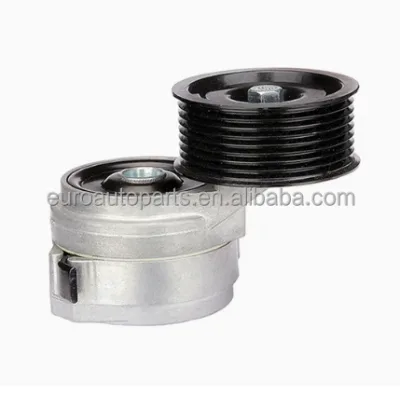
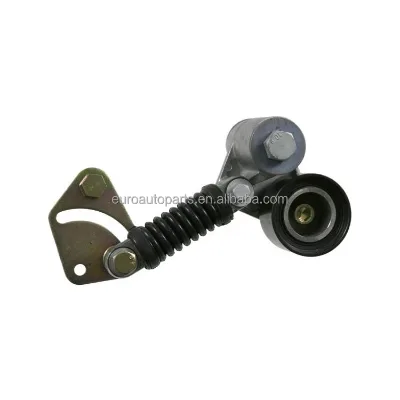
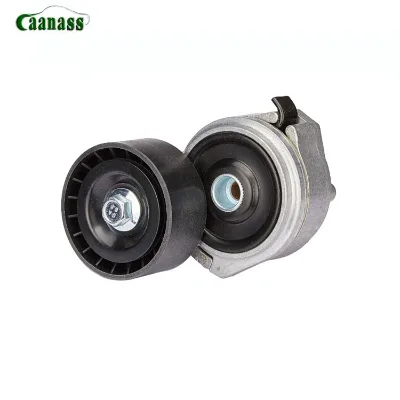
A Man Truck Belt Tensioner Assembly keeps the drive belt at the correct tension so it can turn the alternator, water pump and other engine accessories without slipping. It uses an internal spring or hydraulic element and a pulley to absorb belt movement. A worn tensioner can cause squealing noise, belt wear and accessory failure.
Which MAN truck models do the listed belt tensioner assemblies fit?
The listed tensioner assemblies cover MAN TGA, TGS, TGX and TGL trucks, plus the MAN E2000 engine, with OEM reference numbers such as 51958007315, 51958007445 and 51958006092. Always match the reference number or truck model and engine against your current part before ordering, because fitment varies between engine variants and production years.
What materials and manufacturing processes are used for these tensioners?
Most listed tensioners use aluminium alloy or iron bodies produced by casting, with stainless steel components on some machining-based listings. Product data on the page notes casting technology, standard sizing and models such as A T110, OC90410 and T124. Confirm the exact material, pulley size and weight specification with the supplier for your application before purchase.
Do suppliers of MAN truck belt tensioner assemblies hold quality certifications?
Several listings state TS 16949 certification, and some product listings cite ISOGS, RoHS and CE certification with testing to BS, ANSI, JIS, GB, GOST, ASTM and DIN standards. One manufacturer is BV verified and another is TUV Rheinland verified. Ask each supplier for current certificate copies and confirm which certification applies to the specific part you order.
Can I order customized belt tensioner assemblies in small quantities?
Yes, customization is marked as available on the listed tensioner products, and one manufacturer lists a minimum order quantity of 100 pieces with prices ranging roughly from four to twenty-three US dollars depending on the model. Note that one machining-based listing shows a much higher MOQ of ten million pieces, so check MOQ per listing before requesting a quote.
How long do delivery and response times typically take?
Listed manufacturers report lead times of 23 to 30 days, with average response times around 3 to 11 hours. Actual timing depends on the model, order quantity and customization level, since neutral or customized packing options can add processing steps. Confirm current production scheduling and shipping options directly with the supplier before confirming your order.
How are the tensioners packed and where are the suppliers located?
The manufacturers are located in Zhejiang province, China, with Wenzhou listed as the origin city on several products. Packing options include the supplier's own branded box, neutral packing, and customized packing, with cartons and pallets used for some machining parts. Request packing details in your quote so you can plan import handling and labeling requirements.
What should I verify before ordering a belt tensioner assembly?
Verify the OEM reference number, truck model and engine compatibility, then request the material specification, pulley dimensions and weight for your chosen model. Ask for certification documents, a sample if possible, the confirmed MOQ, unit pricing, lead time and warranty terms. Checking these points before payment reduces the risk of fitment and quality issues.