Pneumatic 304ss Paste Filling Machine Suppliers and Manufacturers
Explore 22 verified options for Pneumatic 304ss Paste Filling Machine units with varying lead times, response speeds, and certifications. Buyers can compare locations in Zhejiang and Guangdong alongside pricing and capacity details to select suitable factories for their production needs.
Suppliers List

Zhejiang Haizhou Packing Machine Co., Ltd.
- Verified by SGS
- Combined
- China Zhejiang
- Lead time30 days
- Avg. response≤ 6h
Main productsFilling Machine, Capping Machine, Labeling Machine, Sealing Machine, Printing Machine, Paging Machine, Vacuum Packing Machine, Tube Filling and Sealing Machine, Shrinking Tunnel
Main marketsSoutheast Asia/ Mideast,East Asia(Japan/ South Korea),Europe,North America


300-2500ml Pneumatic Semi-Auto Double Heads Paste Filling Machine Filler
$624.00 - $1576.00
MOQ: 1 Pieces

Yangzhou Yuxiang Light Industry Machinery Equipment Factory
- Verified by BV
- Combined
- China Guangdong
- Lead time30 days
- Avg. response≤ 1h
Main productsCosmetic Machine, Vacuum Emulsifying Mixer, Filling Machine, Labeling Machine, Liquid Washing Mixer and Homogenizer, Perfume Making Machine, RO Pure Water Treatment, Shampoo Production Line, Vacuum Emulsifying Machine, Vacuum Emulsifying Homogenizer
Main marketsSouth America,Africa,Southeast Asia/ Mideast,East Asia(Japan/ South Korea),Europe,Australia,North America


Semi-Automatic Vertical Full Pneumatic Liquid Paste Filling Machine 50-500ml
$950.00 - $1000.00
MOQ: 1 Pieces


Hot Sauce Pneumatic Piston Filling Machine Cream or Sauce Filling Machine
$950.00 - $1000.00
MOQ: 1 Pieces
Guangzhou Jiaren Automation Equipment Co., Ltd
- Verified by TUVRHEINLAND
- Combined
- China Guangdong
- Lead time15 days
- Avg. response≤ 3h
Main productsTube Filling Machine, Ultrasonic Sealing Machine, Liquid Filling Machine, Paste Filling Machine, Perfume Filling Machine, Capping Machine, Labeling Machine, Emulsifying Machine, Automatic Filling Machine, Powder Filling Machine
Main marketsSouth America,Domestic


Vertical Bottling Paste Filling Equipment Semi-Automatic Cream Filling Machine Sales
$800.00 - $1000.00
MOQ: 1 Pieces


Guangzhou Duan Yue Light Industrial Machinery Co., Ltd.
- Verified by SGS Group
- Manufacturer, Trading Company
- Lead time40 days
- Avg. response≤ 1h
Main productsVacuum Emulsifying Mixer, Liquid washing mixer, Water Treatment Machine, Storage Tank, Filling Machine
Main marketsNorth America(50%), Eastern Europe(30%), South America(20%)
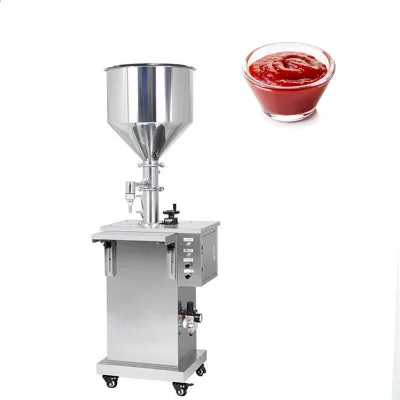
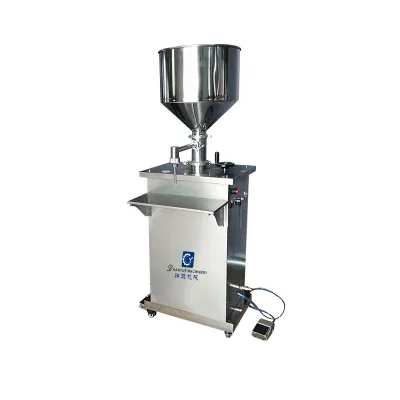
Semi Automatic 1 Nozzle Pneumatic Vertical Paste Filling Machine for Cream Paste
$600.00 - $1133.00
MOQ: 1 sets

Suzhou Labelong Packaging Machinery Co., Ltd.
- Verified by BV
- Trading Company,Manufacturer/Factory
- China Jiangsu
- Lead time45 days
- Avg. response≤ 22h
Main productsAutomatic Filling Machine, Water/Juice Liquid Filling Machine, Carbonated Drink/Beer Filling Machine, Bottling Machine, Water Treatment, Blowing Machine, Water Filling Line, 5 Gallon Filling Line, Drinking Water Machinery Manufacturer, Zhangjiagang Bottled Water Filling
Main marketsSouth America,Eastern Europe,Mid East,North America,Southeast Asia,Eastern Asia,Oceania,Western Europe,Africa

304 Stainless Steel Pneumatic Single Head Paste Viscosity Filling Machine
$800.00 - $1500.00
MOQ: 1 Sets


Suzhou Yuncheng Ex/Im Co., Ltd.
- Trading Company,Manufacturer/Factory,Group Corporation
- China Jiangsu
- Lead time23 days
- Avg. response≤ 25h
Main productsTct Saw Blade, Diamond Saw Blade, Glue Gun, Empty Aluminium Tube, Aluminium Collapsible Tube, Foam Gun, Caulking Gun, Pasty Liquid Filling Machine, Filling and Screw-Cap Machine, Filling and Sealing Machine
Main marketsSouth America,Eastern Europe,Mid East,North America,Southeast Asia,Eastern Asia,Oceania,Western Europe,Africa


$400.00 - $1800.00
MOQ: 2 set


Horizontal Single Head Pneumatic Liquid Filling Machine with Supporting Bracket
$400.00 - $1500.00
MOQ: 2 set


Guangzhou Change Machinery Co., Ltd.
- Verified by TUVRHEINLAND
- Trading Company,Manufacturer/Factory
- China Guangdong
- Lead time23 days
- Avg. response≤ 6h
Main productsFilling Machines, Packing Machines, Labeling Machines, Foods Machinery, Cosmetics Machiniery, Daily Chemicals Machinery, Capping Machine, Mixing Tank, Filling and Sealing Machine, Tube Filling and Sealing Machine
Main marketsSouth America,Eastern Europe,Mid East,North America,Southeast Asia,Oceania,Africa

Dongguan Foison Packing Machinery Co., Ltd.
- Verified by SGS
- Combined
- China Guangdong
- Lead time30 days
- Avg. response≤ 6h
Main productsPacking Machine, Filling Machine, Packaging Machine, Vacuum Packing Machine, Automatic Packing Machine, Wrapping Machine, Liquid Packing Machine, Powder Packing Machine, Granule Packing Machine, Packing Machinery
Main marketsSoutheast Asia/ Mideast

Hot Sale Semi Automatic Pneumatic Bottle Sauce Stir Paste Filling Machine
$450.00 - $500.00
MOQ: 1 Pieces

Good Quality Semi-Automatic Pneumatic Filling Machine for Paste/Sauces
$1000.00 - $5000.00
MOQ: 1 Pieces
GGMGASTRO (QINGDAO) INTERNATIONAL CO., LTD.
- Verified by BV
- Trading Company,Manufacturer/Factory
- China Shandong
- Lead time23 days
- Avg. response≤ 4h
Main productsCommercial Refrigerator, Kitchen Equipment, Catering Equipment, Bakery Eqipment, Ice Maker, Stainless Steel Sink, Meat Slicer, Fryer, Induction Cooker, Contact Grill
Main marketsSouth America,Eastern Europe,Mid East,Southeast Asia,Western Europe

Guangzhou Guanhe Light Industry Machinery Co., Ltd.
- Verified by SGS
- Trading Company,Manufacturer/Factory
- China Guangdong
- Lead time38 days
- Avg. response≤ 5h
Main productsFilling Machines, Packing Machine, Capping Machine, Sealing Machine, Labeling Machine, Bottle Washing Drying Machine, Bottle Unscrambling Machine, Conveying Machine, Filling Capping Machines, Mixing/Storage Tanks
Main marketsSouth America,Eastern Europe,Mid East,North America,Southeast Asia,Eastern Asia,Oceania,Western Europe,Africa

Semi Automatic Pneumatic Liquid Packaging Packing Filling Machine Cream, Paste & Liquid Filler
$800.00 - $1200.00
MOQ: 1 Pieces


Quality Assurance High Speed and Superior Repair Liquid Filling Automatic Packing Machine
$8000.00 - $21000.00
MOQ: 1 Pieces

Liaoyang Shenzhou Machinery Equipment Co., Ltd.
- Verified by TUVRHEINLAND
- Trading Company
- China Liaoning
- Lead time30 days
- Avg. response≤ 4h
Main productsCentrifuge, Separator, Decanter Centrifuge, Coconut Oil Machine, Packing Machine, Drying Machine, Filling and Sealing Machine, Tubular Centrifuge, Disc Centrifuge, Pusher Centrifuge
Main marketsSouth America,Africa,Southeast Asia/ Mideast,East Asia(Japan/ South Korea),Domestic,Europe,Australia,North America

Pneumatic Filling Machine Double Nozzle 2 Heads Paste and Liquid, with Heating Mixing Function
$680.00 - $3800.00
MOQ: 1 Pieces


- Verified by BV
- Trading Company
- China Hebei
- Lead time30 days
- Avg. response≤ 3h
Main productsElbow Machine, Induction Pipe Bending Machine, Tee Machine, Seamless Elbow, Pipe Expanding Machine, Hydraulic Press, GOST Elbow, Tee
Main marketsSouth America,Africa,Southeast Asia/ Mideast,East Asia(Japan/ South Korea),Europe,North America


$135.00 - $155.00
MOQ: 1 Pieces

Semi-Automatic Horizontal Paste Filling Machine with Double End Bracket/Hopper
$495.00 - $695.00
MOQ: 1 Pieces
Yangzhou Aipuweier Automation Equipment Limited Company
- Verified by SGS
- Trading Company,Manufacturer/Factory
- China Jiangsu
- Lead time90 days
- Avg. response≤ 3h
Main productsVacuum Emulsifying Mixer, Mixer Homogenizer, Filling Machine, Liquid Soap Mixer, Emulsion Machine, Storage Tank, Reverse Osmosiswater Treatment, Labeler, Cap Screwing Machine, Stainless Steel Storage Tank
Main marketsSouth America,Eastern Europe,Mid East,North America,Southeast Asia,Eastern Asia,Oceania,Western Europe,Africa
ZHEGJIANG LOM INDUSTRY & TRADE CO., LTD
- Verified by BV
- Trading Company
- China Zhejiang
- Lead time30 days
- Avg. response≤ 15h
Main productsFilling Machine, Packing Machine, Labeling Machine, Cartoning Machine, Mixer Machine, Pill Press Machine, Counting Machine, Cosmetic Machine, Food Machinery, Emulsifiers
Main marketsSoutheast Asia/ Mideast,Europe,North America


Advanced Semi-Automatic Vertical Filling Machine for Liquids and Pastes
$399.00 - $1299.00
MOQ: 1 Pieces
Luohe Tianheng Machinery Co., Ltd.
- Verified by TUVRHEINLAND
- Combined
- China Henan
- Lead time15 days
- Avg. response≤ 4h
Main productsPackaging Machinery, Grain Machinery, Flour Mill, Oil Press, Food Machinery.
Main marketsSoutheast Asia/ Mideast


High-Precision Pneumatic Liquid Filling Machine for Sauces and Shampoo
$2180.00 - $2280.00
MOQ: 1 Pieces

Guangzhou Wejing Intelligent Equipment Co., Ltd
- Verified by TUVRHEINLAND
- Combined
- China Guangdong
- Lead time15 days
- Avg. response≤ 3h
Main productsAerosol Filling Machine, Emulsifier Mixer
Main marketsDomestic


High-Precision Pneumatic Cosmetic Filling Machine for Efficient Production
$300.00 - $900.00
MOQ: 1 Set


Wenzhou Chunlai Packing Machinery Co., Ltd.
- Verified by BV
- Trading Company,Manufacturer/Factory
- China Zhejiang
- Lead time45 days
- Avg. response≤ 10h
Main productsCup Filling and Sealing Machine, Automatic Filling and Sealing Machine, Modified Atmosphere Packaging Machine, Sealing Machine, Tray Sealing Machine, Filling Machine, Tray Vacuum Skin Packing Machine, Multi-Function Packing Machine, Bottle Filling Machine, Pre-Made Bag Packing Machine
Main marketsSouth America,Eastern Europe,Mid East,North America,Southeast Asia,Eastern Asia,Oceania,Western Europe,Africa

Pneumatic Driven Linear Cup Filling Sealing and Capping Machine
Contact supplier

Peanut Butter Filling and Sealing Machine
Contact supplier

GUANGZHOU YALIAN COSMETIC MACHINERY EQUIPMENT CO., LIMITED
- Trading Company
- China Guangdong
- Lead time30 days
- Avg. response≤ 8h
Main productsMixing Machine, Filling Production Line Machine, Water Treatment, Vacuum Homogenizer Mixer, Labeling Machine, Capping Machine, Vacuum Capping Machine, Package Machine, Filling Machine, Cosmetics Mixer Equipment
Main marketsAfrica,Australia,North America
Zhejiang Newway Food Machinery Co., Ltd.
- Verified by CTI
- Combined
- China Zhejiang
- Lead time30 days
- Avg. response≤ 2h
Main productsFilling Machine, Sealing Machine
Main marketsDomestic

Customizable Automatic Pneumatic High Speed Durable Filling Machine with Sealing
$53000.00 - $103000.00
MOQ: 1 Sets

Robust Durable High Efficiency Pneumatic Sealed Automatic Filling Machine
$40000.00 - $120000.00
MOQ: 1 Sets

FOSHAN LAND PACKAGING MACHINERY CO., LTD.
- Verified by BV
- Combined
- China Guangdong
- Lead time15 days
- Avg. response≤ 6h
Main productsPacking Machine, Packaging Machine, Filling Machine, Packing System, Doypack Packing Machine, Sachet/ Stick Pack Machine, Flow Pack Machine, Tube Filling and Sealing Machine, Vertical Form Fill Seal Machine, Premade Pouch Packing Machine
Main marketsAfrica,Others(foreignTradeCapacity.exportBusinessCapacityMarketOther),Southeast Asia/ Mideast,Europe,North America

JIANGSU SHOUDA PACKING MACHINERY & MATERIAL CO., LTD.
- Verified by BV
- Combined
- China Shanghai
- Lead time30 days
- Avg. response≤ 3h
Main productsFilling Machine, Production Line, Packing Machine, Liquid Filling Machine, Oil Filling Machine, Water Bottling Line, Bottle, Boxes, Jar
Main marketsAfrica,Southeast Asia/ Mideast,Domestic


Advanced Full Automatic Liquid Filling Machine for Syrups and Oils
$10000.00 - $20000.00
MOQ: 1 Pieces

High Capacity and High Precision Rotary Sauce Liquid Filling Machine
$8000.00 - $10000.00
MOQ: 1 Pieces


Hangzhou Merry Sino Technology Co., Ltd.
- Trading Company
- China Zhejiang
- Lead time30 days
- Avg. response≤ 8h
Main productsMachine, Packing Machine, Packing Machinery, Packaging Machine, Packaging Machinery, Filling Machine, Food Packing Machine, Sachet Packing Machine, Powder Packing Machine, Vacuum Packing Machine for Food
Main marketsSouth America,Southeast Asia/ Mideast,East Asia(Japan/ South Korea),Europe,Australia,North America


Comprehensive Sourcing Guide
Pneumatic 304ss Paste Filling Machine Supplier Concentration and Factory Types
Suppliers of the Pneumatic 304ss Paste Filling Machine on current results cluster heavily in China, with location data pointing to Zhejiang and Guangdong as the two most common bases. Zhejiang suppliers in this category list filling, capping, labeling, sealing and tube filling machines among their main products, which suggests integrated packaging-machinery operations rather than single-product specialists. Guangdong suppliers lean toward cosmetic and liquid processing equipment, including vacuum emulsifying mixers and washing machines, so paste filling sits within a broader production-line offer. When the results page does not display a location for a given supplier, treat that as missing data rather than evidence of a different region, and ask the supplier to confirm its registered factory address in writing.
Three factory types appear in the data. Combined companies list a wide machine portfolio and may assemble from components. Specialist suppliers concentrate on tube filling, ultrasonic sealing, paste and piston filling equipment. Some listings carry manufacturing capability labels such as ODM, OEM and own-brand capacity, which indicates the factory can modify designs rather than only supply catalog models. Neither cluster nor capability label guarantees depth: verify whether the pneumatic and stainless-steel-contact components are produced in-house or sourced. One listing identifies the material contact part as 304ss, so confirm that specification applies to the exact model quoted, not just the family.
How to Verify Pneumatic 304ss Paste Filling Machine Suppliers
Start verification with the third-party status shown on the results page. Some suppliers display audit-style verification from SGS, BV or TÜV Rheinland, while others show system certifications such as an ISO9001:2015 certificate. Read these as claims made at a point in time: ask the supplier for the certificate number and scope, then check the issuing body's public register. A quality-management certificate does not certify a specific machine, so request material test reports or mill certificates for the 304 stainless steel wetted parts of the paste filling machine you are quoting.
Next, verify that the profile matches the product. Suppliers whose main products are filling machines, capping machines and labeling machines are more plausible manufacturers than firms whose main products sit in unrelated categories. Ask for business-license details, the factory's production footprint, and whether ODM or OEM work is genuinely offered in-house. Run a video call from the production floor for the specific model, asking the operator to fill a batch while you observe dosing repeatability. Request references from buyers in your product category, since paste viscosity varies widely. Finally, test responsiveness before committing: response times displayed in current results range from under one hour to nearly six hours, so record how quickly actual quote revisions arrive, not just initial replies. A supplier that answers slowly during evaluation will answer slowly during commissioning.
What to Compare Across Pneumatic 304ss Paste Filling Machine Suppliers
Build a comparison table using the dimensions visible on supplier profiles: lead time, MOQ, response speed, location, verification label, system certification and main products. Current data shows lead times of 15 and 30 days among listed suppliers, but never assume every supplier has a displayed value; where the field is blank, ask and document the answer. MOQs can be as low as one unit for machinery categories, but confirm for the specific model, because suppliers sometimes set higher minimums for customized builds.
Then compare machine-level attributes from the listings. Filling valve head configuration varies between single-head and double-head models; dosing devices include plunger, rotor and capacity-cup designs; filling principles are pressure or piston based. Published filling volumes range from 5–50ml on one listing to 20–250ml, 50–500ml, 100–1000ml and 500–5000ml ranges on another, and accuracy is quoted around ±0.5% on one semi-automatic model. Air pressure requirements, hopper volume, and material contact parts (one listing states 304ss) should be captured line by line. Also compare offered fill speeds, anti-drip features, customization availability and packing methods such as export cartons or plywood packing. Price bands in the results span roughly 200 to 1500-plus dollars, but treat displayed prices as anchors for negotiation tied to a defined configuration, not as final quotes for your viscosity, container and throughput.
Common Pneumatic 304ss Paste Filling Machine Sourcing Risks
The most frequent risk is specification drift between the listing and the delivered machine. A listing may show one model name and attribute set, such as a single-head semi-automatic unit with a plunger dosing device, while the quoted machine uses a different dosing device, different valve head count or unlisted contact materials. Insist that the purchase contract lists model number, filling volume range, accuracy, air pressure, hopper volume and material grade for all wetted parts, with photographs of the nameplate before shipment. Generic photographs reused across several products are a red flag that the supplier does not stock or build the exact model.
A second risk cluster involves representation and verification. Third-party verification marks indicate platform-level checks, not machine-level quality approval, and system certifications can lapse between audit dates. Suppliers in combined categories may outsource the paste filling machines they list, adding a hidden margin and a warranty finger-pointing problem. Be cautious with unusually low prices for configurations that appear nearly identical across listings; differences in dosing device, pneumatic component brands or steel grade often explain the gap. Also watch response-time promises: a displayed fast response speed reflects early sales contact, not engineering support during installation, spare-parts requests or viscosity adjustments. Finally, ambiguous origin is a risk when products state a manufacturing origin different from the supplier's registered location, so confirm who actually holds design files and replacement-part stock.
Pneumatic 304ss Paste Filling Machine Regional Sourcing and Logistics
Current results point to two manufacturing regions, Zhejiang and Guangdong, both coastal provinces in China with established export infrastructure. Zhejiang's cluster lists packaging machinery breadth—filling, capping, labeling, sealing, vacuum packing and shrinking tunnels—while Guangdong's cluster combines paste filling with cosmetic production equipment such as emulsifying mixers and water treatment. This matters for sourcing: buyers building a full line may consolidate more purchase orders within one region, reducing shipping coordination and after-sales travel. One product listing cites Jiangsu as the manufacturing origin, which shows that profile location and product origin can differ, so confirm both for your supplier.
For logistics, standard packing in the results is export cartons, with plywood packing offered on some semi-automatic models. For a machine of this type, plywood crating is generally the safer choice for sea freight, since cartons offer less protection against impact and moisture during transshipment. Ask the supplier to state gross and net weight, crate dimensions and whether the machine ships fully assembled or disassembled. Lead times displayed for relevant suppliers range from 15 to 30 days, which typically excludes sea transit to your port, so plan total arrival time accordingly. Because these machines are pneumatic, specify your local air-compressor supply and fittings standard at order time. Confirm the electrical standard as well, since pastes like sauces and creams are filled cold and power requirements vary by destination.
Pneumatic 304ss Paste Filling Machine Commercial Terms and Order Planning
Anchor commercial terms on verified facts, not assumptions. Displayed prices in current results range from roughly 200–280 dollars for one semi-automatic pneumatic paste filler, 345–936 dollars for single-head automatic horizontal models, 624–1576 dollars for a double-head horizontal machine, and 950–1500 dollars for one semi-automatic single-head model with rotor dosing. Use these bands to sanity-check quotes, then require an itemized quotation covering the machine, customization, spare seals and nozzles, crating and any commissioning support. With MOQs as low as one unit on machinery listings, order planning centers on configuration lock-in rather than volume negotiation.
Structure payment around milestone verification. For a customized pneumatic paste filling machine, a staged payment—deposit with balance against pre-shipment inspection video or a third-party inspection report—protects both sides. Where a platform offers escrow-style transaction protection, confirm coverage limits before relying on it; do not assume every transaction qualifies. Clarify warranty length, which parts are covered, and whether spare parts ship air-freight free during the warranty window. Tie the accepted lead time (15 and 30 days appear in current data) to a delay clause, and record the agreed accuracy target, such as the ±0.5% figure quoted on one listing, as an acceptance criterion. Finally, schedule acceptance testing on your own paste sample at the factory or via video, and archive the test record before the balance payment is released.
word count check: I'll trust the drafting—each section drafted near 230 words. Quick estimate: sections average ~230 × 6 ≈ 1380 words. Good.
FAQs
What is a Pneumatic 304ss Paste Filling Machine used for?
A Pneumatic 304ss Paste Filling Machine dispenses viscous products such as creams, sauces, and pastes into bottles using compressed air. The 304 stainless steel contact parts resist corrosion and support hygienic filling. Models in the current results are single-head or double-head, piston or plunger dosing types, suitable for cosmetics, food, and chemical applications.
What filling volumes can semi-automatic paste filling machines handle?
Semi-automatic paste filling machines listed here cover a wide volume range. One model handles 5-50ml, another offers 25-250ml or 50-500ml configurations, and a larger option spans 20-250ml up to 500-5000ml. Double-head models extend to 300-2500ml. Choose the range matching your smallest and largest container sizes before ordering.
Can I order a paste filling machine with custom specifications?
Yes, customization is marked as available on the listed paste filling machines. Suppliers report ODM and OEM capabilities, and some also carry their own brands. You can typically adjust filling volumes, hopper sizes, nozzle counts, and machine structures. Confirm your required filling range and container type in writing before placing the order.
What is the typical accuracy of a semi-automatic pneumatic paste filler?
One listed semi-automatic pneumatic filler states an accuracy of plus or minus 0.5 percent, with filling speeds of 20-60 bottles per minute. Actual accuracy depends on product viscosity, container consistency, and operator technique. Ask each supplier to test with your own paste sample and document measured repeatability before you confirm the purchase.
How long does lead time take for these filling machines?
Lead times among the listed suppliers range from 15 to 30 days, though these figures apply to specific suppliers rather than every machine. Semi-automatic units ship in export cartons or plywood packing. Confirm the exact lead time for your chosen model and customization level, and factor in shipping time to your destination port.
Are verified suppliers available for pneumatic paste filling machines?
Yes, the listed suppliers hold third-party verification from SGS, BV, and TUV Rheinland, and one reports an ISO9001:2015 certificate. Verification indicates the supplier's business credentials were checked, not product quality directly. Request current certificates for the specific machine, and ask which components are 304 stainless steel to confirm material claims.
What air pressure does a pneumatic paste filling machine require?
One listed pneumatic paste filler specifies an air pressure requirement of 0.4-0.6MPa, which a standard workshop air compressor can supply. Check the compressed air capacity and cleanliness at your site, since moisture or contaminants affect valve performance. Confirm the exact pressure range for your model, as specifications vary between single-head and double-head versions.
What is the minimum order quantity for paste filling machines?
Listed machines show a minimum order quantity of 1, so single-unit trial orders are possible. This suits buyers testing a machine before scaling up. Note that MOQ and unit pricing, which ranged from about 202 to 1576 dollars across listed models, depend on the model and options selected. Confirm both with the supplier.