Portable Foldable Titanium Soup Bowl Suppliers and Manufacturers
Compare 23 suppliers of the Portable Foldable Titanium Soup Bowl on grounded dimensions such as factory type, response time, lead time, capacity options, price ranges, MOQ, and certifications including ISO 9001 and FDA, LFGB. Shortlist verified manufacturers and request quotations today.
Suppliers List
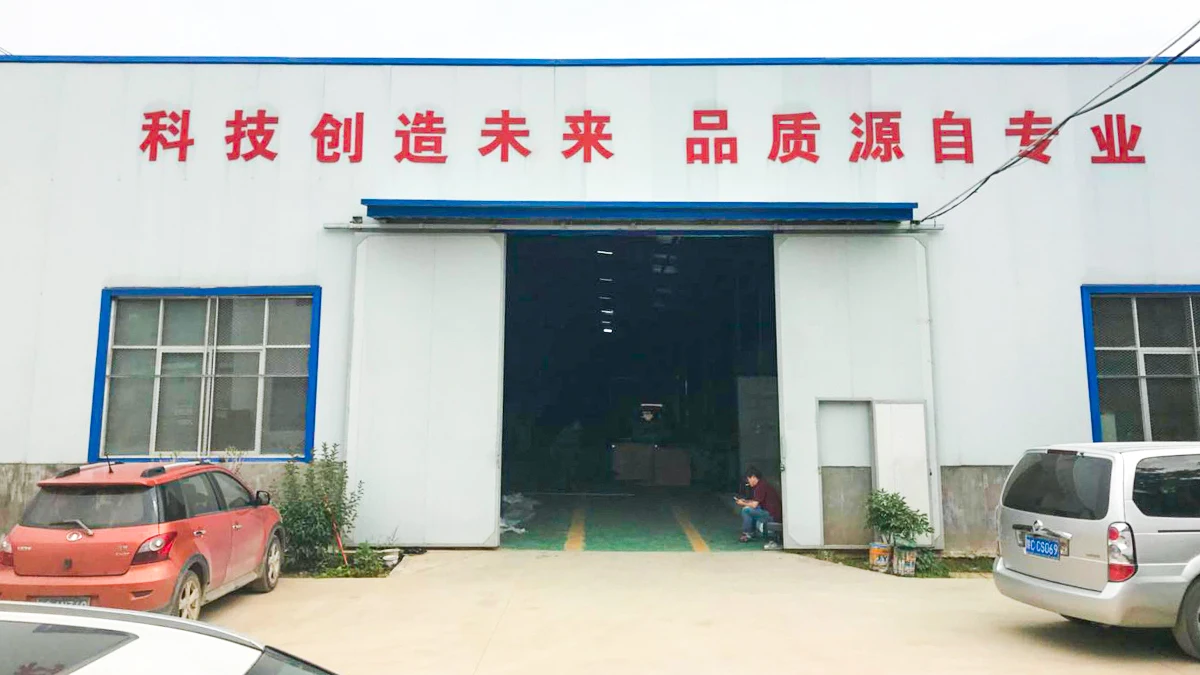
Baoji Ninghao Industry And Trade Co., Ltd.
- Trading Company
- Shaanxi, China
- Lead time0 days
- Avg. response≤ 3h
Main productstitanium bike parts bicycle frame,titanium fastner,titanium outdoor parts,carbon bicycle parts,other titanium bicycle parts
Main marketsNorth America(50.00%), South America(20.00%), Central America(10.00%), Western Europe(10.00%), Eastern Asia(10.00%)
Shanghai Fupower Industry Co., Ltd.
- Manufacturer, Trading Company
- Lead time旺季: "1 - 500":30,"> 500":"To be negotiated", 淡季: "1 - 500":30,"> 500":"To be negotiated"
- Avg. response≤ 2h
Main productsAir intakes, Exhaust Pipes, Carbon fiber panels , Silicone hose, Air filter and prefilters

Zhong Xing Da (Hangzhou) Import & Export Co., Ltd.
- Verified by SGS
- Manufacturer/Factory
- China Zhejiang
- Lead time45 days
- Avg. response≤ 5h
Main productsCooking, Cookware, Waterfun, Fishing, Camping, RV
Main marketsSouth America,Eastern Europe,North America,Western Europe

$29.14 - $38.65
MOQ: 100 Sets

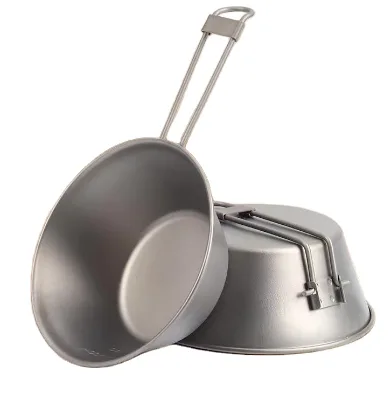
Titanium Sierra Bowl for Outdoor Hiking Camping 260ml 300ml 450ml Tableware Equipment Bowl
$5.15 - $6.24
MOQ: 100 Pieces

$5.15 - $6.24
MOQ: 100 Pieces

$5.15 - $6.24
MOQ: 100 Pieces

$5.15 - $6.24
MOQ: 100 Pieces

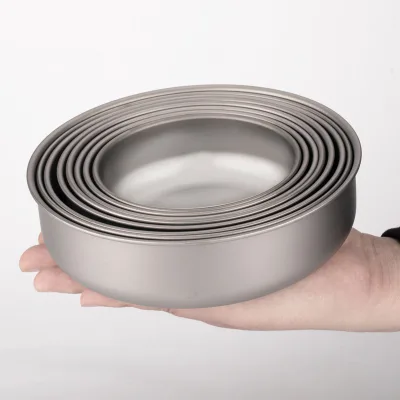
Titanium Sierra Bowl Outdoor Hiking Camping 260ml 300ml 450ml Tableware Bowl Set Stacking Cups
$5.15 - $6.24
MOQ: 100 Pieces

Ningbo Galaxy International Trading Co., Ltd.
- Trading Company,Manufacturer/Factory,Group Corporation
- China Zhejiang
- Lead time23 days
- Avg. response≤ 15h
Main productsTitanium, Titanium Bar, Nickel Base Alloy, Titanium Sheet, Nickel Sheet, Titanium Pipe, Nickel Bar, Titanium Tube, Tantalum Bar, Niobium Bar
Main marketsSouth America,Eastern Europe,Mid East,North America,Southeast Asia,Eastern Asia,Oceania,Western Europe,Africa
- Verified by CTI
- Combined
- China Guangdong
- Lead time45 days
- Avg. response≤ 4h
Main productsCasserole, Dish, Bowl, Mug
Main marketsEast Asia(Japan/ South Korea),Domestic,Europe,North America


Restaurant Kitchen Serving Bowl Round Large Capacity Ceramic Soup Bowl with Handles
$2.50 - $6.90
MOQ: 500 Pieces

Tableware Food Safety Noodle Bowl Large Ceramic Deep Soup Bowl for Restaurant
$2.60 - $4.30
MOQ: 500 Pieces

Double Ear Soup Bowl Heat Resistant Mini Round Ceramic Baking Bowl with Lid
$1.66 - $1.77
MOQ: 500 Pieces
Chaozhou Chaoan Nicety Stainless Steel Wares Manufactory
- Verified by TüVRheinland
- Manufacturer, Trading Company
- Lead time30 days
- Avg. response≤ 3h
Main productsStainless Steel Lunch Box, Stainless Steel Dog Bowl, Stainless Steel Cookware
Main marketsDomestic Market(30%), North America(20%), Western Europe(20%)
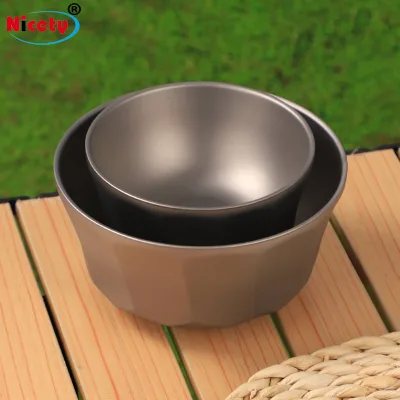
$9.06 - $12.01
MOQ: 500 Minimum
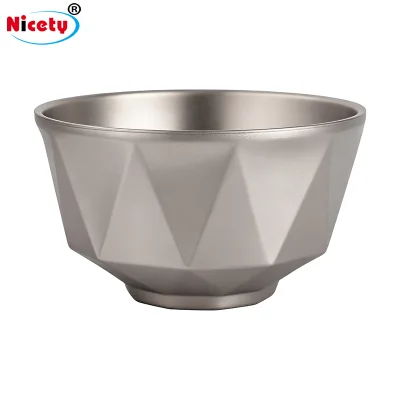
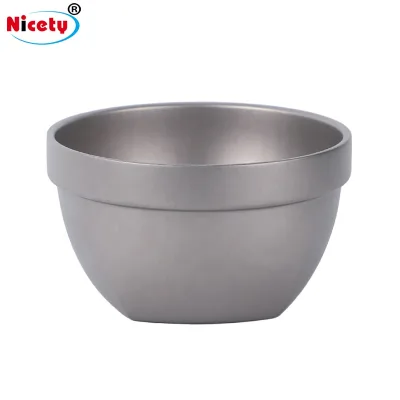
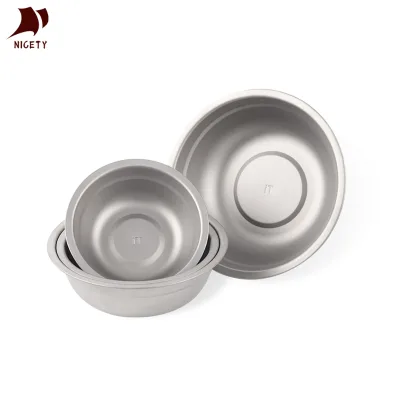
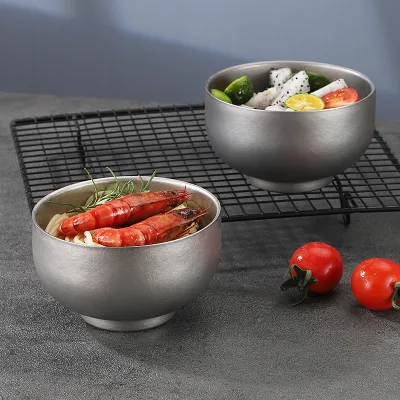
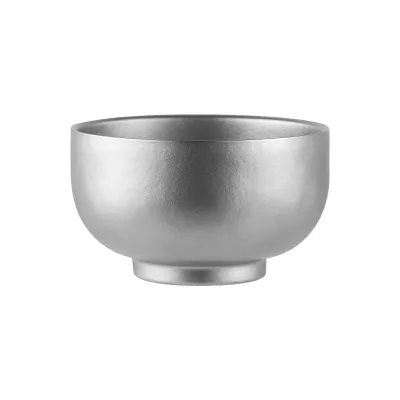

Chaozhou Nicety Technology Co., Ltd
- Verified by CTI
- Trading Company
- China Guangdong
- Lead time30 days
- Avg. response≤ 6h
Main productsLunch Box, Stainless Steel Lunch Box, Pet Product, Pet Bowl, Car Accessory, Bathroom Fitting
Main marketsSouth America,Southeast Asia/ Mideast,East Asia(Japan/ South Korea),Domestic,Europe,Australia,North America


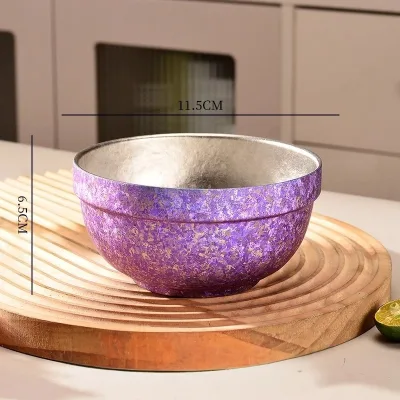
Wholesale Titanium Korean Rice Bowl Kitchen Baking Mixing Bowl Salad Bowl
$9.20 - $9.80
MOQ: 480 Pieces

New Big Capacity Titanium Outdoor Cooking Pot Portable Light Weight Lunch Box
$12.00 - $12.93
MOQ: 100 Sets
Shenzhen Guangyufeng Rubber Co., Ltd.
- Verified by SGS
- Trading Company,Manufacturer/Factory
- China Guangdong
- Lead time23 days
- Avg. response≤ 3h
Main productsSilicone Product, Silicone Rubber Product, Baby Product, Silicone Tube, Silicone Rubber Roller, Silicone Sex Toy, Silicone Mold, Silicone Kitchenware, Silicone Case, Silicone Strap
Main marketsSouth America,Eastern Europe,Mid East,North America,Southeast Asia,Eastern Asia,Oceania,Western Europe,Africa

Portable Retractable Lunch Folding Bowl. Food Grade Silicone, Heat-Resistant and Portable Lunch Bowl
$1.50 - $8.00
MOQ: 200 Pieces


$2.10 - $2.20
MOQ: 50 Pieces


Lunch Folding Bowl, Food-Grade Silicone, Heat-Resistant, Portable Travel Round Silicone Lunch Box
$1.00 - $5.00
MOQ: 50 Pieces
Chaozhou Huiyi Technology Co., Ltd.
- Verified by Intertek
- Manufacturer, Trading Company
- Lead time10 days
- Avg. response≤ 2h
Main productsStainless Steel Korean Tableware
Main marketsDomestic Market(50%), Eastern Europe(20%), Eastern Asia(20%)
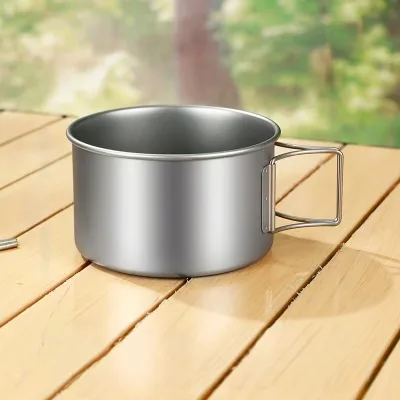
$7.39 - $7.96
MOQ: 40 Minimum

Baoji Titanium Progress New Technology Co., Ltd.
- Manufacturer/Factory
- China Shaanxi
- Lead time23 days
- Avg. response≤ 6h
Main productsTitanium Bottle, Titanium Clad Plate & Foil, Titanium Cookware Pot Wok Stock Frying Pan Skill
Main marketsSouth America,Eastern Europe,Mid East,North America,Southeast Asia,Eastern Asia,Oceania,Western Europe,Africa

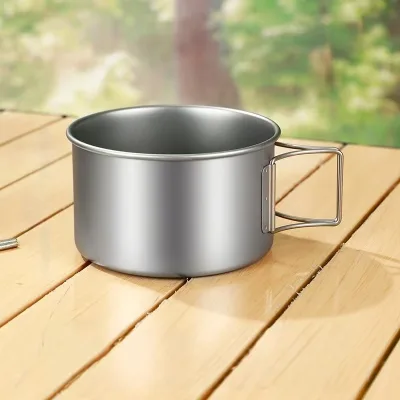
Premium Lightweight Camping Bowl - Eco-Friendly Titanium Outdoor Dinnerware
$11.60 - $15.70
MOQ: 12 Pieces


Corrosion-Resistant Titanium Bowl - Lightweight and Durable for Home Use
$11.60 - $15.70
MOQ: 12 Pieces

Rollin Porcelain Industrial Co., Ltd.
- Verified by BV
- Manufacturer/Factory
- China Guangdong
- Lead time45 days
- Avg. response≤ 6h
Main productsPorcelain Dinnerware, Tableware, Dinner Set, Dinner Plate, Hotel and Restaurant Tableware, Bone China, Cutlery, Glassware, Ceramic Plate, Porcelain
Main marketsEastern Europe,Mid East,North America,Southeast Asia,Eastern Asia,Oceania,Western Europe

- Verified by SGS
- Trading Company
- China Zhejiang
- Lead time15 days
- Avg. response≤ 13h
Main productsTents, BBQ Grill, Folding Table and Chair, Cooler Bag, Outdoor Lamp, Beach Mat, Picnic Blanket, Sleeping Bag, Water Bottle, Hammock
Main marketsEurope,Australia

Cheap Price Camping 304 Stainless Steel Foldable Outdoor Portable Scale Bowl
$0.74 - $0.84
MOQ: 1000 Pieces


2024 High Quality fashion Outdoor 800ml Pure Titanium Camping Salad Bowl
$6.95 - $8.93
MOQ: 100 Pieces

2024 New Design Outdoor 304 Stainless Steel Portable 400/600ml Snow Roller Bowl
$1.14 - $1.29
MOQ: 1000 Pieces

- Verified by SGS
- Trading Company,Manufacturer/Factory
- China Guangdong
- Lead time45 days
- Avg. response≤ 1h
Main productsStainless Steel Cookware, Stainless Steel Untensil, Stainless Steel Kitchenware, Stainless Steel Colander Bowl, Stainless Steel G. N Pan, Stainless Steel Pressure Cooker, Stainless Steel Buckets, Stainless Steel Dishes Rack, Stainless Steel Chafing Dishes, Stainless Steel Fittings
Main marketsSouth America,Eastern Europe,Mid East,North America,Southeast Asia,Eastern Asia,Oceania,Western Europe,Africa


Stainless Steel Tableware Multifunction Sauce Bowl Food Storage Container
$4.30 - $8.86
MOQ: 250 Pieces


Thickened Stainless Steel Large-Capacity Bowl - Multiple Size Containers
$1.50 - $2.00
MOQ: 1000 Pieces
Zibo Ciyu Light Industry Co., Ltd.
- Verified by TüVRheinland
- Trading Company
- Lead time20 days
- Avg. response≤ 4h
Main productsCeramic Plate, Mug, Glass Cup, Ceramic Dinnerware Set, Glass Jar
Main marketsNorth America(76%), Eastern Europe(5%), Oceania(3%)

NINGBO HAISHU JUDIN PACKING PRODUCTS CO., LTD.
- Verified by CTI
- Combined
- China Zhejiang
- Lead time15 days
- Avg. response≤ 5h
Main productsCup, Paper Cup, Food Packaging, Salad Bowl, Coffee Cup, Plastic Cup, Soup Cup, Take Away Box, Ice Cream Cup, Food Container
Main marketsEurope,North America

Linyi Feifan Imp. & Exp. Co., Ltd.
- Verified by TUVRHEINLAND
- Trading Company
- China Shandong
- Lead time30 days
- Avg. response≤ 11h
Main productsEnamel Mug/Cup, Enamel Bowl, Enamel Basin, Enamel Plate/Tray/Kettle, Enamel Casserole/Pot, Enamel Bucket, Safety Shoe/Boot, Safety Gloves
Main marketsSoutheast Asia/ Mideast,Domestic

SHOUGUANG SUNRISE INDUSTRY CO., LTD.
- Verified by CTI
- Trading Company
- China Shandong
- Lead time30 days
- Avg. response≤ 3h
Main productsPaper, Cup Fans, PE Coated Paper, Art Paper, Fbb, Offset Paper, Paper Cup, Paper Bowl, Thermal Paper, Copy Paper
Main marketsSoutheast Asia/ Mideast
Chaozhou Jiayuehui Tableware Co., Ltd.
- Verified by SGS
- Manufacturer
- China Guangdong
- Lead time45 days
- Avg. response≤ 25h

Creative Gradient Rainbow Colorful Ceramic Instant Noodle Large Soup Bowl with Lid Home Lunch Box
$0.50 - $2.00
MOQ: 500 Pieces


Dongguan ShunTa Melamine Products Co., Ltd.
- Verified by CTI
- Combined
- China Guangdong
- Lead time15 days
- Avg. response≤ 10h
Main productsMelamine, Table Ware, Tableware, Household, Kitchen Ware, Pets Accessories, Chopsticks, Ashtray, Cushions, Bowls
Main marketsSoutheast Asia/ Mideast,East Asia(Japan/ South Korea),Domestic,Europe,Australia,North America

$1.16 - $1.43
MOQ: 100 Pieces


Chaozhou City Chaoan District Caitang Town Hongyuan Hardware Products Factory
- Verified by SGS Group
- Manufacturer, Trading Company
- Lead time6 days
- Avg. response≤ 4h
Main productsStainless Steel Plate, Stainless Steel Basin, Stainless Steel Pot, Stainless Steel Square Plate, Stainless Steel Bowl
Main marketsNorth America(25%), Southeast Asia(20%), Western Europe(20%)

Wuhan Haokelao Packaging Technology Co., Ltd.
- Verified by BV
- Trading Company,Manufacturer/Factory
- China Hubei
- Lead time23 days
- Avg. response≤ 3h
Main productsPaper Bowl, Paper Cup, Paper Bag, Paper Box, Coffee Cup, Disposable Bowl, Disposable Cup
Main marketsSouth America,Eastern Europe,Mid East,North America,Southeast Asia,Eastern Asia,Oceania,Western Europe,Africa

16oz Disposable Soup Bowls with Lid Round Plastic Cereal Bowl for Oatmeal Breakfast
$0.02
MOQ: 20000 Pieces


Guangzhou Jianxin Plastic Products Co., Ltd.
- Verified by BV
- Combined
- China Guangdong
- Lead time15 days
- Avg. response≤ 3h
Main productsPlastic Packaging, Disposable Tableware, Disposable Plastic Cup&Lid, Plastic Bowl, Plastic Tary, Plastic Container, Blister Packaging, Plastic Food Packaging, Disposable Food Container, Disposable Catering Supplies
Main marketsSouth America,Africa,Southeast Asia/ Mideast,East Asia(Japan/ South Korea),Europe,Australia,North America

999ml Disposable Round Bowl Lunch Bowl Food Container Soup Bowl with Cover
$0.06 - $0.07
MOQ: 50000 Pieces


Y1500ml High Quality Disposable Lunch Soup Round Bowl Food Container Storage Box
$0.03 - $0.04
MOQ: 50000 Pieces

Disposable 700ml Round Bowl Lunch Soup Bowl Food Container Storage Box with Lid
$0.04 - $0.06
MOQ: 50000 Pieces

Changsha Mingkai Paper Products Co., Ltd.
- Combined
- China Hunan
- Lead time30 days
- Avg. response≤ 2h
Main productsCoffee Cup, Disposable Plastic Cup, OPP Bag, Brown Craft Paper Cup
Main marketsSouth America,Africa,Southeast Asia/ Mideast,East Asia(Japan/ South Korea),Domestic,Europe,Australia,North America






Comprehensive Sourcing Guide
Portable Foldable Titanium Soup Bowl Supplier Concentration and Factory Types
Suppliers of titanium camping and outdoor tableware visible in current search results come from a range of Chinese provinces, with at least one active supplier based in Shaanxi and another in Zhejiang. Zhejiang-hosted results describe a manufacturer/factory operation focused broadly on cooking, cookware, waterfun, fishing, camping and RV categories, holding BSCI and ISO 9001 system certifications and verified through SGS. The Shaanxi-hosted result is a trading company whose listed main products center on titanium bicycle parts, titanium fasteners, titanium outdoor parts and carbon bicycle parts — a reminder that titanium tableware sometimes appears in the catalogs of suppliers whose core business lies elsewhere. Another result lists a combined manufacturer and trading company profile with main products in air intakes, exhaust pipes, carbon fiber panels and silicone hoses, yet offers titanium bowls and soup pots among its listings.
This mixed picture matters for sourcing strategy. Buyers should classify each supplier by type: factory operations may offer deeper process control on titanium forming and welding, while trading companies can aggregate titanium bowl, pot and cookware SKUs across factories at the cost of an additional margin layer. Because titanium cookware suppliers often emerge from broader metal-product or outdoor-goods backgrounds, buyers should confirm which facility actually produces the foldable soup bowl model rather than assuming the main-product line tells the full story. Where concentration data is not displayed, treat province information and product keywords as starting points only, and verify production ownership before shortlisting.
How to Verify Portable Foldable Titanium Soup Bowl Suppliers
Verification begins with the evidence fields displayed on supplier and product listings. One Zhejiang supplier shows SGS verification and BSCI plus ISO 9001 system certifications, which gives an externally audited reference point. A titanium materials group lists an unusually broad set of system certifications — including ISO 9001, ISO 13485, ISO 20000, ISO 29001, QC 080000, BSCI, IFS, GAP and OHSAS/OHSMS 18001 — so buyers should request current certificates and confirm scope covers the relevant production site, since wide certificate lists can reflect group-level rather than factory-level audits. For suppliers with no displayed certification, ask directly for material-grade documentation for the titanium used, food-contact declarations, and any FDA or LFGB claims in writing; one listed cookware product cites FDA and LFGB certification at product level, which should still be evidenced with test reports.
Product-level attributes also support verification. Listings show capacity ranges from 300ml and 500ml up to 1200ml, specified net weights, package dimensions and origin labels such as Shaanxi or China generally. Check that these attributes match samples you receive. Other verification steps include confirming whether the entity is a manufacturer, trading company or hybrid; asking for the specific plant address; and requesting references from past camping-cookware buyers. Response-time figures visible on some listings — for example a two-hour or three-hour average, versus one supplier showing roughly fourteen and a half hours — are a useful but non-guaranteed signal of account management quality. Finally, use platform-provided payment protections where offered and verify that any escrow-style arrangement applies to your specific order before paying deposits.
What to Compare Across Portable Foldable Titanium Soup Bowl Suppliers
Build a comparison grid using the attributes suppliers actually display. Lead times differ sharply in the current results: one Zhejiang cookware manufacturer lists a forty-five-day lead time, a hybrid automotive-and-titanium supplier lists thirty days for orders of one to five hundred units with larger volumes to be negotiated, and a Shaanxi titanium-parts trading company shows no displayed lead time at all. MOQs also vary — from ten units on one foldable titanium bowl listing, to one hundred units on a 400ml pure titanium bowl priced near eleven dollars seventy, to unspecified minimums elsewhere. Response speed ranges from about two to five hours on some listings to nearly fifteen hours on another, which affects how quickly iteration and problem-solving will move.
Beyond these metrics, compare supplier type (factory versus trading company versus hybrid), location, and the breadth of main products, since a supplier specializing in titanium bar, sheet and pipe materials may have different quality leverage than one specializing in outdoor goods. Also compare customization support: one Zhejiang listing explicitly advertises OEM and ODM logo printing and available customization, while others mention customized logos in product titles. R&D or service capability labels such as "Own Brand, OEM, ODM" indicate whether private-label work is routine. Do not assume every supplier displays every attribute; where a field is blank, treat it as a question to ask rather than a negative signal, and standardize your grid so comparisons use identical columns for all candidates.
Common Portable Foldable Titanium Soup Bowl Sourcing Risks
The first risk is mismatch between a supplier's core business and the product being purchased. One Shaanxi trading company lists titanium bicycle parts, fasteners and carbon bicycle components as main products, yet markets a portable foldable titanium camping bowl; a hybrid supplier's main products are automotive air intakes, exhaust pipes and silicone hoses, with titanium bowls appearing as supplementary items. In both cases the buyer should confirm whether the folding bowl is manufactured in-house, subcontracted to a cookware specialist, or merely resold, because each scenario carries different quality-control and traceability implications. Buying titanium tableware from a supplier without a visible cookware specialization raises the probability of inconsistencies in titanium grade, weld quality or folding-hinge durability.
A second risk is product-listing inconsistency. One single-layer bowl listing carries a net-weight figure of 627g alongside a single gross weight of 0.050 kg — an internal contradiction that should prompt a demand for an accurate spec sheet before ordering. Prices across listings span roughly five to fifty dollars depending on size, style and supplier, so unusually low quotes should be checked against material grade and wall thickness. Further risks include delayed lead times on negotiated volumes, ambiguous certification scope (FDA and LFGB claims appearing only at product level), and reliance on trading-company intermediaries when direct factory access was assumed. Mitigate these by ordering pre-production samples, defining inspection criteria for fold mechanisms and seams, and insisting written confirmation of titanium material grade before any deposit.
Portable Foldable Titanium Soup Bowl Regional Sourcing and Logistics
The visible supplier results place production in two Chinese provinces: Zhejiang and Shaanxi. The Zhejiang supplier identifies as a manufacturer/factory covering cooking, cookware, camping and related outdoor categories, with a forty-five-day stated lead time. The Shaanxi supplier is a trading company with titanium outdoor parts among its offerings and no displayed lead time. A third relevant listing, based simply in China, combines manufacturing and trading under automotive-adjacent main products. Where broader cluster information is not supplied with high confidence, buyers should not assume that all titanium cookware comes from one province; instead, use supplier-declared origins, product attribute fields such as "Place of Origin: Shaanxi, China," and factory audit addresses to map where actual production occurs for each shortlisted candidate.
Logistics planning should account for differences between small foldable bowls and larger cookware. Package dimensions on listings range from compact formats such as 20X15X20 cm for single-layer bowls to 40X40X50 cm for soup pots, with single gross weights varying from 0.050 kg to 1.000 kg as declared — figures that materially affect freight calculations and should be validated against physical samples. Confirm Incoterms, export documentation, and whether the supplier routinely ships camping cookware internationally. Also ask whether folding designs nest with stacking cups or pot sets, since compact nesting improves container utilization. Build buffer time around stated lead times, especially where volumes exceed threshold ranges and terms shift to negotiation, and confirm holiday-season effects on the factory calendar before committing to launch dates.
Portable Foldable Titanium Soup Bowl Commercial Terms and Order Planning
Commercial terms in this category vary enough to warrant careful comparison before committing. Displayed pricing examples include a foldable titanium bowl at roughly 17.80–19.80 US dollars with a ten-unit minimum, a 400ml pure titanium bowl near 11.72 US dollars with a one-hundred-unit minimum, a titanium multi-function pot set at approximately 29.14–38.65 US dollars, and pure titanium soup pots at about 36.79–49.05 US dollars for 2800ml and 2000ml models. A sierra-style titanium bowl listing shows prices from about 5.15 to 6.24 US dollars for 260ml, 300ml and 450ml variants. Use these only as reference points; request quotations against your exact specification, capacity mix and logo requirements.
Order planning should sequence deposits, sample approval, and volume tiers. Where a supplier states thirty days for one-to-five-hundred-unit orders with more negotiated above that, plan volume breaks explicitly rather than assuming linear pricing. For a forty-five-day lead time, work backward from your retail calendar to set sample, tooling and production milestones. Clarify payment protection: ask which platform escrow or third-party arrangements apply to your transaction and what they cover, since protection terms differ by listing. Confirm whether customized-logo orders carry separate plate or printing fees and minimums. Finally, document acceptance criteria — capacity tolerance, weight, fold-cycle durability and surface finish — in the purchase contract, and align inspection timing with the balance payment so leverage remains before final release of funds.
FAQs
What capacities are available for portable foldable titanium soup bowls?
Listed titanium soup bowls and bowls cover roughly 260 ml up to 2800 ml. Common bowl sizes include 300 ml, 350 ml, 450 ml, 500 ml, 550 ml, 650 ml, 750 ml, 900 ml, 1050 ml and 1200 ml, while soup pots reach 2000-2800 ml. Confirm the exact capacity ladder with each supplier before ordering samples.
What is the typical MOQ for titanium soup bowls?
Minimum order quantities vary widely by supplier and product. Some suppliers list MOQs as low as 10 pieces for foldable camping bowls, while others require 100 pieces for 400 ml portable titanium bowls. Higher-tier trading companies and manufacturers may negotiate MOQs downward, so always request the current MOQ in writing before quoting.
How long does production take for titanium camping bowls?
Lead times in current listings range from about 23 to 45 days, with one automotive-parts supplier quoting 30 days for 1-500 units and negotiated terms above 500 units during peak season. Seasonal demand affects schedules, so confirm lead time for your order quantity and destination before confirming a purchase contract.
Can suppliers customize titanium soup bowls with a private logo?
Yes, customization is commonly offered. Several listings explicitly state they accept OEM and ODM logo printing, and one Shaanxi supplier advertises a single-layer hiking bowl with customized logo. Provide artwork files, logo placement and printing method early, because customization can affect both unit price and production lead time.
Do titanium camping bowls have food-contact certifications?
Some products list FDA and LFGB food-contact certifications, and certain suppliers hold system certifications such as ISO 9001 or BSCI, with one factory verified by SGS. Certification coverage differs by listing, so request valid, dated certificates for the specific bowl model and verify them directly with the issuing body.
What do portable titanium soup bowls cost?
Current listing prices vary by size and type. Small Sierra-style titanium bowls run roughly 5.15 to 6.24 dollars, foldable camping bowls about 17.80 to 19.80 dollars, 400 ml portable bowls around 11.72 dollars, and larger titanium soup pots between 36.79 and 49.05 dollars. Request updated quotations for your exact specification.
How fast do titanium bowl suppliers typically respond to inquiries?
Response times among listed suppliers range from about 2 to 15 hours. Faster responders include a trading company around 3 hours and a manufacturer-trader around 2 hours, while one group corporation averages roughly 14.6 hours. Message several suppliers at once and compare reply speed along with quote quality.
Where are most titanium soup bowl suppliers located?
The suppliers in these results are based in China, with one trading company located in Shaanxi and a manufacturer in Zhejiang province. Shaanxi is also listed as the place of origin for several titanium bowl products. Verify the shipping origin, since factory location affects freight cost and transit time.