Racing Car Exhaust Manifold Suppliers and Manufacturers
Compare 16 verified suppliers offering racing car exhaust manifolds with details on location, lead times, and certifications. Review product attributes like material and emission standards to select a factory that meets your specific requirements; review the available evidence before requesting comparable quotations from suitable candidates.
Suppliers List
Dezhou Fujiya Auto Parts Technology Co., Ltd.
- Verified by BV
- Combined
- China Shandong
- Lead time30 days
- Avg. response≤ 13h
Main productsSilenciador De Escape, Muffler, Catalytic Converter, Exhaust Pipe, Tubo De Escape, Tailpipe, Exhaust Muffler
Main marketsSouth America,Africa,Southeast Asia/ Mideast,East Asia(Japan/ South Korea),Domestic,Australia,North America


Modify The Exhaust System to Be Compatible with The Vehicle's Exhaust Manifold
$20.00 - $180.00
MOQ: 50 Pieces

for Car Parts Catalyst Catalytic Converter Exhaust Manifold Exhaust Muffler
$20.00 - $180.00
MOQ: 50 Pieces


WUXI XISHAN HUANYU METAL HOSE CO., LTD.
- Combined
- China Jiangsu
- Lead time0 days
- Avg. response≤ 13h
Main productsExhaust Flexible Pipe, Flexible Coupling, Flex Connector, Flexible Pipe, Flexible Tube, Bellows, Muffler Pipe, Flexible Exhaust Pipe, Interlock, Bending Pipe with Flex

Zhejiang Shengxuan Industry Co., Ltd
- Verified by SGS
- Combined
- China Zhejiang
- Lead time30 days
- Avg. response≤ 6h
Main productsAluminum Casting, Aluminum Auto Parts, Aluminum Wheel, Customize Metal Parts
Main marketsAustralia,North America

Guangzhou Gangzheng Automobile Parts Co.,Ltd.
- Verified by BV
- Manufacturer/Factory
- China Guangdong
- Lead time15 days
- Avg. response≤ 3h
Main productsShock Absorber, Clutches, Brake Disc, Brake Pads, Electronic Fuel Injection System Parts, Engine Assembly, Headlamp, Aluminium Wheel
Main marketsSouth America,Eastern Europe,Mid East,North America,Southeast Asia,Eastern Asia,Oceania,Western Europe,Africa

Auto Parts Exhaust Manifold for Chinese Cars
MOQ: 1 Pieces

Diesel Engine Exhaust Manifold used for KY5
MOQ: 1 Pieces

Shanghai Intelsheng International Trading Co., Ltd.
- Verified by SGS
- Trading Company
- China Shanghai
- Lead time23 days
- Avg. response≤ 9h
Main productsValve, Pipe Fittings, Pump Accessories, Brass Manifolds, Brass Ball Valve, Check Valve, Gate Valve, Stop Valve, Brass Bibcock, Brass Radiator
Main marketsSoutheast Asia/ Mideast
Dezhou Fujiya Auto Parts Technology Co., Ltd.
- Manufacturer, Trading Company
- Shandong, China
- Lead time0 days
- Avg. response≤ 3h
Main productsmuffler,catalytic converter,exhaust manifold,exhaust pipe,diesel particulate filter
Main marketsSouth America(20.00%), Eastern Asia(15.00%), Southeast Asia(12.00%), Domestic Market(11.00%), North America(10.00%), South Asia(8.00%), Mid East(8.00%), Central America(6.00%), Africa(5.00%), Northern Europe(5.00%)
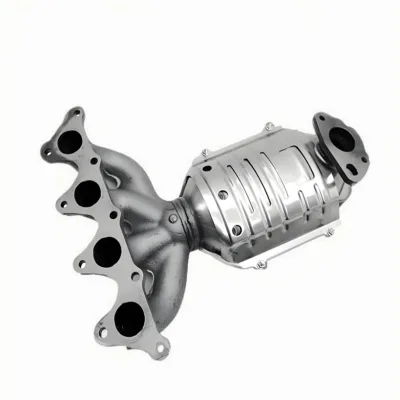
Anti-seismic Exhaust Manifold, Flexible Connection, Reduces Transmission of Engine Vibration
$52.00 - $55.00
MOQ: 1 pieces
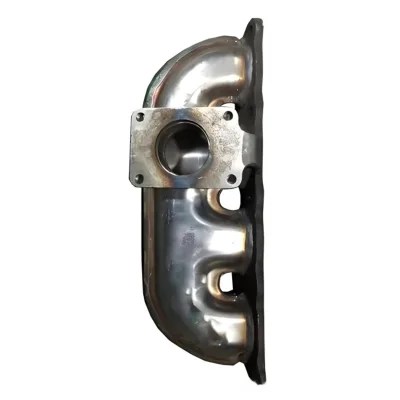
Customizable Silent Exhaust Manifold - Optimized Structure to Reduce Exhaust Noise
$52.00 - $55.00
MOQ: 1 pieces
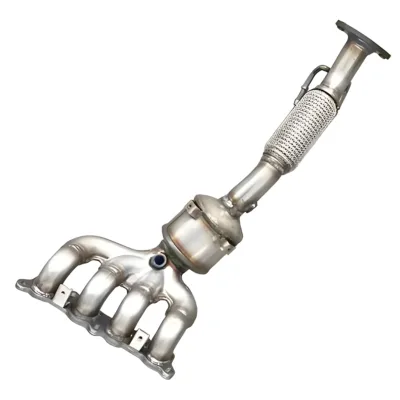
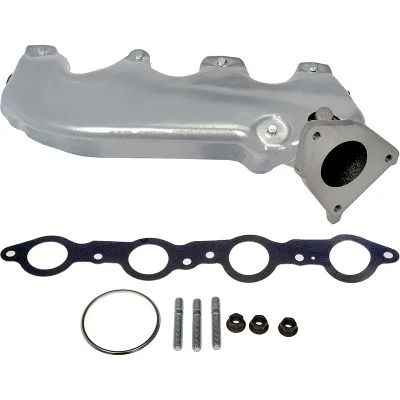
Low-noise Exhaust Manifold with Streamlined Corners to Reduce Airflow Impact Noise
$52.00 - $55.00
MOQ: 1 pieces
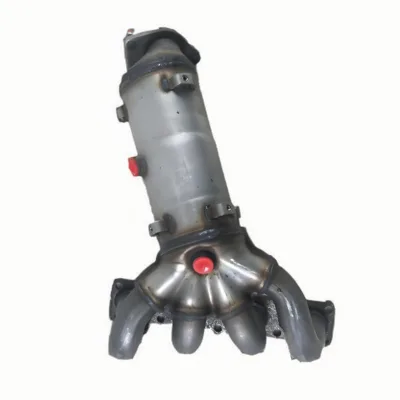
High-density Exhaust Manifold, Precisely Cast, with Smooth Exhaust and Strong Power.
$52.00 - $55.00
MOQ: 1 pieces
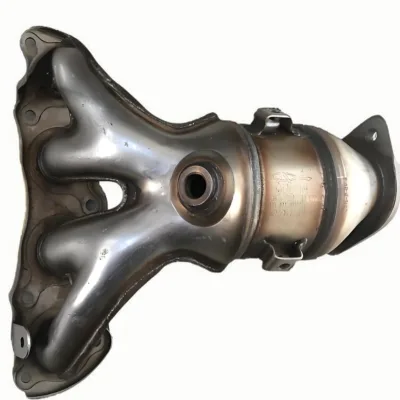

- Verified by TUVRHEINLAND
- Trading Company,Manufacturer/Factory
- China Shandong
- Lead time30 days
- Avg. response≤ 2h
Main productsCNC Machining, Machining Parts, Brass Forging Parts, Aluminum Forging Parts, Precision Parts, Forging and Machining Parts, Die Casting Parts, CNC Machining Parts, Turn Parts
Main marketsEastern Europe,Mid East,North America,Oceania,Western Europe
Tianjin Ruihe Auto Parts Co., Ltd.
- Verified by SGS
- Combined
- China Tianjin
- Lead time15 days
- Avg. response≤ 1h
Main productsCatalytic Converter/Three-Waycatalytic Converter, DPF/Cdpf/Csf/Scrf/Doc/Poc Catalytic Converter, Twc/Twf/Cu-SCR/Fe-SCR/V-SCR Catalytic Converter, Honeycomb Ceramic Catalyst/Metal Catalyst, Bare Substrate Supplier in China, Marine& Stationary Exhaust Catalytic Converter, Exhaust System Electric Accessory, Exhaust System Mechanical Accessary& Muffler, Customized Parts&Alternative Fuel Catalyst, Catalytic Exhaust System/Tail Gas Purifying
Main marketsDomestic

Exhaust Engine Systems Catalytic Converters Automotive Parts Exhaust Manifold
$30.00 - $39.00
MOQ: 10 Pieces

Exhaust Manifold Pipe Manifold for Lancer 2.4L Direct Fit Catalytic Converter
$44.00 - $57.00
MOQ: 1 Pieces

Factory Supply High Flow Exhaust Manifold for 2.4L Rear with Gasket Kit Catalytic Converter
$32.00 - $41.00
MOQ: 10 Pieces

Ruici Metal Product (Dalian) Co., Ltd
- Verified by SGS
- Combined
- China Liaoning
- Lead time60 days
- Avg. response≤ 3h
Main productsCasting Parts, CNC Maching, Forgings, Stampings Parts, Valve Parts, Pump Parts, Metal Products
Main marketsSouth America,East Asia(Japan/ South Korea),Domestic,Europe,North America

Shandong Ningjin Hongye Auto Parts Co., Ltd.
- Manufacturer/Factory
- China Shandong
- Lead time105 days
- Avg. response≤ 22h
Main productsExhaust Muffler, Catalytic Converter, Universal Catalytic Converter Box, Universal Muffler Box, Car Muffler, Flexible Pipe, Flange, Stainless Steel Pipe, Car Parts, Auto Parts
Main marketsSouth America,Eastern Europe,Mid East,North America,Southeast Asia,Eastern Asia,Oceania,Western Europe,Africa


Universal Exhaust Muffler Exhaust Manifold Exhaust Pipe Catalyst Converter Catalytic Converter
$20.40 - $168.00
MOQ: 50 Pieces


High Quality, Durable and Reliable Automotive Exhaust Purification System
$20.40 - $168.00
MOQ: 50 Pieces

Anhui Jagrow Auto Parts Co., Ltd.
- Verified by TUVRHEINLAND
- Trading Company,Manufacturer/Factory
- China Anhui
- Lead time45 days
- Avg. response≤ 4h
Main productsPerformance Parts, Exhaust System, Air Intake System, Cooling System, Carbon Fiber Parts, Exhaust Downpipe, Exhaust Manifold, Exhaust Catback, Oil Cooler, Turbo Intercooler
Main marketsSouth America,Eastern Europe,Mid East,North America,Southeast Asia,Eastern Asia,Oceania,Western Europe,Africa


Performance Racing K Series K20 K24 Exhaust Pipe Headers Exhaust 3" 4-1 Civic Manifold
$155.00 - $165.00
MOQ: 30 Pieces


Shanghai Matech Machinery Manufacture Corporation Ltd.
- Verified by TUVRHEINLAND
- Combined
- China Shanghai
- Lead time30 days
- Avg. response≤ 3h
Main productsCasting, Ball Valve, Gate Valve, Casting Parts, Iron Casting, Aluminum Casting, Steel Casting, Stainless Steel Casting, Machining, Conveyor Chains
Main marketsEast Asia(Japan/ South Korea),Europe,North America


Factory Price Customized Intake and Exhaust Manifolds of Different Materials for Cars
$8.66 - $95.00
MOQ: 1 Pieces

Chengdu Jinding Precision Casting Co., Ltd
- Verified by TUVRHEINLAND
- Combined
- China Sichuan
- Lead time45 days
- Avg. response≤ 3h
Main productsCamshaft, Balancer Shaft, Cylinder Head, Crankshaft, Exhaust Manifold, Differential Housing, Connecting Rod, Engine Parts, Diesel Engine Spare Parts, Customised Casting Parts
Main marketsEast Asia(Japan/ South Korea),Domestic

Weifang Qisong Industries Co., Ltd.
- Verified by BV
- Trading Company,Manufacturer/Factory
- China Shandong
- Lead time23 days
- Avg. response≤ 9h
Main productsValvetronic Muffler, Tornado Spiral Muffler, Hotdog Resonator Muffler, Carbon Fiber Muffler Tip, Exhaust Flexible Pipe, Metallic Substrate, Non-Intumescent Catalyst Mat, Ceramic Fiber Support Mat, Muffler Perforated Pipe, Catalytic Converter
Main marketsSouth America,Eastern Europe,Mid East,North America,Southeast Asia,Eastern Asia,Oceania,Western Europe,Africa


Universal Automotive Exhaust Catalytic Converter Housing for Enhanced Performance
$18.00 - $48.00
MOQ: 20 Pieces


Shandong Xuguang Auto Parts Co., Ltd.
- Verified by TUVRHEINLAND
- Combined
- China Shandong
- Lead time15 days
- Avg. response≤ 12h
Main productsExhaust Muffler, Catalytic Converter, Ceramic, Flexible Pipe, Diesel Particulate Filter
Main marketsSouth America,East Asia(Japan/ South Korea),Australia,North America

High Quality Ceramic Catalyst Exhaust Manifoldcatalytic Converter Fit Chrysler Sebring 2.7
$40.00 - $150.00
MOQ: 1 Pieces


Hangzhou Huajida Auto Parts Co., Ltd.
- Trading Company
- China Zhejiang
- Lead time15 days
- Avg. response≤ 20h
Main productsJAC Truck Spare Part
Main marketsSouth America,Africa,Southeast Asia/ Mideast,Europe


Comprehensive Sourcing Guide
Racing Car Exhaust Manifold Supplier Concentration and Factory Types
The current supplier landscape for racing car exhaust manifolds shows a concentration of manufacturers primarily located in China's Shandong province, with additional facilities operating in Jiangsu. These regions host a mix of combined company types that integrate manufacturing capabilities with trading functions, allowing them to offer both original design manufacturing and original equipment manufacturing services. The presence of these combined entities suggests a supply chain structure where production and sales are managed under a single operational umbrella, potentially streamlining communication for international buyers. Fact-based observations confirm that these suppliers specialize in a broad range of exhaust system components, including mufflers, catalytic converters, and flexible pipes, indicating a mature industrial cluster capable of handling complex automotive parts.
When evaluating the factory types within this sector, buyers should look for evidence of specific production capacities such as ODM, OEM, and own-brand capabilities. The available data indicates that many suppliers possess the technical infrastructure to customize exhaust manifolds for various vehicle models, including gasoline and diesel applications. This versatility is often supported by certifications like CCC, COP, ISO, and E-Mark, which signal adherence to specific quality and safety standards. However, the exact establishment years of these factories are not explicitly provided in the current results, so buyers must verify the longevity of the operation directly. Understanding the specific factory type is crucial, as it dictates the level of customization available and the flexibility of the supply chain to meet unique racing car requirements.
How to Verify Racing Car Exhaust Manifold Suppliers
Verification of suppliers in the Racing Car Exhaust Manifold sector requires a rigorous check of their business credentials and product authenticity. The current results indicate that some suppliers hold BV verification status, which serves as a third-party validation of their business existence and operational capacity. Buyers should prioritize suppliers with this verification badge to mitigate the risk of dealing with fraudulent entities. Additionally, the presence of specific certifications such as CCC, COP, ISO, and E-Mark on product listings provides a layer of assurance regarding the manufacturing standards and compliance with international regulations. These certifications are particularly important for exhaust systems, which must meet strict emission and noise standards in target markets like Europe.
Beyond certifications, buyers must scrutinize the response times and service commitments listed by potential partners. The data shows response times ranging around 12 to 13 hours, which can be a critical metric for urgent racing car projects where lead times are tight. A supplier with a faster response time may indicate a more agile operation capable of handling custom orders efficiently. Furthermore, the availability of 24-hour customer service and quality inspection protocols before shipping are vital indicators of a reliable partner. Buyers should request proof of these quality control measures, such as inspection reports or video evidence of the manufacturing process, to ensure that the claimed standards are consistently met. Without direct verification of these claims, the risk of receiving substandard components remains high.
What to Compare Across Racing Car Exhaust Manifold Suppliers
Comparing suppliers requires a detailed analysis of key operational metrics such as lead times, minimum order quantities, and pricing structures. The observed data reveals significant variation in lead times, with some suppliers listing a standard 30-day delivery window while others show zero days, likely indicating stock availability or a specific production model. Minimum order quantities also differ substantially, ranging from 50 units for certain exhaust manifolds to 500 units for flexible pipes and related accessories. Buyers must align these MOQs with their inventory needs and budget constraints, as ordering below the threshold may not be feasible. Price ranges are equally diverse, with some products listed between $1 and $5, while others span from $20 to $180, reflecting differences in material quality, complexity, and customization levels.
In addition to logistical metrics, buyers should compare the specific product attributes and material specifications offered by each supplier. The current results highlight materials such as stainless steel 409ss, steel, and honeycomb ceramic cordierite, which directly impact the durability and performance of the exhaust manifold. Some suppliers offer customized sizes and shapes, while others provide standard sizes only. The ability to accept customized services is a significant differentiator for racing applications where fitment is critical. Buyers should also evaluate the main market focus of the supplier; many listed products target the European market, suggesting compliance with Euro IV and other emission standards. Comparing these technical specifications ensures that the selected supplier can meet the precise engineering requirements of the racing vehicle.
Common Racing Car Exhaust Manifold Sourcing Risks
One of the primary risks in sourcing racing car exhaust manifolds is the potential mismatch between claimed certifications and actual product compliance. While listings may display certifications like CCC, COP, ISO, and E-Mark, buyers must verify that these apply specifically to the racing manifold model being ordered, as certifications can sometimes be generic to the factory rather than the specific product. Another significant risk involves the variability in lead times and production capacity. A supplier claiming a zero-day lead time might be referring to stock items, whereas custom-manufactured manifolds could face delays not immediately apparent in the initial listing. This discrepancy can disrupt project timelines, especially for racing teams with strict deadlines.
Material quality and consistency present another critical risk factor. The product attributes mention various materials, including stainless steel and steel, but the specific grade and treatment processes are not always detailed in the initial search results. For racing applications, the heat resistance and corrosion resistance of the manifold are paramount, and any deviation from the specified material standards can lead to premature failure. Additionally, the lack of explicit establishment years for many suppliers makes it difficult to assess their long-term stability and experience. Buyers should request detailed material test reports and production history to mitigate these risks. Without thorough due diligence, the likelihood of receiving components that do not meet performance expectations increases significantly.
Racing Car Exhaust Manifold Regional Sourcing and Logistics
The regional concentration of suppliers in China's Shandong and Jiangsu provinces offers logistical advantages but also presents specific challenges for international buyers. These regions are established manufacturing hubs with a dense network of suppliers specializing in automotive parts, which can facilitate efficient sourcing. However, the distance from these inland provinces to major ports may add transit time and costs to the overall logistics chain. Buyers should account for the time required to transport goods from the factory floor to the shipping port, as this can impact the total lead time. The location data confirms that the place of origin is consistently listed as China, which simplifies customs documentation but requires careful planning for freight forwarding.
Logistics planning must also consider the packaging standards and shipping methods recommended by the suppliers. The available data indicates that products are typically packed in carton boxes with plastic bags, which is standard for protecting metal components during transit. However, for high-value racing parts, buyers may need to request enhanced packaging to prevent damage. The main market focus on Europe suggests that many suppliers are experienced in handling international shipping requirements, including export documentation and compliance with European regulations. Buyers should verify the specific shipping terms, such as Incoterms, to understand who bears the risk and cost during transit. Proper logistics planning ensures that the racing car exhaust manifolds arrive on time and in perfect condition, ready for installation.
Racing Car Exhaust Manifold Commercial Terms and Order Planning
Commercial terms for racing car exhaust manifolds vary significantly based on the supplier's capacity and the specific product requirements. The observed data shows a wide range of prices, from as low as $1 to as high as $180, which necessitates a clear understanding of the cost drivers. Buyers should plan their orders by considering the minimum order quantities, which can range from 50 to 500 units, and how these align with their budget and storage capabilities. The lead times, ranging from zero to 30 days, also play a crucial role in order planning, as they determine the production schedule and delivery date. Understanding these commercial terms is essential for maintaining a smooth supply chain and avoiding unexpected delays or cost overruns.
Order planning should also account for the customization options and service levels offered by the suppliers. Many suppliers accept customized services, allowing buyers to specify dimensions, materials, and finishes to match their racing car specifications. However, customization often extends lead times and may increase costs, so buyers must factor these variables into their planning. The availability of 24-hour customer service and quality inspection protocols before shipping are additional commercial terms that can enhance the reliability of the order. Buyers should negotiate clear terms regarding quality assurance, payment methods, and after-sales support to ensure a successful transaction. By carefully planning the commercial aspects, buyers can secure high-quality racing car exhaust manifolds that meet their performance and budgetary needs.
FAQs
What certifications do the exhaust manifolds hold?
The exhaust manifolds carry certifications including CCC, COP, ISOCE, E-Mark, and RoHS. Some products also meet TSComponent standards for catalytic converters. Buyers should verify specific certification documents for their target market compliance before placing orders.
What is the typical lead time for these parts?
Lead times vary by supplier, with some listing 30 days for production. Other suppliers indicate zero lead time for specific flexible pipe items. Buyers must confirm the exact delivery schedule with the chosen vendor to ensure timely project completion.
What is the minimum order quantity required?
Minimum order quantities differ across listings, ranging from 50 units for some exhaust manifolds to 500 units for flexible pipes. Buyers should check the specific product page to confirm the exact MOQ before initiating a purchase request with the supplier.
Where are these exhaust systems manufactured?
Manufacturing locations include China Shandong and China Jiangsu. These regions are known for producing various auto parts like mufflers and catalytic converters. Buyers can filter results by these specific provinces to find suppliers with the desired geographic origin.
What materials are used for the exhaust manifolds?
Common materials include stainless steel 409ss, steel, and double stainless steel sheets. Some components feature honeycomb ceramic cordierite or metal carriers. The specific material depends on the product type, such as racing manifolds or flexible bellows.
What is the price range for these components?
Prices range from 1.00 to 180.00 depending on the specific product and specifications. Flexible pipes often start at 1.00, while catalytic converters and manifolds can reach up to 180.00. Buyers should compare listings to find the best value for their needs.
Do suppliers offer customization services?
Many suppliers accept customized orders for exhaust manifolds and flexible pipes. Services include custom sizes, models, and branding options like OEM or ODM. Buyers should specify their requirements clearly to ensure the manufacturer can meet their unique design specifications.