Replacement Outer CV Joint Suppliers and Manufacturers
Find 22 verified suppliers offering Replacement Outer CV Joint products with ISO certification and customizable options. Compare lead times, MOQs, and response times to select the right factory for your needs. Review product specifications and pricing details before contacting vendors.
Suppliers List

Shanghai Spb Industry Co., Ltd.
- Verified by SGS
- Trading Company
- China Shanghai
- Lead time30 days
- Avg. response≤ 5h
Main productsShock Absorber, Ball Joint, C. V Joint, Car Filters, Clutch Disc, Radiator, Brake Pad, Ignition Coil, Cylinder Head, Water Pump
Main marketsSouth America,Africa,Southeast Asia/ Mideast,Europe,North America


Auto Parts Drive Shaft Parts Front Axle Outer CV Joint 34D498099A for VW
$10.00 - $50.00
MOQ: 200 Pieces

Good Quality Auto Parts Front Axle Outer CV Joint 13296187 for Opel Vauxhall
$10.00 - $50.00
MOQ: 200 Pieces
Jiangsu Great Industrials (group) Corp. Ltd.
- Trading Company
- Jiangsu, China
- Lead time35 days
- Avg. response≤ 4h
Main productsClutch Cover,Clutch Disc,Brake Pad,Brake Shoe,Auto Belt
Main marketsSouth America(20.00%), Mid East(20.00%), North America(10.00%), Eastern Asia(10.00%), Africa(10.00%), Southeast Asia(10.00%), Eastern Europe(10.00%), Western Europe(5.00%), Oceania(5.00%)

- Verified by SGS
- Trading Company
- China Guizhou
- Lead time23 days
- Avg. response≤ 14h
Main productsMachine Tool, Auto Spare Parts, Crankshaft, Camshaft, Packing Machine, Labeling Machine, Filling Machine, Crown Wheel and Pinion, Connecting Rod, Piston Ring
Main marketsAfrica


Auto Parts Customized Car Accessories Multi-Specification Flexibility CV Joint
$25.00 - $50.00
MOQ: 1000 Pieces


OEM Truck Auto Spare Part Suspension Joint with ISO9001 Certification
$25.00 - $50.00
MOQ: 1000 Pieces

Ningbo Tower Machinery Co., Ltd
- Verified by TUVRHEINLAND
- Manufacturer/Factory
- China Zhejiang
- Lead time30 days
- Avg. response≤ 7h
Main productsSheet Metal Fabrication, CNC Machining Parts, Laser Cutting Parts, Tube Bending Parts, Welding Parts, Stamping Parts, Bus Seat, Trailer Jack, Electric Winch, Wheel Spacer
Main marketsSouth America,Eastern Europe,Mid East,North America,Southeast Asia,Eastern Asia,Oceania,Western Europe,Africa
Ningbo Hohan Auto Parts Co., Ltd.
- Verified by Intertek
- Trading Company
- Lead time20 days
- Avg. response≤ 3h
Main productsProp Shaft, Drive Shaft and Kits, CV Joint and Kits, Control Arm, Shock Absorber
Main marketsNorth America(20%), Western Europe(20%), Southern Europe(20%)

Anhui Heshun Automobile Parts Co., Ltd.
- Verified by SGS
- Combined
- China Anhui
- Lead time30 days
- Avg. response≤ 4h
Main productsBall Joint
Main marketsDomestic

Shanghai Spb Industry Co., Ltd.
- Verified by SGS
- Trading Company,Manufacturer/Factory,Group Corporation
- China Shanghai
- Lead time30 days
- Avg. response≤ 4h
Main productsCar Spare Part, Suspension Parts, Ball Joint, Shock Absorber, C. V Joint, Brake Pad, Radiator, Stabilizer Bar, Oil Filter, Steering Rack
Main marketsSouth America,Eastern Europe,Mid East,North America,Southeast Asia,Eastern Asia,Oceania,Western Europe,Africa
- Trading Company
- Shandong, China
- Lead time0 days
- Avg. response≤ 5h
Main productsauto parts,truck crane spare parts,spare parts,motorcycle spare parts,car parts
Main marketsSoutheast Asia(38.00%), Africa(12.00%), North America(11.00%), Mid East(9.00%), South America(7.00%), Oceania(6.00%), South Asia(5.00%), Eastern Europe(5.00%), Western Europe(4.00%), Southern Europe(3.00%)

Ruian Shengliang Trading Co., Ltd.
- Verified by TUVRHEINLAND
- Trading Company,Manufacturer/Factory
- China Zhejiang
- Lead time45 days
- Avg. response≤ 10h
Main productsCooling System Parts, Suspension Parts, Engine Parts, Sensor Parts, Chassis Parts
Main marketsSouth America,Eastern Europe,Mid East,Western Europe

Inner CV Joint for GM. /GM-300, CV Conjunta, Juntas Homocineticas/Junta Homocinetica
$5.00 - $10.00
MOQ: 500 Pieces


outer CV Joint for GM, Juntas Homocineticas GM-012, Repuestos De Repuesto De Alta Calidad
$5.00 - $10.00
MOQ: 500 Pieces

CV Conjunta, CV Joint, Juntas Homocineticas Op-001 with ABS (29T) /Junta Homocinetica
$5.00 - $10.00
MOQ: 500 Pieces


Inner Joint Tripod Size: (33.95, 25Teeth) , Tripodes, Juntas Homocineticas, Junta Homocineticas
$5.00 - $10.00
MOQ: 500 Pieces
Yueqing Weiao Import & Export Co., Ltd.
- Verified by TüVRheinland
- Manufacturer, Trading Company
- Lead time15 days
- Avg. response≤ 3h
Main productsAuto Parts, Precision Instrument Accessories, Industrial Pipeline Products, Hardware Tools, Electrical Products
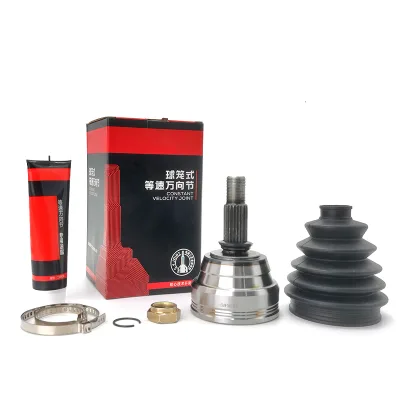
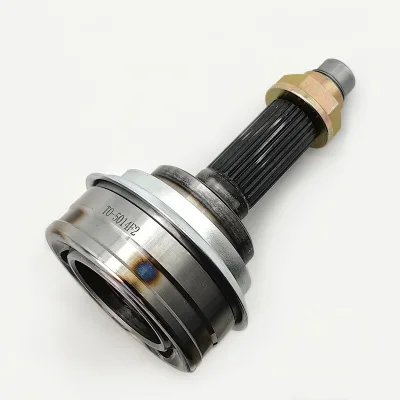
High Quality Wholesale Auto Outer CV Joint for Toyota Honda Nissan Mazda Hyundai Mitsubishi Kia
$12.84 - $15.61
MOQ: 200 pieces

Hangzhou Huayutai Auto Parts Co., Ltd.
- Verified by SGS
- Manufacturer/Factory
- China Zhejiang
- Lead time60 days
- Avg. response≤ 20h
Main productsDrive Shafts, Cardan Shaft, Universal Joints, U-Joints, Needle Roller, Pto Shafts, Driveline, Propeller Shafts
Main marketsSouth America,Eastern Europe,Mid East,North America,Southeast Asia,Eastern Asia,Oceania,Western Europe,Africa
Yuhuan Mingyan Technology Co., Ltd
- Verified by SGS Group
- Manufacturer, Trading Company
- Lead time25 days
- Avg. response≤ 5h
Main productsCV Joint Boot, Steering Boot, Drive Shaft, Control Arm, Auto Rubber Parts
Main marketsWestern Europe(50%), Mid East(30%), Southeast Asia(20%)
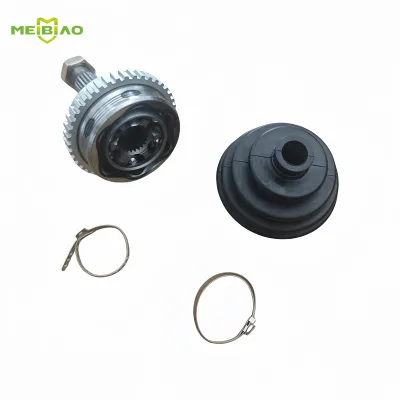
$7.93 - $8.64
MOQ: 50 pieces
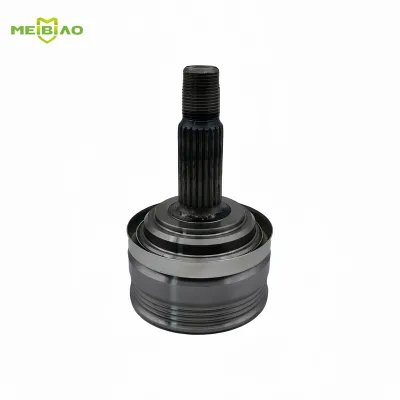
Manufacturers Wholesale High Performance Auto Parts Cv Joint for toyota and corolla
$7.03 - $7.86
MOQ: 50 pieces

Sichuan Mighty Machinery Co. Ltd.
- Verified by BV
- Manufacturer/Factory
- China Sichuan
- Lead time45 days
- Avg. response≤ 6h
Main productsV Belt Pulleys, Sheaves, Timing Pulley, Buhsed, Locking Device, Shaft Collar, Shaft Coupling, Gears, Gear Racks, Sprockets
Main marketsSouth America,Eastern Europe,Mid East,North America,Southeast Asia,Eastern Asia,Western Europe,Africa

Guangzhou PSQ Auto Parts Co.,Ltd.
- Verified by SGS
- Trading Company
- China Guangdong
- Lead time30 days
- Avg. response≤ 4h
Main productsAuto Parts, Car Shock Absorber, Exterior Parts, Car Wheel Hub Bearing, Chassis Parts, Car Spare Parts, Control Arms, Air Suspension, CV Joints, Drive Shafts
Main marketsAfrica

Mazda Axle Outer Ball Joint for 2017 Mazda CV Joints Drive Shaft Universal Axle
$5.00 - $15.00
MOQ: 5 Pieces


Ningbo Joy International Trade Co., Ltd.
- Verified by BV
- Trading Company
- China Zhejiang
- Lead time30 days
- Avg. response≤ 6h
Main marketsEurope

Hangzhou New Century Universal Joint Co., Ltd.
- Manufacturer/Factory
- China Zhejiang
- Lead time60 days
Main productsUniversal Joint, Yoke, Drive Shaft, Auto Part, Transmission Part, Uj Cross, Automobile, U-Joint, Truck Part, Chassis Part
Main marketsSouth America,Eastern Europe,Mid East,North America,Southeast Asia,Eastern Asia,Oceania,Western Europe,Africa


Contact supplier

Contact supplier

Contact supplier

Custom Extended Cv Rear Driveshaft
Contact supplier

Chongqing Faliao Import & Export Co., Ltd.
- Trading Company
- Chongqing, China
- Lead time20 days
- Avg. response≤ 9h
Main productsAutomotive Parts
Main marketsNorth America(60.00%), South America(20.00%), Mid East(5.00%), Oceania(5.00%), Africa(5.00%), Southeast Asia(5.00%)
Anqing Renyi Automotive Parts Co., Ltd.
- Manufacturer, Trading Company
- Anhui, China
- Lead time0 days
- Avg. response≤ 3h
Main productstransmission shaft,drive shaft / actuating shaft,universal joint,transmission shaft intermediate support,All kinds of repair kits
Main marketsDomestic Market(95.00%), Mid East(5.00%)
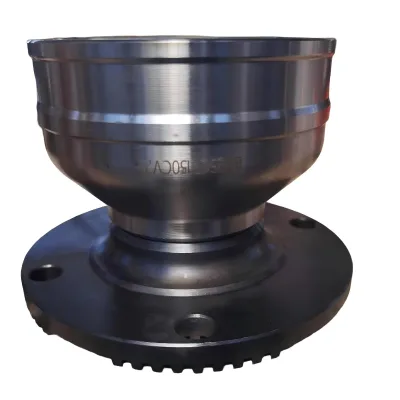
Ball Joint Replacement. Constant Velocity (CV) Joint.Wheel Hub Assembly
$97.23 - $100.30
MOQ: 10 pieces


Hangzhou Ocean Industry Co., Ltd.
- Verified by BV
- Combined
- China Zhejiang
- Lead time15 days
- Avg. response≤ 6h
Main productsGear, Gear Rack, Pulley, Chain, Sprocket, Coupling, Gearbox, Pinion, Speed Reducer, Speed Reducer Gear Box
Main marketsSouth America,Southeast Asia/ Mideast,Europe,Australia

Zhe Jiang Yue Ding Corrugated Tube Co., Ltd.
- Verified by SGS
- Combined
- China Zhejiang
- Lead time15 days
- Avg. response≤ 5h
Main productsExhaust Flexible Pipe, Exhaust Clamp, Hose Clamp, Exhaust X/Y Pipe, Truck Exhaust Pipe, Pipe & Cable Clamps, Exhaust Elbow, Exhaust Accessories, Exhaust Tip, Metal Bellow
Main marketsSoutheast Asia/ Mideast,Europe,Australia

Hangzhou Xiaoshan Jiangshan Autoparts Factory
- Trading Company,Manufacturer/Factory,Group Corporation
- China Zhejiang
- Lead time45 days
- Avg. response≤ 19h
Main productsUniversal Joint, King Ping Kits, Hanger Bearing, Bushing, Drive Shaft
Main marketsSouth America,Eastern Europe,Mid East,North America,Southeast Asia,Eastern Asia,Oceania,Western Europe,Africa

Double Universal Joint, Wing Type Universal Joint
Contact supplier

Contact supplier
Hangzhou Speedway Import & Export Co., Ltd.
- Trading Company
- Zhejiang, China
- Lead time30 days
- Avg. response≤ 5h
Main productsAutomotive drive shaft,Agriculture PTO drive shaft,Heavy duty industrial universal coupling,CV drive shaft,Universal coupling
Main marketsSouth America(15.00%), Southern Europe(14.00%), Western Europe(11.00%), North America(11.00%), Northern Europe(7.00%), Central America(7.00%), Africa(7.00%), South Asia(6.00%), Mid East(6.00%), Eastern Europe(4.00%), Domestic Market(4.00%), Southeast Asia(3.00%), Eastern Asia(3.00%), Oceania(2.00%)


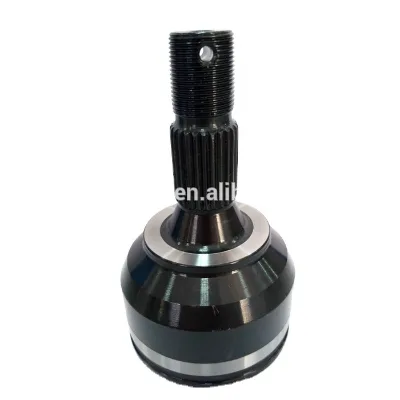






Comprehensive Sourcing Guide
Replacement Outer CV Joint Supplier Concentration and Factory Types
Current data indicates a concentration of suppliers in China, specifically within Shanghai and Jiangsu provinces, where trading companies and manufacturers operate. These regions host entities offering a broad range of automotive components, including shock absorbers, ball joints, and various CV joint variants. The presence of multiple suppliers in these specific locations suggests established industrial clusters for auto parts manufacturing. Buyers should verify if a supplier's listed location matches their actual factory address, as trading companies may list a different city than their production base. The main products listed by these entities often include clutch discs, brake pads, and water pumps alongside the core CV joint items, indicating a diversified inventory strategy rather than a specialized single-product focus.
Factory types vary significantly among the available results, with many identified as trading companies rather than direct manufacturers. This distinction is critical because trading companies may source from multiple factories, potentially affecting quality control consistency and lead time reliability. Some suppliers list specific certifications like ISO, which serves as a baseline for quality management systems, though this does not guarantee factory-level inspection protocols. Buyers must determine if the supplier is a direct factory or an intermediary by reviewing their company type and main product lines. A supplier listing diverse unrelated parts like labeling machines alongside auto parts may indicate a broader trading scope, whereas a focus on suspension systems suggests deeper technical expertise in the specific category.
How to Verify Replacement Outer CV Joint Suppliers
Verification begins with checking for third-party validation marks such as SGS, which appears in the current supplier data as a verification status. This external audit provides a layer of confidence regarding the supplier's business legitimacy and operational stability. However, buyers should not assume that a single verification badge covers all aspects of production quality or financial health. It is essential to request specific documentation for the exact product model, such as the Outer CV Joint with specific tooth counts or OE numbers, to ensure the verified entity actually produces the item in question. The presence of ISO certification on product attributes further supports the claim of standardized manufacturing processes, but this should be cross-referenced with recent audit reports.
Response time metrics offer another tangible verification point, with some suppliers showing response times under five hours while others take significantly longer. A rapid response time often correlates with active sales teams and efficient communication channels, which are vital for resolving technical queries about fitment or specifications. Buyers should test communication channels before placing orders to gauge the actual responsiveness of the sales team. Additionally, checking the establishment year and company history helps assess long-term stability, though this data is not always explicitly provided in initial search results. If a supplier claims to be a manufacturer but lacks detailed factory photos or specific production capacity data, buyers should request a video tour or a detailed facility profile to confirm their operational status.
What to Compare Across Replacement Outer CV Joint Suppliers
When comparing suppliers, lead time is a primary differentiator, with observed ranges spanning from 10 to 35 days depending on the specific product and order volume. Some listings indicate a standard lead time of 30 days, while others offer expedited windows of 10 to 30 days for specific models. Buyers must align these timelines with their inventory planning to avoid stockouts or production delays. Minimum Order Quantity (MOQ) requirements also vary widely, with some suppliers accepting orders as low as one piece, while others enforce a strict MOQ of 100 or 200 pieces. This variation significantly impacts the total cost of ownership for small to medium-sized buyers who may not have the volume to meet higher thresholds.
Price ranges provide another critical comparison point, with unit costs fluctuating between approximately $3 and $50 based on specifications like material, tooth count, and brand. Some suppliers offer competitive pricing for standard models, while specialized items with specific OE numbers or custom packaging command higher rates. Buyers should compare the price per unit against the MOQ to determine the true cost efficiency of an order. Additionally, warranty terms, such as the 12-month coverage seen in some listings, should be weighed against the price difference. A lower price point might be attractive, but if it lacks a warranty or comes from a supplier with a slower response time, the risk of defects or communication delays could outweigh the initial savings.
Common Replacement Outer CV Joint Sourcing Risks
One significant risk involves the discrepancy between product descriptions and actual specifications, particularly regarding technical details like gear teeth counts or fitting positions. Listings may specify "External Teeth 30, Internal Teeth 27" for one model, while another requires "36 and 25," and a mismatch can lead to installation failures. Buyers must meticulously verify these technical attributes against their vehicle's requirements before confirming an order. Another risk is the variability in packaging and shipping conditions, as some suppliers offer neutral packing while others provide customized boxes. Inadequate packaging can result in damage during transit, especially for precision components like CV joints that are sensitive to impact and corrosion.
Reliability of the supply chain is another major concern, particularly when dealing with trading companies that may not have direct control over production schedules. If a supplier lists a lead time of 30 days but fails to meet it due to raw material shortages or factory downtime, the buyer faces potential production stoppages. The lack of a unified standard across different suppliers means that quality consistency can vary even within the same region. Buyers should request sample units to test durability and fitment before committing to large orders. Furthermore, the absence of detailed test results or specific quality assurance protocols in the initial listing data necessitates a proactive approach to quality verification, rather than relying solely on the supplier's claims.
Replacement Outer CV Joint Regional Sourcing and Logistics
Sourcing from China, specifically Shanghai and Jiangsu, offers access to a dense network of automotive parts manufacturers and trading hubs. These regions benefit from established logistics infrastructure, facilitating efficient export processes for heavy items like drive shafts and CV joints. However, buyers must account for the specific shipping requirements of these components, which often require robust packaging to prevent damage during long-haul transport. The location of the supplier directly impacts shipping costs and transit times, with inland locations potentially adding days to the delivery schedule compared to coastal ports. Understanding the specific origin, such as Jiangsu versus Shanghai, helps in estimating the final landed cost more accurately.
Logistics planning should also consider the impact of regional trade policies and customs regulations on the import of auto parts. Different regions may have varying export procedures that affect the speed of documentation processing. Buyers should verify if the supplier handles export documentation or if they require the buyer to manage customs clearance. The use of specific packing standards, such as "Package of Box" or "Neutro-Packing," influences how the goods are loaded and secured for shipment. For buyers sourcing from multiple regions, consolidating orders can reduce shipping costs, but it requires careful coordination to ensure all items arrive simultaneously. Understanding these logistical nuances is essential for maintaining a smooth supply chain and avoiding unexpected delays or additional fees.
Replacement Outer CV Joint Commercial Terms and Order Planning
Commercial terms regarding payment and escrow are critical for securing transactions, especially when dealing with international suppliers. While specific escrow details are not always visible in initial listings, buyers should prioritize platforms or methods that offer buyer protection to mitigate financial risk. The availability of customization options, such as branded packaging or specific model numbers, often comes with additional costs or longer lead times that must be factored into the budget. Buyers need to clarify these terms early in the negotiation process to avoid misunderstandings that could delay the order or inflate the final price. Understanding the full scope of customization is vital for ensuring the product meets specific brand or vehicle requirements.
Order planning must account for the variability in lead times and MOQs to ensure a steady supply of replacement parts. With lead times ranging from 10 to 35 days, buyers should maintain a buffer stock to handle unexpected demand spikes or supply chain disruptions. The ability to customize orders, such as selecting specific gear ratios or packaging types, allows for better alignment with market needs but requires precise planning. Buyers should also consider the warranty terms, such as the 12-month coverage offered by some suppliers, as part of their risk management strategy. By carefully analyzing these commercial terms and planning orders around the specific constraints of each supplier, buyers can optimize their procurement process and ensure a reliable supply of high-quality replacement outer CV joints.
FAQs
What is the typical lead time for outer CV joints?
Lead times vary by supplier, ranging from 10 to 35 days. Some manufacturers offer a standard 30-day window, while others provide faster 10-day options for specific models. Buyers should confirm exact delivery schedules before placing orders to ensure timely project completion.
What is the minimum order quantity for these parts?
Minimum order quantities typically start at 100 pieces for standard models. Some suppliers require 200 pieces for specific drive shaft components, while others may accept single items for testing. Always verify the specific MOQ with the vendor to avoid unexpected purchasing requirements.
Are these outer CV joints ISO certified?
Yes, many listed products carry ISO certification for quality assurance. This certification ensures the parts meet international manufacturing standards. Buyers should request proof of certification during negotiations to confirm the supplier adheres to the required quality protocols for automotive components.
What is the price range for replacement outer CV joints?
Prices generally range from 3 to 50 dollars per unit depending on specifications. Basic models may cost around 3 dollars, while specialized units for specific car brands can reach 50 dollars. The final price depends on the quantity ordered and the specific vehicle fitment required.
Where are these suppliers located?
Suppliers are primarily located in China, specifically in Shanghai, Jiangsu, and Guizhou regions. These locations offer established manufacturing hubs for automotive parts. Buyers should consider shipping costs and logistics when selecting a supplier from these specific Chinese provinces.
Do suppliers offer customization for these joints?
Customization is available for many outer CV joint models listed. Suppliers can adjust specifications to meet unique vehicle requirements or branding needs. Buyers should discuss their specific customization needs early in the process to ensure the manufacturer can accommodate the requested changes.
What warranty is provided for these auto parts?
Most suppliers offer a warranty period of 12 months for their outer CV joints. This coverage protects against manufacturing defects and ensures product reliability. Buyers should review the specific warranty terms provided by each vendor to understand the scope of coverage and claim procedures.