Solar LED House Number Lamp Suppliers and Manufacturers
Source a Solar LED House Number Lamp from 30 verified suppliers. Compare key dimensions including location, lead time, MOQ, and response time. Review product specifications such as IP rating and material. Contact suppliers directly to request quotes and verify certifications.
Suppliers List
Henan Xingfuhui Electronic Commerce Co., Ltd.
- Trading Company
- Henan, China
- Lead time20 days
- Avg. response≤ 3h
Main productssolar lighting,outdoor lighting,holiday lighting,indoor lighting,pet supplies
Main marketsSouth Asia(20.00%), North America(20.00%), Southeast Asia(15.00%), Eastern Europe(15.00%), Southern Europe(8.00%), Western Europe(8.00%), South America(5.00%), Africa(2.00%)
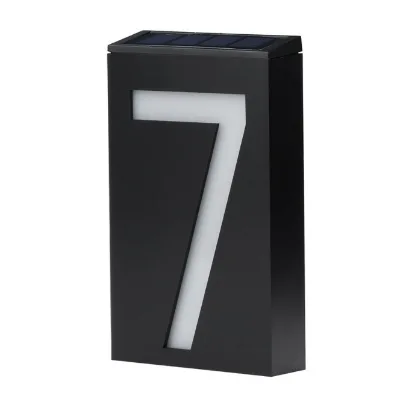
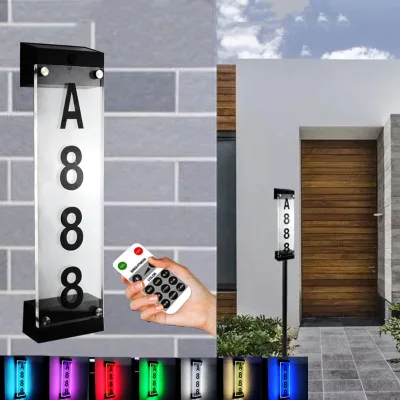
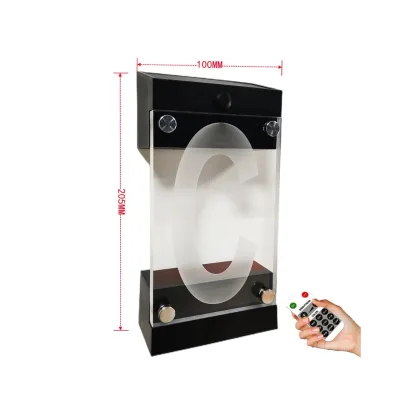
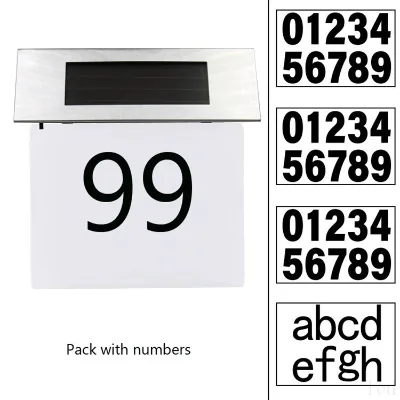
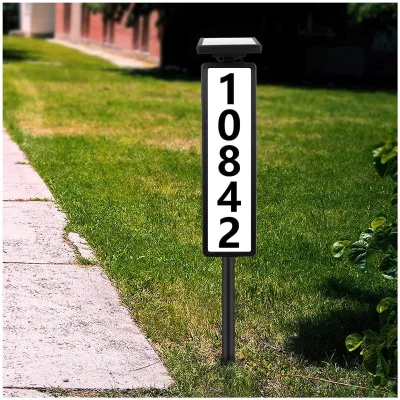
LED Solar House Number Light Waterproof Door Digital Lamp Villa Wall Lamp Night Lights
$4.50 - $5.50
MOQ: 2 pieces

Ningbo Weixin Houseware Co., Ltd.
- Trading Company
- China Zhejiang
- Lead time30 days
- Avg. response≤ 10h
Main productsLED Garlands, LED Flood Lights, LED Decoration Lights, LED Night Lights
Main marketsSouth America,Africa,Southeast Asia/ Mideast,Europe,North America


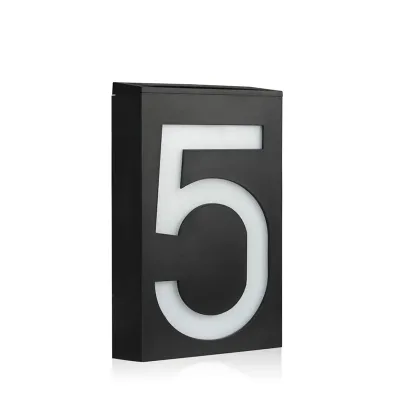
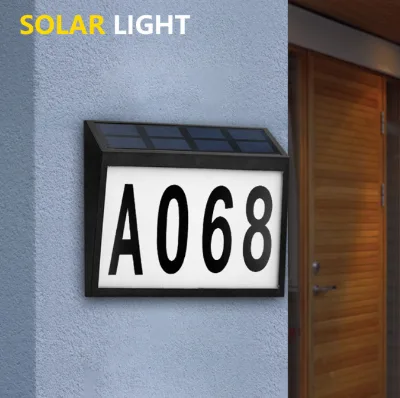
Outdoor Waterproof Solar LED House Number Light for Garden Pathway IP65 Rating Door Address Sign
$6.00 - $9.00
MOQ: 3000 Pieces

$3.00 - $8.00
MOQ: 3000 Pieces
Zhongjing Rongguang New Energy Jiangsu Co., Ltd.
- Verified by TUVRHEINLAND
- Combined
- China Jiangsu
- Lead time15 days
- Avg. response≤ 4h
Main productsstreet light pole
Main marketsSoutheast Asia/ Mideast


Best Solar House Number Light Street Light Solar LED Commercial Solar Street Lights
$25.00 - $79.00
MOQ: 10 Pieces

Ningbo Yinzhou Wonderful Lighting Co., Ltd.
- Verified by SGS
- Trading Company
- China Zhejiang
- Lead time45 days
- Avg. response≤ 3h
Main marketsEurope


New Solar Illuminated House Numbers Light LED Garden Decorative Pathway Light
$3.10 - $3.56
MOQ: 500 Pieces


Outdoor Solar LED Door Plate Plaque House Numbers Address Sign Wall Light
$1.75 - $2.02
MOQ: 1000 Pieces
Hangzhou Jacony Technology Co., Ltd.
- Verified by Intertek
- Trading Company
- Lead time20 days
- Avg. response≤ 2h
Main productsSolar Lighting, Solar System, Outdoor Lighting, LED Lights, Exhaust Fan
Main marketsNorth America(25%), South America(25%), Western Europe(15%)

- Manufacturer/Factory
- China Zhejiang
- Lead time23 days
- Avg. response≤ 4h
Main productsSolar Garden Lights, Solar Security Lights, Solar Mosquito Lamp, Solar Grave Lights, Solar Fairy Lights, Mosquito Zapper, Solar Decorative Lanterns, Cemetery Lanterns, Solar Holiday Lights, Solar Street Lights
Main marketsSouth America,Eastern Europe,Mid East,North America,Southeast Asia,Eastern Asia,Oceania,Western Europe,Africa


LED Solar House Number Light Garden Number 3 LED Color Solar Address Sign LED Light Outdoor Plaque
$4.20 - $6.80
MOQ: 10 Pieces


Telesol Energy Company Limited
- Trading Company
- China Guangdong
- Lead time30 days
- Avg. response≤ 5h
Main productsEnergy Storage System, Solar Home System, Hybrid Solar Inverter, Solar Reading Lamp, Solar Radio, Solar Lantern, Solar Torch, LED Lamp
Main marketsAfrica,Southeast Asia/ Mideast,Europe
Zhuhai Haixin Decoration Engineering Co., Ltd.
- Manufacturer, Distributor/Wholesaler
- Guangdong, China
- Lead time5 days
- Avg. response≤ 3h
Main productsOutdoor Light,Wall LIght,Garden Lights,Waterproof Light,Landscape Lights
Main marketsWestern Europe(30.00%), Eastern Europe(20.00%), Southern Europe(20.00%), Domestic Market(10.00%), South America(10.00%), North America(10.00%)
$11.92 - $13.63
MOQ: 2 pieces
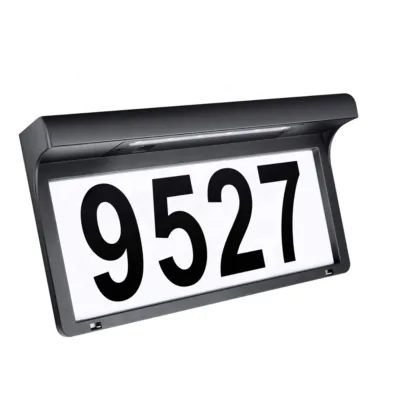
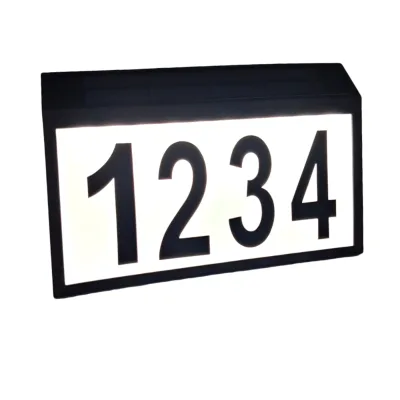
Solar Powered LED Lighted Lamp Address Sign House Door Number with Factory Price
$11.69 - $13.36
MOQ: 2 pieces
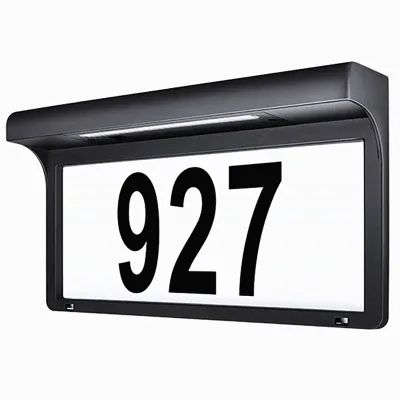
$11.69 - $13.36
MOQ: 2 pieces
- Verified by TUVRHEINLAND
- Trading Company
- China Zhejiang
- Lead time15 days
- Avg. response≤ 13h
Main productsLED Solar Light, Festival Lights, Table Lamp, LED Grow Lights, LED Light Strip, Smart Lights, LED Light String, Decorative Light, LED Head Light, LED Professional Lights
Main marketsSouth America,Europe,North America

LED Illuminated Outdoor Address Plaque Solar Address Sign Solar House Number Light
$6.50 - $7.50
MOQ: 500 Pieces


Guangdong Guangyun Lighting Co., Ltd.
- Combined
- China Guangdong
- Lead time30 days
- Avg. response≤ 9h
Main productsSolar Street Light, Solar Flood Light, Rechargeable Flood Light
Main marketsSouth America,Africa,Southeast Asia/ Mideast,Domestic,Europe

Yangzhou Dingxin Photoelectric Technology Co., Ltd.
- Trading Company,Manufacturer/Factory
- China Jiangsu
- Lead time15 days
- Avg. response≤ 3h
Main productsSolar Lamp, Solar Street Light, LED and Sodium Street Lights, Lighting Pole/Tower, High Mast Lighting, Lamp Post, LED Lights, LED Lighting Fixture, Traffic Light Signal Pole, Solar Home System/Solar Kit
Main marketsSouth America,Eastern Europe,Mid East,North America,Southeast Asia,Eastern Asia,Oceania,Western Europe,Africa
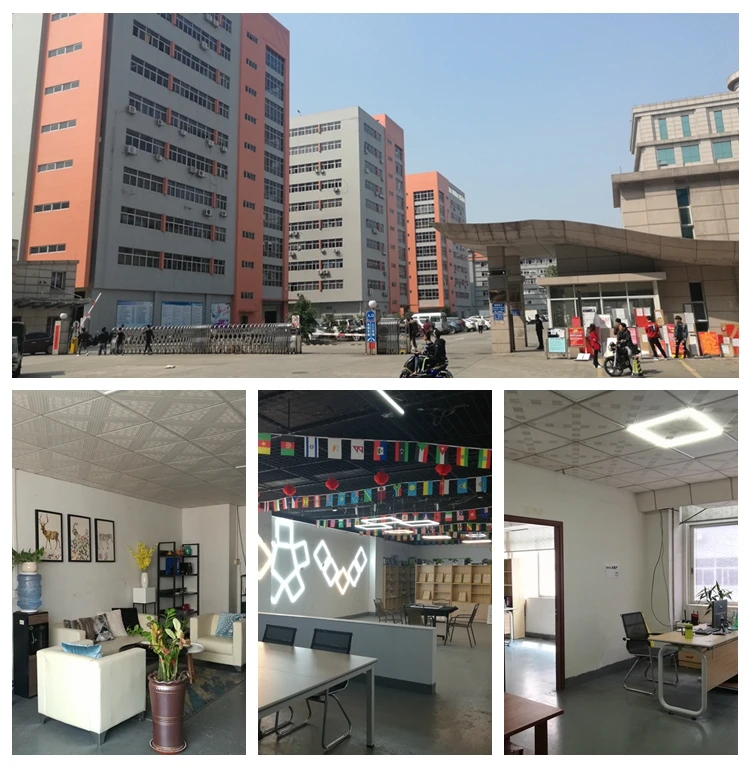
Meizhou Juncheng Technology Co., Ltd.
- Trading Company
- Guangdong, China
- Lead time7 days
- Avg. response≤ 5h
Main productsled strip light,led flex neon light,led solar light,led street light,led wall light
Main marketsEastern Europe(20.00%), South America(20.00%), North America(20.00%), Eastern Asia(5.00%), Mid East(5.00%), Central America(5.00%), Africa(5.00%), Southeast Asia(5.00%), Northern Europe(3.00%), Oceania(3.00%), Domestic Market(3.00%), Western Europe(2.00%), South Asia(2.00%), Southern Europe(2.00%)

NINGBO XUSHENG LEISURE PRODUCTS CO., LTD.
- Trading Company
- China Zhejiang
- Lead time30 days
- Avg. response≤ 13h
Main productsBeach Chair, Patio Swing Chair, Garden Tools, Outdoor Furniture, Patio Umbrella, BBQ, Sun Lounger, Tent & Awning, Cast Aluminium Garden Furniture, Rattan Furniture
Main marketsSouth America,Africa,Southeast Asia/ Mideast,East Asia(Japan/ South Korea),Domestic,Europe,Australia,North America

Fuzhou Liandesheng Trading Co., Ltd
- Verified by TUVRHEINLAND
- Manufacturer/Factory
- China Fujian
- Lead time23 days
- Avg. response≤ 8h
Main productsHome Decor, Garden Decor, Metal Truck Decor, Metal Planter, Wall Drcoration, Artificial Flowers, Metal Bookends, Metal Candlestick Holder, Garden Ornament, Art Sculpture
Main marketsSouth America,Eastern Europe,Mid East,North America,Western Europe

Outdoor Doorplate Address Number Rechargeable Plaque Eco Friendly House Solar LED Light
$7.99 - $12.55
MOQ: 100 Pieces


Shenzhen You&My Electronic Technology Co., Ltd
- Manufacturer, Trading Company
- Guangdong, China
- Lead time5 days
- Avg. response≤ 4h
Main productsLed solar light,Led Strip Light,Led Module,Led Flood Light,Led street lightt
Main marketsNorth America(25.00%), Eastern Europe(10.00%), Central America(10.00%), South America(10.00%), Southeast Asia(5.00%), South Asia(5.00%), Southern Europe(5.00%), Northern Europe(5.00%), Western Europe(5.00%), Eastern Asia(5.00%), Mid East(5.00%), Oceania(5.00%), Africa(5.00%)

Wenzhou Jssan Electric Co., Ltd.
- Verified by CTI
- Combined
- China Zhejiang
- Lead time30 days
- Avg. response≤ 8h
Main productsIndustry Socket, Industry Plug, Solar String Light, Christmas Decoration, Solar Light, Christmas Lights, Solar LED Light, LED Strip Light, Industry Switch, Tools Switch
Main marketsSouth America,Southeast Asia/ Mideast,East Asia(Japan/ South Korea),Domestic,Europe,Australia,North America

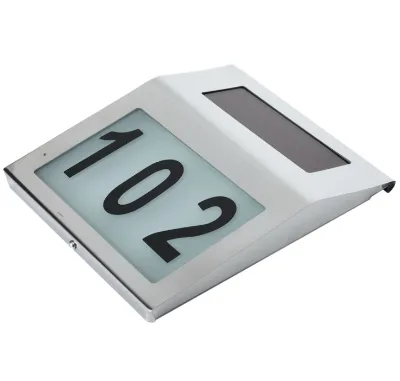
LED Solar Outdoor Stainless Steel Door Number Light Digital Letter Courtyard House Wall Lamp
$2.56 - $2.67
MOQ: 500 Pieces

Ningbo Ever Shine Electronic Technology Co., Ltd.
- Trading Company
- Zhejiang, China
- Lead time10 days
- Avg. response≤ 4h
Main productssolar panel,solar system,solar light,led emergency lights,solar fans
Main marketsMid East(12.00%), Africa(10.00%), Southern Europe(10.00%), Western Europe(10.00%), South America(10.00%), Southeast Asia(5.00%), Northern Europe(5.00%), South Asia(5.00%), Eastern Europe(5.00%), Eastern Asia(5.00%), North America(5.00%), Oceania(5.00%), Domestic Market(2.00%), Central America(2.00%)

Shenzhen Romanso Electronic Co., Ltd.
- Verified by BV
- Combined
- China Guangdong
- Lead time23 days
- Avg. response≤ 3h
Main productsLED High Bay Light, LED Work Light, LED Street Light, LED Flood Light, LED Stadium Light, Solar Street Light, LED Corn Light, LED Grow Light, LED Dock Light, LED Post Top Light
Main marketsSouth America,Africa,Southeast Asia/ Mideast,East Asia(Japan/ South Korea),Europe,Australia,North America
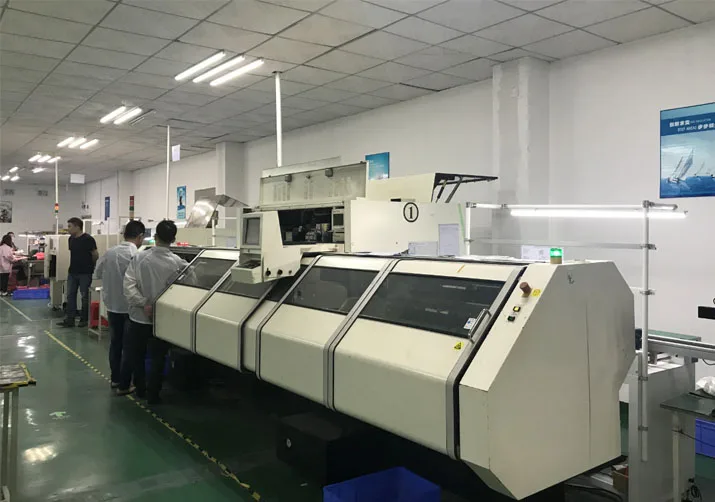
Shenzhen Hangrong Technology Co., Ltd.
- Manufacturer
- Guangdong, China
- Lead time0 days
- Avg. response≤ 5h
Main productsFlashlights & Torches,Headlamps,Wall&Table Lights,Book Lights,Solar Lights
Main marketsNorth America(36.00%), Southeast Asia(18.00%), Western Europe(16.00%), Northern Europe(16.00%), Mid East(14.00%)
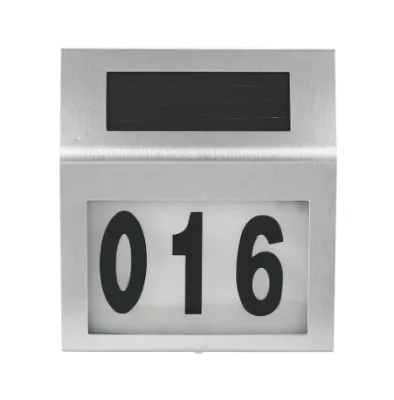
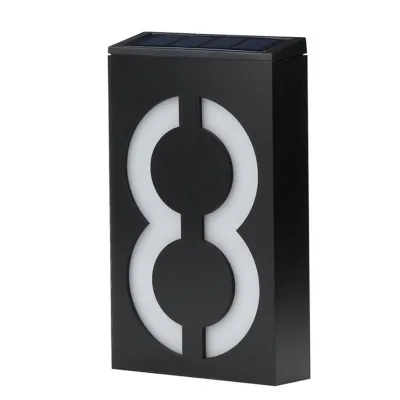
Hot Sale Modern Style LED Lighted up Outdoor Plaque Solar Powered Address Number Lights
$4.60 - $5.25
MOQ: 10 pieces
Wuxi Opulent Led Lighting Technology Co., Ltd
- Verified by CTI
- Trading Company
- China Jiangsu
- Lead time23 days
- Avg. response≤ 2h
Main productsLED Outdoor Light, LED Glass Lens, Solar Light, LED Light
Main marketsSouth America,Southeast Asia/ Mideast,Domestic,Europe,North America


Solar Light Lamp Energy Solar Light IP65 Solar Light Outdoor LED Street Lighting
$52.26 - $78.66
MOQ: 10 Pieces
Nantong Honorland Imp. & Exp. Co., Ltd.
- Trading Company
- Jiangsu, China
- Lead time35 days
- Avg. response≤ 6h
Main productssolar light,solar power system,umbrella,festival light
Main marketsWestern Europe(24.00%), Northern Europe(18.00%), Mid East(12.00%), Oceania(9.50%), North America(9.30%), Eastern Europe(8.00%), Africa(6.00%), Central America(5.00%), Eastern Asia(2.00%), Southeast Asia(2.00%), South America(1.30%)
Foshan Kaicheng Lighting Co., Ltd.
- Verified by SGS
- Combined
- China Guangdong
- Lead time30 days
- Avg. response≤ 7h
Main productsSolar Light, LED Light, Solar Flood Light, Solar LED Street Light, LED Flood Light, LED High Bay Light, LED Work Light, LED Street Light, Solar Garden Light, LED Solar Street Light
Main marketsSoutheast Asia/ Mideast,Europe
Dongguan Chaofan Lamp Manufacturing Co., Ltd.
- Verified by SGS
- Combined
- China Guangdong
- Lead time15 days
- Avg. response≤ 6h
Main productsNeon Sign, Neon Light, Felxible Light Strip, Custom Neon Lamp, Customized Arrylic Panel Neon Sign
Main marketsDomestic

$5.21 - $6.10
MOQ: 1000 Feet


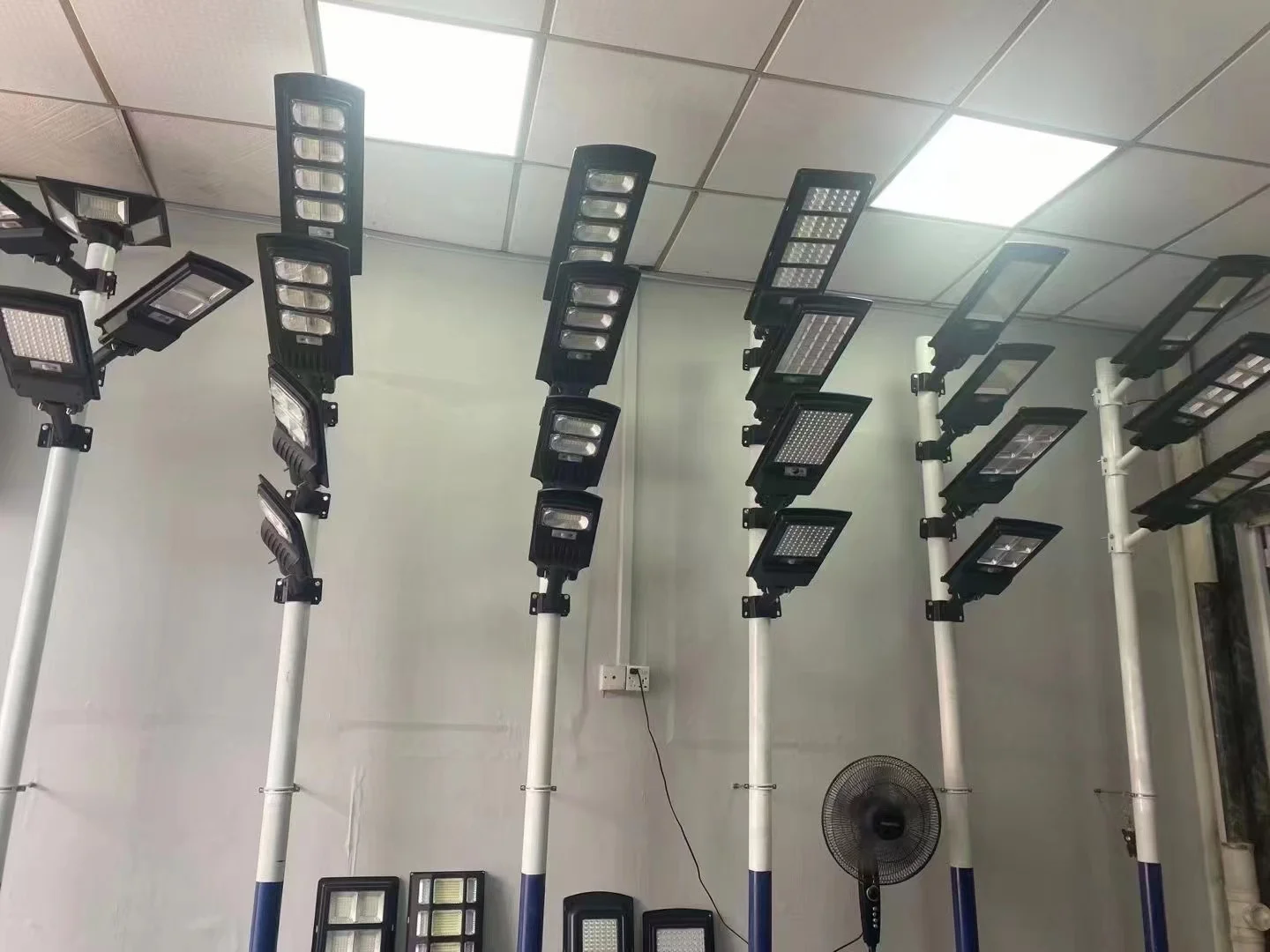
Shenzhen Dearzone Technology Co., Ltd.
- Manufacturer, Trading Company
- Guangdong, China
- Lead time7 days
- Avg. response≤ 5h
Main productssolar street light,solar flood light,solar garden light,solar lawn light,LED Wall light
Main marketsSoutheast Asia(30.00%), Africa(20.00%), North America(20.00%), Northern Europe(5.00%), Central America(5.00%), Western Europe(5.00%), Mid East(5.00%), Eastern Europe(5.00%), South America(5.00%)
Ningbo Bone International Trading Co., Ltd.
- Trading Company,Manufacturer/Factory
- China Zhejiang
- Lead time30 days
- Avg. response≤ 4h
Main productsOutdoor Camping Light, Outdoor Flashlight, Outdoor Headlamp, Solar Garden Light Lamp, Solar Festival Christmas Light Lamp, Decoration Light Lamp String, Outdoor Trekking Pole, Warning Light Lamp, Outdoor Running Pole, Outdoor Walking Pole
Main marketsSouth America,Eastern Europe,Mid East,North America,Southeast Asia,Eastern Asia,Oceania

Solar House Numbers Light Lighted House Plaque Number Address Sign Waterproof LED Doorplate Light
$3.67 - $4.27
MOQ: 10 Pieces

Wholesale Customized Good Quality Solar House Number Light Solar Door Plate Number Light
$3.67 - $4.27
MOQ: 10 Pieces
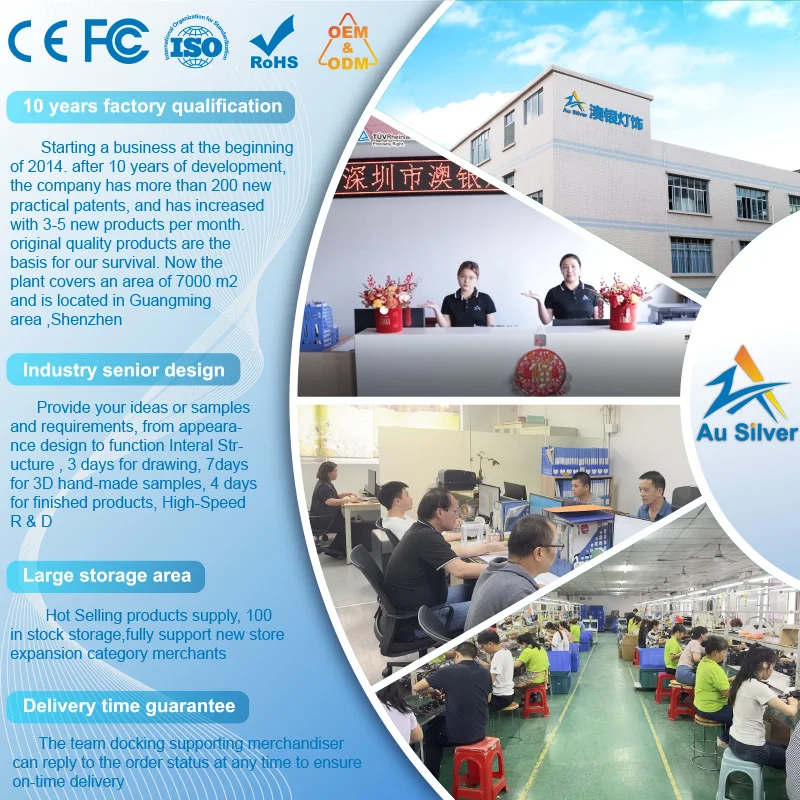
Shenzhen Au Silver Lighting Ornaments Co., Ltd.
- Manufacturer, Trading Company
- Guangdong, China
- Lead time0 days
- Avg. response≤ 1h
Main productsOutdoor Indoor Solar LED Lights,Solar LED Emergency Lights,Small Household Appliances
Main marketsCentral America(20.00%), South America(20.00%), North America(20.00%), Mid East(8.00%), Eastern Asia(6.00%), Western Europe(5.00%), Eastern Europe(5.00%), Northern Europe(5.00%), Southeast Asia(5.00%), Africa(2.00%), Domestic Market(2.00%), South Asia(1.00%), Southern Europe(1.00%)

Huizhou More Green Light Co., Ltd.
- Verified by BV
- Trading Company,Manufacturer/Factory
- China Guangdong
- Lead time15 days
- Avg. response≤ 2h
Main productsSolar Garden Light, LED Poultry Light, LED Tri-Proof Tube Light, LED Plug Light, LED Tri-Prof Light, LED Camping Light, LED Flashlight, LED Track Light, LED Down Light, LED Testing Equipment
Main marketsSouth America,Eastern Europe,Mid East,North America,Southeast Asia,Eastern Asia,Oceania,Western Europe,Africa

$7.59 - $7.89
MOQ: 100 Pieces

Shenzhen CXWON Technology Co., Ltd.
- Verified by Intertek
- Trading Company
- Lead time7 days
- Avg. response≤ 3h
Main productsSolar Garden Light, Solar Flood Light, Smart Lighting, LED Strip, Solar Street Light
Main marketsSouth America(30%), North America(20%), Western Europe(12%)
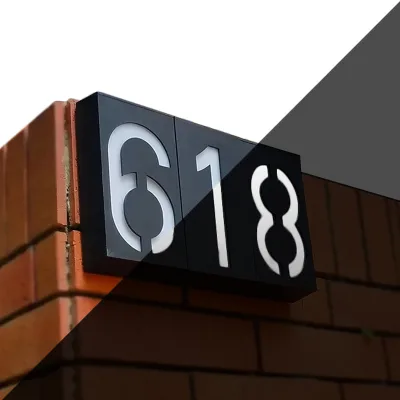
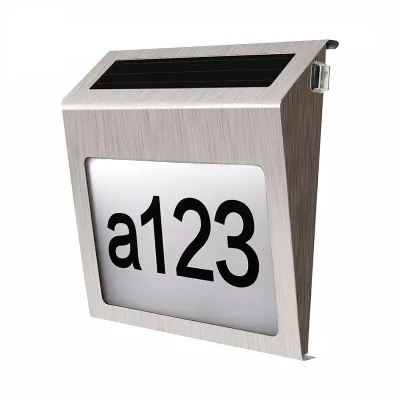
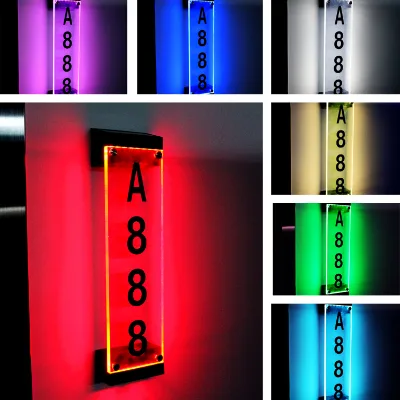
Solar Powered House Number Light, 6 LEDs Illuminated Door Plaque for Hotel Villa Residence
$4.69 - $5.28
MOQ: 10 pieces
Zhangzhou Gengdi Trading Co., Ltd.
- Trading Company
- China Fujian
- Lead time0 days
- Avg. response≤ 3h
Main productsSolar Light, Solar Fan, Solar Camera, Solar Panel, Solar Power Bank, Solar-Powered Air Conditioner, Earphone, Light, Fan, Camera

Street Lamps with Outdoor LED Garden Lights and High-Power Lamps Solar Light
$9.00 - $9.90
MOQ: 10 Pieces

Solar Outdoor Courtyard Lamps and Street Lamps. IP65 Rated for Outdoor Light
$9.00 - $9.90
MOQ: 10 Pieces
Hefei Bahe Import Export Co., Ltd.
- Manufacturer
- Anhui, China
- Lead time7 days
- Avg. response≤ 2h
Main productsChandeliers & Pendant Lights,Floor Lamps,Wall Lamps,Table Lamps,LED Ceiling Fans
Main marketsNorth America(60.00%), Western Europe(15.00%), Mid East(5.00%), Oceania(5.00%), Eastern Europe(5.00%), Southern Europe(3.00%), Northern Europe(3.00%), South America(3.00%), Domestic Market(1.00%)








Comprehensive Sourcing Guide
Solar LED House Number Lamp Supplier Concentration and Factory Types
Suppliers offering solar LED house number lamps on B2B platforms come from a mix of company types, and the current search results already illustrate that split: at least one listed supplier identifies itself as a trading company rather than a manufacturer, with its registered location in Henan, China, while the products it lists show a place of origin in Guangdong, China. That gap between registration location and production origin is common in this category and matters to buyers. A trading company may consolidate goods from multiple lighting factories, which can simplify communication and ordering but adds a layer between you and the actual production floor. Manufacturer-direct suppliers, when they exist on a results page, tend to offer more control over tooling, customization of number plates and housing colors, and engineering changes to the solar charging circuit.
Because search results change, do not assume any fixed supplier count or a single dominant cluster for this product. Instead, identify concentration yourself: scan the listed locations of returned suppliers, note which provinces or cities appear repeatedly, and cross-check the "Place of Origin" field on individual product records against the supplier's registered address. In the current results, suppliers register in places like Henan and Zhejiang while product origins point to Guangdong, which suggests a distribution network spread across coastal manufacturing regions and interior trading hubs. Record both addresses for each shortlisted supplier, because customs declarations, factory audits and shipping pickup points will all depend on where production actually happens, not where the company account was registered.
How to Verify Solar LED House Number Lamp Suppliers
Verification starts with what the platform actually displays, and the current results show what a buyer can legitimately expect to see. One listed supplier shows a system certification field marked NIL, which means no system-level certification is displayed on the platform record — not that the supplier holds none, and not that it holds any. Treat that field as a flag for follow-up: request copies of any quality management certificates directly, and confirm validity through the issuing body where possible. Check whether escrow or trade assurance style protections are offered on the supplier's listings; the results allow comparison of such labels, but do not assume every supplier supports them. Established years, business licenses and export history should also be confirmed with documentation rather than accepted from a profile badge.
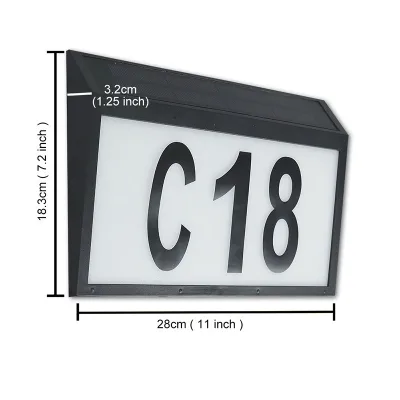
Product-level evidence is equally important for a solar house number lamp. Review the full attribute set on listings: current products show IP ratings of IP55 and IP65, NiMH batteries rated 1.2V/600mAh, polycrystalline silicon solar panels, ABS+PC housings, LED light sources and specific color temperatures such as 2700K and 4100K. Verify these against physical samples, because attribute tables are self-reported. A supplier whose listings contain consistent, detailed specifications — model numbers, package dimensions, gross weights, warranty statements of one year on some models and no warranty on others — is generally easier to audit than one with sparse records. Ask the supplier to reconcile any mismatch between the platform record and the factory's own datasheets before you commit to a sample order, and keep written confirmation of agreed specifications for your purchase contract.
What to Compare Across Solar LED House Number Lamp Suppliers
Build a comparison sheet from the dimensions platforms expose. In the current results you can compare: response time (one supplier shows a three-hour response figure), lead time (one shows twenty days), MOQ (listings here show a MOQ as low as 2 units), price ranges (one product spans 4.50–5.50 per unit, another 3.80, another 7.00–8.00), location, company type, and main product lines such as solar lighting, outdoor lighting, holiday lighting, indoor lighting, pet supplies, or LED garlands, flood lights, decoration lights and night lights. A supplier whose main products center on solar and outdoor lighting is more likely to have stable supply of panels, batteries and IP-rated housings than a diversified trader for whom this lamp is a sideline.
Beyond the headline numbers, compare the depth of product evidence. Some listings specify luminous flux (5 lm on one model, 15 lm on another), color rendering index (Ra 50 on one, Ra 80 on another), working hours of 50000, dimming support (one explicitly NO), assembly requirements, warranty of one year versus no warranty, and packaging options such as color box or neutral packing. These differences reveal how transparently each supplier documents its products, which correlates with how smoothly customization and quality disputes will go. Also compare whether the supplier lists lighting solutions services, such as lighting and circuitry design, which one current record shows. Do not assume every supplier displays every attribute; where a field is blank, contact the supplier and ask, then score each supplier consistently on responsiveness, documentation completeness and commercial terms so your shortlist ranking is defensible.
Common Solar LED House Number Lamp Sourcing Risks
The most common risk in this category is specification drift between listing and delivered goods. Attribute tables in the current results show wide variance even within one product family: one model runs at 2700K with Ra 50, another at 4100K with Ra 80; one claims IP55, another IP65; battery capacity is listed at 1.2V/600mAh NiMH; power figures range from 0.3W to 5W; and luminous flux ranges from 5 to 15 lm. Buyers who accept listing data without sample verification frequently receive lamps with dimmer output, shorter night runtime or weaker water sealing than expected. Require a pre-production sample tested outdoors through at least one full charge-discharge cycle in your own climate conditions before approving mass production.
Second, note the warranty and certification gaps visible in the data: some listed models carry a one-year warranty while others explicitly state no warranty, and certification fields show "Other" or a NIL system certification on the supplier record. These gaps shift risk onto the buyer, so contract terms must state warranty coverage, spare-part policy and remedy for water ingress or battery failure explicitly. Third, low MOQs — as low as 2 units here — invite buyers to skip diligence; a cheap trial order does not remove the need for documentation checks. Finally, watch the trading company layer: when the registered location (Henan) differs from the product origin (Guangdong), miscommunication about production status and shipping pickup is more likely, so insist on a named production contact and a confirmed factory address before deposit payment.
Solar LED House Number Lamp Regional Sourcing and Logistics
Regional planning should be grounded in the addresses actually displayed. The current results show suppliers registered in Henan and Zhejiang, China, while the product records themselves declare origins in Guangdong, China. This means your logistics planning must use the product origin, not the supplier registration city, when calculating inland haulage to port, consolidation point and export documentation. If you order through a supplier registered inland but the goods ship from a coastal province, ask who arranges the inland transfer, what the transit time adds to the twenty-day lead time shown on one supplier record, and where inspection should occur — at the factory before shipment or at a forwarder's warehouse near the port.
Packaging and weight data in the listings help you plan freight precisely: single package sizes around 19×11×6 cm and 11×4.8×20 cm, single gross weights of 0.300 kg and 0.718 kg, and packaging choices of color box or neutral packing. Small, light cartons mean air freight is viable for samples and small replenishment orders, while sea freight suits volume orders; confirm carton counts per master carton and stackability because solar lamps with acrylic or ABS+PC panels can deform under heavy stacking. Because the category is seasonal — demand peaks before holidays and spring — confirm with each supplier how their quoted lead time holds during peak months, whether stock of fast-moving models exists, and how battery shipping regulations are handled for your destination market before booking cargo.
Solar LED House Number Lamp Commercial Terms and Order Planning
Commercial terms should be negotiated against the visible baselines rather than the supplier's opening offer. Current listings show unit price ranges of roughly 3.80 to 8.00 depending on model, a MOQ as low as 2 units, a twenty-day lead time, and a three-hour average response time from at least one supplier. Use these as reference points: ask each shortlisted supplier for its own MOQ per model, price breaks at incremental volumes, what the quoted lead time excludes (sample time, customization of the number digits, packaging printing), and whether response times hold during Chinese holiday periods. Because warranty coverage differs — one year on some models, none stated on others — price comparisons are only fair when warranty, spare parts and after-sales support are normalized into your sheet.
Order planning for this category differs from generic procurement in a few ways that deserve emphasis. Solar house number lamps are typically low-value, high-unit-count goods, so your cost model should weight packaging, carton volume and battery compliance more heavily than unit price alone. Plan a first order at or near the displayed MOQ to validate the sample against production, then scale with agreed price-break thresholds in a framework agreement. Specify number-plate artwork, color temperature (2700K versus 4100K in current listings), IP rating target, and whether dimming support is required before finalizing the proforma invoice. Finally, align payment milestones to inspection points — deposit after sample approval, balance after passed inspection — and record all agreed attributes in the contract so the twenty-day lead time starts from a confirmed specification, not an open one.
FAQs
What is the price range for solar LED house number lamps?
Prices typically range from $3.80 to $8.00 per unit depending on specifications. Basic models start around $3.80, while larger or more feature-rich options cost up to $8.00. Buyers should verify exact pricing based on quantity and customization needs.
What is the minimum order quantity for these solar lights?
The minimum order quantity is generally two units. This low MOQ allows buyers to test product quality before committing to larger orders. It is ideal for small businesses or individual buyers looking for sample orders or small-scale installations.
How long does it take to produce an order?
The standard lead time is 20 days. This duration covers production and preparation for shipment. Buyers should confirm specific timelines with suppliers, as rush orders or custom designs may require additional time beyond the standard production window.
What certifications do these solar house number lamps have?
Certification details are often listed as Other or not explicitly specified in basic listings. Buyers should request specific certification documents such as CE or RoHS directly from the supplier. Verifying compliance with local safety standards is essential before placing large orders.
Where are these solar lighting products manufactured?
Products are manufactured in regions including Henan and Guangdong in China. Some suppliers are located in Zhejiang. Buyers can filter results by specific province to align with logistics preferences or regional sourcing strategies for better shipping efficiency.
What is the response time for supplier inquiries?
Supplier response times are typically around 3 hours. This indicates a relatively quick turnaround for initial communications. Buyers can expect timely replies regarding quotes, samples, and order status, facilitating smoother negotiation and faster decision-making during the sourcing process.