Solar Powered LED Advertising Screen Suppliers and Manufacturers
Discover 13 verified suppliers offering Solar Powered LED Advertising Screen solutions with ODM and OEM capabilities. Compare response times, lead times, certifications, and pricing to find the right partner. Contact suppliers directly to request quotes; review the available evidence before requesting comparable quotations from suitable candidates.
Suppliers List

Shenzhen Ledful Electronics Co., Ltd.
- Verified by BV
- Combined
- China Guangdong
- Lead time23 days
- Avg. response≤ 3h
Main productsLED Screen, LED Display, LED Billboard, LED Sign, LED Panel, LED Cabinet, LED Video Wall, LED Event Rental Display
Main marketsSouth America,Africa,Southeast Asia/ Mideast,East Asia(Japan/ South Korea),Europe,Australia,North America


Versatile Solar Powered Outdoor LED Screen for Sustainable Advertising
$433.00 - $494.00
MOQ: 1 Pieces


Innovative Solar Powered Outdoor LED Screen for Eco-Friendly Advertising
$433.00 - $494.00
MOQ: 1 Pieces

Versatile Solar Powered Outdoor LED Screen for Eco-Friendly Advertising
$433.00 - $494.00
MOQ: 1 Pieces

Innovative Solar Powered LED Screen for Outdoor Advertising with CE Certification
$433.00 - $494.00
MOQ: 1 Pieces

sz hongking stage equipment co., ltd.
- Verified by TUVRHEINLAND
- Combined
- China Guangdong
- Lead time15 days
- Avg. response≤ 3h
Main productsFull Color LED Display, Indoor LED Display, Outdoor LED Display, Rental LED Display, Outdoor SMD LED Display, Outdoor DIP LED Display, Full Color LED Display Module, Single Color LED Display Module, Transparent LED Display, Advertising LED Screen
Main marketsSouth America,Africa,Others(foreignTradeCapacity.exportBusinessCapacityMarketOther),Southeast Asia/ Mideast,East Asia(Japan/ South Korea),Europe,Australia,North America


High Brightness Outdoor Supermarket Advertising Digital Billboard LED Display Screen
$1200.00
MOQ: 1 Square Meters

Outdoor P6.67 Energy Saving LED Display Power Efficient Advertising Screen
$699.00
MOQ: 1 Square Meters

Shenzhen ENM Electronic Technology Co., Ltd
- Manufacturer/Factory
- China Guangdong
- Lead time15 days
- Avg. response≤ 2h
Main productsSolar Mobile Light Tower, Wind Turbine, Solar Street Light, Solar Garden Light, LED Stadium Flood Light, LED Street Light, LED Garden Light, Industrial LED Light, LED Wall Light, Office Commercial LED Light
Main marketsSouth America,Eastern Europe,Mid East,North America,Southeast Asia,Eastern Asia,Oceania,Western Europe,Africa

- Manufacturer/Factory
- China Guangdong
- Lead time23 days
- Avg. response≤ 7h
Main productsOutdoor LED Display, Indoor LED Display, Outdoor Rental LED Display, Indoor Rental LED Screen, Window LED Display, Store LED Screen, Perimeter LED Screen, Traffic LED Sign, Creative LED Display
Main marketsSouth America,Eastern Europe,Mid East,North America,Southeast Asia,Eastern Asia,Oceania,Western Europe,Africa


High Brightness P3.91 Outdoor Commercial Advertising LED Display Screen
$410.00 - $589.00
MOQ: 1 Square Meters

P5 High Quality Outdoor Programmable LED Screen for Advertising
$250.00 - $1300.00
MOQ: 1 Square Meters


Shenzhen D-King Photoelectric Technology Co., Ltd.
- Verified by BV
- Combined
- China Guangdong
- Lead time15 days
- Avg. response≤ 4h
Main productsLED Display, LED Screen, LED Video Wall, Rental LED Display, Fixed Installation LED Display, Interactive Floor LED Display, Poster LED Display, Transparent LED Display, Light Pole LED Display, Stadium LED Display
Main marketsSouth America,East Asia(Japan/ South Korea),Europe,North America

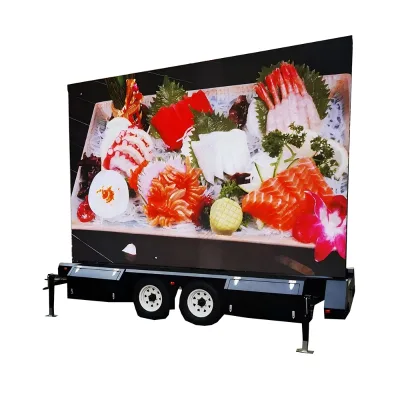
Custom P4 Outdoor Mobile Solar-Powered LED Billboard Trailer Screen (2560mm X 1600mm)
$18000.00 - $18300.00
MOQ: 1 Pieces

P4 Custom Outdoor Mobile LED Trailer Display Screen with Solar Power
$12800.00 - $13000.00
MOQ: 1 Pieces

P4 Customized Outdoor Mobile Solar-Powered LED Billboard Trailer Screen Display
$12800.00 - $13000.00
MOQ: 1 Pieces


Bright Outdoor LED Screen for Captivating Advertising Campaigns
$335.00 - $349.00
MOQ: 1 Square Meters

High Quality Outdoor P4LED Screen Trailer with Solar Panel Suitable for Advertising
$11600.00 - $11800.00
MOQ: 1 Pieces
Jining Enwei Intelligent Technology Co., Ltd.
- Trading Company
- Shandong, China
- Lead time20 days
- Avg. response≤ 2h
Main productsSolar surveillance trailer,Solar light tower,Mobile surveillance tower,Cube CCTV Tower,Telescopic mast
Main marketsNorth America(30.00%), Eastern Europe(10.00%), Mid East(10.00%), Domestic Market(5.00%), South Asia(5.00%), Southern Europe(5.00%), Northern Europe(5.00%), Central America(5.00%), Western Europe(5.00%), Eastern Asia(5.00%), South America(5.00%), Africa(5.00%), Southeast Asia(5.00%)
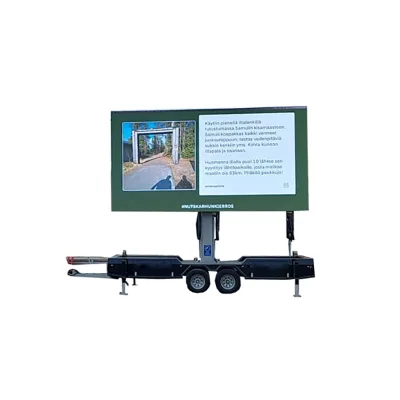
$24800.00 - $25000.00
MOQ: 1 units
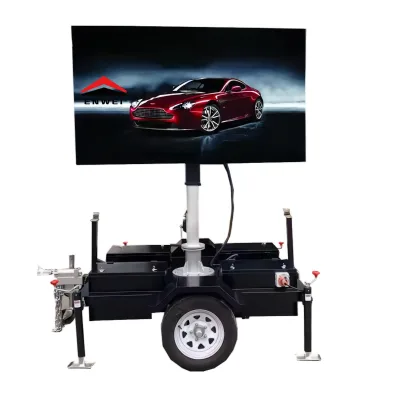
Multi-purpose Solar Panels Advertising Led Screen Display Trailer for Open-air Concert
$9295.00 - $9495.00
MOQ: 1 units
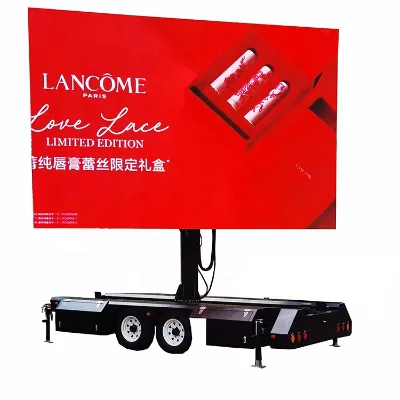

- Verified by TUVRHEINLAND
- Combined
- China Guangdong
- Lead time30 days
- Avg. response≤ 6h
Main productsOutdoor LED Display, Indoor LED Display, Outdoor Rental LED Display, Indoor Rental LED Display, Perimeter LED Display, Super HD LED Display, LED Modules, Curtain LED Display, Outdoor Front Access LED Display, Creative LED Display
Main marketsEurope

High Brightness Retail Store Window LED Advertising Display Screen
$1000.00 - $3500.00
MOQ: 1 Square Meters


High Brightness Windows Indoor LED Display Screen for Advertising
$1000.00 - $3500.00
MOQ: 1 Square Meters


Outdoor Advertising Wholesale LED Giant Screen for Shopping Mall
$2000.00 - $3000.00
MOQ: 1 Square Meters

P5 Outdoor Advertising Sign Solar Full Color Wall Mount Mesh Video LED Display Screen
$400.00 - $600.00
MOQ: 1 Square Meters

Guangzhou Bems Electronics Co., Ltd.
- Verified by SGS
- Combined
- China Guangdong
- Lead time15 days
- Avg. response≤ 4h
Main productsDigital Signage and Displays, Interactive Whiteboard, All in One Touch Screen, Outdoor Totem Kiosk, LCD Menu Board Screen
Main marketsSoutheast Asia/ Mideast,Europe

Shenzhen Hopestar Sci-Tech Co., Ltd.
- Verified by SGS
- Manufacturer
- China Guangdong
- Lead time15 days
- Avg. response≤ 4h
Main productsLED Screen Factory, LED Display Factory, LED Display Screen Factory, LED Video Wall Factory, LED Screen Manufacturer, LED Display Manufacturer, Outdoor LED Screen, Indoor LED Display, Transparent LED Screen, Flexible LED Display
Main marketsEast Asia(Japan/ South Korea),Europe,North America

HD Outdoor Advertising Multiple Sizes LED Billboard Display LED Screen
$198.00 - $295.00
MOQ: 1 Square Meters

High Transparency and High Brightness LED Video Wall Advertising Screen for Effective Display
$485.00
MOQ: 1 Square Meters

Full Color Outdoor Waterproof IP 65 Advertising LED Display Screen
$200.00 - $291.00
MOQ: 1 Square Meters

High Brightness Quality Warranty Outdoor Fixed Installation LED Display Outdoor LED Screen
$430.00 - $620.00
MOQ: 1 Square Meters

$430.00 - $620.00
MOQ: 1 Square Meters

High Refresh Rate Outdoor Fixed Installation Waterproof LED Display Screen for Advertising
$430.00 - $620.00
MOQ: 1 Square Meters

Shanghai ZEMSO Urban Furniture Technology Co., Ltd.
- Verified by BV
- Combined
- China Shanghai
- Lead time60 days
- Avg. response≤ 2h
Main productsBus Shelter, Bus Stop Digital Signage, Outdoor LCD&LED Digital Signage, Container House, Smart Bench
Main marketsDomestic


Advanced Solar-Powered Outdoor Digital Signage for Effective Advertising
$2600.00 - $3000.00
MOQ: 1 Sets


Innovative Solar-Powered Outdoor Digital Signage Solutions for Advertising
$1800.00 - $2100.00
MOQ: 1 Sets


Shenzhen Eaglash Tech Co., Ltd.
- Verified by BV
- Combined
- China Guangdong
- Lead time23 days
- Avg. response≤ 1h
Main productsSelf Service Kiosk
Main marketsDomestic

Shenzhen Micsolar Technology Co., Ltd
- Verified by SGS
- Trading Company
- China Guangdong
- Lead time15 days
- Avg. response≤ 5h
Main productsLED Screen, LED Display, Rental LED Display, Fine Pitch LED Display, Creative LED Screen, LED Ball, Transparent LED Display, Stadium LED Perimeter
Main marketsEast Asia(Japan/ South Korea)

Nanjing Chechi Technology Co., Ltd.
- Verified by BV
- Trading Company,Manufacturer/Factory
- China Jiangsu
- Lead time38 days
- Avg. response≤ 3h
Main productsLED Display, Outdoor LED Display, Indoor LED Display, Rental LED Display, Flexble LED Display, Transparent LED Display, LCD Display
Main marketsSouth America,Eastern Europe,Mid East,North America,Southeast Asia,Eastern Asia,Oceania,Western Europe,Africa


High Definition 162 Inch LED Wall-Mounted Advertising All in One LED Screen
$6429.00 - $27977.00
MOQ: 1 Pieces

Waterproof & Durability & Long Service Life Outdoor Transparent LED Screen for Outdoor Advertising
$697.00 - $822.00
MOQ: 1 Square Meters


Comprehensive Sourcing Guide
Solar Powered LED Advertising Screen Supplier Concentration and Factory Types
The current supplier landscape for solar powered led advertising screens shows a concentration of manufacturing capabilities within China Guangdong, a region known for its robust electronics supply chain. This location hosts a mix of combined supplier types that offer both original design manufacturing and original equipment manufacturing services, alongside their own branded product lines. Buyers observing these results should note that the primary product focus includes a wide array of LED displays, ranging from outdoor billboards and video walls to specialized solar-powered units designed for sustainable advertising. The presence of these combined entities suggests a market where factories often handle the entire production lifecycle, from component sourcing to final assembly, which can streamline the procurement process for complex solar-integrated systems.
When evaluating the factory types available, it is crucial to distinguish between pure manufacturers and trading companies that may offer similar product catalogs. The observed data indicates that many suppliers in this sector possess significant research and development capacity, allowing them to customize solar solutions for specific environmental conditions. These facilities typically produce high-volume items like LED cabinets and video walls, but the integration of solar power adds a layer of technical complexity that requires verified engineering expertise. Buyers should look for evidence of in-house R&D capabilities, such as the ability to adapt pixel pitch, brightness, and power consumption to match local solar irradiance levels, rather than relying on generic off-the-shelf units that may underperform in variable weather conditions.
How to Verify Solar Powered LED Advertising Screen Suppliers
Verification of suppliers in the Solar Powered LED Advertising Screen sector requires a multi-layered approach to ensure that the claimed capabilities match the actual product quality and business stability. The current results highlight specific verification badges such as BV and TÜV Rheinland, which serve as third-party validations of a supplier's business legitimacy and operational standards. Buyers must treat these badges as starting points for due diligence rather than absolute guarantees, as they confirm the existence of the entity but do not necessarily validate the specific performance of every solar-powered unit listed. It is essential to cross-reference these verification statuses with the supplier's response times, which in the observed data range from approximately 2.7 to 2.8 hours, indicating a level of operational readiness that can be critical for resolving technical queries regarding solar integration.
Beyond verification badges, buyers should scrutinize the specific certifications attached to the products themselves, such as CCC, CE, ETL, and RoHS, which are frequently listed in the product attributes. These certifications are particularly important for solar powered screens because they address electrical safety, environmental compliance, and electromagnetic compatibility, all of which are critical for outdoor installations exposed to the elements. The presence of these marks suggests that the supplier adheres to international standards, but buyers must verify that the specific model they intend to purchase carries the same certification level, as product lines can vary significantly in compliance. Additionally, checking the warranty terms, which often span three years in the observed data, provides insight into the manufacturer's confidence in their product's durability and their commitment to after-sales support for long-term solar operations.
What to Compare Across Solar Powered LED Advertising Screen Suppliers
Comparing suppliers requires a systematic evaluation of key operational metrics such as lead time, minimum order quantity, and response speed to determine which partner aligns best with project timelines and budget constraints. The observed data reveals a lead time variance, with some suppliers offering a 15-day turnaround while others require up to 23 days, a difference that can significantly impact project scheduling for time-sensitive advertising campaigns. Buyers should also note the minimum order quantity, which in some cases is as low as one unit, allowing for smaller pilot projects or custom prototypes, while other suppliers may have higher thresholds that necessitate larger initial investments. These operational differences must be weighed against the supplier's response time, as faster communication can be vital for troubleshooting technical issues related to solar power management and LED display synchronization.
In addition to logistical metrics, buyers must compare the technical specifications and customization options available across different supplier catalogs. The product evidence shows a range of pixel pitches, brightness levels, and IP ratings, with some units offering 10mm pitch and 6500 nits of brightness, while others feature different configurations tailored for specific applications like stage performance or general advertising. The availability of customization is a critical differentiator, as solar powered screens often require unique mounting solutions, battery capacities, and control systems to function effectively in diverse environments. Buyers should prioritize suppliers that explicitly state customization availability and offer flexible module sizes, ensuring that the final product can be tailored to the specific architectural and environmental requirements of the installation site without compromising the solar efficiency or display quality.
Common Solar Powered LED Advertising Screen Sourcing Risks
One of the primary risks in sourcing solar powered led advertising screens involves the potential mismatch between the advertised solar capacity and the actual power requirements of the LED display under varying weather conditions. While suppliers may list average power consumption figures, the intermittent nature of solar energy means that battery storage and power management systems must be robust enough to handle extended periods of low sunlight. Buyers must verify that the supplier has conducted rigorous testing on the complete system, including the battery bank and charge controller, to ensure that the screen remains operational during cloudy days or at night. Relying solely on the LED display specifications without a comprehensive understanding of the solar power subsystem can lead to system failures, rendering the advertising screen ineffective during critical promotional periods.
Another significant risk is the discrepancy between the claimed certifications and the actual compliance of the shipped goods, particularly regarding electrical safety and environmental standards. Although many suppliers list certifications like CCC, CE, and RoHS, there is a risk that these apply only to the LED panel and not the integrated solar components or the entire assembled unit. Buyers should demand specific test reports that cover the complete solar-powered system to ensure that all electrical connections, battery safety, and waterproofing meet the required standards for outdoor use. Furthermore, the long-term reliability of the solar components, such as the lifespan of the batteries and the degradation rate of the solar panels, must be clearly defined in the warranty terms to protect the buyer from premature replacement costs and operational downtime.
Solar Powered LED Advertising Screen Regional Sourcing and Logistics
Sourcing from the identified manufacturing cluster in China Guangdong offers logistical advantages due to the region's established infrastructure for exporting heavy electronic equipment and specialized display modules. The proximity of suppliers to major ports facilitates efficient shipping of large LED cabinets and solar power units, which are often bulky and require careful handling to prevent damage during transit. Buyers should consider the packaging standards provided by suppliers, which often include plywood boxes or flight cases designed to protect the sensitive electronic components and solar arrays during long-distance shipping. The origin location being mainland China also implies that buyers should be prepared for potential customs duties and import regulations specific to electronic goods and renewable energy equipment in their destination country.
Logistics planning must also account for the specific dimensions and weight of the solar powered screens, which can vary significantly based on the pixel pitch and cabinet material. The observed data indicates that some units are packed in wooden cases or flight cases, suggesting that freight forwarders need to be engaged early to arrange appropriate transport solutions. Buyers should verify the shipping terms and ensure that the supplier provides detailed packing lists and dimensions to avoid unexpected freight costs or delays at the destination port. Additionally, the working temperature range of the products, which can extend from -20 to +60 degrees Celsius, must be considered when planning the storage and installation timeline to ensure that the equipment is not exposed to extreme conditions during the transit phase that could compromise the solar panels or LED modules.
Solar Powered LED Advertising Screen Commercial Terms and Order Planning
Commercial terms for solar powered led advertising screens often involve a range of pricing structures that reflect the complexity of integrating solar technology with high-brightness LED displays. The observed price data shows a variance, with some units listed in the range of 433 to 494 units of currency, while others are priced significantly higher, indicating that factors such as pixel pitch, brightness, and solar capacity heavily influence the final cost. Buyers should carefully analyze the price-to-specification ratio to ensure they are not overpaying for features that are not essential for their specific application, while also avoiding the pitfalls of selecting overly cheap options that may compromise on the quality of the solar components or the durability of the LED panels.
Order planning must also incorporate the warranty and service access terms, which are critical for the long-term success of solar powered installations. The data indicates that many suppliers offer a three-year warranty, which covers the LED display and potentially the solar components, but buyers must clarify the exact scope of this coverage to avoid disputes over battery replacements or solar panel degradation. Service access options, such as front or rear maintenance capabilities, should be evaluated to ensure that the installation site allows for easy access for repairs and maintenance without requiring specialized equipment or extensive downtime. By aligning the commercial terms with the operational requirements of the project, buyers can secure a reliable supply chain that supports the continuous operation of their solar powered advertising screens.
FAQs
What is the typical price range for a Solar Powered LED Advertising Screen?
Listed solar powered outdoor LED advertising screens commonly show prices from about 433 to 494 dollars per unit, while larger street pole solar display configurations can be quoted around 1400 dollars. Exact pricing depends on pixel pitch, screen dimensions, brightness, and customization options. Buyers should request itemized quotes that separate screen panels, solar power components, and shipping.
What is the minimum order quantity for solar powered LED screens?
Many suppliers on the page list a minimum order quantity of just one unit for their solar powered outdoor LED advertising screens, so single-screen pilots are generally possible. Larger orders may unlock better unit pricing and consolidated freight. Confirm the MOQ in writing before ordering, since it can vary by model, customization level, and current production schedules.
How long does production and delivery usually take?
Lead times observed among these suppliers range from roughly 15 to 23 days after order confirmation. Customized screen dimensions, solar configurations, or peak-season demand can extend that window. Ask the supplier to confirm the current lead time for your specification, and factor in additional transit time to your destination port or installation site before planning the campaign launch.
Which certifications should a Solar Powered LED Advertising Screen have?
Screens listed on this page carry certifications such as CCC, CE, ETL, RoHS, and ISO, which cover safety, electromagnetic, and environmental compliance for key markets. Verification marks from third-party inspection bodies also appear among these suppliers. Check which certifications apply to the exact model you order, and request certificate copies that match the product name and specification sheet.
What technical specifications matter most for outdoor solar LED screens?
Key specifications on listed models include a 10mm pixel pitch, brightness around 5500 to 6500 nits, refresh rates above 1920Hz, and an operating temperature range of roughly -20 to +60 degrees. Solar models should also state panel capacity and battery autonomy. Compare these figures against your site conditions, viewing distance, and daily operating hours before committing.
Where are these solar LED advertising screen suppliers based?
The suppliers featured here are based in Guangdong, China, a major manufacturing hub for LED displays, with several products listing Shenzhen as the production origin. Sourcing from this region gives access to a dense component supply chain. Confirm the exact factory address, arrange an inspection if needed, and clarify shipping terms from the nearest port.
Can I get customization and warranty on solar powered LED screens?
Yes, listed products state customization is available, covering screen dimensions and configurations, with warranties of three years and rated lifespans around 100,000 hours. ODM and OEM capabilities are also noted among these suppliers. Before ordering, confirm exactly what the warranty covers, whether parts or on-site service is included, and how customization affects the quoted lead time.