Sublimation Stainless Steel Can Cooler Suppliers and Manufacturers
Source 18 verified suppliers for Sublimation Stainless Steel Can Cooler products. Compare dimensions including location, lead time, MOQ, response time, and certifications to find the right partner. Review product details and request quotes directly; review the available evidence before requesting comparable quotations from suitable candidates.
Suppliers List

Anhui Dream-China Technology Co., Ltd.
- Verified by SGS
- Combined
- China Anhui
- Lead time23 days
- Avg. response≤ 5h
Main productsUHF/VHF/Yagi/TV Antenna, LNB, MMDS Downconverter, Power Supply/Adapter, Cables, Diseqc Swithes/Spliter/Sat-Finder, Travel Mug, Fishing Net, Security Seal, SPD/Thermostat
Main marketsDomestic,Europe

Jinjiang Jiaxing Import and Export Co., Ltd.
- Verified by CTI
- Manufacturer/Factory
- China Fujian
- Lead time120 days
- Avg. response≤ 1h
Main productsShoes, Slipper, Clothes, Promotion Gifts, Silicone Products, Outdoor Sports Products, Bags, Fashion Accessories, Consumer Electronics
Main marketsSouth America,Eastern Europe,Mid East,North America,Southeast Asia,Eastern Asia,Oceania,Western Europe,Africa
Zhejiang Daian Commodity Co., Ltd.
- Verified by TUVRHEINLAND
- Combined
- China Shanghai
- Lead time45 days
- Avg. response≤ 6h
Main productsTumbler, Water Bottle, Stainless Steel Water Bottle, Travel Mug, Coffee Mug, Stainless Steel Tumbler, Mug, Plastic Cup, Barware, Pet Bowl
Main marketsSouth America,East Asia(Japan/ South Korea),Australia,North America


Durable Stainless Steel 12oz Beer Can Cooler with Thermal Insulation and BPA-Free Design
$1.20 - $2.50
MOQ: 500 pieces


Anhui YOTO Import & Export Co., Ltd.
- Verified by SGS
- Manufacturer/Factory
- China Anhui
- Lead time23 days
- Avg. response≤ 4h
Main productsWater Bottle, Vacuum Flask, Cup & Mugs, Thermos, Plastic Water Bottles, Kid's Bottles, Tumblers, Sports Bottles
Main marketsSouth America,Eastern Europe,Mid East,North America,Southeast Asia,Eastern Asia,Western Europe,Africa


$1.98 - $2.98
MOQ: 100 Pieces

$1.52 - $2.49
MOQ: 100 Pieces

12oz Double Walled Insulation Slim Coolers Travel Portable Stainless Steel Can Cooler Custom Logo
$1.98 - $2.98
MOQ: 100 Pieces

- Verified by TUVRHEINLAND
- Trading Company
- China Beijing
- Lead time30 days
- Avg. response≤ 8h
Main productsWater Bottle, Tumbler, Vacuum Flask, Lunch Box/Food Jar, Travel Mug, Water Jug/Pot, Stainless Steel Cup, Thermo
Main marketsEurope

Custom 12oz Blank Sublimation Metal Vacuum Insulated Stainless Steel Beer Can Cooler
$1.93 - $3.39
MOQ: 100 Pieces

$1.93 - $3.39
MOQ: 100 Pieces

Zhongshan Artigifts Premium Metal & Plastic Co., Ltd.
- Verified by BV
- Combined
- China Guangdong
- Lead time15 days
- Avg. response≤ 3h
Main productsPin, Key Chain, Label, Coin, Lanyard, Purse Hanger, PVC Key Holder, Button Badge, Trolley Coin, Medal
Main marketsSouth America,Africa,Others(foreignTradeCapacity.exportBusinessCapacityMarketOther),Southeast Asia/ Mideast,East Asia(Japan/ South Korea),Europe,Australia,North America

Zhejiang Cibola Products Co., Ltd.
- Verified by SGS
- Manufacturer/Factory
- China Zhejiang
- Lead time23 days
- Avg. response≤ 15h
Main productsVacuum Flask, Stainless Steel Insulated Water Bottle, Tumbler/Coffee Cup, Cup, Coffee Pot, Stainless Steel Shaker, Stainless Steel Mug, Stainless Steel Single Wall Bottle, Water Jug, Children Bottle
Main marketsSouth America,Eastern Europe,Mid East,North America,Southeast Asia,Eastern Asia,Oceania,Western Europe,Africa

12oz Hot-Sale Double Wall Stainless Steel Can Cooler for Storage Drinking
$2.30 - $5.00
MOQ: 1000 Pieces


Wholesale 12oz Double-Walled Stainless Steel Insulated Cooler for Silm Cans
$2.00 - $3.50
MOQ: 1000 Pieces

Suzhou TopRising International Trade Co., Ltd
- Verified by BV
- Trading Company
- China Jiangsu
- Lead time15 days
- Avg. response≤ 2h
Main productsStainless Steel Tumbler, Ceramic Coffee Mug, Pop It Fidget Sensory Toy, Inflatable Mattress, Anti Stress Silicone Toy, Bivy Sack, Water Bottle, Self Stiring Coffee Mug, Vacuum Insulated Tumbler, Non Tipping Suction Mug
Main marketsSouth America,North America
Zhejiang Upriver Industry and Trade Co., Ltd
- Verified by SGS
- Combined
- China Zhejiang
- Lead time30 days
- Avg. response≤ 5h
Main productsWater Bottle Vacuum Flask Tumbler Food Jar
Main marketsEast Asia(Japan/ South Korea),Europe,North America


650ml Unique Design Stainless Steel Double Wall Can Cooler with Lid for Travel
$2.55 - $2.85
MOQ: 500 Pieces


Customizable 304 Stainless Steel Can Cooler with Personalized Logo Options
$2.55 - $2.85
MOQ: 500 Pieces

- Verified by TüVRheinland
- Manufacturer, Trading Company
- Lead time30 days
- Avg. response≤ 5h
Main productsTumbler, Pour Over Coffee Set, Plastic Tumbler, Barware, Dog Bowl
Main marketsNorth America(92%), South America(3%), Southeast Asia(3%)

Zhanjiang Wangmao Electronic Technology Co., Ltd
- Verified by SGS
- Trading Company
- China Guangdong
- Lead time15 days
- Avg. response≤ 2h
Main productsLight Industry & Daily Use, Lights & Lighting, Arts & Crafts
Main marketsEurope

Custom Can Cooler Mug Heat Press Insulated Stainless Steel Sublimation Water White Tumbler
$2.48 - $3.48
MOQ: 50 Pieces


Slim Beer Double-Walled Stainless Steel Insulated Slim Cans 12 Oz Sublimation Can Cooler Tumbler
$2.48 - $3.48
MOQ: 50 Pieces

2 in 1 Stainless Steel Slim Sublimation Insulated Beer Can Cooler Tumbler
$2.48 - $3.48
MOQ: 50 Pieces

Vacuum Double-Wall Beer Mug Stainless Steel 14oz Slim Can Cooler with Opener
$1.96 - $2.98
MOQ: 50 Pieces

Wholesale Double Wall Stainless Steel Sustainable 12oz Multi-Color Cola Can Cooler for Cola Beer
$1.98 - $3.39
MOQ: 50 Pieces
Yongkang Vision Industry & Trade Co., Ltd
- Verified by SGS
- Trading Company,Manufacturer/Factory
- China Zhejiang
- Lead time23 days
- Avg. response≤ 7h
Main productsStainless Steel Tumbler, Stainless Steel Water Bottle, Stainless Steel Mug, Stainless Steel Coffee Mug, Stainless Steel Can Cooler, Stainless Steel Water Flask, Stainless Steel Vacuum Water Bottle, Stainless Steel Tumbler with Handle, Stainless Steel Thermos, Double Wall Vacuum Stainless Steel Travel Mug
Main marketsSouth America,Eastern Europe,Mid East,North America,Southeast Asia,Eastern Asia,Oceania,Western Europe,Africa

Insulated Stainless Steel Can Cooler Tumbler for Keep Beverage Longer Cold
$3.00 - $3.60
MOQ: 100 Pieces


Dongsun Homeware Products Industry and Trade Co., Ltd.
- Verified by SGS
- Trading Company,Manufacturer/Factory
- China Zhejiang
- Lead time15 days
- Avg. response≤ 3h
Main productsVacuum Flask, Sports Water Bottle, Thermos Bottle, Smart Trash Can, Stainless Steel Tumbler, Stainless Steel Cup, Stainless Steel Coffee Mug, Glass Bottle, Thermos Flask, Silicone Bottle
Main marketsSouth America,Eastern Europe,Mid East,North America,Southeast Asia,Eastern Asia,Oceania,Western Europe,Africa


Custom Logo 12oz 14oz 16oz Insulated Stainless Steel Beer Can Cooler with 2 Lids
$2.43 - $3.39
MOQ: 50 Pieces

Zhejiang Pinbo Plastic Machinery Co., Ltd.
- Verified by TUVRHEINLAND
- Combined
- China Zhejiang
- Lead time30 days
- Avg. response≤ 13h
Main productsRecycling Machine, Stretch Film Making Machine, Gearbox, Screen Changer, Screw Barrel, Plastic Extruder Machine, Crusher Machine, Plastic Waste Recycling Machine, Speed Reducer, Plastic Granulator
Main marketsOthers(foreignTradeCapacity.exportBusinessCapacityMarketOther),Southeast Asia/ Mideast

Wenzhou Lihong Machinery Technology Co., Ltd.
- Verified by BV
- Combined
- China Zhejiang
- Lead time45 days
- Avg. response≤ 5h
Main productsDairy Equipment, Mixing Tank, Stainless Teel Tank, Bulk Farm Milk Cooling Tank, Wine Tank, Pharmaceutical Equipments, Milk Tank, Milk Cooling Tank, Brewery Equipments, Pipe
Main marketsSouth America,Africa,Southeast Asia/ Mideast,Europe,North America

- Verified by SGS
- Trading Company,Manufacturer/Factory
- China Shaanxi
- Lead time0 days
- Avg. response≤ 2h
Main productsPush Pull Cable, Marine Engine Control, Mixer Control Lever, Auto Control Cable, Heavy Truck Control Lever, Marine Control Cable, Rotary Steering System, Rotary Steering Helm

Electrotemp Technologies China Inc.
- Verified by SGS
- Combined
- China Zhejiang
- Lead time30 days
- Avg. response≤ 6h
Main productsWater Dispenser, Water Purifier, Water Cooler, Coffee Maker, Soda Maker
Main marketsSouth America,Southeast Asia/ Mideast,Australia,North America

Guangdong Wine Decoration Warehouse Cellar Engineering Co., Ltd.
- Verified by TUVRHEINLAND
- Combined
- China Guangdong
- Lead time30 days
- Avg. response≤ 4h
Main productsStainless Steel Tile Trim, Stainless Steel Edge Trim, Stainless Steel Corner Trim, Stainless Steel Border Trim, Metal Tile Edge Trim, Stainless Steel Room Divider, Wine Cabinet, Wine Rack
Main marketsEurope


Stylish Built-in Stainless Steel Wine Bottle Cooler with LED Light
$900.00 - $1799.00
MOQ: 2 square meters


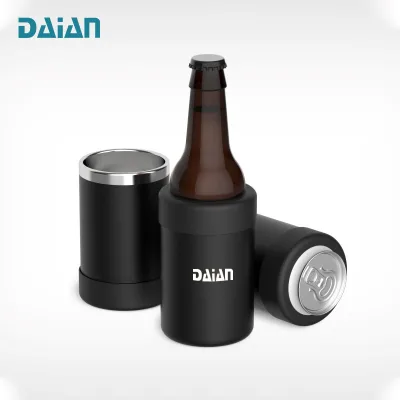
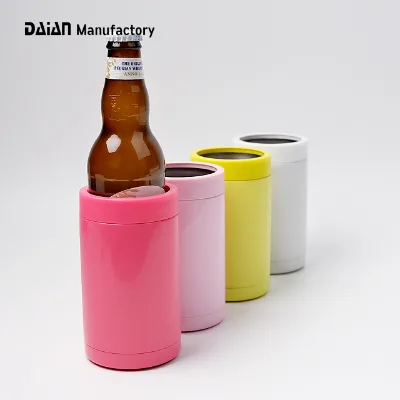
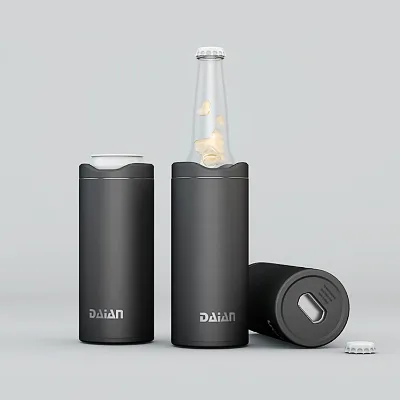


Comprehensive Sourcing Guide
Sublimation Stainless Steel Can Cooler Supplier Concentration and Factory Types
When buyers search for Sublimation Stainless Steel Can Cooler suppliers, the results typically mix several business models that behave very differently in production. Some listings come from combined manufacturers that also produce antennas, cables, travel mugs, and security seals, suggesting a broader drinkware or metal products line rather than a dedicated can cooler specialist. Others identify as manufacturer/factory operations with OEM and ODM capability, which usually signals direct control over coating, vacuum assembly, and printing. A third group operates as combined trading companies whose main products span consumer goods categories; these may broker production but offer wider accessory ranges.
Because listings rarely state the factory's full role, buyers should classify each candidate before contacting it. Check whether the company type field reads manufacturer/factory or combined, whether the main products list includes drinkware alongside unrelated items, and whether the product pages show in-house model numbers and packing specifications. If location data is displayed for specific results, use it to map clusters; where it is not, identify clusters independently by asking each supplier where the sublimation coating, stainless steel forming, and printing steps occur, and whether any step is subcontracted. A factory claiming OEM, ODM, and own-brand capacity should be able to describe its sublimation blank production in concrete terms—wall construction, coating process, and print acceptance criteria. Suppliers whose main products are dominated by unrelated categories deserve extra scrutiny on whether drinkware is a core or occasional line.
How to Verify Sublimation Stainless Steel Can Cooler Suppliers
Verification starts with the credentials each listing actually displays. Some suppliers show third-party verification badges from inspection bodies, and a few list formal quality management system certifications such as ISO 9001. Others display product-level certifications on individual items—FDA, LFGB, SGS, CE/EU—attached to specific can cooler models rather than the company itself. Treat these as claims to confirm, not proof: request the certificate numbers, check that the certificate holder name matches the legal entity you will contract with, and confirm which factory site was audited, since a group certificate may not cover the plant making your goods.
Product attributes are the second verification layer. Detailed listings state the stainless steel grade, for example 304/18/8, wall construction, vacuum insulation, leak-proof features, capacity, weight, and carton dimensions. Ask the supplier to document these in a spec sheet and cross-check against a sample. Third, verify operational data: response time figures shown on some listings (one supplier shows a sub-hour response, another several hours) indicate responsiveness but should be tested with technical questions, not just greetings. Ask each supplier to confirm in writing the exact origin of production, and match it against any location shown in the listing, such as Anhui or Fujian results. Finally, verify customization claims—suppliers advertising available customization and custom colors and logos should explain their sublimation print process, artwork requirements, and sample lead times in detail before you commit to a payment method.
What to Compare Across Sublimation Stainless Steel Can Cooler Suppliers
Build a comparison sheet using dimensions that listings actually display, while remembering not every supplier shows every attribute. Lead time is one of the sharpest differentiators: displayed figures range widely, from roughly 23 days to as long as 120 days, so a buyer needing a seasonal delivery window should weight this heavily and confirm the number applies to customized sublimation orders, not just stock goods. Response time also varies dramatically between listings—from under an hour to several hours on average—and slow responders often slow down further during production issues.
Compare MOQ at the product level, because it varies enormously even within one supplier's catalog: the observed listings range from 10 units on a 14oz sublimation blank cooler, to 50 on a flip-lid travel mug style, to 100 on a powder-coated 12oz cooler. Match the MOQ to your trial order strategy. Compare product evidence quality: listings with full attributes (steel grade, insulation duration of 6–8 hours or over 12 hours, carton sizes, packing method) suggest mature documentation, while sparse listings suggest you will do more specification work. Company type, main products, and R&D capacity (OEM, ODM, own brand) tell you whether the supplier engineers products or resells them. Also compare establishment-year data where shown, verification status, and whether trade assurance or escrow-type protection is offered. Price ranges—observed roughly from under $2 to over $5 per unit across models—should be compared only after normalizing for size, coating, and lid configuration.
Common Sublimation Stainless Steel Can Cooler Sourcing Risks
The first risk cluster is specification drift. Sublimation printing requires a compatible polymer coating, and suppliers may substitute coating sources between your approved sample and mass production, causing dull prints, ghosting, or peeling. Because some listings describe products as sublimation blanks while others describe powder-coated coolers intended for different decoration methods, confirm the decoration process explicitly. Similarly, material claims such as 304/18/8 stainless steel should be verified with test reports, and vacuum performance figures of 6–8 hours or "over 12 hours" in listings should be reproduced in your own sampling before they appear in your marketing.
The second cluster is commercial and identity risk. Suppliers whose main products span antennas, fishing nets, shoes, and consumer electronics may be generalist traders brokering drinkware, which raises the risk of undisclosed subcontracting and inconsistent quality between orders. Long displayed lead times—one result shows 120 days—can quietly stretch a seasonal program if production starts late. Low MOQs as small as 10 units are attractive for testing but often carry higher unit prices, and the widest price spreads (for example, $2.16–$6.99 on one listing) may hide configuration-dependent costs such as gift box packing versus polybag. Certificate claims attached to products (FDA, LFGB, SGS, CE/EU) may not match the exact model you order. Finally, catalog breadth can mask thin drinkware experience; a supplier listing coolers among tumblers and travel mugs should still prove tooling, coating control, and print QC specific to sublimation blanks.
Sublimation Stainless Steel Can Cooler Regional Sourcing and Logistics
The listings in this category point to two Chinese provinces with displayed origins: Anhui, with a product origin stated as Hefei, and Fujian. This matters for logistics planning because provinces differ in port access, freight consolidation options, and proximity to coating and printing material suppliers. When a listing shows a production origin such as Hefei, Anhui, ask whether that is the manufacturing site or the sales office location, and request the actual loading address for freight quotations. Inland origins can add domestic trucking cost and time to coastal ports, which affects your landed cost calculation.
Where the results do not display a location, do not assume one; instead, map regional clusters yourself by asking each shortlisted supplier to state the city of the coating line, the steel forming plant, and the sublimation printing operation, since these are sometimes split across sites. Shipping method data in the listings offers planning cues: one supplier lists sea, air, and express as options, and packed carton dimensions and weights (for example, a 43×43×29 cm carton of 50 pieces at 14 kgs) let you estimate container utilization early. Calculate units per carton, cartons per cubic meter, and gross weight per thousand units before negotiating freight terms. Also confirm whether the supplier exports directly or routes through an export agent, and whether packing—polybag plus white box or gift box—changes carton counts, since gift-box packing materially reduces container density.
Sublimation Stainless Steel Can Cooler Commercial Terms and Order Planning
Order planning should start from the displayed MOQ and lead time spread and then negotiate around your specific program. With MOQs ranging from 10 to 100 units across comparable coolers, a sensible plan is a small paid sample batch from a low-MOQ listing, print and drop tests on those units, then a scaled order negotiated on the same tooling. Confirm that the quoted price tier corresponds to your final quantity, decoration method, and packing choice, since observed price ranges on single listings (for example, $2.60–$2.95 or $1.80–$3.90) typically reflect configuration and volume variations within one model.
Payment and risk protection deserve explicit attention. Ask each supplier whether trade assurance, escrow-style coverage, or third-party inspection before shipment is available, and note that some listings display verification from inspection organizations while others do not—do not assume universal coverage. Tie payments to milestones: deposit on order, balance after a passed inspection against an agreed AQL-level checklist covering sublimation print quality, vacuum performance, lid fit, and packing. Build schedules from the displayed lead times, using the shorter end (around 23 days) as a best case for simple repeat orders and the longer end (up to 120 days) as the planning scenario for first-time customized production, and add sample time—some listings state roughly 3 days for samples—plus freight time. Finally, confirm warranty handling for vacuum failures and print defects, replacement logistics for shortfalls, and whether reorders inherit the original price and tooling without renegotiation.
FAQs
What sizes of sublimation stainless steel can coolers are commonly available?
The most common sizes are 12oz standard can coolers and 14oz slim can and bottle cooler designs, with some 350ml travel mug variants also offered. Check whether the blank is shaped for standard cans, slim cans, or bottles before ordering. Confirm the exact capacity in the specification sheet, since dimensions such as 12.5 by 7.5 by 7.5 cm vary between models.
What is the typical MOQ for custom sublimation can coolers?
MOQs vary widely by model and customization level. Listed figures range from as low as 10 pieces for some 14oz sublimation blanks, 50 pieces for flip-lid cooler tumblers, and 100 pieces for powder-coated 12oz can coolers. Always confirm the MOQ for your specific finish, coating, and logo requirements before requesting a formal quotation.
How long do these can coolers keep drinks cold?
Double-wall vacuum insulated models typically keep drinks cold for 6 to 8 hours, while some 14oz slim designs claim over 12 hours of cold or heat retention. Performance depends on lid type, wall construction, and ambient temperature. Request test data or samples to verify insulation claims under conditions matching your market's actual usage.
What certifications should I verify for sublimation can coolers?
Common certifications listed for these products include FDA, LFGB, SGS, and EU compliance, with some suppliers working to ISO 9001 quality systems. Food-contact stainless steel should be 304 (18/8) grade. Ask for current, batch-applicable certificates and verify they cover the exact model and material you intend to import, not just a similar product.
Can I order custom logos and colors on can coolers?
Yes, customization is widely available on these products. Supported logo methods include silkscreen printing, laser engraving, and heat transfer printing, with customized colors offered on powder-coated and sublimation blank models. Sample lead times of around 3 days are listed for some models. Provide your artwork early and confirm which decoration method suits your design and order volume.
What is the typical production lead time from China?
Listed lead times in current supplier results range from about 23 days to as long as 120 days, so timelines differ significantly between suppliers. Sampling, coating, and sublimation printing can add time for customized orders. Confirm the lead time for your specific quantity and finish, and factor in sea, air, or express shipping options when planning delivery dates.