Thermal Fluid Oil Temperature Machine Suppliers and Manufacturers
Find 10 verified Thermal Fluid Oil Temperature Machine suppliers in China offering ISO certifications and CE compliance. Compare response times, lead times, and product specs like max temperature and flow rate before requesting quotes; review the available evidence before requesting comparable quotations from suitable candidates.
Updated
Suppliers List

Wensui Intelligent Equipment Inc.
- Verified by TUVRHEINLAND
- Combined
- China Guangdong
- Lead time30 days
- Avg. response≤ 7h
Main productsPlastic Crusher, Water Chiller, Plastic Autoloader, Color Mixer, Dehumidifying Dryer, Hopper Dryer, Robotic Arm
Main marketsSouth America,Africa,Others(foreignTradeCapacity.exportBusinessCapacityMarketOther),Southeast Asia/ Mideast,Domestic,Europe,North America

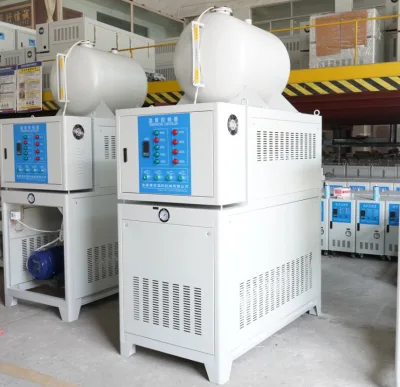
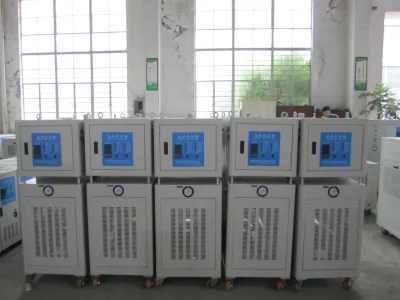
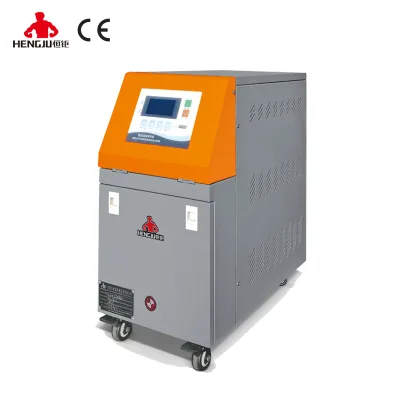
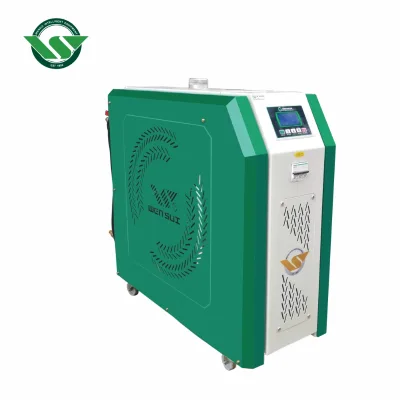
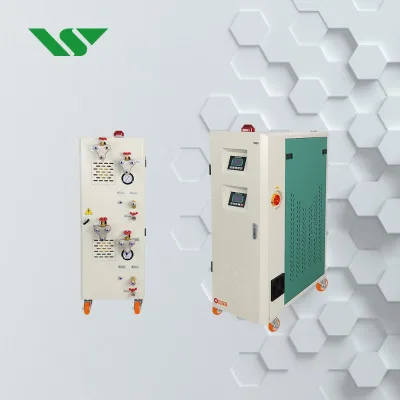
Mold Heating Temperature Controller Water Temperature Oil Temperature Machine
$752.00 - $878.00
MOQ: 1 Pieces


$752.00 - $878.00
MOQ: 1 Pieces


High Temperature Control Machine Water/Oil Type Mold Temperature Controller
$752.00 - $878.00
MOQ: 1 Pieces

Injection Molding Machine High Temperature Oil/Water Heating Mold Temperature Controller
$752.00 - $878.00
MOQ: 1 Pieces

Zhejiang Yonjou Technology Co., Ltd.
- Verified by BV
- Trading Company,Manufacturer/Factory
- China Zhejiang
- Lead time23 days
- Avg. response≤ 8h
Main productsGear Pump, Diaphragm Pump, Screw Pump, Hot Oil Pump, Lobe Pump, Water Pump, Vacuum Pump, Dewatering Pump, Self Priming Pump, Chemical Pump
Main marketsSouth America,Eastern Europe,Mid East,North America,Southeast Asia,Eastern Asia,Oceania,Western Europe,Africa
Bobai Machinery (shanghai) Co., Ltd.
- Verified by Intertek
- Manufacturer, Trading Company
- Lead time15 days
- Avg. response≤ 5h
Main productsMold Temperature Controller, Chiller, Cooling and Heating All-In-One Machine, Industrial Cooling Fan, Screw Chiller
Main marketsDomestic Market(50%), South America(15%), Southeast Asia(10%)
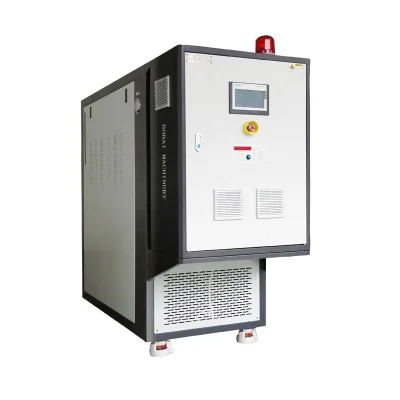
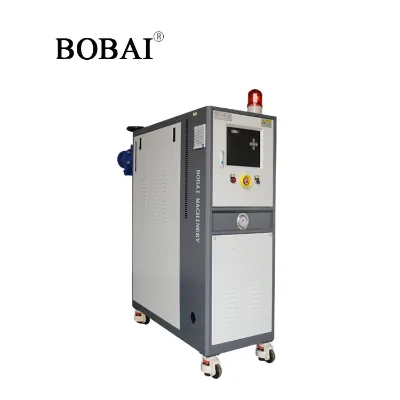
Thermal Oil Heater for Aluminum Heating Plate for Hot Press Machine
$5799.00 - $5899.00
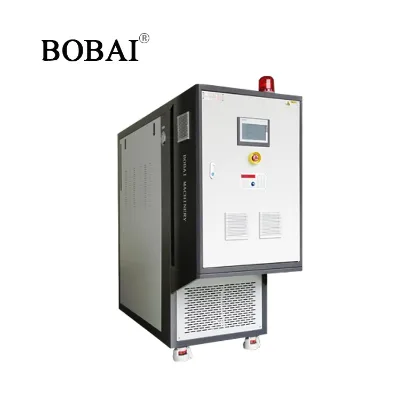
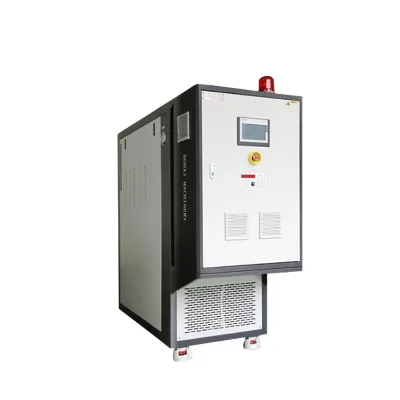
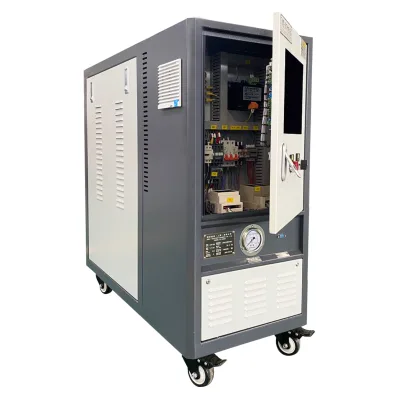


Henan Province Sitong Boiler Co., Ltd.
- Verified by TUVRHEINLAND
- Combined
- China Henan
- Lead time30 days
- Avg. response≤ 3h
Main productsGas Boiler, Oil Boiler, Coal Fired Boiler, Biomass Fired Boiler, Steam Boiler, Electric Boiler, Waste Heat Steam Boiler
Main marketsSoutheast Asia/ Mideast,Europe
Guangdong Xiecheng Intelligent Equipment Co.,Ltd.
- Verified by SGS Group
- Manufacturer, Trading Company
- Lead time旺季: "1 - 10":30,"> 10":"To be negotiated", 淡季: "1 - 10":30,"> 10":"To be negotiated"
- Avg. response≤ 4h
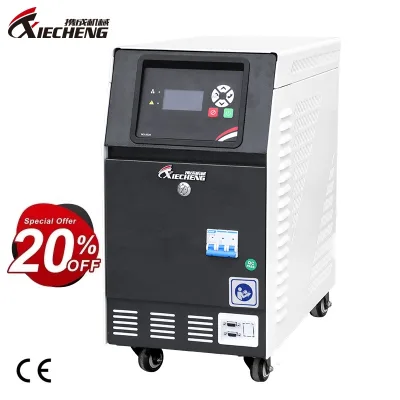
Main productsIndustrail Chiller & Mold Temperature Controller, Plastic Crusher, Dehumidifying Dryer, Vacuum Hopper Loader, Plastic Mixer
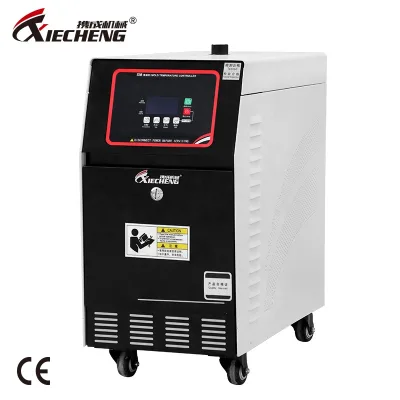
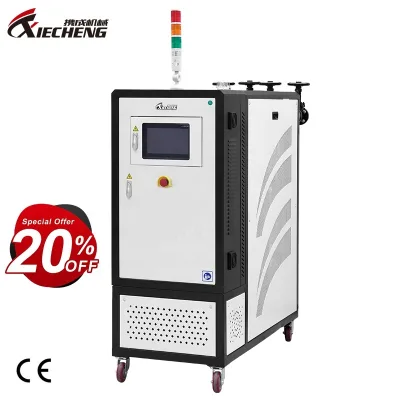
$1554.0177 - $8915.641
MOQ: 1 Minimum

Zhangjiagang Chenxing Machinery Co., Ltd.
- Verified by TUVRHEINLAND
- Combined
- China Jiangsu
- Lead time15 days
- Avg. response≤ 3h
Main productsPipe Production Line, Profile Extrusion Line, Corrugated Pipe Extrusion Line, Sheet/Sheetproduction Line, Board Production Line, Plastic Recycling Machine, Pipe Making Machine, High Speed Mixer, Plastic Extruder, Automatic Weighing System
Main marketsSoutheast Asia/ Mideast,Domestic,Europe,North America
ZHANGJIAGANG CITY CONSTANT TEMPERATURE CONTROL MACHINERY FACTORY
- Manufacturer
- Jiangsu, China
- Lead time0 days
- Avg. response≤ 1h
Main productsMK series cool and hot mould,SML-F air-cooled industrial chiller,SML-S water-cooled industrial chiller,MKS water-type mold temperature controller,MKR oil-type mold temperature controller
Main marketsWestern Europe(12.50%), Eastern Asia(12.50%), Mid East(12.50%), Africa(12.50%), Southeast Asia(12.50%), Eastern Europe(12.50%), South America(12.50%), North America(12.50%)
Dongguan Hengju Machinery Equipment Co., Ltd.
- Trading Company
- Guangdong, China
- Lead time15 days
- Avg. response≤ 2h
Main productsGravimetric Blender,Plastic Hopper Dryer,Central Conveying System,Mould Temperature Controller,Plastic Crusher
Main marketsSoutheast Asia(50.00%), North America(10.00%), Central America(5.00%), Western Europe(5.00%), Eastern Asia(5.00%), Mid East(5.00%), Oceania(5.00%), Africa(5.00%), South America(5.00%), Eastern Europe(5.00%)
Wensui Intelligent Equipment Inc.
- Verified by TüVRheinland
- Manufacturer, Trading Company
- Lead time9 days
- Avg. response≤ 9h
Main productsShredders, Crushers, Mold Temperature Controller, Industrial Chiller, Blending & Dosing Machine
Main marketsDomestic Market(68%), Southeast Asia(9%), South America(6%)

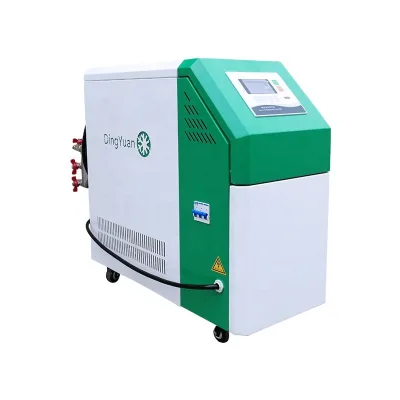
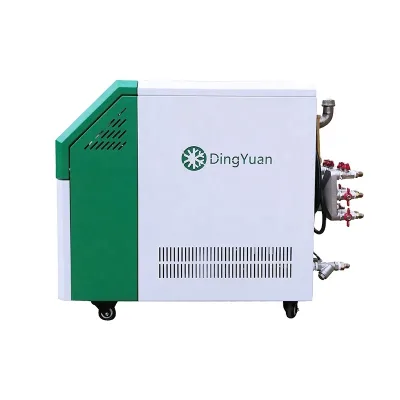
Dongguan Dingyuan Industrial Co., Ltd.
- Manufacturer
- Guangdong, China
- Lead time15 days
- Avg. response≤ 3h
Main productschiller & mold temperature controller series,drying and dehumidifying,mixing material series,feeding and conveying series,Granulating recycling series
Main marketsSoutheast Asia(30.00%), Mid East(15.00%), South Asia(15.00%), Africa(12.00%), Eastern Europe(5.00%), South America(5.00%), Western Europe(5.00%), Southern Europe(3.00%), North America(3.00%), Eastern Asia(3.00%), Oceania(2.00%), Northern Europe(2.00%)


Comprehensive Sourcing Guide
Thermal Fluid Oil Temperature Machine Supplier Concentration and Factory Types
Sourcing results for this category show suppliers concentrated in a few Chinese industrial regions, with Guangdong, Zhejiang and Shanghai all represented in current listings. Guangdong-based suppliers in this space tend to specialize in plastic processing auxiliary equipment, offering mould temperature controllers alongside crushers, chillers, dryers and robotic arms, which makes them a natural fit for injection molding plants building out a complete auxiliary line. Zhejiang suppliers in the results lean toward pump manufacturing, including thermal oil circulation pumps rated for very high temperatures, reflecting that province's strength in fluid handling hardware. Shanghai-listed suppliers focus on heating equipment itself, such as thermal oil heaters for hot press applications.
Factory types vary as much as geography. The sampled results include combined manufacturers and trading companies, a manufacturer and trading hybrid, and a trading company with factory backing. Some suppliers list ODM and OEM capability, while others advertise customization on demand or carry their own brand. Buyers should read these labels carefully: a combined or hybrid company can offer both standard catalogue units and engineered builds, but a pure trading intermediary may add a markup while simplifying communication. When shortlisting, match company type to your need—catalogue units suit standard water or oil type controllers, while custom heating capacities, voltages or stainless steel construction usually justify approaching a manufacturer directly.
How to Verify Thermal Fluid Oil Temperature Machine Suppliers
Verification should start with the third-party badges visible on supplier listings rather than self-declared claims. In the current results, suppliers carry independent verifications from TÜV Rheinland, BV and Intertek, which indicate that on-site or documentary checks of the business have been performed by recognized inspection bodies. System certifications also differ meaningfully: one Guangdong supplier lists ISO9001:2015, a Zhejiang pump supplier lists both ISO 9001 and ISO 14001, and a Shanghai equipment maker lists ISO 9001, ISO 45001 and ISO 14001 together with CE. Confirm that certificate numbers and scopes are current, since listing text is not proof of a valid certificate.
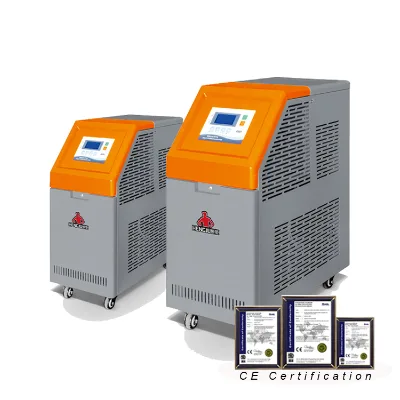
Product-level evidence matters as much as company credentials. Listings in this category show CE certification on mould temperature controller units, video outgoing inspection and machinery test reports offered by some suppliers, and product attributes such as LCD display type, maximum temperatures of 95°C for water type units and 160°C for oil type units, and maximum flow rates of 35L/min. Ask each candidate to supply the actual certificate documents, test reports and, where relevant, inspection records covering the exact model number you intend to purchase. Also verify production depth: check whether heating elements, pumps and controllers are made in-house or sourced, because a supplier of mould temperature controllers that also manufactures pumps may control quality differently than one assembling purchased components under its own label.
What to Compare Across Thermal Fluid Oil Temperature Machine Suppliers
Build a comparison sheet using the attributes suppliers actually display, and record blanks honestly rather than assuming every supplier publishes the same data. In the current results, lead times range from 15 days to 23 days to 30 days depending on the supplier, response times range from roughly 5 hours to about 7 hours, and one listed controller carries an MOQ of just 1 unit. Prices for comparable items differ widely: a water type mould temperature controller is listed between 752 and 878 dollars, an oil type unit between 818 and 955 dollars, hot oil circulation pumps from around 500 dollars, and a larger thermal oil heater for hot press machines between 5,799 and 5,899 dollars. Treat these as anchors, not quotes.
Beyond numbers, compare the substance behind each listing. Main product ranges reveal specialization—one supplier lists mould temperature controllers, chillers and cooling-heating all-in-one machines, another pumps and vacuum equipment, a third plastic auxiliary machinery. Compare customization depth: some list ODM and OEM capacity, others customized-on-demand service or available customization flags on specific models. Check packing (wooden cases appear on controller listings versus export plywood cases on pump listings), warranty terms such as the 1-year warranty shown on one heater, place of origin, and verifications like TUVRHEINLAND, BV or Intertek status. A supplier strong on response speed but weak on lead time may still win if your schedule is flexible.
Common Thermal Fluid Oil Temperature Machine Sourcing Risks
The most frequent risk in this category is specification mismatch, especially around temperature rating and medium. The listings distinguish clearly between water type controllers rated to 95°C and oil type units rated to 160°C, while separate thermal oil pumps advertise capability up to 400°C. A buyer who orders a water type unit for an oil application, or who assumes a controller and its circulation pump share the same temperature ceiling, will discover the error only at commissioning. Always state the heat transfer medium, setpoint, flow requirement and connected mould or tank load in writing before ordering, and confirm the model number—such as the WSTW-06W water unit or WSTO-06 oil unit—matches your process.
Secondary risks cluster around data reliability and trading structure. Some listings show price ranges where the minimum equals the maximum, and others display placeholder values such as negative prices, signaling that quoting is not current or is negotiable. Hybrids and trading companies may resell factory output, adding cost and blurring responsibility for warranty claims; one listing offers a 1-year warranty while others show none, so never assume coverage. Verify whether the CE mark on a controller listing applies to your configuration, especially with customization, since modified voltage or capacity can affect compliance. Finally, confirm packing—wooden versus export plywood—and international standards compliance in the contract, not just the listing description.
Thermal Fluid Oil Temperature Machine Regional Sourcing and Logistics
The regional picture in current results is genuinely multi-province: Guangdong, Zhejiang and Shanghai suppliers all appear, each with a different logistics profile. The Shanghai supplier shows the shortest listed lead time at 15 days and the fastest response time at around 5 hours, which matters for urgent replacement orders. The Zhejiang pump specialist lists 23 days lead time, and the Guangdong auxiliary-equipment supplier lists 30 days, which is typical when a controller must be integrated, tested and packed alongside other equipment. Buyers should map their deadline backwards from these figures and add shipping, inspection and customs time before committing to any delivery date.
Logistics practicalities differ by product size and origin declarations. Controllers in this category are packed in wooden cases and originate in China, with one heater listing explicitly declaring Shanghai origin, a 260 kg unit weight and stainless steel construction—details that directly affect freight class, crating and handling. Pumps ship in export plywood cases, which are generally lighter duty than full wooden crates; confirm whether your destination market requires fumigated or ISPM-compliant wood packaging before accepting either. Because suppliers may be manufacturers, trading companies or both, clarify who arranges export documentation and who holds responsibility in transit. For heavy oil heaters and pump sets, request the actual packed dimensions and gross weight in writing so freight quotations are based on real data rather than assumptions.
Thermal Fluid Oil Temperature Machine Commercial Terms and Order Planning
Commercial terms in the sampled results give buyers useful negotiating anchors. Listed price bands include 752 to 878 dollars for a water type mould temperature controller, 818 to 955 dollars for an oil type unit, roughly 500 dollars for a hot oil circulation pump, and 5,799 to 5,899 dollars for a thermal oil heater for hot press machines. One controller shows an MOQ of 1, which suits trial orders and single-machine replacements. Lead times of 15, 23 and 30 days across suppliers mean you can sequence orders: place the longest-lead supplier first, and use faster-lead suppliers for gap coverage. Always confirm whether listed prices include customization, since several listings flag customization as available.
Order planning should convert listing claims into contractual commitments. Specify the exact model, certification requirements (CE appears on controller listings), packing type, warranty duration—one listing shows 1 year—and inspection arrangements such as the video outgoing inspection and machinery test reports some suppliers provide. Clarify customization scope in writing: whether ODM or OEM applies, what voltage configurations are available (one heater lists 380V 3-phase 50Hz as customizable), and what documentation ships with the goods. For payment protection, verify what escrow or platform-backed terms each marketplace listing actually offers rather than assuming coverage, since displayed attributes vary. Finally, plan a pilot order where possible, align reorder lead times with your maintenance calendar, and record each supplier's real response speed during negotiation as a preview of after-sales support.
Word count check: each section approximately 228–232 words; total approximately 1,385 words.
FAQs
What is a Thermal Fluid Oil Temperature Machine used for?
It circulates thermally conductive oil through a mold or heating plate to maintain a stable, elevated process temperature. This is common in injection molding, hot pressing, and other plastic processing where even heat distribution affects product quality. Units are specified by maximum temperature, flow rate, and heating capacity, so buyers should match those figures to their mold size and target process temperature before ordering.
Which maximum operating temperatures are available?
Listed machines cover a wide range. Water-type mold temperature controllers in the results reach a maximum of 95 degrees Celsius, while oil-type units reach up to 160 degrees Celsius. Thermal oil circulation pumps are rated for service up to 400 degrees Celsius, and one hot oil thermal pump model is described for 370 degree operation with a cooling system. Always confirm the rating needed for your application.
What is the typical minimum order quantity?
At least one listed mold temperature controller model is offered at a minimum order quantity of one unit, which suits trial orders and equipment replacement purchases. Other listings do not publish an MOQ, so quantities may vary by model and customization level. Before committing, buyers should request the exact MOQ for their chosen specification, since customized configurations can carry different minimums than standard catalog units.
How long does production and delivery usually take?
Lead times reported across the current supplier results range from about 15 to 30 days, depending on the supplier and order content. One machinery supplier lists 15 days, a pump manufacturer lists 23 days, and an auxiliary-equipment maker lists 30 days. Standard models usually ship faster than customized builds, so confirm the lead time for your exact configuration and include shipping time to your port when planning.
Do these machines support customization and OEM service?
Yes, customization is available on the listed temperature controller and heater products, and suppliers report ODM and OEM capability, customized on demand production, or an own brand. One supplier also notes customizable voltage such as 380V three phase 50Hz. Buyers should provide their target temperature range, flow rate, voltage, and installation constraints so the factory can quote a configuration that fits the production line.
What certifications should I verify before ordering?
Listed evidence includes CE marking on several mold temperature controller models, ISO 9001 quality system certificates, and additional ISO 14001 and ISO 45001 registrations at some suppliers. One product also offers a machinery test report and video outgoing inspection. Certifications should be checked against current certificates for the specific model you buy, since scope can differ between a factory registration and an individual product approval.
How are the machines packed and shipped?
Listed packing information shows wooden cases for the mold temperature controller units and export plywood cases for the hot oil circulation pumps. Both methods protect equipment against handling shocks during sea freight. A typical listed oil heater unit weighs around 260 kilograms, so buyers should arrange suitable unloading equipment at destination and confirm case dimensions and gross weight with the supplier for an accurate freight quote.
What key specifications should I compare between models?
Focus on maximum working temperature, maximum flow rate such as the 35L/min figure listed on several controllers, heating capacity, pump type, and display type such as the LCD panels noted. Also compare application fit, since some units target plastic products specifically. Water-type and oil-type machines serve different temperature ranges, so choose the medium that matches your process temperature before comparing prices or models.