Source 4 Players Indoor Shooting Simulator for parks, malls, and training
Compare 30 listings for the 4 Players Indoor Shooting Simulator featuring VR technology and customizable options. Buyers can evaluate specifications like voltage, weight, and display types from suppliers in Guangdong, China; compare the available evidence and request quotations based on your requirements.
Updated
Key considerations
Products List


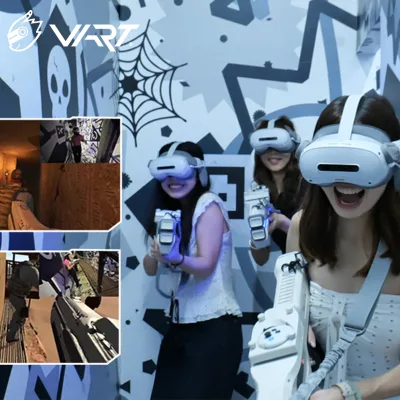


Indoor Vr Shooting Range: Interactive Multiplayer Training Simulator
$2280.00 - $2580.00
MOQ: 1 Pieces


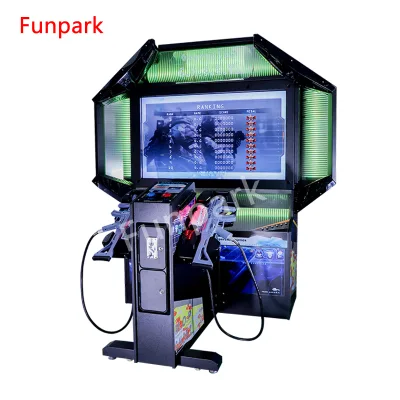
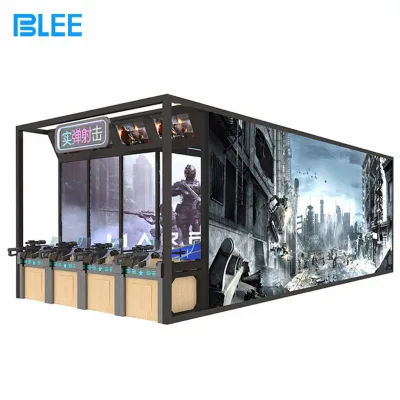
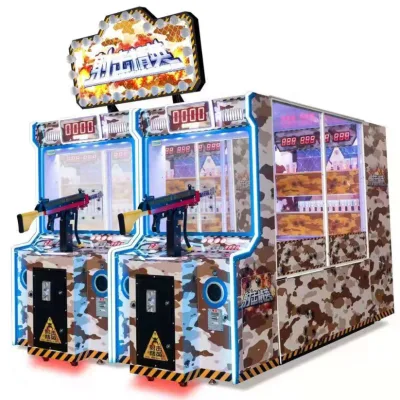
Shooting Game Indoor Target Arcade Shooting Game Machines Simulator Equipment
$8479.7753 - $8898.5296
MOQ: 2 pieces
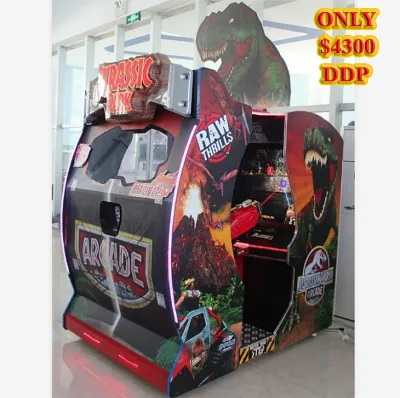

Indoor Playground Equipment Vr Shooting Game Vr Multiplayer Game Shooter Simulator
$7800.00 - $8300.00
MOQ: 1 Pieces


Multiplayer Online Shooting Game Arcade Machine Shooting Gallery Simulator
$12000.00 - $13000.00
MOQ: 1 Pieces


Vr Shooting Game Machine Arcade Gaming Simulator Virtual Reality Amusement Equipment
$23000.00 - $25000.00
MOQ: 1 Pieces
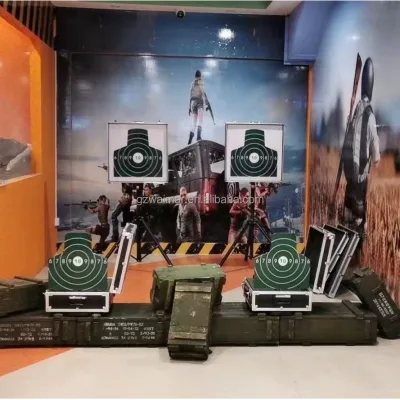
Shooting Practice Target Shooting Range Simulator for Arcade Game Center
$564.7206 - $790.6091
MOQ: 1 pieces
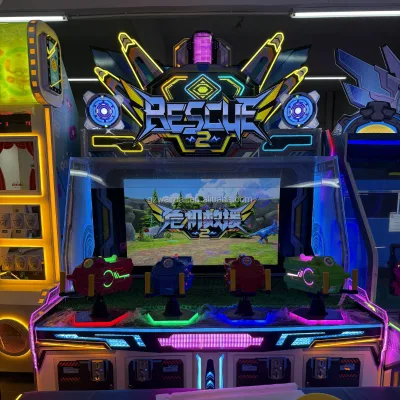
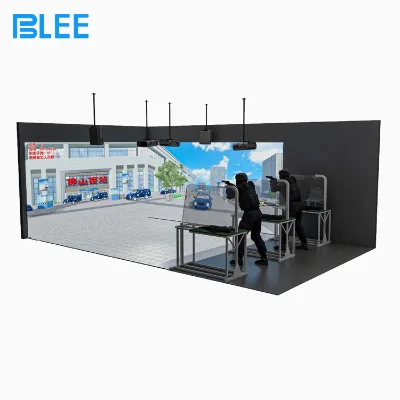
Comprehensive Sourcing Guide
4 Players Indoor Shooting Simulator Sourcing Guide
A four-player indoor shooting simulator is a commercial amusement machine that lets four participants play shooting games simultaneously, typically in an arcade, shopping mall, amusement park, training center, or similar venue. For B2B buyers, the "4 players" configuration is the defining commercial attribute: it multiplies per-session revenue potential relative to single-cabinet machines, but it also increases floor space requirements, power draw, and after-sales complexity. Before comparing listings, buyers should define their venue conditions—available footprint, ceiling height, electrical supply, and target age group—so that supplier quotations can be evaluated against realistic installation constraints rather than catalog specifications alone.
The listings observed in this category include models described as "AR Sniper-4 players" and "EP-SH085 Super Shooting," alongside larger multi-player VR shooting simulator systems. Price points observed range widely, from roughly USD 564.72 to USD 51,300, with minimum order quantities of one to two units. This spread signals a category that spans small upright shooting cabinets up to large immersive installations. Buyers should treat each listing's stated player count, dimensions, and game library as a starting hypothesis to be verified through direct supplier communication and, where possible, live demonstrations before committing to a purchase order.
Product Scope and Observed Listing Signals
The observed product pages describe several distinct machine types under the same keyword umbrella. Some are upright or stand-up shooting arcade machines with liquid crystal displays, listed as suitable for children and adults, with age ranges such as 3–18 or 7–14 years. Others are VR shooting simulators with surround sound systems, light emitting diode displays, and configurations supporting four to eight players. Larger systems specify dimensions such as L3379×W1590×H2555mm or even L7400×W9800×H3000mm, with weights of 300kg to 1000kg and maximum capacities of 100–500kg. Buyers should map these variants to their intended use case before requesting quotes.
Application fields listed by suppliers include indoor commercial amusement parks, shopping malls, city parks, training centers, playhouses, home use, outdoor public playgrounds, and zoos. One listing explicitly positions the product as a "VR Theme Park Investment." These signals suggest that the same keyword covers machines with very different duty cycles, safety profiles, and revenue models. A compact arcade cabinet destined for a mall corner has different durability and supervision requirements than a large immersive VR rig. Buyers should shortlist only listings whose stated occasion, age range, and machine type match their venue's operational reality.
Technical Specifications to Verify
Electrical requirements vary significantly across listings and must be confirmed against your venue's infrastructure. Observed values include 220V power requirements, 380V 63A supplies, and power ratings ranging from 1000W up to 25 KW for larger multi-player systems. Before shortlisting, obtain a full electrical schedule—supply voltage, phase, current draw, and connection type—and verify it with a qualified electrician. A 25 KW system cannot simply be plugged into a standard commercial outlet, and underestimating power needs is one of the most common causes of delayed installations and costly site upgrades.
Physical and gameplay specifications also deserve structured verification. Confirm the machine's exact footprint and height (for example, W165×D227×H260cm for an upright model) against your floor plan, including clearance for player movement and emergency access. Verify the stated player count in practice: a "4 players" system should allow four simultaneous users without queuing or shared controls. Ask about the included game library—one listing notes "5+ (For reference only)"—and whether additional games can be licensed or loaded later. Request the display technology (LCD versus LED), sound system configuration, and material construction, with observed listings citing metal, steel, and fiberglass.
Compliance and Safety Documentation
Certification claims appear in the observed listings—CE is cited across multiple products, and one listing cites RoHS and CE together—but certification status must be verified rather than assumed. Ask each supplier for the actual certificate documents, including the certificate number, the testing body, the product models covered, and the validity period. A CE mark on a product photo is not equivalent to a valid declaration of conformity for the specific machine configuration you are purchasing. Cross-check that the model number on the certificate matches the quotation, since configurations such as 2-player versus 4-player variants may be certified separately.
Beyond electromagnetic and chemical compliance, buyers should request safety documentation relevant to an entertainment machine operated by the public. This includes structural load information—one listing cites a maximum capacity of 100–500kg—user age guidance (observed ranges span 3–18 and 7–14 years), and any operator instructions or warning signage provided with the machine. For VR-based systems, confirm what hygiene measures, protective padding, or supervision features are included. Ask whether assembly, anchoring, and commissioning instructions are supplied in your language; one listing mentions Chinese or English versions, so confirm which applies to your order before shipment.
Cost Drivers and Commercial Terms
The observed price range of USD 564.72 to USD 51,300 reflects genuine differences in machine category, and buyers should expect price to scale with player capacity, display and projection technology, motion platforms, and game content. Rather than comparing headline prices across dissimilar machines, build a total landed cost model: machine price, inland transport to port, sea or air freight, import duties, insurance, and on-site installation. Larger systems—such as a 1000kg VR installation shipped in a wood frame—may require forklifts, rigging, or professional installation crews that materially change the project budget.
Commercial terms should be negotiated explicitly and recorded in the purchase contract. Observed minimum order quantities of one to two units favor small operators, but confirm whether the quoted price applies at MOQ. Clarify warranty coverage—one listing offers 12 months and another a 1-year warranty—and define precisely which parts, labor, and shipping costs the warranty covers. Confirm the unit of sale (one listing states "single item"), payment schedule, production lead time, and incoterms. Finally, note that customization is listed as available; customized machines typically carry longer lead times and different warranty treatment than standard catalog units, so price accordingly.
Supplier Qualification and Quality Control
Supplier qualification should begin with verifiable business credentials: registered company name, years in operation, export experience to your market, and a physical factory address. The observed listings originate from Guangdong, China, a major amusement equipment manufacturing region, but regional clustering alone does not guarantee quality. Ask for references from buyers operating similar venues, and where feasible conduct a live video inspection of the factory floor and a running demonstration of the exact model you intend to purchase, not a similar or older unit.
Pre-shipment quality control is the buyer's most effective safeguard for amusement machinery. Arrange an inspection before the machine is packed—either personally, through a third-party inspection service, or via a detailed photo-and-video acceptance protocol—covering gameplay of all stations simultaneously, display and sound performance, structural condition, and compliance labeling. Packaging is specified in listings as air bubble film with stretch films and wood framing, or bubble pack with strong wood framing; confirm the exact packing specification in writing, since inadequate crating is a leading cause of transit damage. Define in the contract how damaged or defective units discovered at installation will be remedied, including replacement parts logistics and timeframes.
Long-Term Procurement Checks
Operational sustainability matters more than the initial purchase for revenue-critical machines. Before ordering, establish how spare parts will be supplied: which components are most likely to wear (controllers, sensors, displays, motion components), whether parts are stocked and shipped internationally, and at what cost. Confirm the availability of software updates and whether the game library can be expanded—stated content of "5+" games can become stale in a commercial venue. Also clarify technical support channels, response times, and whether remote diagnostics are available for the machine's control system.
Finally, plan the machine's commercial lifecycle within your venue. Track revenue per machine against the total invested cost, monitor usage patterns by age group and time of day, and evaluate periodically whether the equipment still meets your audience's expectations. Keep all documentation—certificates, manuals, wiring diagrams, warranty terms, and supplier correspondence—in a structured file so that future maintenance, resale, or relocation decisions are not dependent on one individual's memory. Buyers operating multiple machines should negotiate framework terms early, since a demonstrated reordering relationship is the strongest leverage for better pricing, priority production slots, and enhanced warranty support over time.
FAQs
What are the power requirements for a 4 Players Indoor Shooting Simulator?
The power requirements vary by model, with some units operating at 220V and others requiring 380V at 63A. Specific models like the AR Sniper-4 indicate 220V compatibility, while larger installations may need higher voltage inputs. Buyers should verify the exact voltage specification for their chosen machine to ensure proper electrical infrastructure is in place before installation.
Can a 4 Players Indoor Shooting Simulator be customized for specific venues?
Yes, customization is available for these simulators to suit different venue needs. Manufacturers offer options for language versions, such as Chinese or English, and allow for specific color choices like pearl-white. This flexibility ensures the equipment can be tailored to match the aesthetic and operational requirements of indoor commercial amusement parks, shopping malls, or training centers.
Which certifications are standard for 4 players indoor shooting simulators?
Standard certifications typically include CE and RoHS compliance, ensuring the equipment meets international safety and environmental standards. These certifications are crucial for commercial installations in regions like Europe and other markets requiring strict regulatory adherence. Buyers should request valid certification documents from suppliers to verify that the specific model meets the necessary legal requirements for public use.
What is the typical weight and size of a 4 Players Indoor Shooting Simulator?
Weights range significantly, with some units weighing 300kg and larger models reaching 1000kg. Dimensions also vary, with compact units measuring around 165x227x260cm and larger installations spanning several meters. These physical attributes impact floor load requirements and space planning, so buyers must consult specific product specifications to ensure the simulator fits their designated indoor area.
How many games are included with a 4 Players Indoor Shooting Simulator?
Most units include five or more games for reference, providing variety for users. The exact number and content of games can depend on the specific model and software configuration. Buyers should confirm the game library details with the supplier, as the content may be updated or customized to suit the target audience, whether for children, adults, or professional training purposes.
What warranty is provided for a 4 Players Indoor Shooting Simulator?
Warranty periods typically range from one year to 12 months, covering manufacturing defects and component failures. This standard warranty provides buyers with assurance regarding the durability and reliability of the equipment. It is advisable to review the specific warranty terms offered by the supplier, including coverage for parts and labor, to understand the support available post-purchase.