Source Amber Heat Resistant Polyimide Tape for Electronics
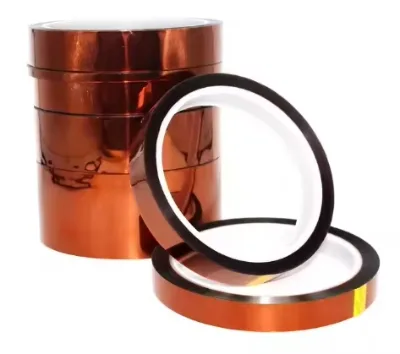
Source Amber Heat Resistant Polyimide Tape for electrical insulation and high-temperature applications. Compare 30 listings with varying thicknesses, widths, and adhesive types to find the right supplier for your manufacturing needs; compare the available evidence and request quotations based on your requirements.
Key considerations
Products List




Comprehensive Sourcing Guide
Amber Heat Resistant Polyimide Tape Sourcing Guide
Procurement professionals seeking Amber Heat Resistant Polyimide Tape must first recognize that this material serves as a critical component for electrical insulation in high-temperature environments. The observed product data confirms that these tapes are specifically engineered for applications requiring thermal stability up to 280 degrees Celsius, making them ideal for protecting sensitive components during soldering or curing processes. Buyers should verify that the amber coloration is consistent with the polyimide base material, which inherently offers superior dielectric strength compared to standard polyester alternatives.
When evaluating listings, it is essential to distinguish between generic polyimide offerings and those specifically rated for high-voltage insulation. The available data indicates a maximum voltage rating ranging from 20KV to 100KV, suggesting these products are suitable for demanding industrial applications rather than light-duty consumer electronics. Sourcing teams must ensure that the specific amber variant selected matches the thermal rating of 250 degrees Celsius to prevent premature failure in high-stress electrical assemblies.
Product Scope and Observed Listing Signals
The market for this specialized tape presents a wide range of physical dimensions, requiring buyers to carefully match specifications to their production needs. Observed listings show thickness variations from 39 microns to 100 microns, with widths available from 8mm up to 50mm or fully customized to client requirements. Lengths also vary significantly, with standard rolls often measuring 33 meters, while other options extend up to 1000 meters depending on the supplier's jumbo roll capabilities.
Buyers must scrutinize the adhesive composition to ensure compatibility with their specific manufacturing processes. The data confirms that silicone-based pressure-sensitive adhesives are the standard for these products, providing reliable bonding on steel and other substrates. It is crucial to verify that the adhesive side is single-sided and that the adhesion strength falls within the observed range of 2.5 to 10 Newtons per 25 millimeters to guarantee secure application without residue issues during high-temperature exposure.
Technical Specifications to Verify
Thermal resistance remains the primary technical metric for validating the performance of amber polyimide tape in industrial settings. Buyers should confirm that the product can withstand continuous exposure to temperatures between 260 and 280 degrees Celsius without degrading or losing adhesion. The observed data specifies a thermal rating of 250 degrees Celsius, which serves as a baseline for high-level insulation materials, but verification of the specific 30-minute resistance at 280 degrees is necessary for short-duration peak heat applications.
Mechanical properties such as tensile strength and elongation at break are equally critical for ensuring the tape survives the rigors of automated application and subsequent thermal cycling. The available specifications indicate a tensile strength ranging from 10 to 40 kilograms per 25 millimeters, with elongation capabilities between 25% and 85%. Procurement teams must request test reports to confirm that the specific batch meets these mechanical thresholds, as variations in the polymer chemistry can significantly impact the tape's durability under stress.
Compliance and Safety Documentation
Ensuring regulatory compliance is a non-negotiable step when sourcing industrial insulation materials for global markets. The observed product data lists ISO9001 certification, which indicates that the manufacturer maintains a quality management system, but buyers must verify if additional safety certifications are required for their specific industry, such as UL or RoHS compliance. It is important to distinguish between general quality claims and verified safety standards that protect against chemical hazards or fire risks in the final assembly.
Documentation regarding the chemical composition of the hybrid insulation materials should be reviewed to ensure compatibility with environmental regulations. The product is classified as hybrid insulation, which implies a specific chemical makeup that may require detailed Material Safety Data Sheets (MSDS) for safe handling and disposal. Buyers should request full documentation to confirm that the adhesive and backing materials do not contain restricted substances that could violate international trade agreements or customer-specific environmental mandates.
Cost Drivers and Commercial Terms
Pricing for Amber Heat Resistant Polyimide Tape is heavily influenced by the complexity of customization and the volume of the order. The observed price range spans from 0.04 to 60 USD, reflecting the vast difference between standard off-the-shelf rolls and custom-cut, high-specification jumbo rolls. Buyers should anticipate that thicker gauges, wider widths, and specialized packaging requirements will drive costs toward the higher end of this spectrum, necessitating a clear definition of technical needs before requesting quotes.
Commercial terms regarding minimum order quantities and lead times must be aligned with production schedules to avoid supply chain disruptions. The data indicates a typical MOQ of 500 rolls, though some listings suggest flexibility down to 1 unit for samples, while others require up to 10,000 units for bulk pricing. Delivery times generally range from 15 to 25 days, and procurement teams should factor in this lead time when planning inventory levels, especially when dealing with custom dimensions that may extend the manufacturing window.
Supplier Qualification and Quality Control
Supplier location and manufacturing capability are key indicators of reliability when sourcing high-performance insulation materials. The observed product origins include Shenzhen, Guangdong, and Dongguan, all of which are major manufacturing hubs in China known for their expertise in polymer processing. Buyers should prioritize suppliers with a proven track record in producing jumbo rolls and custom-cut tapes, as these capabilities suggest a mature production line capable of maintaining consistent quality across large batches.
Quality control processes must be rigorously evaluated to ensure that every roll meets the stringent requirements for electrical insulation. The data highlights that high-quality and high-level standards are claimed, but buyers must verify these assertions through on-site audits or third-party inspection reports. It is essential to confirm that the supplier offers free samples for testing and that they provide detailed packaging options, such as shrink wrap or custom cartons, to protect the tape during transit and storage.
Long-Term Procurement Checks
Establishing a sustainable supply chain for Amber Heat Resistant Polyimide Tape requires ongoing monitoring of supplier performance and product consistency. Buyers should implement a system for tracking batch-to-batch variations in thickness, adhesion strength, and thermal resistance to ensure that the material continues to meet specifications over time. Regular re-verification of the ISO9001 status and other certifications is necessary to maintain compliance as regulatory landscapes evolve and customer requirements shift.
Strategic planning for long-term procurement involves building relationships with suppliers who offer flexible customization and responsive customer support. The ability to adjust order quantities and specifications based on fluctuating demand is a critical advantage for maintaining operational efficiency. Procurement teams should also evaluate the supplier's capacity to provide technical support and troubleshooting assistance, ensuring that any issues with the tape's performance can be resolved quickly to minimize production downtime.
FAQs
What temperature can Amber Heat Resistant Polyimide Tape withstand?
This polyimide tape typically handles application temperatures of 260 to 280 degrees Celsius, with some listings specifying 280 degrees Celsius for 30 minutes. Actual performance depends on film thickness, silicone adhesive quality, and dwell time. For soldering, wave reflow, or hot-bar work, confirm the exact temperature profile with the supplier before committing to a specification.
What thicknesses are available for polyimide tape?
Listed thicknesses include 39 microns to 65 microns generally, plus specific options of 50, 55, 60, 80, and 100 microns, with some ranges extending to 0.15mm. Thicker film generally offers higher tensile strength and better insulation but reduced conformability. Choose thickness based on whether your application prioritizes flexibility, dielectric strength, or mechanical durability.
How strong is the adhesive on this tape?
The tape uses a single-sided pressure-sensitive silicone adhesive with adhesion to steel ranging from 2.5 to 10 newtons per 25 millimeters. Silicone adhesive is chosen because it survives high temperatures without leaving residue. If residue-free removal matters for your process, request adhesion test data for the specific thickness you intend to buy.
Can polyimide tape be customized in width and length?
Yes, customization is available. Standard widths run from 8 to 50 millimeters, and lengths range from 33 meters up to 1000 meters, with jumbo rolls at 500 millimeters by 33 meters also offered. Confirm minimum order quantities for custom dimensions, since the listed MOQ of 500 rolls may vary for non-standard specifications or special packaging.
What is the typical minimum order quantity?
The listed MOQ is 500 rolls, though observed MOQs across the category range from 1 to 10,000 depending on the listing. Free samples are offered, so you can validate performance before committing to the full order. If you need a smaller trial quantity, ask the supplier whether a sample or reduced first order is possible.
How long does delivery take after ordering?
The listed delivery time is 15 to 25 days. Lead time can shift with order size, customization requirements, and packaging choices such as flag shrink, shrink wrap, or custom cartons. Confirm the schedule in writing when ordering customized widths or lengths, and factor sample approval time into your project timeline.
Is polyimide tape waterproof and electrically insulating?
Yes, it is listed as waterproof and designed for electrical insulation, with maximum voltage ratings from 20KV to 100KV and a thermal rating of 250. It suits applications like coil wrapping, capacitor insulation, and transformer work. For critical high-voltage uses, verify the dielectric breakdown rating for the specific thickness and batch you purchase.
What packaging options are available for this tape?
Standard packaging includes cartons, with configurations such as 60 or 120 rolls per carton, flag shrink, shrink wrap, or 1 roll and 6 rolls per packing. Customized packaging is available to meet your requirements. Specify your preferred packaging when requesting quotes, since it affects unit pricing, carton dimensions, and overall shipping cost.