Source Anti-Scratch Welding Safety Face Shield for TIG, MIG, and Dust Protection
Find 30 anti-scratch welding safety face shield options with features like auto-darkening, heat impact resistance, and dustproof capabilities. Compare specifications including optical class, switching time, and power supply types from verified Chinese manufacturers offering OEM services.
Key considerations
Products List


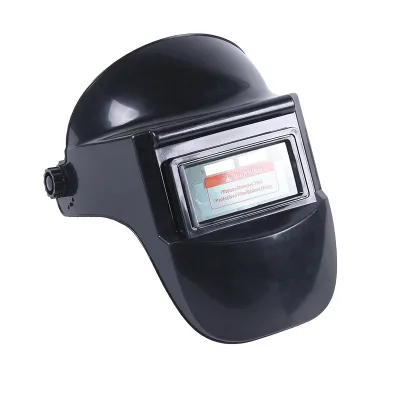
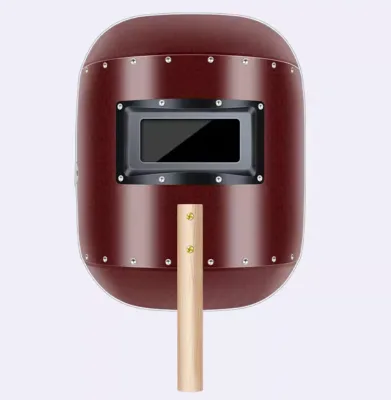


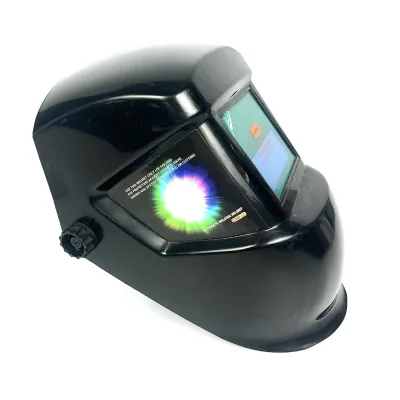
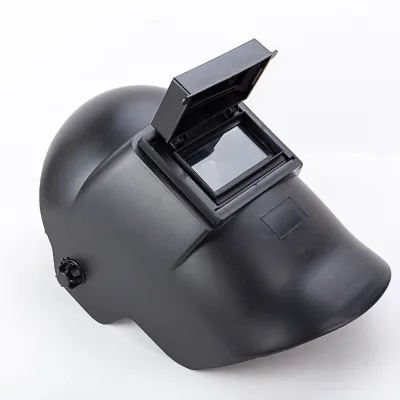


Comprehensive Sourcing Guide
Strategic Sourcing Guide for Anti-Scratch Welding Safety Face Shields
Understanding Product Attributes and Technical Specifications
When sourcing anti-scratch welding safety face shields, buyers must first distinguish between the broad category of face shields and the specific functional requirements of welding helmets. The market data indicates a diverse range of product models, from standard dust masks to advanced auto-darkening welding helmets. A critical observation in the current supply landscape is the variation in application types. While some products are explicitly categorized as "Dust Mask" or "Safe-Type" masks, others are engineered specifically for "Welding Works," "TIG Mag MIG" applications, and general "Welding Mask" usage.
The core keyword "anti-scratch" implies a need for durable viewing lenses, yet the provided product facts reveal a split in technology. Some models feature "Auto-Darkening" capabilities with specific optical classes, such as "1/1/1/2," while others are manual or non-auto-darkening variants. For instance, specific models like "1544" and "15312" are associated with auto-darkening features, whereas models like "D 048" and "GM505" may represent different configurations. The viewing area dimensions are a crucial technical specification for comfort and visibility. Observed data lists viewing areas of "9443 mm" and "9343 mm," which are standard for high-visibility welding tasks.
Material composition is another defining factor. The supply chain includes helmets constructed from "PP" (Polypropylene) for the helmet body, which offers a balance of weight and impact resistance. The lens itself must withstand high-intensity light and physical abrasion. While the term "anti-scratch" is the buyer's requirement, the actual product attributes listed include "Puncture-Proof" and "Insulation" ratings (such as "B"). Buyers should verify that the lens material explicitly meets anti-scratch criteria, as the presence of "Dustproof" and "Explosion Proof" functions does not automatically guarantee surface hardness against abrasion. The switching time for auto-darkening filters is another technical metric, with observed values of "1/25000s" and "1/15000s," indicating the speed at which the lens protects the eyes from arc flash.
Compliance Standards and Certification Verification
Navigating the compliance landscape for welding safety equipment requires careful attention to the standards listed in product specifications. The supplied data mentions "Multi Type" as a product standard for certain models, while others list specific dimensions like "382980" or "Carton size" as standard references. This ambiguity suggests that buyers cannot rely on a single universal standard label but must verify the specific certification for each model.
The background information notes "EN166" and "CE" as potential standards, but these are flagged as low-confidence background data. Consequently, a procurement strategy must not assume that every listed product meets EN166 or holds CE certification without direct verification from the supplier. The "Light/Dark State" is specified as "DIN4/9-13" for some auto-darkening units, which aligns with international welding filter standards, but this must be confirmed for the specific batch being purchased.
Buyers should request test reports that explicitly reference the relevant safety standards for the region of import. For example, if the product is destined for the European market, the EN166 standard for personal eye protection is critical. If the destination is North America, ANSI Z87.1 may be the relevant benchmark. The supplied facts mention "prod_standard" as "Multi Type," which implies a lack of uniformity across the catalog. Therefore, the procurement process must include a step where the supplier provides a certificate of conformity for the specific model number, such as "GM500H" or "D 037," rather than accepting a generic statement of compliance.
Cost Drivers and Pricing Dynamics
The observed price range for these products spans from $0.07 to $35.00 USD. This wide disparity indicates that the "anti-scratch welding safety face shield" is not a monolithic product but a category containing vastly different value propositions. The lower end of the price spectrum likely corresponds to basic manual masks, simple dust masks, or non-auto-darkening helmets with standard polycarbonate lenses. The higher end of the range, approaching $35, is associated with advanced features such as "Auto-Darkening," "Solar Energy" power supply, "Lithium Battery" integration, and specialized optical classes.
Several factors drive the cost within this range. First, the complexity of the optical filter is a primary cost driver. Models with "Arc Sensors" (e.g., 2 sensors) and fast switching times like "1/25000s" command a premium over manual variants. Second, the power source influences pricing. Units powered by "Solar Energy" or "Lithium Battery" systems require additional components and assembly, increasing the unit cost compared to purely mechanical or battery-free designs. Third, customization options, listed as "Available" with "OEM/ODM" services, add to the cost. Custom branding, specific packaging like "Export Carton" or "Carton Box," and tailored product models like "GM534" or "GM43-64" will incur higher prices than standard off-the-shelf items.
The Minimum Order Quantity (MOQ) also affects the effective unit cost. The observed MOQ range is between 2 and 50,000 units. Buyers purchasing small quantities, such as the lower bound of 2, may face a higher per-unit price due to the lack of economies of scale. Conversely, bulk orders approaching 50,000 units may negotiate lower prices, but the total capital outlay increases significantly. Payment terms like "L/C T/T D/P" are standard, but the financial risk and cash flow implications should be factored into the total cost of ownership.
Typical Applications and Functional Requirements
The functional scope of these products is extensive, ranging from general industrial safety to specialized welding tasks. The "Application" attribute lists "Welding Works," "TIG Mag MIG," and "Dust Mask" usage. This indicates that the same product line may serve multiple industries, including metal fabrication, construction, and general manufacturing.
For welding applications, the "Function" attribute highlights "Dustproof," "Explosion Proof," and "Heat Impact Resistant" capabilities. These are essential for environments where sparks, molten metal, and hazardous fumes are present. The "Puncture-Proof" and "Insulation" ratings further suggest suitability for high-risk environments. However, buyers must match the specific application to the product model. A "Handheld Welding Helmet" (Model D 048) serves a different purpose than a "Headband Welding Helmet" (Model 15312). The former offers mobility for specific tasks, while the latter provides hands-free operation for prolonged welding sessions.
The "Viewing Area" dimensions of approximately 93-94 mm in width and 43 mm in height are designed to provide adequate peripheral vision while maintaining structural integrity. The "Size of The Cartridge" (110909 mm) is a critical specification for models using replaceable filters, ensuring compatibility with standard cartridge systems. For applications requiring high precision, such as TIG welding, the "Optical Class" of 1/1/1/2 is vital to ensure clear visibility of the weld pool without distortion.
Supplier Evaluation and Manufacturing Capabilities
Evaluating suppliers for welding safety equipment requires a focus on their manufacturing capabilities and service offerings. The data indicates that "OEM/ODM" services are available, suggesting that many suppliers can customize products for specific buyer requirements. This is a significant advantage for buyers looking to brand their own line of safety equipment or require specific modifications to standard models.
The "prod_origin" is listed as "China" and specifically "Shandong, China." This geographic concentration suggests a robust supply chain in the Shandong region, known for its manufacturing base. However, buyers should verify the specific factory location and capacity. The "prod_packing" varies from "Carton Box" to "CTN" and "Export Carton," indicating different levels of packaging sophistication. "OEM" packing is also listed, which implies the supplier can handle custom packaging requirements.
When evaluating suppliers, buyers should assess their ability to provide consistent quality across different model numbers. The list includes numerous models (e.g., "GM500H," "GM534," "GM611," "D 034"), which suggests a large catalog. A reliable supplier should be able to demonstrate quality control processes that cover this entire range. The "Customization" attribute being "Available" is a positive sign, but buyers must ensure that customization does not compromise the core safety features like the "Anti-Scratch" properties or the "Auto-Darkening" functionality.
Quality Control and Long-Term Procurement Considerations
Quality control is paramount when sourcing safety equipment. The "prod_standard" being listed as "Multi Type" or "Normal Size" highlights the need for rigorous inspection. Buyers should implement a quality control plan that includes visual inspections for scratches, impact testing for the "Puncture-Proof" claims, and functional testing for the "Auto-Darkening" features. The "Switching Time" of 1/15000s or 1/25000s must be verified to ensure the lens reacts fast enough to protect the welder's eyes.
Long-term procurement considerations involve the availability of replacement parts and the durability of the product. The "Power Supply" options, including "Lithium Battery" and "Solar Energy," suggest that batteries may need replacement over time. Buyers should inquire about the lifespan of these batteries and the availability of spare parts. The "Insulation" rating and "Heat Impact Resistant" functions are critical for long-term safety, and suppliers should provide data on the product's resistance to degradation over time.
The "Payment Ways" of L/C, T/T, and D/P offer flexibility, but buyers should consider the payment terms in the context of their cash flow and risk management. For long-term contracts, establishing a framework for recurring orders and consistent quality assurance is essential. The "MOQ" range of 2 to 50,000 allows for flexibility in order sizing, but buyers should plan for volume increases to secure better pricing and prioritize supply chain stability.
Comparison of Key Product Features
To assist in decision-making, the following table summarizes the key technical attributes observed in the product data, highlighting the differences between various model types and features.
| Feature Category | Observation A (Auto-Darkening) | Observation B (Manual/Standard) | Observation C (Specialized) |
|---|---|---|---|
| Model Examples | 1544, 15312, GM500H | D 048, GM505, GM43-64 | GM534, GM611, D 037 |
| Auto-Darkening | Yes | No | Varies |
| Power Source | Lithium Battery / Solar Energy | N/A (Manual) | N/A |
| Switching Time | 1/25000s, 1/15000s | N/A | N/A |
| Viewing Area | 9443 mm, 9343 mm | N/A | N/A |
| Helmet Material | PP | PP | PP |
| Application | TIG, Mag, MIG | Welding Works | General Welding |
| Optical Class | 1/1/1/2 | N/A | N/A |
| Arc Sensors | 2 | N/A | N/A |
| Light/Dark State | DIN4/9-13 | N/A | N/A |
This comparison underscores the importance of selecting the right model based on specific operational needs. The presence of advanced features like solar power and fast switching times in specific models justifies the higher price point, while manual models offer a cost-effective solution for less demanding applications.
Final Procurement Recommendations
In conclusion, sourcing anti-scratch welding safety face shields requires a nuanced approach that balances technical specifications, compliance verification, and cost considerations. Buyers must navigate a market with diverse product models, ranging from basic dust masks to advanced auto-darkening helmets. The key to successful procurement lies in verifying the specific attributes of each model, ensuring that the "anti-scratch" claim is backed by material evidence, and confirming that the product meets the necessary safety standards for the intended application. By carefully evaluating suppliers based on their OEM/ODM capabilities, quality control processes, and the specific features of their product lines, buyers can secure reliable safety equipment that protects workers while meeting budgetary constraints. The wide range of prices and MOQs offers flexibility, but it also demands diligence in supplier selection and contract management to ensure consistent quality and safety performance.
FAQs
What models feature auto-darkening welding helmets?
Models 1544 and 15312 feature auto-darkening capabilities with automatic blackening upon power on. These units utilize lithium battery or solar energy power supplies for operation.
Which viewing area dimensions are available for welding helmets?
Available viewing areas include 94 by 43 mm and 93 by 43 mm dimensions. These sizes provide standard visibility for TIG, MAG, and MIG welding applications.
Can buyers request customization for welding face shields?
Yes, customization is available for these products with OEM and ODM services offered. Buyers can request specific packaging like export cartons or custom branding options.
What are the standard payment methods for these products?
Standard payment ways include L/C, T/T, and D/P methods. These terms allow flexibility for international transactions involving various order quantities and supplier locations.
How fast do the auto-darkening filters switch states?
Switching times are observed at 1/25000 seconds and 1/15000 seconds for specific models. This rapid response protects eyes from arc flash during welding works.
What material is used for the welding helmet body?
The helmet material is specified as PP, which stands for Polypropylene. This material offers a balance of weight and impact resistance for safety applications.
Where are these welding products manufactured?
Products originate from China, with specific mentions of Shandong, China as a production location. This region hosts multiple factories capable of handling various model numbers.