Source breathable anti-slip safety gloves for Construction Farm Garden
Find 30 options for breathable anti-slip safety gloves suitable for industrial work, gardening, and outdoor activities. Compare specifications like thickness, material, and size to select the right pair for your needs.
Key considerations
Products List


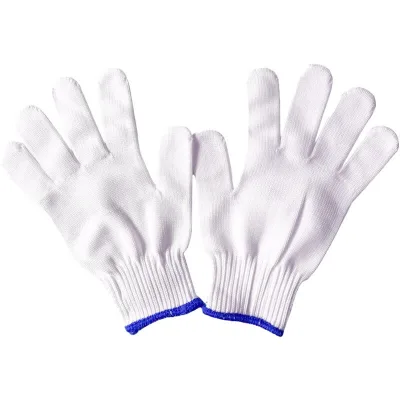


Custom Safety Gloves Anti-Impact Anti-Slip Anti-Wear Mechanical Work Gloves
$4.00 - $5.20
MOQ: 1000 Pairs


High - Quality Work Labor Protection Gloves - Cut - Resistant & Durable
$2.50 - $2.80
MOQ: 300000 pieces


Comprehensive Sourcing Guide
Strategic Sourcing Guide for Breathable Anti-Slip Safety Gloves
Understanding Product Attributes and Functional Requirements
When sourcing breathable anti-slip safety gloves, buyers must first distinguish between the specific functional claims observed in the market and the actual technical specifications required for their operations. The core keyword implies a dual requirement: the material must allow for air circulation to prevent hand fatigue during prolonged wear, while the surface texture must provide a reliable grip on wet, oily, or dry surfaces. Based on current product observations, these gloves are frequently categorized under industrial work safety applications, serving sectors such as construction, general industrial work, farming, and gardening.
The functional profile of these gloves often includes anti-static properties alongside anti-scratch capabilities. This combination is critical for environments where static discharge could damage sensitive components or where abrasive materials pose a risk to the skin. The observed product attributes indicate that "breathable" is a key differentiator, often achieved through specific knitting gauges or material blends like nylon. In contrast, other variations in the market may prioritize heavy-duty protection with "thickened" specifications, which can compromise breathability. Therefore, a buyer must explicitly verify the "Gauge" and "Outer Material" to ensure the final product aligns with the need for airflow. For instance, a 10g gauge with a nylon base and latex palm coating is a common configuration that balances breathability with the necessary anti-slip performance.
It is essential to treat product attributes as observations rather than universal guarantees. While some listings highlight "Anti-Slip" and "Wear-Resistant" features, others may list "Anti-Static" and "Anti-scratch" as primary functions. The "Type" of glove is also a critical variable; some products are designed as non-disposable for long-term use, while others may be single-use. The "Season" attribute suggests that these gloves are suitable for year-round application, but the specific "Cuff Tightness" (e.g., "Tight" vs. loose) will dictate their suitability for different tasks. A tight cuff may be preferred for preventing debris entry in construction, whereas a looser fit might be necessary for high-precision tasks requiring dexterity.
Technical Specifications and Material Composition
The technical specifications of breathable anti-slip gloves are defined by a complex interplay of dimensions, weights, and material layers. The "Outer Material" is frequently identified as Nylon, which provides a lightweight and breathable foundation. This is often paired with an "Outer Material" coating of Latex, specifically in a "Latex Smooth" palm style, to deliver the required grip. The "Gauge" of the knit, observed at 10g, indicates the density of the threads, which directly influences the thickness and flexibility of the glove. A lower gauge number typically suggests a finer, more breathable knit, whereas a higher number indicates a thicker, more durable fabric.
Dimensions play a pivotal role in ensuring a proper fit, which is essential for maintaining the anti-slip functionality. If a glove is too loose, the grip is compromised; if too tight, circulation is restricted, negating the "breathable" benefit. Observed specifications include a "Gloves Length" of 19.5cm and a "Gloves Width" of 9.9cm, which serve as reference points for medium to large sizes. However, buyers must note that size availability varies significantly, with ranges extending from XXS to XL. The "Thread" count, observed as 1 or 2 Threads/Yarns, further defines the structural integrity of the knit. A single-thread construction may offer superior flexibility and breathability, while a two-thread construction might offer enhanced durability for heavy industrial tasks.
Weight is another critical specification that correlates with the intended application. The market data shows a wide range of weights, from light options like 35-60g per pair for general gardening to heavier industrial variants weighing up to 1100g. The "Thickness" specification is equally important; while some products are described as "Thickened" for maximum protection, others are labeled "Flimsy" or lightweight to prioritize dexterity and airflow. Buyers must cross-reference the "Weight" and "Thickness" to ensure the glove meets the specific safety requirements of their work environment without causing excessive hand fatigue. The "Wire Diameter" and "Ring Size" are specific metrics that may apply to wire-reinforced variants, indicating a specialized subset of safety gloves designed for extreme abrasion resistance.
Compliance, Certification, and Safety Standards
Navigating the compliance landscape for safety gloves requires a careful verification of standards and certifications. While the supplied data mentions "SGS" and "ISO" as observed product standards, it is crucial to understand that these are general references and do not automatically guarantee compliance with specific regional safety regulations. The low-confidence background information lists standards such as EN 388 and EN 374, which are widely recognized for mechanical and chemical protection, respectively. However, buyers should not assume that every product labeled "breathable anti-slip" meets these specific EN standards without explicit verification from the supplier.
The "prod_standard" field in product listings often indicates that the manufacturer has undergone third-party testing, but the specific scope of that testing must be confirmed. For example, a glove may be ISO certified for general quality management but not necessarily certified for specific cut or abrasion resistance levels required by local occupational safety laws. The presence of "CE" marking in the background context suggests a potential pathway for European market entry, but this must be validated against the actual product documentation. Buyers should request specific test reports that detail the glove's performance against EN 388 for abrasion, blade cut, tear, and puncture resistance, as well as EN 374 for chemical penetration if the work involves hazardous substances.
Furthermore, the "Customization" attribute indicates that many suppliers offer tailored solutions, which can include custom labeling or specific compliance packaging. However, the "Customizable or Not" flag in some listings shows a "No" status, implying that standard compliance packages may be the only option for certain SKUs. This distinction is vital for procurement teams that require specific branding or regulatory documentation. The "Standard Export Packing" or "Carton" options suggest that the packaging itself may be designed to protect the gloves during transit, but it does not inherently confer safety certification. Buyers must ensure that the supplier can provide a Certificate of Conformity (CoC) that explicitly references the relevant safety standards for the intended application, rather than relying on general marketing claims.
Cost Drivers and Pricing Dynamics
The pricing of breathable anti-slip safety gloves is influenced by a multitude of factors, including material costs, production complexity, and order volume. The observed price range in the market spans from $0.05 to $482, a variance that reflects the vast difference between basic, single-use gloves and highly specialized, multi-layered industrial equipment. The lower end of this spectrum typically corresponds to lightweight, single-gauge nylon gloves with basic latex coatings, suitable for light gardening or general handling tasks. Conversely, the higher price points are associated with gloves featuring advanced materials, reinforced stitching, specialized coatings, or custom manufacturing runs.
Order Volume is a primary driver of unit cost. The observed Minimum Order Quantity (MOQ) ranges from 1 to 300,000 units, indicating that significant economies of scale are available for large buyers. Suppliers often offer tiered pricing structures where the unit cost decreases substantially as the order quantity increases. For instance, a "Selling Units" multiple of 3,000 suggests that the most competitive pricing is available for bulk orders that meet this threshold. Buyers should be aware that smaller orders, while more flexible, may incur higher per-unit costs due to the fixed costs of setup and logistics.
Material composition also plays a significant role in cost. The use of high-grade Nylon and specific Latex formulations can increase the base cost of the glove. Additionally, the "Thickness" and "Weight" of the glove are direct indicators of material usage; a "Thickened" glove will inherently cost more than a "Flimsy" one due to the increased amount of raw material required. Customization features, such as specific colors (e.g., "White" or "Blue") or custom packaging, can also add to the overall cost. Buyers must balance the need for specific performance attributes with their budget constraints, understanding that the most expensive glove is not always the most appropriate for every application.
Typical Applications and Operational Context
Breathable anti-slip safety gloves are designed for a diverse range of applications, each with unique demands on the product's performance. The "Application" field in product data lists Construction, Industrial Work, Farm, and Garden as primary use cases. In construction environments, the "Anti-Slip" and "Wear-Resistant" features are paramount for handling rough materials like bricks, concrete, and metal. The "Anti-Static" property is particularly valuable in industrial settings where electronic components are handled, preventing static discharge that could damage sensitive equipment.
For agricultural and gardening tasks, the "Breathable" attribute is critical due to the physical exertion involved and the potential for high temperatures. The "Season" attribute of "Whole Year" suggests that these gloves are versatile enough for use in varying weather conditions, though the specific "Cuff Tightness" and "Length" should be chosen to prevent debris entry while allowing for ventilation. In industrial work, the "Type" of glove, whether non-disposable or single-use, depends on the duration of the task and the level of contamination risk. Non-disposable gloves are preferred for long-term tasks where durability and cost-effectiveness are priorities, while disposable options may be used for short-duration, high-hygiene tasks.
The "Feature" set of "Anti-Slip," "Wear-Resistant," and "Anti-Static" makes these gloves suitable for a wide array of manual handling operations. The "Palm Style" of "Latex Smooth" provides a consistent grip across various surfaces, making them ideal for general-purpose use. However, buyers must consider the specific "Usage" context; for example, a glove designed for "Gardening" may have different durability requirements compared to one designed for "Construction." The "Weight" of the glove also influences its suitability; lighter gloves (35-60g/pair) are better for precision tasks, while heavier gloves (up to 1100g) are better for heavy-duty protection.
Supplier Evaluation and Quality Control Protocols
Evaluating suppliers for breathable anti-slip safety gloves requires a rigorous assessment of their manufacturing capabilities, quality control systems, and supply chain reliability. The "prod_origin" of "Anping China" or "China" indicates the primary manufacturing hubs, but buyers should not assume uniform quality across all facilities in these regions. Instead, they should verify the supplier's specific quality control processes, including in-line inspections and final product testing. The "Standard Export Packing" or "Carton" options suggest that the supplier has established logistics protocols, but the integrity of the packaging during transit must be confirmed to prevent damage to the gloves.
Quality control should extend beyond the final product to include raw material verification. Buyers should request documentation on the "Material" (Nylon) and "Outer Material" (Latex) to ensure they meet the specified standards. The "Gauge" and "Thread" count should be verified against the ordered specifications to ensure consistency. Additionally, the "Customization" capabilities of the supplier should be assessed; while some suppliers offer "Standard Export Packing or as Your Requirement," others may have limited flexibility. The "prod_model" codes (e.g., TYB-0056, gloves-blue, RTCMG-01) serve as unique identifiers for specific product lines, and buyers should ensure that the supplier can consistently reproduce these models with the same quality attributes.
Long-term procurement considerations include the supplier's ability to maintain consistent quality over time and their responsiveness to changes in demand. The "Selling Units" multiple of 3,000 suggests that the supplier is geared towards bulk orders, and buyers should confirm their capacity to scale production up or down as needed. The "Lead Time" and "MOQ" values are critical factors in supply chain planning, and buyers should negotiate terms that align with their inventory management strategies. Finally, the "Standard" and "Certification" status of the supplier should be regularly reviewed to ensure ongoing compliance with relevant safety regulations and industry standards.
Long-Term Procurement and Strategic Sourcing Considerations
Sourcing breathable anti-slip safety gloves is not merely a transactional activity but a strategic decision that impacts operational efficiency and worker safety. Buyers should develop a long-term relationship with suppliers who demonstrate a commitment to quality and innovation. The "Customization" attribute offers an opportunity to tailor products to specific needs, but this requires clear communication and mutual understanding of requirements. The "prod_packing" options, such as "Standard Export Packing or as Your Requirement," highlight the importance of packaging in protecting the product and ensuring it meets the buyer's logistical needs.
Strategic sourcing also involves monitoring market trends and technological advancements. The "Feature" set of "Anti-Slip," "Wear-Resistant," and "Anti-Static" is likely to evolve as new materials and manufacturing techniques emerge. Buyers should stay informed about developments in glove technology to ensure they are always sourcing the most effective products. The "Weight" and "Thickness" specifications are also areas where innovation can lead to better performance, such as lighter gloves with higher durability.
Finally, the "Application" and "Usage" of the gloves should be regularly reviewed to ensure they continue to meet the needs of the workforce. As work environments change, the requirements for safety gloves may shift, and buyers must be prepared to adapt their sourcing strategies accordingly. By focusing on quality, compliance, and long-term partnerships, buyers can ensure a steady supply of high-performance breathable anti-slip safety gloves that protect their workers and enhance productivity.
FAQs
What are the key features of breathable anti-slip safety gloves?
These gloves typically offer anti-slip, wear-resistant, and anti-static features. They are designed for outdoor activities and industrial work, often made with nylon and latex coatings to ensure breathability and grip during construction or gardening tasks.
Which sizes are available for breathable anti-slip safety gloves?
Available sizes range from XXS to XL, with specific dimensions like 210x95mm for XXS and 265x135mm for XL. Some models also specify a length of 19.5cm and a width of 9.9cm to ensure a proper fit for various hand sizes.
Can buyers request customization for breathable anti-slip safety gloves?
Customization is available for some products, including specific colors like white or blue and custom packing requirements. However, certain models are not customizable, so buyers must verify the specific product listing to confirm if tailored options are offered.
How is the weight of breathable anti-slip safety gloves determined?
Weight varies significantly by model, ranging from 35-60g per pair for light gardening gloves to up to 1100g for heavy industrial variants. The thickness, described as either thickened or flimsy, directly influences the final weight and durability of the glove.
What materials are used to make breathable anti-slip safety gloves?
Common materials include nylon for the outer layer and latex for the palm coating, often in a smooth style. The gauge is typically 10g, and the thread count can be one or two threads per yarn, balancing breathability with structural integrity.
Which certifications apply to breathable anti-slip safety gloves?
Products may meet SGS and ISO standards, though specific safety certifications like EN 388 are not guaranteed for all listings. Buyers should request specific test reports to confirm compliance with regional safety regulations for their intended industrial or construction applications.
What is the typical MOQ for ordering breathable anti-slip safety gloves?
The minimum order quantity ranges from 1 to 300,000 units depending on the supplier and product type. Some vendors require selling units in multiples of 3,000, while others offer flexible single-unit orders for smaller procurement needs.