Source Cat Eyewear Frames for Reading, Sports, and Optical Use
Compare 30 verified Cat Eyewear Frames from suppliers in China. Buyers can review styles including rectangular and square designs, materials like copper alloy and acetate, and customization options for OEM and ODM needs.
Key considerations
Products List


Fashion Cat Eye Metal Frame for Female Optical Frames Glasses Eyewear Frame
$2.60 - $3.80
MOQ: 12 Pieces


Fashionable Style Elegant Shiny Eyewear Cat Eye Frame Colorful Optical Frames
$4.50 - $5.00
MOQ: 12 Pieces


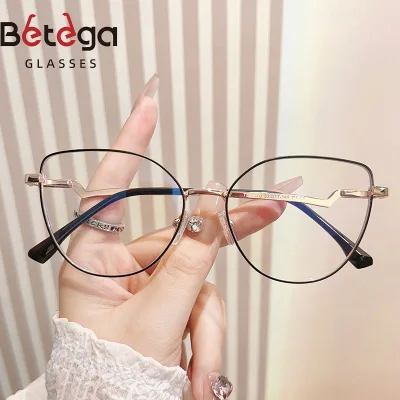

Cat Eyes Acetate Frames Eye Glasses Prescription Glasses Optical Frames
$2.50 - $3.00
MOQ: 1200 Pieces


Women Fashion Eyeglass Cat Eye Eyewear Frames Acetate Optical Frames Glasses
$7.53 - $7.62
MOQ: 1200 Pieces

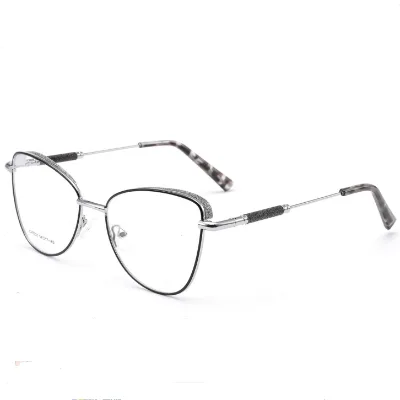

Fashion Cat Eye Shape Eyeglasses Acetate Eyewear Optical Frames Manufacturers
$6.00 - $6.50
MOQ: 15 Pieces


Comprehensive Sourcing Guide
Strategic Sourcing Guide for Cat-Eye Eyewear Frames
The global market for cat-eye eyewear frames presents a complex landscape for B2B procurement professionals seeking to balance aesthetic trends with rigorous supply chain reliability. While the core keyword "Cat Eyewear Frames" often evokes a specific retro-modern silhouette, the actual product catalog reveals a diverse array of structural variations, material compositions, and compliance requirements. Buyers must navigate a dataset where attributes such as frame shape, material type, and intended usage vary significantly across different SKUs. This guide provides a disciplined approach to sourcing, grounded in observed product attributes and verified industry standards, ensuring that procurement decisions are based on factual evidence rather than speculative marketing claims.
Understanding Structural and Design Variations
The first step in sourcing cat-eye frames involves a granular analysis of the product's physical attributes. In the observed dataset, the term "cat-eye" is not a monolithic category but a design element that coexists with other distinct structural classifications. For instance, while some listings specify a "Rectangular" or "Square" frame shape, others explicitly denote "Full frame" or "Semi-Rimless" styles. A buyer must recognize that a frame marketed under a broad "cat-eye" umbrella may possess a "One-Piece" nose support or a "Non-Integrated" nose bridge, significantly altering the fit and comfort profile.
Furthermore, the "Glasses Style" attribute shows a divergence between "Full frame" and "Semi-Rimless" constructions. This distinction is critical for manufacturing and inventory planning. A "Full frame" design typically offers greater durability and lens retention, suitable for "Optical" and "Sport" applications, whereas "Semi-Rimless" variants may appeal to a lighter aesthetic but require different assembly techniques. The "Frame Shape" further complicates this; while "Rectangular" and "Square" shapes are common, the "Cat-eye" silhouette often implies a specific angular lift at the temples. Buyers must verify if the "Frame Shape" listed aligns with the desired visual profile, as the dataset includes "Fashion," "Casual," and "Antique" styles that may overlap with the cat-eye aesthetic but serve different market segments.
| Attribute Category | Observed Variations | Procurement Implication |
|---|---|---|
| Frame Style | Full frame, Semi-Rimless | Determines lens mounting method and durability. |
| Frame Shape | Rectangular, Square, Oval Face fit | Affects target demographic and facial compatibility. |
| Nose Support | One-Piece, Non-Integrated | Influences comfort and weight distribution. |
| Rim Type | Full Rim, Inside Temple | Impacts structural integrity and manufacturing complexity. |
Material Composition and Durability Factors
Material selection is a primary driver of cost, weight, and perceived value in the eyewear sector. The supplied data indicates a wide spectrum of metallic and non-metallic options. "Copper Alloy" is a frequently observed material, offering a balance of malleability and strength, often utilized in "Fashion" and "Casual" styles. In contrast, "Precious Metals" are listed for specific high-end models, suggesting a premium price point and a target audience seeking luxury or "Antique" finishes.
The dataset also highlights "Stainless" steel and "Acetate" as key materials. Stainless steel frames are typically associated with "High Quality" durability and are often found in "Sport" or "Outdoor" applications where resistance to corrosion and impact is paramount. Acetate frames, conversely, provide a rich color palette and are often linked to "Casual" or "Fashion" aesthetics. It is crucial to note that "CP" (Cellulose Propionate) is also listed as a frame material, which may offer distinct optical clarity and flexibility compared to standard acetate.
Buyers must verify the specific alloy composition when "Metallic Materials" are cited as "Copper Alloy" or "Stainless." The presence of "Precious Metals" implies a different supply chain and potentially higher raw material volatility. Additionally, the "Frame Material" consistency is vital; mixing materials within a single order can lead to quality control issues if the plating or bonding processes differ. The "Quality" attribute is explicitly marked as "High Qulaity" in some listings, but this is an observation rather than a guaranteed standard for every SKU. Procurement teams should request material test reports to confirm the actual composition matches the supplier's description.
Compliance, Certification, and Regulatory Standards
Navigating the regulatory landscape is non-negotiable for international B2B transactions. The observed product data includes several critical certifications and standards that serve as baseline indicators of compliance. "CE" certification is a recurring attribute, indicating conformity with health, safety, and environmental protection standards for products sold within the European Economic Area. This is a fundamental requirement for any supplier claiming to export to Europe.
Beyond the CE mark, the dataset references "FDA" standards and "ISO En 14889: 2003 Standards." The FDA (U.S. Food and Drug Administration) regulations are essential for products entering the American market, particularly regarding optical safety and lens quality. The ISO EN 14889: 2003 standard specifically addresses the safety requirements for spectacle frames, covering mechanical strength, flammability, and chemical resistance. Buyers must ensure that the "prod_standard" listed for a specific model aligns with the destination market's legal requirements.
It is important to treat these certifications as observations of specific listings rather than universal guarantees for the entire category. A model with "prod_model: 22Q137M" may carry "FDA, CE ISO En 14889: 2003 Standards," while another model might only list "CE." Procurement teams must verify the validity of these certificates for the specific batch being ordered. The "Certificate" attribute should be cross-referenced with the "prod_origin," which is listed as "China" for the observed products. While China is a major manufacturing hub, the presence of a certificate does not automatically validate the entire production line; independent third-party testing may be required to ensure batch-to-batch consistency.
Cost Drivers and Pricing Dynamics
The pricing structure for cat-eye frames is influenced by a complex interplay of materials, customization, and order volume. The observed price range in the dataset spans from 0.81 to 8 USD, a variance that reflects the diversity of materials and complexity. The lower end of this spectrum likely corresponds to "Copper Alloy" or "Stainless" frames with standard finishes, while the upper end may include "Precious Metals" or frames with intricate "Antique" styling.
The "MOQ" (Minimum Order Quantity) range of 2 to 1200 units further dictates the cost per unit. High-volume orders typically benefit from economies of scale, reducing the unit cost significantly. However, the "Customization" attribute introduces a variable cost element. Suppliers offering "OEM & ODM & Customized" services and "Accept Customized Logo" capabilities often charge a premium for tooling, mold creation, and branding setup. The "Service" attribute explicitly mentions "Welcom OEM," indicating that custom design is a core competency for many suppliers in this category.
Buyers must analyze the "prod_packing" specifications to understand logistics costs. Listings such as "12 Pieces/Box, 300 Pieces/Carton" or "Oppbag" packaging affect shipping efficiency and potential damage rates. The "Delivery Time" of "10-15 Days" suggests a relatively agile supply chain, but this lead time may fluctuate based on the level of customization required. When evaluating cost, buyers should consider the total landed cost, including packaging, shipping, and potential tariffs, rather than focusing solely on the unit price.
Supplier Evaluation and Service Capabilities
Selecting the right supplier requires a deep dive into their service capabilities and operational flexibility. The dataset highlights several key service attributes, including "OEM & ODM & Customized" services and the ability to accept "Customer Logo." This indicates that suppliers are equipped to handle private label projects and custom design requests. The "Brand Name" "Readsun" is mentioned, but buyers should not limit their search to a single entity; rather, they should evaluate the supplier's capacity to replicate the "High Qulaity" standards observed in the dataset.
The "Design" attribute, noted as "Welcom OEM," suggests a collaborative approach to product development. Suppliers with strong OEM capabilities can assist in refining the "Frame Shape" and "Style" to meet specific market demands. However, buyers must verify the supplier's track record in delivering consistent quality. The "Quality" attribute is listed as "High Qulaity" in some contexts, but this is an observation that requires validation through sample testing.
Furthermore, the "Suitable for" attributes, such as "Woman," "Man," "General," and specific face shapes like "Oval Face" and "Round Face," indicate the supplier's ability to target diverse demographics. A supplier that can produce frames suitable for "Reading Glasses," "Sport," and "Optical" use simultaneously demonstrates versatility. Buyers should assess whether the supplier can maintain this versatility without compromising on the "Standard" compliance or material integrity.
Quality Control and Long-Term Procurement Strategy
Establishing a robust quality control (QC) protocol is essential for mitigating risks in the eyewear supply chain. The "prod_standard" of "53-16-142" and "54-17-140" refers to specific dimensional measurements that must be strictly adhered to. Deviations in these dimensions can lead to poor fit and customer dissatisfaction. Buyers should implement a QC plan that includes random sampling of the "prod_model" batches to verify that the "Frame Material," "Nose Support," and "Temple" specifications match the agreed-upon samples.
The "Usage" attributes, ranging from "For Reading Glasses" to "For Optical" and "For Sport," imply different stress tests. Frames intended for "Sport" or "Outdoor" applications must undergo rigorous durability testing to ensure they can withstand impact and environmental factors. The "Applicaiton" of "Outdoor" suggests a need for UV protection or specific material treatments, which should be verified through test reports.
Long-term procurement success depends on building a relationship with suppliers who can scale production while maintaining quality. The "Delivery Time" of "10-15 Days" is a baseline, but buyers should negotiate lead times that account for potential supply chain disruptions. The "prod_packing" method should be standardized to minimize damage during transit. Finally, buyers should maintain a clear communication channel regarding "Customization" requirements, ensuring that "Logo" placement and "Style" adjustments are accurately executed in every production run. By focusing on these evidence-based factors, buyers can secure a reliable supply of cat-eye frames that meet both aesthetic and functional requirements.
FAQs
What certifications do Cat Eyewear Frames typically hold?
Many Cat Eyewear Frames hold CE certification and meet FDA and ISO EN 14889: 2003 standards. These compliance markers ensure safety for optical use and export to European and American markets, though specific models vary in their documented standards.
Which materials are used for cat eyewear frame construction?
Frames are constructed from Copper Alloy, Stainless steel, Acetate, and sometimes Precious Metals. CP material is also observed, offering distinct flexibility. Buyers must verify the specific alloy composition to ensure durability matches the intended usage like sport or optical applications.
Can suppliers offer customization for Cat Eyewear Frames?
Yes, suppliers offer OEM, ODM, and customized services including custom logos. This allows buyers to modify frame shapes, colors, and branding. However, customization often impacts the minimum order quantity and may extend the standard delivery time of ten to fifteen days.
How does the MOQ affect pricing for Cat Eyewear Frames?
The minimum order quantity ranges from two to twelve hundred units, directly influencing the unit price. Lower MOQs like two units typically cost more per piece, while larger orders near twelve hundred units benefit from economies of scale and lower per-unit costs.
What is the typical delivery time for Cat Eyewear Frames?
The standard delivery time is ten to fifteen days for most orders. This lead time assumes standard production without complex customizations. Buyers should confirm specific timelines as high-volume orders or unique design requests might require additional processing time beyond the baseline.
Which face shapes are suitable for these Cat Eyewear Frames?
Frames are designed to suit Oval, Round, and General face shapes. Some models are specifically tailored for women or men, while others are unisex. Selecting the correct frame shape, such as rectangular or square, ensures a comfortable fit and aesthetic appeal for the target demographic.