Source Cerebral Palsy Walker for Rehabilitation for Therapy, Home, and Clinic
Explore 30 options for a Cerebral Palsy Walker for Rehabilitation designed for therapy, home care, and clinic use. Buyers can compare models like SHT-734 and BME4620, noting features such as adjustable seats, metal construction, and foldable designs from suppliers in Hebei and Jiangsu.
Key considerations
Products List


Cerebral Palsy Rehabilitation Equipment Wheelchair Cerebral Palsy for Children
$73.00 - $91.00
MOQ: 1 Pieces


Durable Lightweight Rollator Walker for Seniors Rehabilitation Therapy
$10.00 - $15.00
MOQ: 100 Pieces





Comprehensive Sourcing Guide
Strategic Sourcing Guide for Cerebral Palsy Rehabilitation Walkers
Understanding Technical Specifications and Functional Design
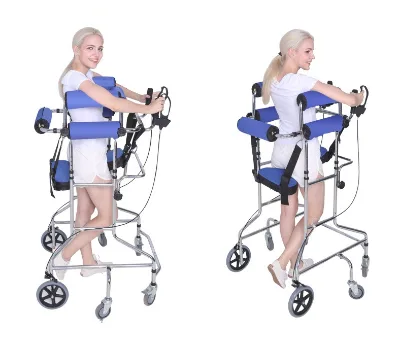
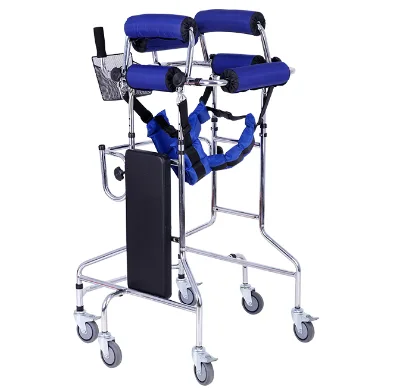
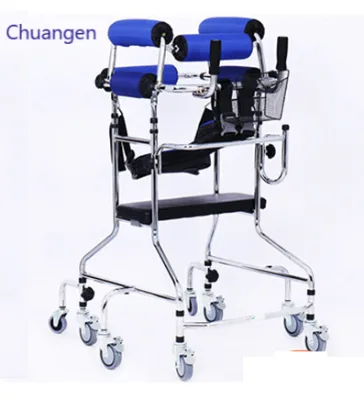
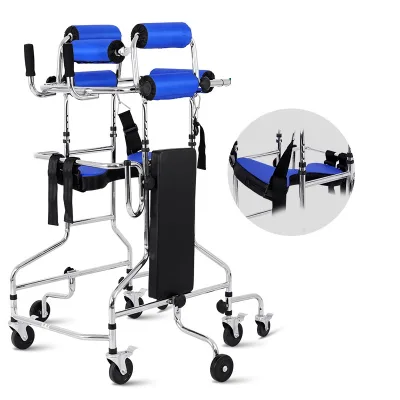
When sourcing assistive mobility devices for cerebral palsy rehabilitation, the primary objective is to identify equipment that balances stability with the specific motor control needs of the user. The product landscape for these devices is defined by distinct mechanical attributes that directly influence therapeutic outcomes. Buyers must scrutinize the structural configuration, specifically the folding mechanism and the principle of operation. In the current market, available units often feature a fixed-type principle, ensuring a stable base of support during gait training. However, the physical form factor varies significantly; some models are designed in a folded state for portability, while others are observed in an unfolded configuration for immediate clinical use. A critical distinction lies in the leg rest type, where advanced rehabilitation models may feature a design that spans across both sides, offering enhanced lateral support for users with varying degrees of spasticity or asymmetry.
Material composition is another non-negotiable technical factor. The observed inventory includes units constructed from metal, steel, and aluminum alloy. The choice of material dictates the device's weight profile and durability. For instance, aluminum alloy variants are typically lighter, which is advantageous for users with limited upper body strength, whereas steel constructions may offer superior rigidity for heavier-duty applications. The color of the device, ranging from blue, red, and black to multi-color options, is often a secondary aesthetic consideration but can play a role in user engagement and psychological comfort. Furthermore, the wheel configuration is vital; specifications indicate rear wheel sizes such as 16 inches, with tire options available in solid or pneumatic varieties, and tire colors in black, gray, or other custom shades. Buyers should verify if the specific model supports a tilt function, as some units are non-tilted while others offer adjustable tilt capabilities, which is essential for pressure relief and positioning.
Compliance, Certification, and Regulatory Standards
Navigating the regulatory landscape is paramount when procuring medical rehabilitation equipment. The supply chain for these devices is governed by international standards that ensure safety and efficacy. High-confidence data indicates that reputable manufacturers often hold ISO certifications, and specific product lines may carry CE and RoHS compliance marks. These certifications are not merely marketing labels; they signify adherence to strict quality management systems and restrictions on hazardous substances. When evaluating a supplier, buyers must request documentation proving that the product standard aligns with these certifications. For example, some listings reference stainless steel standards, which implies a specific grade of material resistance to corrosion and ease of cleaning, a critical factor in clinical environments.
It is essential to distinguish between the material standard and the packaging standard. While the product itself may be built to stainless steel specifications, the packaging standard might be defined as "1 pc/ctn," indicating a single unit per carton. This distinction is crucial for logistics planning. Additionally, the origin of the product, such as Hebei or Jiangsu in China, can influence the regulatory framework applied during manufacturing. Buyers should verify that the supplier's facility is audited and that the specific batch of walkers being purchased has undergone the necessary testing to meet the claimed ISO, CE, or RoHS standards. Relying on unverified claims can lead to procurement of non-compliant goods, which poses significant liability risks in healthcare settings.
Cost Drivers and Pricing Structure Analysis
The pricing structure for cerebral palsy walkers is influenced by a complex interplay of material costs, customization levels, and manufacturing complexity. The observed market range spans from 9 to 320 USD, a wide variance that reflects the diversity of product configurations. Lower-priced units often correspond to basic steel or metal constructions with standard, non-customized features. In contrast, higher-priced models typically incorporate advanced materials like aluminum alloy, specialized adjustable features such as seat angles and leg rests, and custom branding options. The cost driver of customization is particularly significant; products marked as "Customized" or offering logo customization often command a premium over standard "Non-Customized" inventory.
Beyond the unit price, buyers must consider the Minimum Order Quantity (MOQ) as a cost driver. The observed MOQ range of 1 to 100 units suggests that buyers can source small quantities for pilot testing or specific clinical needs, while larger orders may benefit from economies of scale. However, the total cost of ownership extends beyond the purchase price. Factors such as the net weight (observed at 18kg) and gross weight (20kg) directly impact shipping costs. A heavier unit requires more freight volume and weight-based shipping fees. Additionally, the manufacturing lead time, observed at 2 weeks for certain models, affects inventory holding costs and the urgency of the procurement cycle. Buyers should calculate the total landed cost, including freight, duties, and potential warehousing fees, rather than focusing solely on the per-unit price.
Typical Applications and Clinical Use Cases
Cerebral palsy rehabilitation walkers are designed for a spectrum of clinical applications, ranging from acute therapy to long-term daily living support. The primary application involves gait training, where the walker provides the necessary stability for patients learning to walk or relearning to walk. The "Aid Standing Wheelchair" type observed in the market suggests a hybrid application, supporting users who require assistance in transitioning from a seated to a standing position. This is particularly relevant for patients with significant lower limb weakness. The adjustable seat width, observed in ranges of 12, 14, 16, and 18 inches, allows for customization based on the patient's body dimensions, ensuring proper posture and comfort during extended therapy sessions.
The adjustable seat angle and elevating, height-adjustable leg rests are critical features for specific therapeutic interventions. These adjustments allow therapists to modify the patient's center of gravity and limb positioning to target specific muscle groups or to accommodate growth in pediatric patients. The "Across Both Sides" leg rest type is particularly useful for patients with bilateral involvement, providing uniform support. Furthermore, the detachable armrests offer versatility, allowing the device to be adapted for different stages of rehabilitation where arm support may be needed or removed to encourage independent arm movement. The outdoor capability, indicated by the "Using Ambient: Outdoor" attribute, suggests that these devices are robust enough for community reintegration therapy, enabling patients to practice walking in real-world environments.
Supplier Evaluation and Operational Capabilities
Evaluating a supplier requires a deep dive into their operational capabilities and production consistency. The origin of the product, whether from Hebei or Jiangsu, provides context regarding the industrial ecosystem and supply chain maturity. Buyers should verify the supplier's ability to handle customization requests, as the market data shows a split between "Customized" and "Non-Customized" options. A capable supplier should demonstrate flexibility in producing units with specific colors, such as blue, red, or black, and the ability to apply custom logos. The packing specifications, such as the 804168cm carton dimensions, are also indicators of the supplier's logistical competence.
Lead time is a critical metric for supplier evaluation. The observed manufacturing lead time of 2 weeks indicates a relatively agile production process, but buyers must confirm if this timeline holds for customized orders. Capacity is another factor; the observation of 295 pieces fitting into a 40HQ container provides a benchmark for bulk shipping efficiency. Suppliers who can consistently meet these volume targets while maintaining quality are preferable. Buyers should also assess the supplier's quality control processes, ensuring that the "New" condition of the products is maintained from the factory floor to the point of delivery. Requesting samples or third-party inspection reports can validate the supplier's claims regarding material quality and assembly standards.
Quality Control and Long-Term Procurement Considerations
Ensuring long-term value requires a rigorous quality control strategy that extends beyond the initial purchase. The durability of the walker is directly linked to the material used; steel and aluminum alloy offer different longevity profiles. Buyers should verify the finish and corrosion resistance, especially for units intended for outdoor use. The "Stainless steel" standard mentioned in the context implies a high level of durability, but this must be confirmed for the specific model being purchased. Regular maintenance checks are necessary to ensure that adjustable components, such as the leg rests and seat angles, remain functional and safe over time.
Long-term procurement considerations also involve the scalability of the supply relationship. As a rehabilitation center's needs grow, the ability to source additional units with consistent specifications is vital. The availability of spare parts, such as tires (solid or pneumatic) and wheels, should be confirmed. The supplier's ability to provide consistent color options and customization services ensures that the equipment remains aligned with the facility's branding and user preferences. Finally, buyers should establish clear communication channels for after-sales support, including warranty terms and repair protocols. By focusing on these long-term factors, procurement teams can secure a reliable supply of high-quality rehabilitation equipment that supports patient outcomes over the long term.
Comparative Analysis of Product Attributes
To facilitate decision-making, the following table summarizes key observed attributes across the product spectrum, highlighting the variations buyers must navigate.
| Attribute Category | Observed Options | Implication for Procurement |
|---|---|---|
| Material | Metal, Steel, Aluminium Alloy | Determines weight, durability, and cost; Aluminum for portability, Steel for rigidity. |
| Certification | ISO, CE, RoHS | Essential for regulatory compliance and safety assurance in clinical settings. |
| Customization | Available, Non-Customized, Logo Customization | Affects unit price and lead time; Custom options require specific MOQs. |
| Folding State | Folded, Unfolded, Folding | Impacts storage requirements and portability for home vs. clinic use. |
| Wheel/Tire | 16" Rear, Solid or Pneumatic, Black/Gray | Influences terrain adaptability and maintenance frequency. |
| Adjustability | Seat Width (12-18"), Seat Angle, Leg Rest | Critical for fitting diverse patient anatomies and therapeutic needs. |
| Origin | Hebei, Jiangsu | Indicates regional manufacturing capabilities and potential logistics routes. |
| Lead Time | 2 Weeks | Standard production window; verify for customized orders. |
This comparative overview underscores the necessity of precise specification matching. A buyer seeking a lightweight, portable unit for home use might prioritize aluminum alloy and folding capabilities, while a clinical facility might prioritize steel construction and extensive adjustability features. By aligning procurement decisions with these specific attributes, buyers can ensure that the selected walkers effectively meet the complex needs of cerebral palsy rehabilitation.
FAQs
What certifications do cerebral palsy walkers for rehabilitation have?
High-confidence facts indicate these devices often carry ISO, CE, and RoHS certifications. Buyers must verify specific product listings to confirm if the unit meets these standards before procurement.
Which materials are used for cerebral palsy walkers for rehabilitation?
Observed inventory includes units constructed from metal, steel, and aluminum alloy. Aluminum alloy variants are typically lighter for portability, while steel constructions offer superior rigidity for heavy-duty applications.
Can I customize the logo on cerebral palsy walkers for rehabilitation?
Customization is available for logos and specific product features in many listings. However, some models are marked as non-customized, so buyers should check individual product attributes before ordering.
What is the manufacturing lead time for cerebral palsy walkers for rehabilitation?
The observed manufacturing lead time for certain models is two weeks. Buyers should confirm this timeline applies to customized orders as it may vary based on production capacity and specific requirements.
How does the price range vary for cerebral palsy walkers for rehabilitation?
The observed market price range spans from 9 to 320 USD depending on configuration. Lower prices often correspond to basic steel constructions, while higher prices reflect advanced materials and customization options.
Which leg rest types are available for cerebral palsy walkers for rehabilitation?
Advanced models may feature leg rests that span across both sides for enhanced lateral support. Other units offer elevating and height-adjustable leg rests to accommodate different patient anatomies and therapeutic needs.