Source Class I Ultrasound Paper for Hospitals, Clinics, and Labs
Find 27 Class I Ultrasound Paper options from China. Compare thermal rolls for ultrasound scanners, hospital imaging, and clinic diagnostics. View specs, MOQs, and lead times for bulk sourcing; compare the available evidence and request quotations based on your requirements.
Key considerations
Products List




Comprehensive Sourcing Guide
Class I Ultrasound Paper Sourcing Guide
Procuring Class I Ultrasound Paper requires a clear understanding of the specific material composition and intended medical application. The available supply chain features products explicitly categorized as medical materials and accessories, designed primarily for adult patient use in hospital and clinic settings. Buyers must distinguish between sterile and non-sterile variants, as the observed market data indicates a prevalence of non-sterile paper products that rely on external sterilization processes if required for specific surgical procedures.
The sourcing landscape includes manufacturers offering both standard and customizable configurations, with some suppliers providing direct factory access. While the core product is identified as thermal paper rolls for ultrasound scanners, the supply base also lists related imaging equipment specifications, necessitating careful verification to ensure the purchased item matches the exact printer model requirements. Buyers should prioritize suppliers who explicitly state their product origin and material composition to avoid confusion with general office paper or incompatible thermal media.
Product Scope and Observed Listing Signals
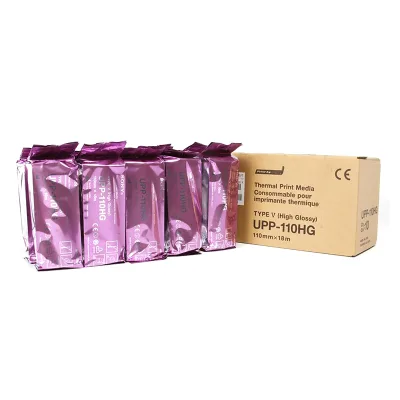
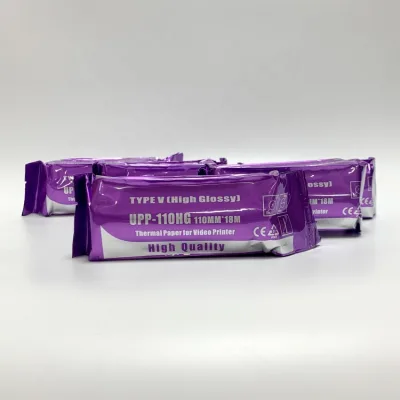
The observed product listings reveal a distinct range of specifications, including paper rolls with dimensions such as 110mm by 18 meters, which are critical for fitting specific ultrasound printer models. The material composition is consistently identified as paper products, often utilizing virgin wood pulp with a single-side coating to ensure optimal thermal transfer and image clarity. These signals indicate that the primary scope involves high-quality tracing paper designed for durability and water resistance, rather than standard thermal receipt paper used in retail environments.
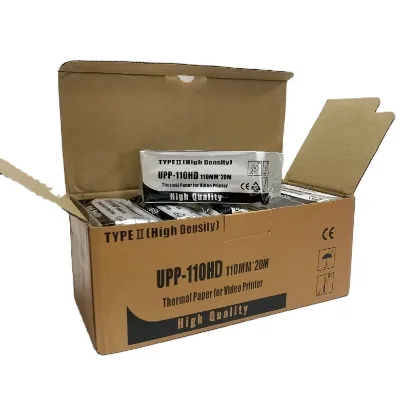
Buyers must navigate a variety of packaging options, ranging from simple paper cartons to robust wooden export packages, depending on the order volume and destination. The market data shows that while some listings offer customization, others are strictly non-customized single items, requiring precise alignment with existing inventory systems. Additionally, the presence of stock status indicators suggests that availability can fluctuate, prompting buyers to confirm immediate stock levels before finalizing orders to prevent operational delays in clinical settings.
Technical Specifications to Verify
Technical verification begins with confirming the physical dimensions and model compatibility, as listings show variations like 110HG or UPP-110HG that must match the specific ultrasound printer hardware. The coating side is a critical technical attribute, with observed data specifying single-side coating to ensure the thermal image transfers correctly without smudging or fading during the printing process. Buyers should request sample rolls to verify the pulp style, ensuring it is virgin wood pulp rather than recycled material, which can affect print quality and archival longevity.
Further technical due diligence involves checking the shelf life and storage requirements, as the observed data indicates a two-year shelf life for these medical paper products. The physical weight and single package size are also essential for logistics planning, with specific gross weights and dimensions provided for export packaging. It is vital to confirm whether the product includes any specific features like waterproofing, which is listed as a key attribute, to ensure the printed records remain legible in various hospital environments where moisture exposure is possible.
Compliance and Safety Documentation
Compliance verification is paramount for medical supplies, and the observed listings cite CE certification and ISO13485 safety standards as key quality markers. Buyers must request valid certificates to confirm that the manufacturer adheres to these international standards for medical device quality management systems. The distinction between CE certification and ISOCE is important, and procurement teams should ensure the documentation provided matches the specific regulatory requirements of the destination country to avoid customs clearance issues.
Safety documentation must also address the sterilization status of the product, as the observed data explicitly notes the absence of Ethylene Oxide sterilization for many items. This means the paper is supplied in a non-sterile condition, and the purchasing facility must have its own protocols for handling or sterilizing the material if it is to be used in sterile surgical environments. Buyers should verify that the supplier provides a clear statement regarding the disinfecting type and any potential chemical residues from the coating process to ensure patient safety.
Cost Drivers and Commercial Terms
Cost structures for Class I Ultrasound Paper are influenced by material quality, specifically the use of virgin wood pulp and specialized thermal coatings, which command higher prices than standard paper products. The observed market data shows a wide range of minimum order quantities, from single items up to 10,000 units, allowing buyers to scale their procurement based on immediate clinical needs versus long-term inventory planning. Understanding these volume tiers is essential for negotiating better unit prices and managing cash flow effectively within the medical budget.
Commercial terms are further defined by delivery lead times and payment conditions, with observed data indicating a standard delivery window of 20 days after payment arrival. Buyers should factor in the potential for stock shortages, as some listings indicate a "No" stock status, which may extend lead times beyond the standard window. Additionally, the availability of customization services can impact the final cost, requiring a clear agreement on whether the supplier can accommodate specific branding or dimensional requests without incurring excessive setup fees.
Supplier Qualification and Quality Control
Supplier qualification should focus on verifying the factory status and the consistency of their quality control processes, as the observed data confirms that many suppliers operate as direct manufacturers. Buyers must assess the supplier's ability to maintain the ISO13485 standard consistently across all production batches, ensuring that every roll of paper meets the required safety and performance criteria. The presence of a two-year quality guarantee period suggests a commitment to product reliability, but this should be backed by a formal written agreement detailing the terms of the guarantee.
Quality control checks must also include the verification of the supplier's after-sales support capabilities, such as online technical support for resolving printing issues or product defects. It is crucial to confirm that the supplier can provide traceability for the raw materials, specifically the wood pulp source, to ensure sustainability and quality consistency. Buyers should request a sample batch for independent testing before committing to large orders to validate that the product meets the specific thermal sensitivity and durability requirements of their ultrasound equipment.
Long-Term Procurement Checks
Long-term procurement strategies require regular audits of the supplier's ability to maintain consistent stock levels and adhere to the agreed-upon delivery timelines. Given the observed variability in stock status, buyers should establish a buffer inventory strategy to mitigate the risk of supply interruptions in critical medical departments. Regular communication with the supplier regarding production schedules and raw material availability will help anticipate potential delays and ensure a steady supply of essential medical paper products.
Continuous evaluation of the product's performance in clinical settings is also necessary to validate the initial specifications against real-world usage. Buyers should monitor the shelf life of the inventory on hand, ensuring that older stock is utilized before the two-year expiration date to prevent waste. Furthermore, periodic reviews of the supplier's certification status and compliance with evolving medical standards will ensure that the procurement channel remains robust and capable of meeting future regulatory requirements without interruption.
FAQs
What is Class I Ultrasound Paper used for in medical settings?
Class I Ultrasound Paper is thermal printing paper used with ultrasound scanners to record diagnostic images for patient files. It is typically supplied in rolls such as the 110mm x 18mm format and is classified as a Class I medical material for adult use. Hospitals and clinics rely on it for routine sonography documentation, and rolls are non-sterile with a two-year shelf life.
Which printer models accept UPP-110HG ultrasound paper rolls?
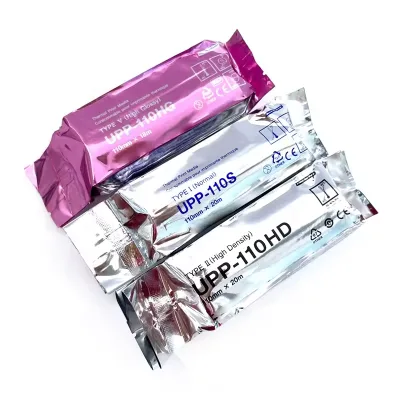
UPP-110HG type rolls are designed for thermal printers used with ultrasound scanner systems, and the product listing references model numbers including UPP-110HG, UPP-110S, and UPP110. Buyers should confirm the exact roll width and core dimensions against their printer manual before ordering. Listing the printer model when requesting quotations helps suppliers match compatible roll specifications.
How is the ultrasound paper packaged for shipping and export?
Packaging options described on the page include paper cartons, cartons, and wooden packages for export, with custom packing also supported. Single gross weight per roll is listed at 0.128 kg, and a single package size is given as 1800 x 10 x 10 cm. Buyers exporting internationally can request wooden packaging, while domestic or regional orders often use standard cartons.
Can the ultrasound paper be customized for my clinic or brand?
Customization is listed as available for this product, so buyers can discuss options with the supplier. The product also carries a non-customized variant and custom packaging support, so requests may cover packing rather than roll specifications. Contact the supplier with your required roll size, packaging format, and order volume to confirm which customization options apply to your order.
What certifications apply to this Class I Ultrasound Paper?
The product page lists CE quality certification, ISO13485 as the safety standard, and an ISOCE certification entry. It is classified as a Class I medical instrument, which is the lowest risk class for medical materials and accessories. Buyers should request current certificate copies from the supplier before ordering, since certification scope can vary between product lines and production batches.
How long is the shelf life and how should the paper be stored?
The listed shelf life is two years, matching the stated quality guarantee period of two years. The paper is non-sterile, waterproof, single-side coated wood pulp thermal paper, so it should be stored away from heat, direct sunlight, and moisture to preserve image quality. Ordering quantities that can be consumed within the shelf life helps avoid faded or unreadable printed ultrasound images.
What is the minimum order quantity and delivery time for rolls?
The page lists a minimum order quantity of 200 rolls and a delivery time of 20 days after payment arrival. Observed MOQ values across listed products range from 1 to 10000, so smaller trial quantities may be negotiable depending on the seller. Confirm the exact MOQ, unit price, and production schedule in writing before confirming payment.
Where is this ultrasound paper produced and sold from?
The stated place of origin is Shandong, China, and the product is sold as a single item with factory-direct availability indicated. Shipping, customs duties, and freight costs are typically quoted separately, so request an landed-cost estimate for your destination. Buyers in hospitals and clinics can also ask about after-sale support, which is listed as online technical support.