Source Conical Optical Snoot Projector Attachment for Home Business Teaching
Find 30 verified listings for the Conical Optical Snoot Projector Attachment designed for home, business, and teaching environments. Buyers can compare specifications like brightness, working principles, and customization options from multiple Chinese manufacturers.
Key considerations
Products List


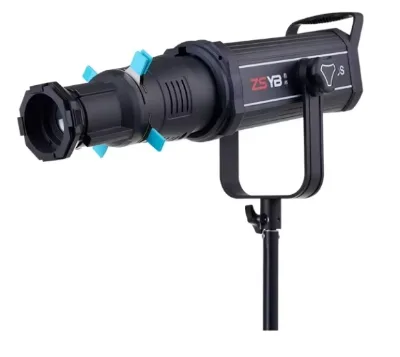




Large Cinema Quality Projector for Unforgettable Viewing Experiences
$1680.00 - $1700.00
MOQ: 1 Pieces



Comprehensive Sourcing Guide
Strategic Sourcing Guide for Conical Optical Snoot Projector Attachments
The procurement of specialized optical components, such as conical optical snoot projector attachments, requires a rigorous approach that balances technical precision with supply chain reliability. In the B2B market, these components serve as critical interfaces between light sources and projection systems, often found in professional lighting, medical imaging, and educational environments. Buyers must navigate a complex landscape where material properties, surface quality, and manufacturing tolerances directly dictate performance. This guide outlines the essential factors for sourcing these attachments, drawing upon verified product attributes and industry standards to ensure a robust procurement strategy.
Technical Specifications and Optical Performance
When evaluating conical optical snoots, the primary focus must be on the optical characteristics that define light control and transmission efficiency. The core material selection is paramount; observed market data indicates that high-performance attachments often utilize optical glass or specialized alumina-based materials. Optical glass is frequently preferred for its superior clarity and durability, particularly in applications requiring high transmittance. Buyers should verify that the transmittance of the material meets specific thresholds, with industry benchmarks often citing ranges between 90% and 95% or exceeding 95% for premium grades.
The geometric design of the snoot is equally critical. While the core keyword specifies a "conical" shape, the actual product listings reveal a diversity of optical forms, including flat lenses, convex lenses, and single-lens configurations. For a conical snoot, the surface figure and edge finish are the determinants of light quality. The surface quality is typically quantified using the "Scratch and Dig" standard, with observed specifications ranging from 10/5 to 60/40. A tighter tolerance, such as 40-20 Scratch and Dig, indicates a higher grade of optical clarity with fewer imperfections that could scatter light. Furthermore, the edge finish must be ground and beveled to prevent chipping and ensure a smooth transition for light rays entering or exiting the device.
Tolerance levels are non-negotiable in optical procurement. Dimensional accuracy ensures that the snoot fits precisely into projector housings and maintains the intended beam angle. Observed data highlights size tolerances as tight as ±0.02mm for specific lens models, while diameter tolerances may range up to ±0.10mm depending on the component size. For custom-sized attachments, the manufacturer must demonstrate the capability to maintain these tolerances across the entire batch. The center thickness, observed at 17mm for certain models, is another variable that buyers must confirm aligns with their optical path requirements. Without these precise specifications, the attachment may fail to deliver the required beam focus or may introduce optical aberrations.
Compliance, Certification, and Material Standards
In the global B2B marketplace, compliance with international safety and environmental standards is a prerequisite for market access. Buyers must verify that suppliers possess valid certifications, specifically looking for CE, RoHS, and ISO standards. The presence of these certifications ensures that the optical materials do not contain hazardous substances and that the manufacturing process adheres to quality management systems. For instance, observed product data explicitly lists CE and RoHS certifications, which are essential for electronic and optical equipment entering European and many other international markets.
Material safety is another critical compliance aspect. The coatings applied to the optical surfaces, such as Anti-Reflective (AR) coatings or Hard Coating (HC), must be verified for durability and environmental safety. The "HC" coating observed in some listings suggests a protective layer designed to resist scratching and wear, which is vital for equipment subjected to frequent handling. Additionally, the origin of the product plays a role in compliance; many high-quality optical components originate from established manufacturing hubs like Fuzhou, Fujian, China, where specialized optical industries have matured. Buyers should request proof of origin and ensure that the "Fumigation-Free Wooden Box" or "Air Cushion Wrapped Carton Packaging" used for shipping meets international phytosanitary and safety regulations.
Standardization of the product is also a key consideration. While some products adhere to specific model numbers like "LGT-PRT1" or "CST-50," others are fully customized. In cases where a standard is not explicitly defined, the buyer must ensure the supplier follows a consistent internal standard that matches the required optical performance. The "1-3M" standard observed in some contexts may refer to a specific industry benchmark or a lifespan expectation, but buyers should clarify this with the supplier to avoid ambiguity. Ultimately, the goal is to secure a product that not only performs optically but also legally and safely within the buyer's jurisdiction.
Cost Drivers and Pricing Structures
The pricing of conical optical snoots is influenced by a complex interplay of material costs, manufacturing complexity, and order volume. The observed price range in the market is vast, spanning from $0.80 to $7,750. This significant variance reflects the difference between simple, mass-produced components and highly customized, precision-engineered optical systems. Low-cost items typically involve standard sizes, basic glass materials, and minimal surface quality requirements. Conversely, high-cost units often feature custom dimensions, superior surface figures (e.g., Lambda/10), and advanced coatings like AR or HC.
Minimum Order Quantity (MOQ) is a primary driver of unit cost. The market data indicates an MOQ range from 1 piece to 2,000 pieces. For buyers requiring small batches or prototyping, suppliers offering an MOQ of 1 piece are essential, though the unit price will likely be higher. As order volumes increase, economies of scale typically reduce the per-unit cost. However, for custom orders involving unique sizes or specialized coatings, the MOQ may be higher to justify the setup costs. Buyers should also consider the "Customized Support" and "OEM" capabilities of the supplier. If the project requires a specific shape or branding, the supplier may charge a setup fee or a premium for the customization process, which should be factored into the total cost of ownership.
Packaging and logistics also contribute to the final cost. The choice between a standard "Carton Box" and a "Fumigation-Free Wooden Box" can impact shipping expenses, especially for heavy or fragile optical components. Additionally, the "Working Principle" of the component, whether it relies on LCD technology or simple refraction, can influence the complexity of the manufacturing process and, consequently, the price. Buyers must balance their budget constraints with the necessary technical specifications to avoid overpaying for features that are not required for their specific application.
Typical Applications and Usage Scenarios
Conical optical snoot projector attachments are versatile components designed for a wide array of professional applications. The observed usage categories include Home, Business, Teaching, Measure, Photography, Optical, Medical, and Lighting. In the medical field, these attachments are crucial for directing light precisely during examinations or surgical procedures, where high transmittance and clear lenses are non-negotiable. The "Optical" and "Medical" usage tags highlight the need for components that can withstand rigorous sterilization processes and maintain optical integrity under high-intensity light sources.
In the lighting and photography sectors, the "Single-lens" and "Conical" designs are used to control beam angles and reduce spill light. This is particularly important in stage lighting and architectural illumination, where precision is key to creating specific visual effects. The "Brightness" attribute, observed in the range of 1500-2000 Lumens, suggests that these attachments are compatible with high-intensity projectors used in large venues or industrial settings. For educational and business environments, the "Teaching" and "Business" tags indicate that these components are often integrated into presentation projectors to enhance image clarity and focus.
The "Measure" usage category points to applications in metrology and inspection, where the optical snoot serves as a reference point for measurement devices. In these scenarios, the "Surface Figure" and "Size Tolerance" become critical, as any deviation can lead to inaccurate readings. The versatility of these components allows them to be adapted for various "Working Principles," including LCD-based systems, making them suitable for both traditional projection and modern digital display technologies. Buyers should align their specific application needs with the observed usage tags to ensure the selected component meets the operational demands of their environment.
Supplier Evaluation and Quality Control
Selecting the right supplier is as important as the product specifications themselves. Buyers should prioritize suppliers that offer "Customization" and "OEM" support, as this indicates a flexible manufacturing capability. The ability to produce "Customed Size" lenses and "Single-lens" configurations is a strong indicator of a supplier's technical proficiency. When evaluating potential partners, buyers must verify the supplier's "Surface Quality" claims, ensuring they can consistently deliver the 10/5 to 60/40 Scratch and Dig standards observed in the market.
Quality control processes should be transparent and documented. Suppliers should provide evidence of their "Surface Figure" capabilities, such as Lambda/10, and demonstrate their ability to maintain "Flatness" at a "High Class" level. The "Edge Finish" process, specifically "Ground and Beveled," should be verified through visual inspection or third-party testing to ensure there are no micro-fractures or irregularities. Additionally, the "Coating" process, whether it is "HC" or "AR," must be consistent across all units to prevent variations in light transmission.
Buyers should also assess the supplier's packaging standards. The use of "Air Cushion Wrapped Carton Packaging" or "Fumigation-Free Wooden Box" demonstrates a commitment to protecting the fragile optical components during transit. A reliable supplier will have a robust quality assurance system that includes pre-shipment inspections and post-delivery support. The "Certification" status, including CE and RoHS, should be current and verifiable. By rigorously evaluating these factors, buyers can mitigate the risk of receiving substandard products and ensure a long-term, reliable supply chain.
Long-Term Procurement and Maintenance Considerations
Sourcing optical components is not a one-time transaction but a long-term partnership that requires ongoing management. Buyers should consider the "Lead Time" and "MOQ" flexibility when planning their inventory. While some suppliers offer an MOQ of 1 piece for prototyping, larger production runs may require higher volumes, which impacts cash flow and storage. The "Standard" of 1-3M, if it refers to a lifespan or warranty period, should be clearly defined to understand the expected durability of the product.
Maintenance and replacement strategies are also crucial. Optical components are susceptible to dust, scratches, and coating degradation over time. Buyers should inquire about the availability of replacement parts and the ease of cleaning or recoating the lenses. The "Transmittance" of the material may degrade if not properly maintained, so suppliers should provide guidelines for care and storage. Furthermore, the "Customized" nature of some products means that future replacements may require re-ordering with the same specifications, making it essential to maintain detailed records of the original design and material properties.
Finally, buyers should monitor market trends and technological advancements. As optical technology evolves, new materials and coatings may become available that offer better performance or lower costs. Staying informed about these developments allows buyers to make strategic decisions about when to upgrade their equipment. By focusing on long-term relationships with suppliers who demonstrate technical expertise and reliability, buyers can ensure a steady supply of high-quality conical optical snoot projector attachments that meet their evolving needs.
FAQs
What materials are used for conical optical snoot projector attachments?
These attachments typically use optical glass or alumina-based materials for superior clarity. Buyers should verify transmittance levels, which often range between 90% and 95% or exceed 95% for premium grades.
Which certifications ensure safety for these optical components?
Valid certifications like CE, RoHS, and ISO are essential for market access and safety compliance. These ensure materials are free from hazardous substances and manufacturing adheres to strict quality management systems.
How does surface quality affect light transmission in these units?
Surface quality is quantified by Scratch and Dig standards, ranging from 10/5 to 60/40. Tighter tolerances like 40-20 indicate higher clarity with fewer imperfections that could scatter light rays.
Can suppliers provide custom sizes for these projector attachments?
Yes, many manufacturers offer customized sizes and OEM support for specific project needs. Buyers must ensure suppliers maintain precise tolerances, such as ±0.02mm, even for non-standard dimensions.
What is the typical price range for these optical components?
Market prices vary widely from $0.80 to $7,750 depending on complexity and customization. Simple mass-produced items cost less, while precision-engineered units with advanced coatings command higher prices.
Where are these optical components primarily manufactured?
High-quality components often originate from established hubs like Fuzhou, Fujian, China. Buyers should verify the product origin to ensure compliance with international shipping and phytosanitary regulations.
How are these fragile optical parts packaged for shipping?
Packaging options include air cushion wrapped cartons or fumigation-free wooden boxes. These methods protect fragile lenses during transit and meet international safety regulations for export.