Source Customizable Logo Jute Bag for Garment, Toy, and Gift
Compare 30 Customizable Logo Jute Bag options from suppliers in China. Buyers can review models like SU-JTB-018 and HHT591, noting features such as logo printing, soft jute material, and varied packing styles for garment, toy, and gift applications; compare the available evidence and request quotations based on your requirements.
Key considerations
Products List




Comprehensive Sourcing Guide
Customizable Logo Jute Bag Sourcing Guide
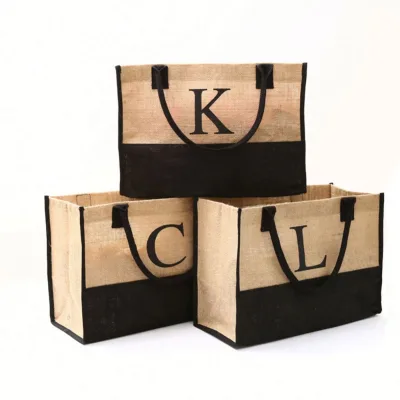
Customizable logo jute bags occupy a practical middle ground between disposable packaging and branded retail merchandise, making them a recurring purchase category for brand owners, retailers, and promotional distributors. Listings observed in this category consistently advertise logo printing or customized logos, leisure or Korean-style designs, and customization availability as core selling points. Because jute is a natural fiber with visible weave texture and a characteristic hand feel, logo reproduction quality varies more than it does on synthetic nonwoven bags, so buyers should treat printing capability as a primary qualification criterion rather than an afterthought.
This guide is written for procurement teams preparing a first order or consolidating existing jute bag suppliers. Observed listings in the category span a price range of roughly USD 0.10 to 4.29 per unit and minimum order quantities from 100 to 3,000 pieces, which signals a wide spread between small-run promotional formats and bulk retail programs. The sections below translate the listing signals into verification steps: what to confirm technically, what documentation to request, how costs are structured, and how to qualify and monitor suppliers over multiple order cycles.
Product Scope and Observed Listing Signals
The observed product scope covers small rectangle-shaped jute bags intended for garment and shoes, toys, jewelry, gifts, and arts and crafts—essentially drawstring and handled pouches used as gift or retail packaging. Several listings carry model identifiers such as SU-JTB-018, SU-SHB-117, SU-SHB-119, SU-SHB-120, SU-SHB-127, SU-SHB-130, CY1, J-01, HH002, HHT084, and HHT591, with origins in China including Quanzhou in Fujian, Wenzhou, and Zhejiang. Gender positioning varies by listing between female and unisex, and styles range from leisure to Korean-style to handle formats, so buyers should shortlist by style family before comparing prices.
Useful commercial signals appear directly in the listings. Some offer logo printing while others explicitly list without logo printing, allowing buyers to separate blank-stock programs from branded ones. Sample policies are favorable in the observed listings, with samples described as free, and delivery times are quoted as five to twenty days depending on order size. Closure types include zipper with customized options, and one tote-style listing confirms waterproof construction while another states non-waterproof— Buyers should record these attributes per model, since they materially affect both unit cost and end-use suitability.
Technical Specifications to Verify
Start with material and construction. Confirm that the jute fabric weight, weave density, and lining (if any) match the intended load; gift and jewelry pouches tolerate lighter fabric, while tote formats such as the listed HHT591 need reinforced handles and stress-point stitching. Verify dimensions against the "small" size descriptions in listings by requesting physical measurements in millimeters, not category labels. Closure type should be confirmed per SKU—zipper closures require hardware or zip-tape quality checks that drawstring formats do not, and customized closures should be documented on a signed specification sheet before production.
Waterproofing is a decisive variable in this category. One observed listing states waterproof while another states non-waterproof, so buyers must define the required performance and ask how it is achieved—lamination, coating, or an inner liner—and whether the treatment affects the natural jute appearance and recyclability. Also verify logo reproduction method (screen print, heat transfer, or embroidered patch), achievable color count, print area dimensions, and wash or rub durability on jute's textured surface. Request a pre-production sample carrying the actual artwork, and approve it in writing as the reference standard for incoming inspection.
Compliance and Safety Documentation
Natural jute carries fewer chemical concerns than some synthetics, but buyers should still ask for documentation rather than assume compliance. Request test reports covering the fiber composition and any dyes, prints, coatings, or lamination layers applied to the fabric, particularly for bags that will contact food-adjacent gifts, toys, or children's items. If a supplier references an environmental or organic fiber claim, ask which certification body issued it and verify the certificate number and validity directly; the observed context includes a low-confidence GOTS reference, which should be treated as unverified until documented.
For export into regulated markets, align documentation with the destination's requirements for textile labeling, fiber content declaration, and country-of-origin marking. Because listings state production origins in Fujian, Zhejiang, and Wenzhou, confirm which entity actually manufactures the goods versus which acts as a trading intermediary, since responsibility for compliance documentation follows the manufacturer. Buyers selling into retail channels should also confirm that the customized logo artwork does not infringe third-party trademarks and that the supplier has agreed in writing to produce only the buyer's authorized designs. Keep all certificates and test reports on file with validity dates and schedule re-verification annually.
Cost Drivers and Commercial Terms
Observed unit prices span USD 0.10 to 4.29, and that spread is explained by four main drivers: bag size and fabric consumption, closure and hardware complexity, printing method and color count, and waterproofing treatment. A small non-waterproof drawstring pouch with a single-color logo sits at the low end, while a lined, zipped, waterproof tote with multi-color branding approaches the top of the range. Buyers should request itemized quotations that separate bag cost, printing cost per color, tooling or screen charges, and packaging, so that future design changes can be repriced transparently.
Commercial terms observed in the listings include minimum order quantities from 100 to 3,000 pieces, free samples, and delivery in five to twenty days depending on order size. One listing states an MOQ of 500, suggesting that branded variants may carry higher minimums than blank stock—confirm whether MOQ applies per colorway or per order. Clarify Incoterms, payment terms, and whether the quoted price covers conventional transport packing, a paper box, or carton packing as listed. For repeat programs, negotiate tiered pricing anchored to annual volume rather than negotiating each order independently, and document lead-time commitments with a defined order-confirmation-to-shipment window.
Supplier Qualification and Quality Control
Qualify suppliers with a structured first-order process rather than a price comparison alone. Shortlist by style match and customization capability, order free samples from each candidate, and compare them side by side for weave consistency, seam strength, print registration, and odor. Because listings are concentrated in Quanzhou, Wenzhou, and Zhejiang, a factory audit or third-party inspection before the first bulk order is a reasonable investment, especially for orders at the upper end of the MOQ range. Verify business licenses, production capacity claims, and whether the supplier subcontracts printing or sewing to third parties.
Define quality control checkpoints in the purchase contract. A typical sequence is: incoming fabric inspection, approval of a pre-production sample with the final logo, in-line checks during sewing and printing, and a pre-shipment inspection based on an agreed sampling plan with defined acceptance limits for defects such as print misalignment, broken stitching, frayed edges, and dimensional deviation. State which inspection standard applies, who pays for re-inspection after failed lots, and the remedy for rejected goods. Keep the approved golden sample sealed and dated on both sides as the arbitration reference for any later dispute.
Long-Term Procurement Checks
After the first successful order, shift the relationship from transactional to programmatic. Track per-shipment defect rates, on-time delivery performance against the five-to-twenty-day quoted window, and responsiveness on artwork revisions, and review these metrics with the supplier quarterly. Require notification of material changes—new jute source, changed coating, altered zipper hardware—before they reach production, since natural-fiber appearance can shift noticeably between harvest lots and affect how your logo prints. Maintain a rolling forecast so capacity is reserved during peak promotional seasons.
Protect continuity with practical safeguards. Keep a documented specification pack per SKU covering dimensions, fabric weight, closure, print colors and positions, packing format, and label requirements, so a replacement line can be tooled quickly if needed. Re-verify certifications and test reports annually, and refresh the approved sample when the specification changes. For customized logo programs, retain ownership clauses over the artwork and any printing screens or dies held at the factory. Periodically re-quote the category—observed prices start as low as USD 0.10—while weighting any new supplier's trial order with the same QC gates used for the incumbent.
FAQs
Can I get a Customizable Logo Jute Bag with free samples?
Yes, free samples are available for customizable logo jute bags to help you evaluate quality before placing a bulk order. This allows you to verify the material texture, stitching durability, and logo printing accuracy. Once satisfied with the sample, you can proceed with the full production run, ensuring the final products meet your specific branding and design requirements.
What is the typical delivery time for these orders?
The typical delivery time ranges from 5 to 20 days, depending on the order size and customization complexity. Larger orders or those requiring specific logo printing and packaging adjustments may take longer to complete. This timeframe ensures that manufacturers can properly handle production, quality checks, and logistics preparation without compromising the integrity of the final jute bag products.
Which models are available for small rectangular jute bags?
Several models are available, including SU-JTB-018, SU-SHB-117, SU-SHB-120, SU-SHB-119, SU-SHB-130, and SU-SHB-127. These models typically feature a small size and rectangular shape, suitable for various uses like jewelry, gifts, or arts and crafts. Buyers can choose from these options based on their specific dimensional needs and intended application for the jute bags.
What customization options are available for logo printing?
Customization is available for logo printing, allowing you to add your brand identity to the jute bags. Options include both with and without logo printing, depending on your preference. The standard is custom-made, meaning you can specify the design, placement, and style. This flexibility ensures that the final product aligns perfectly with your marketing strategy and aesthetic requirements.
Where are these jute bags manufactured?
These jute bags are manufactured in China, with specific origins including Quanzhou City of Fujian Province, Wenzhou, and Zhejiang. These regions are known for their robust manufacturing capabilities and supply chain efficiency. Buyers can expect consistent quality and reliable production standards, as these areas have established expertise in producing various types of jute bags for global markets.
What is the minimum order quantity for these bags?
The minimum order quantity varies, with observed ranges from 100 to 3000 units, and some specific models requiring an MOQ of 500. This flexibility allows businesses of different sizes to place orders that suit their inventory needs. Smaller MOQs are ideal for testing the market, while larger orders benefit from economies of scale in production and shipping costs.