Source dot e-mark led tail light for Trucks, Trailers, and Buses
Compare 30 verified suppliers offering dot e-mark led tail light units with ABS, varying LED counts, and heavy-duty construction for trucks, trailers, and buses. Review certifications like E-MARK and DOT to find the right fit.
Key considerations
Products List


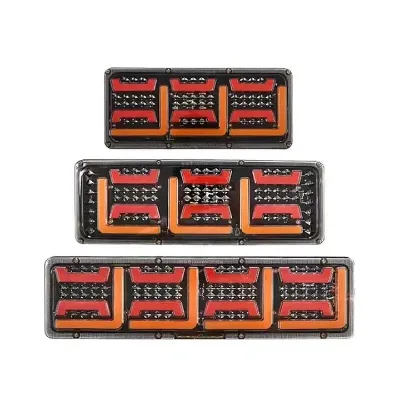


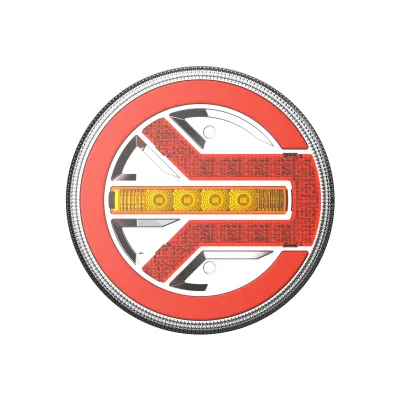

Comprehensive Sourcing Guide
Strategic Sourcing Guide for DOT and E-MARK LED Tail Lights
Understanding the Technical Architecture of Heavy-Duty Lighting Systems
When sourcing LED tail lights for commercial vehicles, particularly those designated for heavy-duty trucks and trailers, the technical specifications define the operational viability of the component. The core keyword "DOT E-MARK LED tail light" implies a product designed to meet stringent regulatory requirements in North America and the European Union simultaneously. Based on observed product attributes, these units are engineered with specific electrical and physical parameters to ensure compatibility with 12V, 24V, and 10-30V DC power systems. This voltage flexibility is critical for global fleets that may operate across different regional standards.
The physical construction of these lights often utilizes a polycarbonate diffuser and a stainless steel base material. The polycarbonate component is selected for its high impact resistance and optical clarity, ensuring that the emitted light—typically red for tail and stop functions—is distributed effectively without degradation over time. The stainless steel base provides the necessary structural integrity to withstand the vibration and shock inherent in heavy-duty transport applications. In terms of light emission, the units are available in configurations ranging from 10 to 40 LED quantities, with specific models like the HR09233-1 and HR151503 featuring distinct dimensions such as 110mm82mm20mm or 37017557mm. These size variations allow buyers to select units that fit specific mounting points on semi-trailers or van-type vehicles.
The functional scope of these lights extends beyond simple illumination. They are designed to perform multiple roles, including stop, turn, tail, and retro-reflector functions. Some advanced configurations also incorporate indicator capabilities, ensuring that the lighting system communicates clearly with other road users regarding the vehicle's status. The IP rating and waterproof resistance are critical attributes, as these lights are exposed to harsh environmental conditions. While specific IP numerical ratings vary by model, the emphasis on waterproof resistance confirms that the internal electronics are sealed against moisture ingress, a non-negotiable requirement for outdoor vehicle applications.
Navigating Compliance and Certification Requirements
Compliance is the most significant barrier to entry for international procurement of vehicle lighting. The terms "DOT" and "E-MARK" are not merely marketing labels but represent adherence to specific legal standards. DOT (Department of Transportation) certification is mandatory for vehicles operating in the United States, while E-MARK (ECE) certification is required for the European Economic Area. The supplied product data indicates that compliant units often carry a dual or multi-certificate status, including SGS, ISO, ECE, and ADR (European Agreement concerning the International Carriage of Dangerous Goods by Road).
Buyers must verify that the supplier provides valid documentation for these certifications. The observed product attributes list standards such as CCC (China Compulsory Certification), E-MARK, DOT, ECE, and ADR. It is important to note that a single product model may not possess every single certification listed in a general catalog; rather, specific batches or models are tested and certified against specific regional requirements. For instance, the HR2016-09227-3 model is associated with CCC and E-mark certifications, while other models may prioritize DOT and ECE.
The presence of an E-MARK label on the lens or housing is a visual indicator of compliance, but it must be backed by a test report. Similarly, DOT compliance often requires the manufacturer to maintain a specific file of test results proving that the light meets Federal Motor Vehicle Safety Standards (FMVSS). When evaluating a supplier, procurement teams should request the actual certificate numbers and the specific test reports that validate the claims. Relying solely on the presence of a certification logo on a product page is insufficient; the documentation must be traceable to the specific batch of goods being purchased. The standard list also includes ISO and SGS, which indicate that the manufacturing process and quality management systems have been audited by third-party agencies, adding a layer of assurance regarding the consistency of the product.
Analyzing Cost Drivers and Pricing Structures
The pricing of LED tail lights is influenced by a complex matrix of factors, including material costs, certification expenses, and order volume. The observed price range for these products spans from 1 to 57 USD, a wide variance that reflects differences in specifications, certification levels, and order quantities. Lower-priced units typically correspond to smaller dimensions, fewer LED counts (e.g., 10PCS), or basic packaging configurations. Conversely, higher-priced units often feature larger sizes (such as the 37017557mm model), higher LED densities (up to 40PCS), and more robust materials like stainless steel bases.
The Minimum Order Quantity (MOQ) is another critical cost driver. The observed MOQ range spans from 1 to 1000 units. For buyers requiring immediate replacement parts or small fleet upgrades, suppliers offering an MOQ of 1 provide flexibility, though the unit cost will likely be at the higher end of the spectrum. For large-scale procurement or original equipment manufacturer (OEM) partnerships, an MOQ of 1000 units can significantly reduce the per-unit cost, potentially bringing the price closer to the lower bound of the observed range.
Material composition plays a substantial role in pricing. Units constructed with heavy-duty grades and carbon steel towing pins, or those utilizing high-grade stainless steel bases, command a premium over standard plastic or aluminum alternatives. Additionally, the cost of maintaining certifications like DOT and E-MARK is often passed on to the buyer. Products that are certified for multiple regions (e.g., both DOT and E-MARK) generally cost more than those certified for a single region due to the increased testing and administrative overhead. Buyers should also consider the packaging type; "Neutral Packing" may offer cost savings compared to "Standard Export Packing," which includes protective materials and branding suitable for international shipping.
Identifying Typical Applications and Vehicle Compatibility
The application scope for DOT and E-MARK LED tail lights is primarily focused on the heavy-duty transport sector. The product attributes explicitly state an application for "Heavy-Duty Trucks and Trailers." This includes semi-trailers, which are characterized by a connecting type of "Semi-trailer" and often require lights with specific mounting configurations. The observed wheel base range of 8000-9000mm suggests these lights are designed for long-haul vehicles where stability and visibility over long distances are paramount.
The versatility of these lights is further demonstrated by their compatibility with various vehicle shapes, including "Van-type" configurations. The inclusion of a "Double Hook" type and a "Cross Type" towing pin indicates that the lighting systems are integrated into complex towing assemblies. The suspension systems, noted as "Cross Arm Type," and the differential gear types, described as "Gear Type," highlight that these lights are part of a larger mechanical ecosystem. The 50T load capacity mentioned in the context of location and specification suggests that the supporting structures for these lights must be robust enough to handle significant weight, reinforcing the need for durable materials like stainless steel and carbon steel.
Furthermore, the specific function of the lights—Stop, Turn, Tail, and Retro-Reflector—makes them essential for safety compliance in all weather conditions. The use of "Open Type" impellers in related components suggests a design philosophy that prioritizes airflow and heat dissipation, which is crucial for maintaining the lifespan of the LEDs. The 50,000-hour life expectancy (IPLife:50000h) mentioned in the attributes underscores the suitability of these lights for high-mileage applications where frequent replacement is not economically viable.
Evaluating Supplier Capabilities and Origin
Supplier evaluation requires a deep dive into the manufacturing origin and the ability to meet customization needs. The observed product origin is consistently listed as Shenzhen, China, or Shen Zhen, Guangdong. This region is a global hub for electronics manufacturing, offering a mature supply chain for LED components and automotive lighting. However, the presence of a specific location does not guarantee quality; buyers must verify the supplier's production capacity and quality control processes.
Customization is a key differentiator in the supplier landscape. The attribute "Customization: Available" indicates that suppliers are willing to adapt product specifications to meet unique buyer requirements. This could involve modifying the size, LED quantity, or mounting hardware. For buyers with specific fleet requirements, this flexibility is invaluable. However, customization often impacts lead times and MOQs. Buyers should clarify the extent of customization allowed and whether it affects the certification status of the final product.
When evaluating a supplier, the consistency of their product data is a strong indicator of reliability. Suppliers that provide detailed specifications, such as the exact dimensions (e.g., 178X90X30mm) and model numbers (e.g., LT105, HR09233-1), demonstrate a level of transparency that is essential for B2B procurement. Additionally, the ability to provide "Standard Export Packing" or "Neutral Packing" shows an understanding of international logistics requirements. Buyers should also check if the supplier has a history of supplying to the heavy-duty truck sector, as this experience often correlates with a better understanding of the specific durability and safety standards required in this niche.
Quality Control and Long-Term Procurement Considerations
Quality control is paramount when sourcing lighting systems that are critical for vehicle safety. The observed attributes highlight several quality indicators, such as the use of "Heavy Duty" grade materials and specific certifications like SGS and ISO. These certifications suggest that the manufacturing process adheres to international quality management standards. However, buyers must implement their own quality control measures upon receipt of goods. This includes verifying the physical integrity of the polycarbonate diffuser and the stainless steel base, as well as testing the electrical continuity and waterproof resistance.
The "Self-dumping" attribute, while seemingly unrelated to lighting, suggests a broader context of heavy-duty vehicle components where reliability is non-negotiable. For LED tail lights, the long-term procurement strategy should focus on the lifespan of the LEDs and the durability of the housing. The observed "IPLife:50000h" is a strong selling point, but buyers should verify this claim through independent testing or by reviewing the supplier's historical performance data.
Long-term considerations also include the availability of spare parts and the consistency of the supply chain. Given the wide range of model numbers and specifications, buyers should ensure that the supplier can maintain a steady supply of specific models over time. The "Electric Current Type: AC" and "Power Source: DC" attributes indicate a need for careful verification of the electrical system compatibility, as mixing these types could lead to system failures. Buyers should establish a clear communication channel with the supplier to address any technical issues that arise during the lifecycle of the product.
Final Procurement Checklist and Verification Steps
To conclude the sourcing process, buyers should adhere to a rigorous verification checklist. First, confirm that the specific model number matches the required dimensions and LED configuration. Second, validate the certification documents for DOT and E-MARK, ensuring they are current and applicable to the specific batch. Third, verify the material composition, specifically the stainless steel base and polycarbonate diffuser, to ensure they meet the heavy-duty requirements. Fourth, check the MOQ and pricing structure to ensure it aligns with the procurement budget and volume needs. Finally, assess the supplier's ability to provide customization and their track record in the heavy-duty truck sector.
By following these steps and relying on the observed facts regarding specifications, certifications, and material grades, buyers can make informed decisions that ensure the safety, compliance, and reliability of their vehicle lighting systems. The complexity of the market requires a disciplined approach, but the availability of detailed product data and the presence of established manufacturing hubs in Shenzhen provide a solid foundation for successful procurement.
FAQs
What certifications do DOT E-MARK LED tail lights carry?
These lights carry certifications including SGS, ISO, DOT, ECE, and ADR. Specific models may also hold CCC or E-MARK status, ensuring compliance for North American and European markets while meeting international safety standards.
Which voltage systems are compatible with these LED lights?
The lights operate on 12V, 24V, and 10-30V DC power sources. This voltage flexibility ensures compatibility with diverse heavy-duty truck and trailer electrical systems across different global regions and fleet configurations.
How large are the standard dimensions for these tail lights?
Available sizes include 110mm by 82mm by 20mm and 370mm by 175mm by 57mm. Specific dimensions vary by model, allowing selection for different mounting points on semi-trailers or van-type vehicles.
Can buyers request customization for these lighting units?
Customization is available for these products to meet specific buyer requirements. Suppliers can adapt specifications, though this may impact minimum order quantities and lead times depending on the extent of the requested changes.
What materials are used for the base and diffuser?
The base material is typically stainless steel, while the diffuser is made of polycarbonate. These materials provide high impact resistance and structural integrity necessary for heavy-duty applications and harsh environmental conditions.
Where are these DOT E-MARK lights manufactured?
The products originate from Shenzhen, China, or Shen Zhen, Guangdong. This region is a known hub for electronics manufacturing, offering a mature supply chain for LED components and automotive lighting systems.