Source Eco Friendly Football Goal Net for Training, Matches, and Play
Find 30 Eco Friendly Football Goal Net options from Shandong suppliers. Compare materials like PE, PP, and PET, mesh sizes, and custom sizes for soccer training, matches, and recreational play. Request quotes for knotless or knotted nets; compare the available evidence and request quotations based on your requirements.
Key considerations
Products List
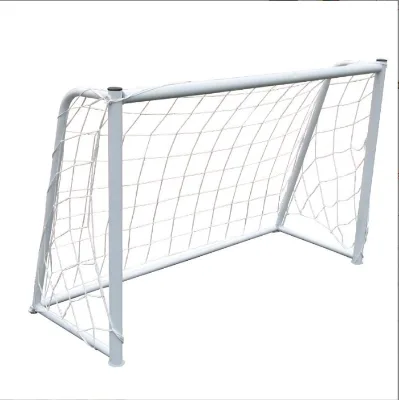
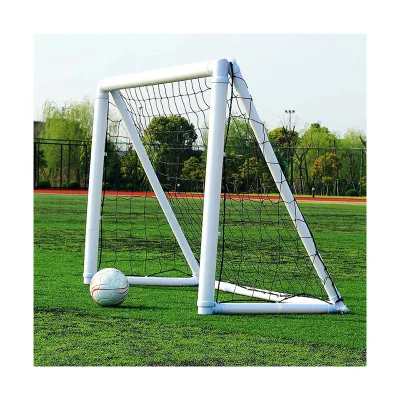

High Quality Football Training Net Football Goals and Nets Football Goal Net
$9.80 - $13.00
MOQ: 100 Pieces

White Nylon Portable Football Training Net Football Net Soccer Goal Football Goal Net
$9.80 - $13.00
MOQ: 100 Pieces

Wholesale 5-Player Durable High Quality Football Goal Net Folding Football Goal Net
$9.80 - $13.00
MOQ: 100 Pieces


High Performance Football Goal Net Engineered for Accurate Ball Rebound and Containment
$9.80 - $13.00
MOQ: 100 Pieces


Knotless or Knotted Football Netting Soccer Filed Net Goal Net Sports Practice Net
$0.49 - $0.79
MOQ: 100 Square Meters


Eco-Friendly Football Net for Sustainable Sports Events and Training Camps
$50.00 - $70.00
MOQ: 50 Pieces


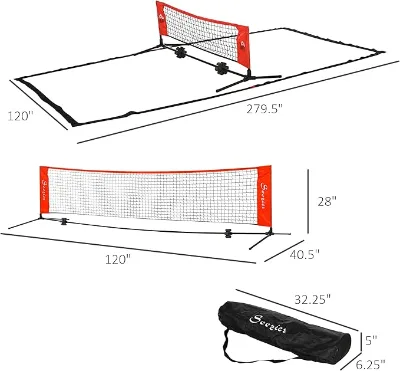
$12.00 - $15.00
MOQ: 200


Comprehensive Sourcing Guide
Eco Friendly Football Goal Net Sourcing Guide
Sourcing an Eco Friendly Football Goal Net requires balancing material composition, durability, and verifiable environmental attributes against the practical demands of training, match play, and recreational use. The listings observed in this category are concentrated in Shandong, China, with Rizhao as a named origin, and are positioned as customizable training and recreation soccer goal nets. Buyers should treat "eco friendly" as a claim to be substantiated rather than a standard feature: most listings describe PE, PET, PP, nylon, or PU construction without explicit environmental certification, so the burden of proof sits with the buyer during qualification.
This guide is written for B2B procurement teams — distributors, sports facility operators, clubs, and institutional buyers — who need repeatable supply rather than a one-off purchase. It walks through scope definition, technical verification, compliance documentation, cost drivers, supplier qualification, and long-term monitoring. Where the category data provides concrete signals, such as observed mesh sizes, diameters, and custom sizing options, those are used as checkpoints. Where it does not, the guide identifies exactly what the buyer must request from suppliers before committing to a purchase order.
Product Scope and Observed Listing Signals
The observed category covers football nets sold as single items, with product names alternating between "Football Net" and "goal net football" under the aoson brand name. Listed applications include football match, training, and entertainment scenarios, with usage described as outdoor exercising and football training. Sizes shown include 3×2m, 5.5×2m, and 7.32×2.44m, plus OEM custom sizing, and one listing references a 1×1m standard. Mesh sizes of 12×12cm and 14×14cm are cited alongside OEM options, and both knotless and knotted net constructions appear, with hexagonal and square mesh shapes listed. Buyers should map these variations to their own end-use before shortlisting.
Price observations across the 30 listings range from USD 0.49 to 85, and observed MOQs span 5 to 5000 pieces, including a stated MOQ of 500 pieces on one listing. This wide spread signals a mixed category: low-price entries may be small accessory nets or components, while higher-priced items may reflect larger goal dimensions or heavier construction. Rather than anchoring on any single listing, buyers should define their own specification — full-size match net, training net, or recreational net — and then filter listings against that scope, confirming which observed attributes actually apply to each candidate product.
Technical Specifications to Verify
Material is the first specification to pin down. Listings reference PE, PET, PP, nylon, and PU, plus "high tenacity polyester" as an accessory material, and these polymers behave very differently in outdoor UV exposure, abrasion, and cold weather. Buyers should request the exact polymer grade, UV stabilization treatment if any, and whether the net is knotless or knotted, since knotless nets typically offer smoother ball contact while knotted constructions may offer different strength characteristics. Net diameter is listed at 2mm, 3mm, and 4mm; thicker twine generally correlates with durability but also weight and cost, so the choice should follow the intensity of intended use.
Dimensional and construction details come second. Confirm the finished net dimensions against your goal frame — the listed 7.32×2.44m corresponds to a full-size senior goal, while 3×2m and 5.5×2m suit training and youth setups — and verify mesh size (12×12cm or 14×14cm per listings) and mesh shape (square or hexagonal). Ask how the net attaches to the frame: edge rope, clips, or sewn borders, and whether accessory materials are high tenacity polyester as some listings state. Request a physical sample before bulk ordering, since mesh geometry photographs poorly and tension behavior can only be judged in hand.
Compliance and Safety Documentation
Because "eco friendly" is the core keyword, environmental claims deserve the strictest documentation discipline. None of the observed listings state a certification, and background references to EN 748 (goal safety) and ISO 9001 (quality management) carry low confidence in this dataset and should not be assumed. Buyers should therefore ask each supplier directly: what specific standard, if any, does the product meet, and can the supplier produce a test report or certificate issued by an identifiable body? A supplier who cannot name the standard behind an "eco" claim is signaling that the term is marketing language, not a documented attribute.
Safety documentation follows a similar logic. Goal nets are used in environments with children and athletes, so buyers should ask about sharp edge treatment, rope integrity, and any relevant toy or sports equipment safety standards applicable in their destination market — Europe, North America, and other regions maintain different regimes, and the buyer, not the supplier, usually knows which market rules apply. Request material safety declarations covering the polymer and any additives, including colorants used in the white or OEM colorways. Keep all documents on file with the purchase order so compliance claims are traceable to specific production lots rather than generic catalog statements.
Cost Drivers and Commercial Terms
Observed pricing runs from USD 0.49 to 85 per unit with MOQs from 5 to 5000 pieces, which tells buyers that cost scales strongly with specification. The main drivers to model are: net dimensions (a 7.32×2.44m senior net uses far more material than a 1×1m or 3×2m training net), twine diameter (2mm versus 4mm), mesh density, knotless versus knotted construction, material choice among PE, PP, PET, nylon, and PU, and customization level — custom sizes and customized logos appear throughout the listings, and both add setup cost relative to standard white stock nets. Packaging is listed variously as wood, PVC, and box packing, which also affects landed cost.
Commercial terms deserve equal attention. Confirm whether quoted prices are per single item (the stated selling unit) or per set, since goal nets are often used in pairs. Clarify what the MOQ covers — one size, one color, or mixed configurations — and whether custom logo or OEM size orders carry a different minimum than stock items. Ask for a tiered quotation showing unit price at several volume breakpoints so future reorder economics are visible at the first purchase. Finally, confirm Incoterms, payment terms, and whether packaging choice (wood versus box packing) changes the quoted price before comparing suppliers on cost.
Supplier Qualification and Quality Control
Supplier qualification should start with verified manufacturing capability rather than listing polish. The observed origin signals — Shandong province, with Rizhao specifically named — suggest a netting production cluster, but buyers should still confirm whether the supplier manufactures or trades, request factory information, and ask which quality management processes they follow. Both OEM and ODM service appear in the listings, which favors buyers needing customization, but a supplier offering customization should also demonstrate process control: how are custom mesh sizes and logo applications specified, checked, and recorded on the production order?
Quality control should be built into the order, not assumed. Recommend a staged approach: sample approval against an agreed specification sheet covering material, diameter, mesh size and shape, dimensions, color, and knot type; a documented inspection at pre-shipment covering net weight, dimensional accuracy, and visual defect rates; and clear acceptance criteria written into the contract. Gross weight is listed at 12kg for one product and packing standards such as 60×40×45cm appear in the data — use these observed parameters as reference points when defining what "correct" looks like for your own specification. For first orders, third-party inspection is a reasonable safeguard; for repeat orders, agreement on AQL sampling keeps control consistent without inflating cost.
Long-Term Procurement Checks
Long-term supply of an Eco Friendly Football Goal Net depends on consistency across repeat production runs, not just a strong first order. Build a running record comparing each batch against the approved sample: twine diameter, mesh dimensions, weight per unit, and color consistency in the white and any OEM colorways. Because listings describe products as wearproof and waterproof, track field feedback on UV degradation, tear incidence, and knot slippage across a season of use; actual lifespan data from your own installations is more persuasive than supplier claims and should feed back into the specification. Rotate or double-source within the Shandong cluster if volume justifies it, so a single factory disruption does not stall replenishment.
Procurement should also revisit environmental claims annually. If the "eco friendly" positioning matters to your customers or end users, ask suppliers whether they have since obtained documentation for recycled content, material safety, or recognized management systems, and update your product claims only as fast as your documentation. Reconfirm MOQs, tiered pricing, and lead times at each annual review, since both observed ranges (5 to 5000 pieces MOQ, USD 0.49–85 price) indicate substantial variance that can shift between quotations. Keep the specification sheet, compliance file, and inspection records under version control so any new supplier can be onboarded against the same documented standard that governs your current program.
FAQs
What materials are used for the football goal net?
The football goal net is constructed from PE, PET, PP, or Nylon materials to ensure durability. These materials provide high tenacity and are suitable for outdoor exercising and soccer training applications. The specific material choice depends on the customization requirements and intended usage scenarios for the net.
Can I customize the size and mesh of the net?
Yes, the product offers custom sizes including 3x2m, 5.5x2m, and 7.32x2.44m options. Buyers can also select mesh sizes like 12x12cm or 14x14cm, or request OEM specifications. This flexibility allows the net to fit various football match and training field requirements precisely.
What is the minimum order quantity for this product?
The minimum order quantity ranges from 5 to 5000 pieces depending on the specific supplier and configuration. Some listings indicate a standard MOQ of 500 pieces for single items. Buyers should verify the exact MOQ with the manufacturer before placing an order for their specific needs.
Where are these football goal nets manufactured?
These nets are manufactured in Shandong, China, with specific origins noted in Rizhao. The production location ensures access to established manufacturing capabilities for sports equipment. Buyers sourcing from this region can expect consistent quality and availability for their soccer training and entertainment needs.
Is the net suitable for outdoor use and training?
Yes, the net is designed for outdoor exercising, football training, and entertainment purposes. It features waterproof and wearproof properties to withstand various weather conditions. The product is explicitly described as a training recreation soccer goal suitable for professional matches and practice sessions.
What packaging options are available for shipping?
Packaging options include wood, PVC, and box packing to ensure safe transport. The single package size is listed as XX cm, though exact dimensions vary by model. Buyers can request specific packaging solutions to protect the net during international shipping and handling processes.
Does the supplier offer logo customization services?
Yes, the supplier provides customized logo services and OEM branding options. Buyers can add their own branding to the white or OEM colored nets. This service supports marketing efforts for teams, clubs, or event organizers looking to brand their soccer training equipment effectively.