Source Eco-Friendly Plastic Cosmetic Cream Jar for Tea, Food, Chemical
Compare 30 listings of Eco-Friendly Plastic Cosmetic Cream Jar options suitable for tea, food, and chemical packaging. Buyers can review specifications like material type, sealing methods, and customization availability from suppliers in Ningbo and Yuyao.
Key considerations
Products List


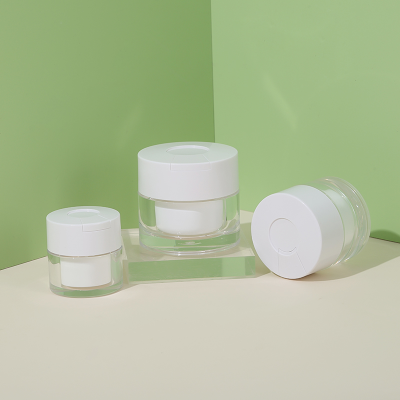


Factory Price Custom Color Empty Face Cream Jar Cosmetic Container Cream Jars
$0.25 - $0.56
MOQ: 10000 Pieces
Comprehensive Sourcing Guide
Strategic Sourcing Guide for Eco-Friendly Plastic Cosmetic Cream Jars
Understanding Product Specifications and Material Variations
When sourcing eco-friendly plastic cosmetic cream jars, buyers must first navigate a complex landscape of material definitions and technical specifications. The core product category encompasses small package tanks and jars designed specifically for the cosmetics industry, yet the exact composition varies significantly between suppliers. Based on observed market data, the primary material identified for these containers is plastic, with a specific subset of high-quality options utilizing Polypropylene (PP). PP is frequently cited in product attributes due to its durability and chemical resistance, making it suitable for holding various formulations including tea, food, aerosols, and chemicals.
The physical dimensions of these jars are not uniform. Buyers will encounter a wide range of sizes, from miniature 3g units to larger 50ml and 250ml capacities. Specific model observations indicate dimensions such as a 29mm x 17mm profile for smaller variants, while other standard models feature a diameter of 63mm and a height of 53.5mm. The shape is predominantly round, designed to maximize shelf presence and ergonomic handling. Furthermore, the sealing mechanism is a critical technical specification; the Screw Cap is the standard configuration observed, ensuring a secure closure that prevents leakage. The "Non Spill" feature is often highlighted as a key attribute, directly resulting from the precision of the cap and jar interface.
Buyers should be aware that while the general category is defined as "Eco-Friendly," the specific environmental claims attached to the plastic material require verification. The term "Eco-Friendly" appears in product attributes, but without third-party validation data in the immediate listing, this remains an observation rather than a guaranteed performance claim. The packaging for these items varies as well, ranging from Safe Export Packs to Cardboard Boxes and Export Cartons, which influences the logistics strategy for the buyer.
Compliance, Certification, and Regulatory Standards
Navigating the regulatory landscape is essential for importing cosmetic packaging, particularly when the product claims to be eco-friendly. The supply chain for these jars often references a suite of certifications that buyers must verify. Commonly observed certifications include ISO, CE, and CIQ. These marks suggest that the manufacturing process adheres to certain international standards for quality management and safety. Additionally, some product listings reference SGS, a global inspection and certification body, indicating that the products may undergo rigorous testing for material safety and compliance.
However, the presence of a certification name in a product description does not automatically equate to a valid, current certificate for every unit. Buyers must distinguish between the manufacturer's internal standards and external, audited certifications. For instance, while "ISO" is listed as a certification, the specific standard (e.g., ISO 9001 for quality or ISO 14001 for environmental management) is often not explicitly detailed in general product summaries. Similarly, the mention of "ce SGS ul Customized" suggests a combination of standards, but the "ul" reference requires specific confirmation as it typically pertains to safety standards that may not apply to all cosmetic jar applications.
The "Eco-Friendly" attribute is a significant selling point, yet it is not a regulated term in itself. Buyers should look for specific environmental certifications such as FSC (Forest Stewardship Council) for packaging materials or specific plastic recycling codes, though these are noted as low-confidence background items in current market data. Relying solely on the "Eco-Friendly" label without requesting the underlying test reports or material composition certificates can lead to compliance risks, especially when exporting to markets with strict environmental regulations. The "SGS" standard is frequently mentioned, which is a positive indicator, but the buyer must request the actual test report to confirm the specific eco-claims, such as recyclability or the use of post-consumer recycled (PCR) content.
Cost Drivers and Pricing Dynamics
The pricing structure for eco-friendly plastic cosmetic cream jars is influenced by several variable factors, primarily driven by material costs, order volume, and customization requirements. The observed price range in the market is quite broad, spanning from $0 to $1.25 USD per unit. This wide variance indicates that the final cost is highly dependent on the specific configuration of the order. Lower prices often correlate with standard, non-customized models in high volumes, while higher prices within this range may reflect custom colors, specialized eco-materials, or smaller batch sizes.
The Minimum Order Quantity (MOQ) is a critical cost driver. Market data shows an MOQ range from 10 units to 30,000 units. A specific observation notes an MOQ of 10,000 pieces for certain models, which suggests that achieving the lowest unit price often requires a significant commitment to volume. For buyers with lower volume needs, the unit cost will naturally be higher due to the fixed costs of mold setup and production line allocation. The "Custom Order: Accept" attribute confirms that customization is possible, but this invariably increases the cost and potentially the MOQ.
Material selection also plays a pivotal role in cost. While standard plastic jars are generally more affordable, those made from PP or those claiming to be eco-friendly may command a premium. The "High Qualiy" attribute often correlates with a higher price point, as it implies better raw material purity and stricter quality control during manufacturing. Additionally, the "Selling Units: Single item" option suggests that some suppliers may offer samples or small trial runs, but these will carry a significantly higher per-unit cost compared to bulk orders. Buyers must balance the desire for eco-friendly materials and customization against the financial impact of higher MOQs and unit prices.
Typical Applications and Functional Requirements
The versatility of plastic cosmetic cream jars makes them suitable for a diverse array of applications beyond just cosmetics. The "Usage" attribute explicitly lists Tea, Food, Aerosol, and Chemical, indicating that these containers are robust enough to handle various contents. However, the primary industrial use remains in the Cosmetics sector, where the "Type" is often categorized as a "Bottle" or "Jar." The specific model "WL-PJ009" and others like "YK08" are designed to meet the aesthetic and functional demands of the beauty industry.
The "Eco-Friendly" claim is particularly relevant for brands positioning themselves as sustainable. These jars are often used for creams, lotions, and serums where the "Non Spill" feature is critical for consumer experience. The "Screw Cap" design ensures that the product remains sealed during transit and storage, protecting the integrity of the formulation. The "Safe Export Pack" and "Cardboard Box" options highlight the importance of protecting the product during international shipping, especially for fragile plastic components.
For buyers in the chemical or food sectors, the material compatibility is paramount. The PP material offers good chemical resistance, making it suitable for a wide range of formulations. However, the "Eco-Friendly" aspect must be carefully aligned with the specific content; a jar that is eco-friendly in its disposal may not be suitable for aggressive chemicals if the material degradation rate is too high. The "Industrial Use: Cosmetics" designation reinforces that while the jars are multi-purpose, their design optimization is heavily skewed toward the cosmetic market, where aesthetics and brand perception are as important as functionality.
Supplier Evaluation and Origin Verification
Evaluating suppliers for eco-friendly plastic jars requires a deep dive into their operational capabilities and geographic origins. The "prod_origin" field frequently lists locations such as Ningbo, Yuyao, and the broader Zhejiang, China region. These areas are known manufacturing hubs for plastic packaging, offering a dense network of suppliers with varying levels of expertise. The "Place of Origin: Zhejiang, China" is a common indicator of a supplier base that has developed specialized infrastructure for plastic molding and finishing.
When evaluating a supplier, buyers should look beyond the generic "High Qualiy" claims. The presence of specific certifications like ISO, CE, and CIQ is a positive signal, but the buyer must verify the validity of these certificates. The "Customized" attribute suggests that the supplier has the flexibility to adapt to specific brand needs, which is a crucial capability for private label cosmetics. The "Brand Name: LONSHINE" is one example of a supplier identity, but buyers should not limit their search to a single name. Instead, they should assess the supplier's ability to provide samples, their response time, and their track record with international clients.
The "Delivery Cycle" is another critical factor in supplier evaluation. A lead time of 7-10 days is observed for some models, which is relatively fast for custom manufacturing. However, this may vary based on the complexity of the order and the current production load. Buyers should confirm if this lead time applies to stock items or custom orders, as the latter often requires additional time for mold creation and approval. The "Custom Order: Accept" feature implies a collaborative process, and the supplier's communication efficiency during this phase is a strong indicator of their reliability.
Quality Control and Long-Term Procurement Considerations
Ensuring consistent quality in eco-friendly plastic jars is essential for maintaining brand reputation. The "Quality: High Qualiy" attribute is a starting point, but buyers must implement their own quality control measures. This includes verifying the material composition to ensure it meets the "Eco-Friendly" claims and checking for defects such as flash, warping, or color inconsistencies. The "SGS" standard is often referenced, suggesting that third-party testing is part of the supplier's process, but buyers should request these reports to confirm the results.
Long-term procurement considerations involve building a sustainable supply chain. The "Eco-Friendly" aspect is not just a marketing term but a strategic decision that affects the brand's environmental footprint. Buyers should inquire about the supplier's sourcing of raw materials, specifically whether they use recycled plastics or bio-based polymers. The "Customized" nature of the product allows for ongoing improvements, such as switching to lighter-weight materials to reduce shipping emissions or designing for easier recycling.
The "prod_packing" options, such as "Export Carton" and "Cardboard Box," also play a role in the overall sustainability of the procurement process. Buyers should evaluate if the packaging materials are themselves recyclable or made from recycled content. The "Safe Export Pack" ensures that the jars arrive in perfect condition, reducing waste from damaged goods. Finally, the "MOQ" of 10,000 pieces or higher suggests that long-term contracts are beneficial for stabilizing costs and ensuring supply continuity. Buyers should consider the scalability of the supplier's production lines to accommodate future growth without compromising quality or lead times.
Summary of Key Sourcing Parameters
To facilitate a streamlined procurement process, buyers should consolidate the critical parameters observed in the market into a clear checklist. The following table summarizes the key specifications and requirements for sourcing eco-friendly plastic cosmetic cream jars.
| Parameter | Observed Range / Standard | Verification Requirement |
|---|---|---|
| Material | Plastic, PP | Confirm specific polymer type and eco-claims |
| Size | 3g to 250ml | Verify capacity and dimensions (e.g., 63mm dia) |
| Sealing | Screw Cap | Check for "Non Spill" performance |
| Certifications | ISO, CE, CIQ, SGS | Request valid certificates and test reports |
| MOQ | 10 to 30,000 pcs | Confirm minimum order for target price |
| Lead Time | 7-10 Days (observed) | Verify for custom vs. stock orders |
| Origin | Ningbo, Yuyao, Zhejiang | Validate factory location and capacity |
| Packing | Export Carton, Cardboard Box | Ensure protection and sustainability |
By adhering to these parameters and maintaining a rigorous approach to verification, buyers can successfully source high-quality, eco-friendly plastic cosmetic cream jars that meet both functional and environmental standards. The market offers a diverse range of options, but success lies in the ability to distinguish between marketing claims and verified product attributes.
FAQs
What certifications do eco friendly plastic cosmetic cream jars have?
These jars commonly hold ISO, CE, CIQ, and SGS certifications. Buyers should verify specific certificate validity as listings may reference multiple standards without confirming current audit status for every unit.
Which materials are used for these cosmetic cream jars?
The primary material is plastic, with Polypropylene (PP) being a specific high-quality variant. PP offers durability and chemical resistance suitable for cosmetics, food, and aerosol applications.
Can I order customized eco friendly plastic cosmetic cream jars?
Yes, customization is available for these jars including colors and specific models. Accepting custom orders often impacts the Minimum Order Quantity and may increase the unit price compared to standard items.
What is the typical lead time for these cosmetic jars?
The delivery cycle is typically 7 to 10 days for certain models. This timeframe may vary depending on whether the order is for stock items or requires custom mold creation and approval.
How much is the minimum order quantity for these jars?
The MOQ ranges from 10 to 30,000 pieces depending on the supplier and product model. Some specific models require an MOQ of 10,000 pieces to achieve standard pricing tiers.
Where are these plastic cosmetic jars manufactured?
Products originate from locations such as Ningbo, Yuyao, and Zhejiang, China. These regions are established manufacturing hubs for plastic packaging with specialized infrastructure for molding and finishing.
What sealing type is used for these cosmetic cream jars?
The standard sealing type is a Screw Cap designed to prevent spilling. This closure ensures a secure seal for protecting the integrity of creams, lotions, and other chemical formulations during transit.