Source Eco-Friendly Plastic Food Storage Jar for Tableware, Sundries, and Food
Compare 30 listings of eco-friendly plastic food storage jar options from verified suppliers in China. Buyers can evaluate capacities, customization features, and certifications like ISO and FDA for tableware, sundries, and food applications.
Key considerations
Products List


Premium Food Safe Plastic Jar with Airtight Seal Lid for Fresh Storage
$0.07 - $0.09
MOQ: 10000 Pieces
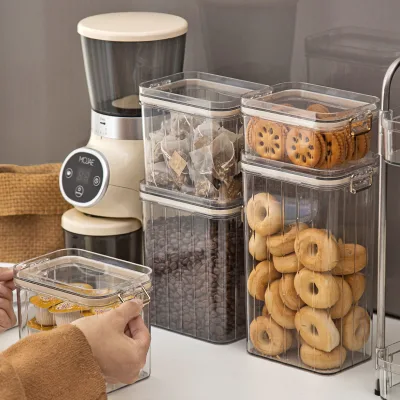


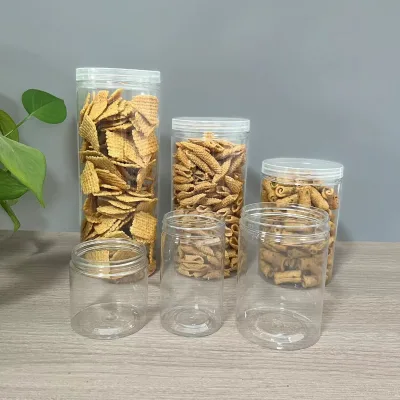


Customized Color Plastic Storage Can Round Bottle Food Jar Plastic Container
$0.35 - $0.85
MOQ: 10000 Pieces


Comprehensive Sourcing Guide
Strategic Sourcing Guide for Eco-Friendly Plastic Food Storage Jars
Navigating the global market for eco-friendly plastic food storage solutions requires a disciplined approach that balances material science, regulatory compliance, and supply chain reliability. For procurement professionals seeking "eco-friendly plastic food storage jar" options, the current landscape presents a diverse array of product attributes that must be carefully dissected. The available data indicates a market segment heavily influenced by specific manufacturing origins in China, particularly within the provinces of Zhejiang and Shandong. Buyers must recognize that while the term "eco-friendly" is prevalent, the actual material composition and end-of-life characteristics vary significantly between product listings. This guide provides a structured framework for evaluating suppliers and products based on verified facts, ensuring that procurement decisions are grounded in observable data rather than marketing assertions.
Material Composition and Physical Attributes
The foundational aspect of sourcing any plastic storage container is the verification of the base material. In the observed product catalog, the primary material identified is explicitly listed as "Plastic." However, for eco-friendly initiatives, the specific polymer type is critical. Some entries in the market data specify "Pet" (Polyethylene Terephthalate) as the plastic type, particularly for fruit clamshells, while others list generic "Plastic" for storage boxes and bins. The distinction is vital because PET offers different recyclability profiles compared to other common plastics like PP (Polypropylene), which is noted in the context of food containers.
When evaluating physical attributes, buyers should look for specific shape and structural indicators. The market data reveals a prevalence of "Square" shapes for storage boxes and bins, alongside "Round Bottle" configurations for other food packaging types. The "Folded" attribute is consistently noted as "Unfolded," indicating that these are rigid or semi-rigid containers rather than collapsible designs. Furthermore, the "Style" is described as "Original," suggesting a standard, non-decorative design focused on utility. For eco-conscious buyers, the "Feature" tag explicitly mentions "Recyclable," which serves as a primary indicator of the product's environmental profile. However, this claim must be cross-referenced with local recycling infrastructure capabilities, as a recyclable material is only truly eco-friendly if it enters a functional recycling stream.
Compliance Standards and Certification Verification
Regulatory compliance is non-negotiable when sourcing food-grade storage solutions. The observed product listings provide concrete evidence of specific certifications that buyers should prioritize. The data confirms the presence of "ISO" certification and "FDA" certification among the available products. ISO certification generally indicates adherence to international quality management standards, while FDA certification is essential for products intended for direct food contact in the United States market.
In addition to broad certifications, specific product standards are listed. One set of data points to volume standards of "460ml, 700ml, 1300ml, 1800ml," which are critical for inventory planning and shelf-space optimization. Another entry highlights a "Microwavable" feature, with a specific attribute confirming "Microwaveble: Yes." This capability is a significant value-add for food storage jars, allowing for reheating directly in the container. However, buyers must verify that the "Microwavable" claim aligns with the specific plastic type (e.g., PP is typically microwave-safe, whereas PET may have lower heat resistance). The "Sealing Type" is identified as "Screw Cap," and the "Cap" style is described as "Smooth Ribbed," which impacts the ease of use and the integrity of the seal.
Cost Drivers and Minimum Order Quantities
Understanding the economic structure of the supply chain is essential for budgeting and negotiation. The observed price range for these products spans from $0.03 to $3.60 USD. This wide variance suggests that costs are heavily influenced by factors such as volume, material thickness, customization level, and specific certifications. The "Competitive Price with Good Quality" is listed as an advantage, but buyers should treat this as a general market observation rather than a guaranteed price point for every transaction.
Minimum Order Quantity (MOQ) is a significant constraint in this sector. The data indicates an MOQ range of 72 to 100,000 units. A specific listing for a PP food container notes an MOQ of 100,000 PCS, which is typical for large-scale manufacturing runs that maximize efficiency and minimize unit costs. Conversely, lower MOQs around 72 units may be available for custom or prototype orders, though the unit price would likely be higher. Payment terms are observed to be "Tt" (Telegraphic Transfer), a standard method in international trade that requires careful management of cash flow. Buyers must align their order volumes with their storage capacity and sales velocity to avoid the financial strain of high MOQs while ensuring they meet the threshold for cost-effective pricing.
Supplier Evaluation and Geographic Considerations
The geographic origin of the manufacturer plays a pivotal role in logistics, lead times, and communication. The supplied facts identify "Zhejiang, China" and "Shandong" as the primary production locations. Zhejiang is a major hub for plastic manufacturing and export, known for a dense network of suppliers and established logistics infrastructure. Shandong is also a significant industrial region, often specializing in heavy manufacturing and packaging.
When evaluating suppliers, the "ODM/OEM" (Original Design Manufacturer/Original Equipment Manufacturer) support is a key differentiator. The data confirms that "ODM/OEM: Support" is available, allowing buyers to customize product models, such as the "CN-0720-13" or "PJ078" model numbers seen in the listings. Customization is further supported by the "Customization: Available" and "Customized: Customized" attributes. Buyers should verify the supplier's capacity for "Printing Page: Single" and other branding requirements. Additionally, the "prod_packing" varies between "Carton," "Export Cartons," and "Plastic Bag+ Carton," which affects shipping density and product protection. The "Delivery Time" is noted as "25days" for certain items, while sample availability is listed as "3-7days." These timelines must be integrated into the buyer's overall supply chain schedule to prevent stockouts.
Quality Control and Technical Specifications
Ensuring product quality requires a rigorous verification of technical specifications before mass production. The "prod_model" and "Model Number" fields, such as "PP Food Container" or "Plastic Fruit Packaging," serve as unique identifiers that must be matched precisely to the physical samples received. Dimensional accuracy is another critical factor; the data indicates that dimensions are often "Customized," meaning buyers must provide exact specifications to ensure the jars fit their intended use cases.
The "Neck Size" is a specific technical parameter listed with values of "47 56 68 83 89," likely referring to millimeters. This specification is crucial for ensuring compatibility with caps and dispensing mechanisms. For food storage, the "Food Container Feature" of being "Microwavable" must be validated through actual testing, as the "Microwaveble" attribute in the data is a claim that requires physical verification. Furthermore, the "Sealing Type" of "Screw Cap" must be tested for leak resistance, especially if the jars are intended for liquid foods or long-term storage. The "Feature" of being "Disposable" or "Stocked" also influences the durability expectations; a disposable item may have thinner walls than a reusable storage bin, affecting its suitability for repeated use.
Long-Term Procurement and Sustainability Strategy
Sourcing eco-friendly products is not merely a one-time transaction but a strategic long-term initiative. The "Eco-Friendly" attribute is explicitly listed in the product data, and the "Feature" of being "Recyclable" supports this positioning. However, buyers should look beyond the label and assess the entire lifecycle of the product. The "Usage" categories include "Sundries, Food, Tableware" and specifically "Fruit," indicating versatility. For a sustainable procurement strategy, buyers should prioritize suppliers who can provide documentation on the recyclability of the specific plastic type used, such as the "Pet" or "PP" mentioned in the listings.
The "Sets" attribute, noted as ">5PCS," suggests that many products are sold in bulk sets, which can reduce packaging waste per unit. The "prod_packing" method of "Export Cartons" is standard for international shipping but should be evaluated for its own environmental impact. Buyers should inquire about the use of recycled materials in the cartons themselves. Additionally, the "Advantage" of "Competitive Price with Good Quality" should be balanced against the long-term costs of waste management and brand reputation. By selecting suppliers with "ISO" and "FDA" certifications, buyers mitigate regulatory risks and ensure that the "Eco-Friendly" claims are backed by recognized standards.
Comparative Analysis of Product Variants
To assist in decision-making, the following table summarizes the key distinctions between the observed product categories based on the provided facts. This comparison highlights the trade-offs between customization, volume, and specific features.
| Product Attribute | Storage Boxes & Bins | Food Containers | Fruit Clamshells |
|---|---|---|---|
| Primary Shape | Square | Round Bottle | Round Bottle |
| Material | Plastic | PP (Polypropylene) | Pet (Polyethylene Terephthalate) |
| Key Feature | Recyclable, Eco-Friendly | Microwavable, Disposable | Disposable, Transparent |
| Certification | ISO | FDA | Not Specified |
| Standard Volume | 460ml - 1800ml | Customized | Not Specified |
| MOQ Range | 72 - 100,000 | 100,000 PCS | Not Specified |
| Origin | Zhejiang, China | Zhejiang, Shandong | Shandong |
| Sealing Type | Screw Cap | Screw Cap | Not Specified |
This comparison underscores that while all products fall under the "Plastic" umbrella, their specific applications and compliance requirements differ. Storage boxes offer high volume customization and eco-friendly features, food containers prioritize microwave safety and FDA compliance, and fruit clamshells focus on transparency and disposability.
Conclusion
Sourcing eco-friendly plastic food storage jars requires a meticulous examination of material properties, certification status, and supply chain logistics. The available market data provides a solid foundation for identifying products that meet specific operational needs, from the "Square" storage bins in Zhejiang to the "PP Food Containers" in Shandong. Buyers must rigorously verify claims regarding recyclability, microwave safety, and certification standards like ISO and FDA. By understanding the cost drivers, such as the wide MOQ range and price variance, and by prioritizing suppliers with strong ODM/OEM capabilities, procurement professionals can build a resilient and sustainable supply chain. The ultimate goal is to select products that not only meet immediate functional requirements but also align with long-term environmental and quality objectives, ensuring that the "eco-friendly" designation is a reality rather than a marketing label.
FAQs
What certifications do eco-friendly plastic food storage jars have?
Products typically hold ISO and FDA certifications for quality and food safety. These standards verify compliance with international management systems and US food contact regulations, ensuring the plastic containers meet necessary safety thresholds for storage applications.
Can these jars be used in a microwave?
Yes, specific food containers are confirmed to be microwavable. This feature allows for direct reheating, but buyers must verify the specific plastic type, such as PP, to ensure heat resistance aligns with the intended usage and safety requirements.
Which materials are used for these storage containers?
The primary material is plastic, with specific types including PET for fruit clamshells and PP for food containers. These polymers offer distinct recyclability profiles, with some products explicitly marked as recyclable and eco-friendly for sustainable procurement strategies.
How are the jars sealed and what is the cap style?
The jars utilize a screw cap sealing type with a smooth ribbed design. This configuration ensures a secure closure for liquids and solids, providing leak resistance and ease of opening for various food storage and tableware applications.
What is the minimum order quantity for these products?
Minimum order quantities range from 72 to 100,000 units depending on the supplier and customization level. Large-scale manufacturing runs often require higher volumes like 100,000 pieces to achieve competitive pricing and efficient production scheduling.
Where are these plastic storage jars manufactured?
Manufacturing primarily occurs in Zhejiang and Shandong provinces in China. These regions are established hubs for plastic production, offering dense supplier networks and logistics infrastructure to support international export requirements for food packaging.
Can I customize the product model and dimensions?
Yes, ODM and OEM support are available for customization of models and dimensions. Buyers can request specific volume standards like 460ml or 1800ml, as well as tailored dimensions, to fit unique inventory planning and shelf-space optimization needs.