Source Elegant Cardboard Paper Bag with Ribbon for Shopping, Gift, and Promotion
Compare 30 listings of Elegant Cardboard Paper Bag with Ribbon featuring custom logos, ribbon handles, and various paper types. Buyers can evaluate specifications like weight limits, hardness, and printing options to find suitable suppliers for storage, daily life, and promotional needs.
Key considerations
Products List


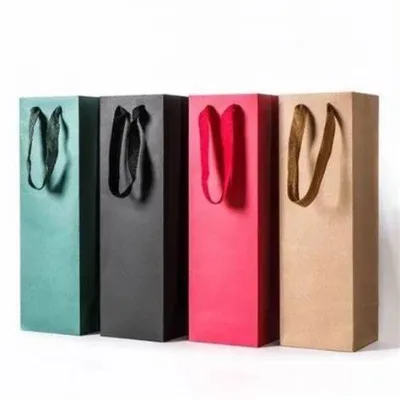


Comprehensive Sourcing Guide
Strategic Sourcing Guide for Elegant Cardboard Paper Bags with Ribbon
Understanding Product Specifications and Material Variations
When sourcing elegant cardboard paper bags with ribbon, buyers must first navigate the diverse landscape of material specifications and structural designs. The core product category encompasses a range of paper types, with Kraft Paper and Cardboard being the most frequently observed variants in the market. Kraft Paper offers a natural, rustic aesthetic often preferred for eco-conscious branding, while Cardboard provides the rigidity and smooth surface necessary for high-end, glossy finishes. The hardness of the final product is a critical differentiator; observed market data indicates a spectrum ranging from "Medium Soft" to "Soft" and even "Partial Hard." This variation directly impacts the bag's ability to hold weight and maintain its shape during transport.
The structural integrity of these bags is often defined by their handle configuration. The most common configuration involves a "With Handle" design, specifically utilizing ribbon, polyester, cotton, or paper rope. Some designs feature die-cut handles, while others rely on string handles attached to the body. The choice of handle material influences both the tactile experience and the load-bearing capacity. For instance, ribbon handles are often associated with a premium, elegant feel suitable for gift packaging, whereas polyester or cotton ropes may offer greater tensile strength for heavier retail applications.
Surface treatment plays a pivotal role in the visual appeal of the bag. To achieve an "elegant" finish, manufacturers typically apply glossy or matte lamination. This process not only enhances the vibrancy of full-color printing but also provides a protective layer against moisture and scuffing. Additional decorative processes such as hot stamping and embossing are frequently available to add texture and luxury to the design. The printing capabilities generally support full-color offset printing, allowing for complex brand graphics and custom logos. Buyers should verify that the specific supplier can accommodate the desired surface finish, as options like UV coating may be available as a customization feature.
| Feature Category | Observed Options | Strategic Consideration |
|---|---|---|
| Paper Type | Kraft Paper, Cardboard, Art Paper, Ivory Board | Select based on brand image (rustic vs. premium) and required rigidity. |
| Hardness | Medium Soft, Soft, Partial Hard | Correlates with weight capacity; "Partial Hard" suits heavier items better. |
| Handle Material | Ribbon, Polyester, Cotton, Paper Rope, Die Cut | Ribbon for aesthetics; Rope for durability and heavy loads. |
| Surface Finish | Glossy/Matt Lamination, Hot Stamping, Embossing | Lamination protects print; embossing adds tactile luxury. |
| Printing | Full Color, Offset Printing, Custom Logo | Ensure color fidelity and logo resolution match brand guidelines. |
Compliance, Certification, and Standard Verification
In the realm of B2B procurement, verifying compliance and adherence to standards is as critical as the physical attributes of the product. While specific certifications such as FSC (Forest Stewardship Council) or BSCI (Business Social Compliance Initiative) are often cited in the broader industry context, buyers must treat these as potential attributes rather than guaranteed facts for every listed product. The absence of explicit certification data in a product listing does not imply non-compliance, but it does necessitate a proactive verification step.
Buyers should request current certification documents directly from the supplier before placing an order. If sustainability is a core requirement, the buyer must confirm whether the paper source is FSC-certified. Similarly, if social compliance is a prerequisite for the brand's supply chain policy, the BSCI audit report must be reviewed. It is important to note that these certifications are not inherent to the product model itself but are dependent on the specific manufacturing facility and their current operational status.
Regarding physical standards, dimensions and weight limits vary significantly across different product models. Observed data suggests standard dimensions such as 42W32H15cm for specific models, while other listings indicate that custom sizes are available. This variability means that a "one-size-fits-all" approach to specifications is ineffective. Buyers must define their exact dimensional requirements early in the sourcing process. Furthermore, weight limits are a crucial safety parameter. Market observations indicate weight capacities ranging from under 5 kg to 5-10 kg. Products rated for "Medium Soft" hardness may have lower weight limits compared to those with "Partial Hard" construction. Relying on general descriptions without verifying the specific weight limit for the chosen model can lead to product failure during shipping or retail display.
Cost Drivers and Economic Factors in Procurement
The pricing structure for elegant cardboard paper bags with ribbon is influenced by several dynamic factors, primarily driven by customization levels, order volume, and material selection. The observed price range in the market spans from $0.01 to $1.35 per unit, a wide disparity that reflects the complexity of the order. At the lower end of the spectrum, prices typically correspond to standard sizes, minimal customization, and high-volume orders. Conversely, the upper end of the price range is associated with complex custom designs, premium materials like high-grade ivory board, and specialized surface treatments such as hot stamping or UV coating.
Minimum Order Quantity (MOQ) is a significant economic driver. While some suppliers offer low MOQs for custom logo printing, potentially starting as low as 500 pieces, other standard listings may require a minimum of 1,000 pieces or even up to 10,000 pieces for certain configurations. The "Low MOQ for Custom Logo" advantage is a notable feature for small businesses or brands testing new markets, but it often comes with a higher unit cost compared to bulk orders. Buyers must balance the need for inventory flexibility against the economies of scale offered by larger production runs.
Production lead times also impact the total cost of ownership. Typical production times are estimated at about 10-15 days, with sample times ranging from 5-7 days. Delays in sample approval or rush orders can incur additional costs or disrupt the supply chain schedule. Additionally, packaging requirements, such as the standard practice of placing 100 pieces into a PE bag and then into a corrugated carton, add to the material and labor costs. Buyers should factor in these logistical details when calculating the landed cost of the product, ensuring that the budget accounts for both the unit price and the associated packaging and shipping expenses.
Typical Applications and Usage Scenarios
The versatility of elegant cardboard paper bags with ribbon makes them suitable for a wide array of applications. The primary usage categories observed include shopping, promotion, packing, gift, and household storage. For retail environments, these bags serve as a powerful branding tool. The ability to print custom logos and designs allows retailers to transform a simple carrying vessel into a mobile advertisement. The "With Handle" design, particularly with ribbon, elevates the unboxing experience, making it ideal for luxury goods, fashion accessories, and boutique items.
In the promotional sector, these bags are frequently used as corporate gifts or event giveaways. The "Suit for: Storage; Shopping; Daily Life; Promotional" classification highlights their adaptability. A custom-designed bag with a ribbon handle can be distributed at trade shows, conferences, or product launches to leave a lasting impression on attendees. The "Customized Design" attribute ensures that the bag can be tailored to match specific campaign themes or seasonal events.
For the gift industry, the aesthetic appeal of the ribbon and the rigidity of the cardboard make these bags a preferred choice for packaging presents. The "Gift" usage category is particularly strong, where the bag itself is part of the gift presentation. The "Elegant" descriptor often implies a need for a premium look, which is achieved through the combination of high-quality paper, full-color printing, and sophisticated handle materials. Additionally, the "Household" and "Storage" applications suggest that these bags are durable enough for organizing items in retail or home settings, provided the weight limit is not exceeded.
Supplier Evaluation and Operational Capabilities
Selecting the right supplier requires a thorough evaluation of their operational capabilities, specifically regarding customization, production capacity, and quality control. A key indicator of a supplier's flexibility is their willingness to accept OEM (Original Equipment Manufacturer) and ODM (Original Design Manufacturer) requests. The availability of "Customized Design" and "Custom Logo" options suggests that the supplier can adapt to specific brand requirements. Buyers should verify the extent of these customization services, including the ability to modify dimensions, paper types, and handle materials.
The production timeline is another critical factor. Suppliers typically offer a sample time of 5-7 days, followed by a production time of about 10-15 days. This timeline is standard but can vary based on the complexity of the order and the current workload of the factory. Buyers must ensure that the supplier can meet their specific deadlines, especially for time-sensitive promotional campaigns or seasonal product launches.
Geographic location and origin are also relevant for logistics planning. Most observed products originate from China, with specific mentions of Shanghai as a production hub. This concentration of manufacturing capabilities can be advantageous for sourcing, but buyers should also consider the logistics of shipping from these locations. The "Standard Shipping Carton" or "Corrugated Carton" packing methods indicate that the supplier has established protocols for protecting the goods during transit.
When evaluating suppliers, buyers should look for those who explicitly state their advantages, such as "Low MOQ for Custom Logo." This feature is particularly beneficial for startups or brands with fluctuating demand. However, buyers must also assess the supplier's ability to maintain consistency across large orders. The "OEM/ODM: Acceptable" status is a positive sign, but it should be backed by a robust quality assurance process to ensure that the final product matches the approved sample.
Quality Control and Long-Term Procurement Strategy
Ensuring consistent quality is paramount in the procurement of paper bags, as defects in printing, structural integrity, or handle attachment can severely impact brand perception. Quality control should begin at the sample stage. The 5-7 day sample time allows buyers to inspect the physical attributes of the bag, including the hardness, the strength of the ribbon attachment, and the accuracy of the color reproduction. Buyers should test the weight limit of the sample to ensure it meets their specific usage requirements, as the observed range of 5-10 kg or <5 kg varies by model.
For long-term procurement, establishing a clear specification sheet is essential. This document should detail the exact paper type, dimensions, handle material, surface finish, and printing requirements. Given that the "prod_standard" can range from fixed dimensions like 42W32H15cm to "custom size available," precise communication is necessary to avoid misunderstandings. Regular audits of the production line may be necessary for high-volume orders to ensure that the quality remains consistent over time.
Sustainability and ethical sourcing should also be part of the long-term strategy. While certifications like FSC and BSCI are not guaranteed for every product, buyers should prioritize suppliers who are transparent about their sourcing practices. Building a relationship with a supplier who is open to these discussions can lead to a more resilient supply chain. Additionally, maintaining a buffer stock of standard items while customizing for specific campaigns can help mitigate the risks of lead time delays. By focusing on these strategic elements, buyers can secure a reliable supply of elegant cardboard paper bags with ribbon that meet their quality standards and brand values.
FAQs
What customization options are available for logo and design?
Custom logo printing and customized designs are available for these bags. Suppliers accept OEM and ODM requests, allowing buyers to specify unique graphics and handle types like ribbon or paper rope to match brand identity.
What is the typical minimum order quantity for custom orders?
The minimum order quantity for custom logo printing can be as low as 500 pieces. However, some standard listings require a minimum of 1000 pieces, so buyers should verify the specific MOQ before placing an order.
How long does it take to produce and ship these bags?
Production time is typically about 10 to 15 days after sample approval. Sample creation takes approximately 5 to 7 days, and the goods are packed in standard shipping cartons or corrugated cartons for protection.
What paper types and hardness levels are offered?
Available paper types include Kraft Paper and Cardboard, with hardness ranging from soft to partial hard. Buyers can select materials like Art Paper or Ivory Board depending on whether they need a rustic or rigid premium finish.
Can these bags support heavy items up to 10 kg?
Weight limits vary by model, with some supporting up to 10 kg and others rated under 5 kg. Hardness levels like partial hard are better suited for heavier loads compared to medium soft or soft variants.
What surface finishes and printing methods are used?
Bags feature full color offset printing with glossy or matte lamination options. Additional surface treatments like hot stamping, embossing, and UV coating are available to enhance the visual appeal and durability of the design.
Where are these paper bags manufactured and shipped from?
Products originate from China, with specific production hubs mentioned in Shanghai. The goods are packed in PE bags within cartons and shipped from these locations to international buyers.