Find 4 20ma flow transmitter for Liquid, Gas, and Variable Flow
Source 30 verified Field 4-20mA Flow Transmitter units suitable for liquid, gas, and variable area flowmeter applications. Buyers can compare specifications including accuracy, power supply options, and process connections from Chinese manufacturers.
Key considerations
Products List


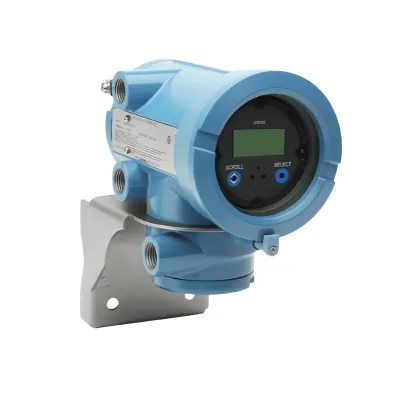
Rosemounte Micro Motion 1700 Single Variable Field Mount Flow Transmitter
$330.00 - $420.00
MOQ: 1 pieces


Advanced Differential Pressure Transmitter for Accurate Flow Measurement
$200.00 - $360.00
MOQ: 1 Pieces


Comprehensive Sourcing Guide
Strategic Sourcing Guide for Field 4-20mA Flow Transmitters
Understanding Core Technical Specifications and Output Standards
When sourcing field 4-20mA flow transmitters, the primary objective is to identify devices that deliver reliable analog signal transmission compatible with existing industrial control systems. The 4-20mA current loop remains the industry standard for process instrumentation due to its immunity to electrical noise and ability to transmit signals over long distances without significant voltage drop. Buyers must verify that the selected unit supports the specific output configuration required by their plant infrastructure. Based on observed product attributes, these devices frequently offer versatile output options, including 4-20mA paired with Hart communication protocols for two-wire systems. This dual capability allows for digital configuration and diagnostics while maintaining the robust analog signal backbone.
In addition to the primary current loop, some models provide voltage output alternatives such as 0-5V, 0-10V, or 0.5-4.5V. The presence of these options suggests that the market offers flexibility for different controller inputs, though the 4-20mA standard is generally preferred for harsh environments. The accuracy of these transmitters is a critical differentiator. Market observations indicate a range of accuracy grades, including 0.15% F.S., 0.25% F.S., 0.3% F.S., 0.5% F.S., and 1.0%. For high-precision applications, buyers should prioritize units with accuracy specifications of 0.15% F.S. or better. It is essential to note that accuracy can vary based on the specific model series, such as the SAC-PT22 or H3051T, and should be confirmed against the specific datasheet for the intended application.
Power supply requirements also vary significantly across different product lines. While some units operate on low voltage inputs like 5V DC or 10V DC, others are designed for standard industrial loops requiring 12-32V DC, 24V DC, or a wide range of 9-36V DC. The 4-20mA two-wire loop typically utilizes the same power supply for both operation and signal transmission, making the 12-32V DC range particularly common for field installations. Buyers must ensure their plant's power distribution matches the transmitter's input requirements to avoid the need for additional power conditioning equipment.
Compliance, Certification, and Safety Standards
In the industrial sector, compliance with international safety and quality standards is non-negotiable. When evaluating potential suppliers, the presence of recognized certifications serves as a primary indicator of product reliability and adherence to regulatory frameworks. The CE mark is a frequently observed certification for these devices, indicating conformity with health, safety, and environmental protection standards for products sold within the European Economic Area. This certification is a baseline requirement for many international procurement contracts.
Beyond general safety, specific applications may require intrinsic safety certifications, particularly in hazardous environments where flammable gases or dusts are present. Some observed product attributes list "Exia II CT6" as an intrinsic safety rating. This designation implies that the device is designed to prevent ignition of specific explosive atmospheres, making it suitable for use in Zone 0 or Zone 1 areas depending on the specific gas group and temperature class. Buyers must verify that the certification matches the specific hazard classification of their facility.
Environmental protection is another critical compliance factor. The ingress protection rating, such as IP68, indicates a high level of protection against dust and continuous immersion in water. This is vital for transmitters installed in outdoor fields or areas prone to washdowns. Additionally, long-term stability is a performance metric that often correlates with compliance with quality management systems. A stability rating of higher than 0.1% F.S. per year suggests a device that maintains its calibration over time, reducing the frequency of maintenance and recalibration costs.
Cost Drivers and Pricing Variables
The pricing of field 4-20mA flow transmitters is influenced by a complex interplay of technical specifications, material quality, and customization requirements. The observed market price range spans from approximately $13.28 to $5,000 USD. This wide variance reflects the diversity in product complexity, from basic pressure transmitters to advanced flow measurement systems with integrated communication protocols. Several key factors drive these costs.
First, the accuracy grade is a significant cost driver. Units offering 0.1% or 0.15% F.S. accuracy typically command a higher price than those rated at 0.5% or 1.0% F.S. due to the precision required in the sensor manufacturing and calibration processes. Second, the choice of wetted materials impacts the price. Options such as 304 stainless steel, 316L stainless steel, and ceramic materials offer varying levels of corrosion resistance and durability. 316L and ceramic are generally more expensive due to their superior resistance to aggressive chemicals and high temperatures.
Customization is another major variable. Products listed with "Customized" attributes or "Available" customization options often carry a premium. Customization can include specific process connections like 1/4" NPT, G1/4, R1/4, or G1/8, as well as tailored output signals or unique mounting configurations. The Minimum Order Quantity (MOQ) also plays a role in the unit cost. The observed MOQ range of 1 to 500 units suggests that buyers can source single units for prototyping or small projects, while bulk orders of 500 units may benefit from economies of scale. However, the specific MOQ for a customized order should be verified directly with the supplier, as it may differ from standard stock items.
Typical Applications and Process Compatibility
Field 4-20mA flow transmitters are designed for a broad spectrum of industrial applications, primarily involving the measurement of liquid and gas flow in various process industries. The versatility of these devices is evident in their ability to handle different measuring mediums. Some models are explicitly rated for liquid applications, while others are optimized for gas. The specific application dictates the required pressure range and material compatibility.
For liquid applications, the pressure range typically spans from 0.001 MPa to 35 MPa. This wide range allows the devices to be used in low-pressure water systems as well as high-pressure hydraulic or chemical processing lines. The process connection types, such as 1/4" NPT Male or G1/2, facilitate easy integration into existing piping systems. The use of ceramic or stainless steel wetted parts ensures that the device can withstand the chemical properties of the liquid being measured.
In gas applications, the transmitters must be robust enough to handle the compressibility and potential variability of gas flow. The intrinsic safety features, such as Exia II CT6, are particularly relevant here, as gas plants often operate in hazardous zones. The operating temperature range of -20°C to +70°C covers most standard industrial environments, but buyers should verify if their specific process requires extended temperature ranges. Additionally, the resolution of 0.001% F.S. indicates that these devices are suitable for applications requiring very fine measurement adjustments, such as in precision chemical dosing or high-efficiency energy monitoring.
Supplier Evaluation and Quality Assurance Protocols
Selecting a reliable supplier is as critical as selecting the right product. Buyers should evaluate potential suppliers based on their ability to provide consistent quality, technical support, and after-sales service. The presence of OEM and ODM support indicates that a supplier has the manufacturing flexibility to adapt products to specific buyer requirements. This is particularly important for large-scale projects where standard off-the-shelf solutions may not meet unique integration needs.
Quality control should be a central part of the supplier evaluation process. Buyers should request documentation regarding the manufacturing process, including material certifications for stainless steel and ceramic components. The warranty period is another key indicator of supplier confidence; a standard one-year warranty is common, but some suppliers may offer extended terms for bulk orders or specific high-value models. The warranty should cover defects in materials and workmanship, providing a safety net for the buyer.
Shipping and logistics capabilities are also essential considerations. The observed shipping methods, including FedEx, EMS, and TNT, suggest that suppliers have established international logistics networks. However, buyers should verify lead times and packaging standards to ensure that sensitive electronic components arrive without damage. The packaging should be robust, typically using paper cartons reinforced to withstand transit, and should include all necessary documentation, such as calibration certificates and installation manuals.
Long-Term Procurement and Maintenance Considerations
Long-term procurement strategies for field 4-20mA flow transmitters must account for the total cost of ownership, which includes maintenance, calibration, and potential replacement costs. The long-term stability of the device, often cited as 0.2% F.S. per year, is a critical metric for planning maintenance schedules. Devices with higher stability ratings will require less frequent recalibration, reducing downtime and labor costs over the life of the installation.
Temperature drift is another factor that affects long-term performance. A temperature drift of 0.02% F.S./°C indicates how much the accuracy changes with temperature fluctuations. In environments with significant temperature variations, buyers should consider units with lower drift specifications or implement thermal compensation strategies. The safe overload capacity of 150% and ultimate overload of 200% provide a margin of safety against process upsets, protecting the sensor from damage during transient pressure spikes.
Finally, buyers should consider the availability of spare parts and the longevity of the product line. Products with established model numbers, such as SAC-PT22 or H3051T, are likely to have better long-term support from the manufacturer. This ensures that replacement parts and compatible accessories will be available years after the initial purchase. By focusing on these long-term factors, buyers can secure a reliable supply chain that minimizes operational disruptions and maximizes the return on investment in their instrumentation systems.
| Feature Category | Observed Specifications | Procurement Verification Point |
|---|---|---|
| Output Signal | 4-20mA, 0-5V, 0-10V, Hart Protocol | Confirm compatibility with existing PLC/DCS inputs. |
| Accuracy | 0.15% F.S. to 1.0% F.S. | Match accuracy grade to process control requirements. |
| Power Supply | 5V DC, 10V DC, 12-32V DC, 24V DC | Verify plant power availability matches device input. |
| Materials | 304 SS, 316L SS, Ceramic | Ensure chemical compatibility with process medium. |
| Protection | IP68, Exia II CT6 | Validate against site hazard classification and environment. |
| Warranty | 1 Year | Confirm terms for extended coverage if required. |
| Customization | Available (OEM/ODM) | Define specific needs for process connections and outputs. |
FAQs
What accuracy grades are available for field 4 20ma flow transmitters?
Available accuracy grades range from 0.15% F.S. to 1.0% F.S. depending on the specific model series. Buyers should prioritize units with 0.15% or 0.25% F.S. for high-precision applications requiring tight tolerances.
Can these transmitters operate in hazardous environments?
Yes, certain models feature intrinsic safety ratings like Exia II CT6 for use in explosive atmospheres. This certification ensures the device prevents ignition in zones with flammable gases or dusts.
Which output signals do field 4 20ma flow transmitters support?
Devices typically support 4-20mA current loops, often paired with Hart protocol for digital diagnostics. Some models also offer voltage outputs such as 0-5V, 0-10V, or 0.5-4.5V for different controller inputs.
How does temperature affect the accuracy of these transmitters?
Temperature drift is typically specified at 0.02% F.S. per degree Celsius. This metric indicates how much accuracy changes with temperature fluctuations, requiring thermal compensation in varying environments.
What wetted materials are used in these pressure transmitters?
Common wetted materials include 304 stainless steel, 316L stainless steel, and ceramic. The choice depends on the chemical compatibility required for the specific liquid or gas being measured.
Are customization options available for process connections?
Yes, process connections can be customized to fit specific piping requirements. Options include 1/4 NPT, G1/4, R1/4, and G1/8 threads, allowing for flexible integration into existing systems.